Kingdom Hearts Sora Necklace: Alloy & Chain Guide
Analyze the Kingdom Hearts Sora necklace crown pendant. Compare zinc, 925 silver, and gold alloys, plus ideal chain gauges and clasp types.

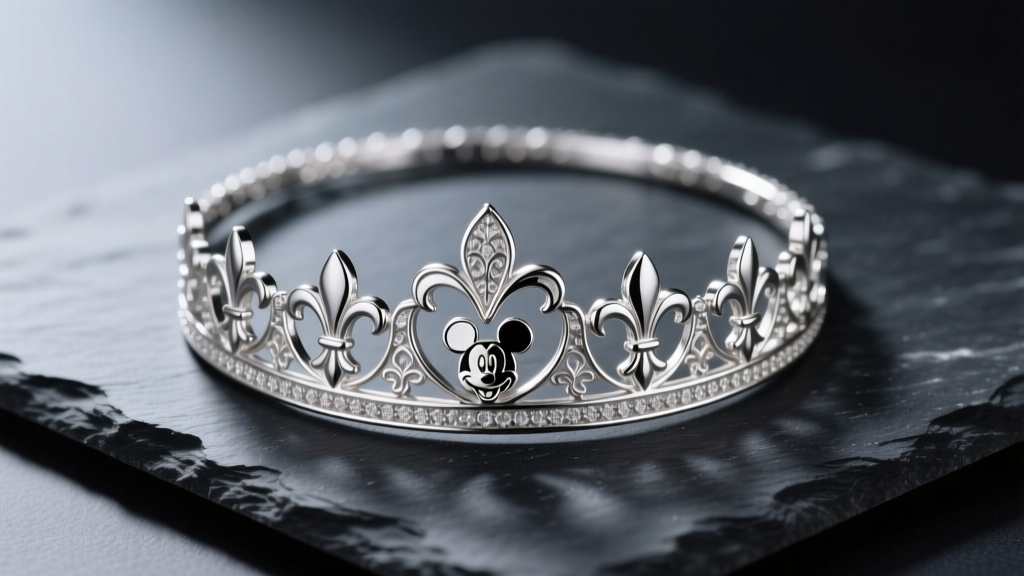
The Anatomy of the Sora Crown Pendant
The Kingdom Hearts Sora necklace is arguably one of the most recognizable pieces of gaming jewelry in modern pop culture. However, transitioning this iconic digital asset into a physical, wearable piece of fine jewelry requires precise metallurgical and structural engineering. The canonical Sora crown pendant features a distinct three-pointed top, a central fleur-de-lis motif, and the subtle integration of a hidden Mickey silhouette within the negative space of the lower arches.
From a dimensional standpoint, a properly scaled official or high-end custom replica should measure approximately 28mm in height and 22mm in width, with a depth of 2.5mm to 3.5mm. This specific volume yields a solid weight of roughly 7 to 9 grams when cast in sterling silver. Maintaining these exact proportions is critical; mass-market replicas often shrink the mold by 15% to save on material costs, resulting in a pendant that feels unnaturally light and looks disproportionate when worn over a t-shirt or hoodie.
Metallurgical Breakdown: Zinc vs. Sterling Silver vs. Gold
The market for the Kingdom Hearts Sora necklace is heavily saturated with varying material grades. Understanding the metallurgy behind these alloys is essential for collectors and daily wearers who want to avoid skin discoloration, structural failure, and rapid tarnishing.
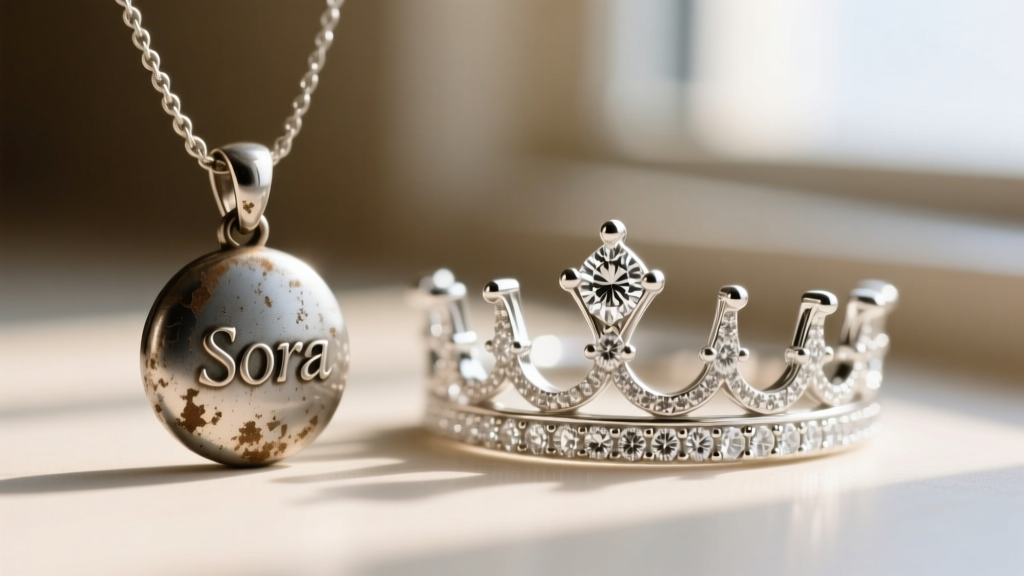
Zamak (Zinc Alloy) and Pot Metal
The vast majority of sub-$30 replicas found on generic marketplaces are die-cast from Zamak, a zinc alloy containing aluminum, magnesium, and copper. While Zamak has a respectable Vickers hardness (80-100 HV), it is highly susceptible to intergranular corrosion. When exposed to the acidic pH of human sweat, the zinc oxidizes rapidly, leading to a chalky white residue and the notorious 'green neck' effect caused by copper leaching. Furthermore, Zamak is brittle; if the pendant is dropped on a hard surface, the delicate lower arches of the crown are prone to snapping.
925 Sterling Silver
For authentic, high-quality merchandise—such as exclusive runs from the Square Enix official store—925 sterling silver is the industry standard. Composed of 92.5% pure silver and 7.5% copper, it offers excellent malleability for capturing the sharp inner angles of the crown's negative space during the lost-wax casting process. However, the copper content means it will oxidize (tarnish) over time, requiring periodic polishing with a jeweler's cloth. According to jewelry manufacturing standards outlined by Rio Grande, sterling silver has a Vickers hardness of roughly 60-70 HV in its annealed state, making it durable enough for daily wear but soft enough to scratch if stored improperly.
14k White Gold and 316L Surgical Steel
For high-end custom commissions, 14k white gold (58.5% gold alloyed with nickel, palladium, or silver) provides superior tensile strength and is typically rhodium-plated to achieve the bright, reflective 'silver' aesthetic seen in the game's CGI. Alternatively, 316L surgical steel offers incredible tarnish resistance and hypoallergenic properties, though its high melting point makes intricate lost-wax casting difficult, often requiring CNC milling or direct metal laser sintering (DMLS) for precise details.
| Alloy Composition | Vickers Hardness (HV) | Tarnish Resistance | Estimated Price Range (2026) |
|---|---|---|---|
| Zamak (Zinc Alloy) | 80-100 HV | Poor (Oxidizes quickly) | $15 - $35 |
| 925 Sterling Silver | 60-70 HV | Moderate (Requires polishing) | $85 - $150 |
| 316L Surgical Steel | 150-190 HV | Excellent | $40 - $70 |
| 14k White Gold | 120-140 HV | High (Rhodium plated) | $450 - $800 |
Chain Engineering: Matching Gauge and Style
A heavy cast crown pendant requires a chain with adequate tensile strength and visual weight. Pairing an 8-gram sterling silver Sora pendant with a 1.0mm rolo chain is a structural failure waiting to happen; the chain will snap under the kinetic force of a sudden snag.
For a pendant of this mass, the optimal chain gauge ranges from 1.8mm to 2.5mm. A 2.0mm Box Chain is highly recommended for its geometric links, which echo the structured, architectural feel of the Kingdom Hearts aesthetic. Box chains distribute weight evenly and have a tensile breaking strength of roughly 12 to 15 pounds in sterling silver. Alternatively, a 2.5mm Curb Chain offers a flatter profile that lays flush against the sternum, reducing the pendulum effect that causes pendants to flip backward during physical activity.
The Physics of the Bail
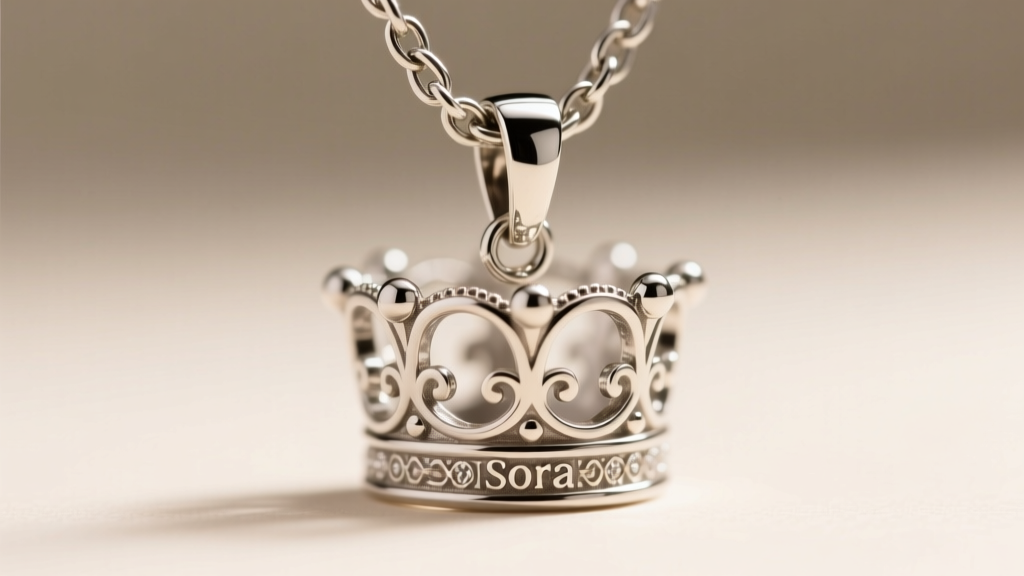
The bail—the loop that connects the pendant to the chain—dictates how the necklace hangs. Mass-produced versions often use a simple soldered jump ring at the top point of the crown. This causes the pendant to swing freely and frequently flip upside down. High-end custom jewelers utilize a fixed hidden bail soldered horizontally behind the top arch of the crown. This lowers the center of gravity and forces the pendant to remain upright and facing forward, ensuring the hidden Mickey and fleur-de-lis are always visible to the observer.
Clasp Mechanics and Security
Do not compromise on the clasp. The standard 5mm spring ring clasp included with cheap replicas lacks the internal spring tension to secure a 2.0mm chain and is prone to accidental unhooking. For a Kingdom Hearts Sora necklace intended for daily wear, upgrade to a 12mm or 15mm Lobster Clasp. Lobster clasps feature a self-closing trigger mechanism and a wider internal cavity that easily accommodates thicker chain gauges and the jump rings of a fixed bail. For maximum security, especially when wearing the necklace over thick winter layers or hoodies, a screw-lock barrel clasp provides a mechanical thread that physically prevents the chain from separating under tension.
Verification: Spotting Authentic vs. Cast Replicas
When investing in a premium sterling silver or gold Sora necklace, verification is key. Authentic precious metal pieces will feature a '.925' or '14k' hallmark stamped in an inconspicuous area, typically on the back of the top right arch or inside the bail. Furthermore, examine the edges of the negative space. Die-struck or cheaply cast zinc replicas often have rounded, soft edges in the inner cutouts due to poor mold flow and inadequate venting. A properly executed lost-wax cast in silver or gold will feature razor-sharp internal corners and a completely flat, polished backplate that sits comfortably against the skin without catching on chest hair or fabric.
'The transition from digital concept to physical jewelry requires respecting the material's limitations. You cannot force zinc alloy to hold the micro-bevels of the Sora crown without the metal tearing during the ejection phase of the die-cast mold.' — Master Bench Jeweler
Ultimately, selecting the right Kingdom Hearts Sora necklace comes down to understanding the intersection of fandom and fine jewelry mechanics. By prioritizing 925 sterling silver or surgical steel, demanding a 2.0mm box chain, and ensuring a secure lobster clasp, you transform a simple piece of merchandise into a durable, everyday heirloom worthy of a Keyblade wielder.


