Kissing Necklace Guide: Magnetic Clasps & Interlocking Pendants
An expert technical guide to kissing necklace designs, covering magnetic clasp mechanics, interlocking pendant CAD tolerances, and metallurgy.

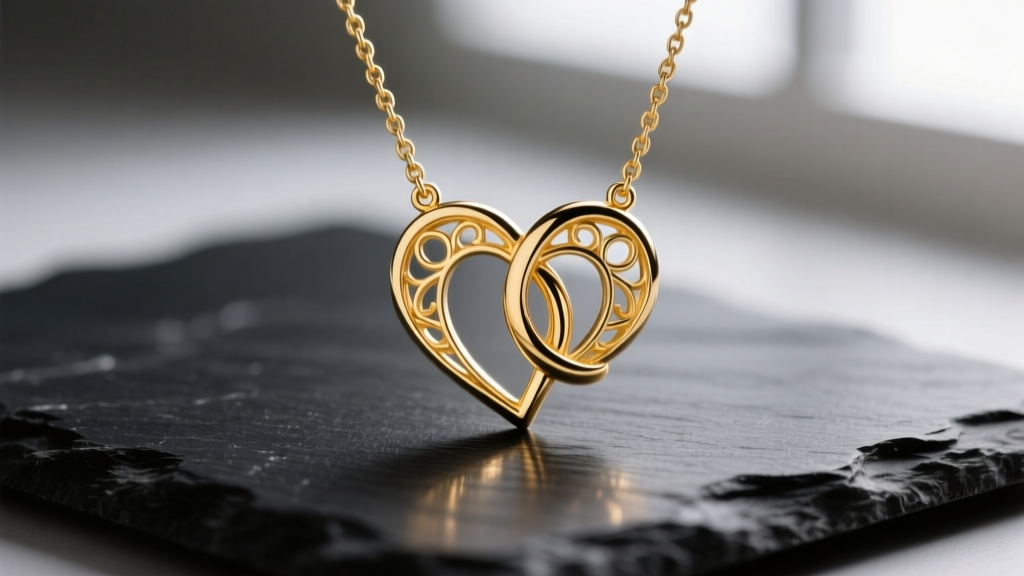
In the realm of fine jewelry, the term 'kissing necklace' refers to two distinct but equally fascinating categories of micro-engineering: interlocking pendants designed to meet perfectly at the sternum, and magnetic 'kissing' clasps that snap together with precision. While often marketed purely for their romantic aesthetics, a true kissing necklace requires rigorous attention to metallurgy, magnetic physics, and CAD/CAM manufacturing tolerances. As we move through 2026, advancements in 3D printing resins and rare-earth magnet coatings have elevated these designs from novelty items to masterclasses in bench jewelry. This guide provides a deep technical dive into the mechanics, materials, and maintenance of kissing necklaces.
The Dual Meaning: Interlocking Pendants vs. Magnetic Clasps
When jewelers discuss a kissing necklace, they are typically referencing one of two structural designs. The first is the interlocking pendant, where two separate halves (often puzzle pieces, split hearts, or geometric fractals) are suspended on a single chain or two separate strands, designed to 'kiss' or flush-mount against one another when the wearer is stationary. The second is the magnetic kissing clasp, a functional hardware component where two magnetized terminals attract and lock, replacing traditional lobster or spring ring clasps.
Both designs present unique challenges on the jeweler's bench. Interlocking pendants demand absolute symmetry and precise weight distribution to ensure the pieces do not flip or tangle. Magnetic clasps, on the other hand, require careful integration of rare-earth metals into precious metal housings without compromising the structural integrity of the jump rings or the magnetic field itself.
Metallurgy at the Suprasternal Notch
A defining characteristic of the kissing necklace is its resting point. Both interlocking pendants and the central node of a magnetic clasp sit directly over the suprasternal notch (the jugular notch at the base of the throat). This anatomical zone features exceptionally thin skin, high vascularity, and a high concentration of eccrine sweat glands.
Because of the constant exposure to moisture and friction, the metallurgy of the 'kissing' point must be strictly hypoallergenic and highly resistant to chloride-induced corrosion. According to dermatological research on contact dermatitis published in the National Center for Biotechnology Information (NCBI), the chest and neck are highly susceptible to nickel sensitization. Therefore, bench jewelers must adhere to the EU Nickel Directive standard, ensuring a nickel release rate of less than 0.5 µg/cm²/week.
- 316L Austenitic Stainless Steel: Excellent for affordable magnetic clasp housings due to its low magnetic permeability (which prevents the housing from interfering with the internal magnet) and high corrosion resistance.
- Grade 5 Titanium (Ti-6Al-4V): The gold standard for skin-contact elements. It is completely bio-inert and non-magnetic, making it ideal for the outer shells of kissing clasps.
- 14k and 18k Gold Alloys: While generally safe, jewelers must avoid nickel-based white gold solders near the clasp mechanism. Palladium-based white gold alloys are mandatory for high-end kissing necklaces to prevent galvanic corrosion against sweat.
Magnetic Clasp Mechanics: Neodymium vs. Ceramic Ferrite
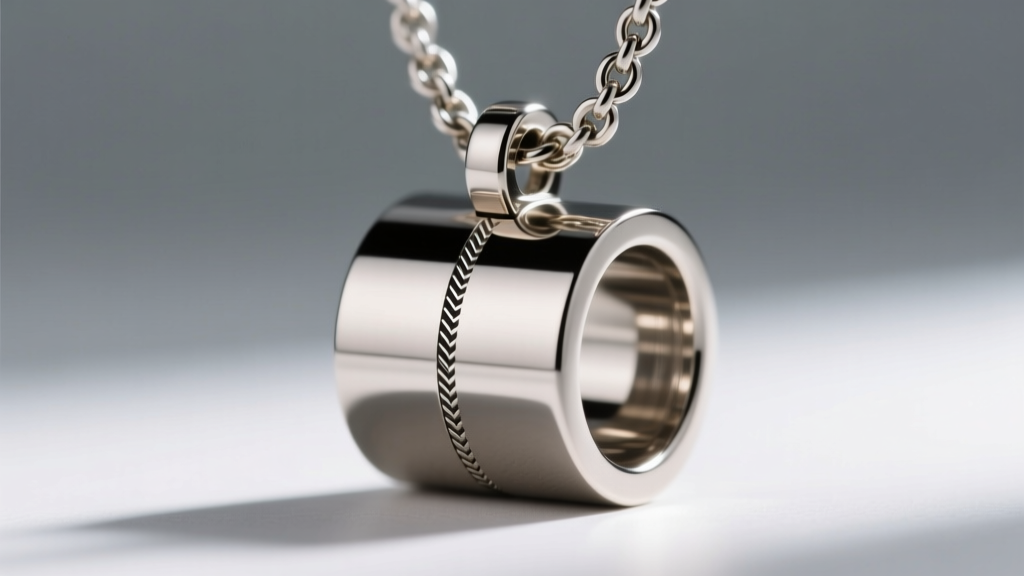
The 'kiss' of a magnetic clasp is dictated by the Gauss rating and the pull force of the internal magnet. Cheap novelty necklaces often use ceramic ferrite magnets, which are bulky, weak, and prone to shattering under shear stress. High-end kissing necklaces utilize N52 Neodymium Iron Boron (NdFeB) rare-earth magnets.
An N52 cylinder magnet measuring just 4mm x 2mm can generate a pull force of approximately 5 to 8 pounds. However, NdFeB is highly susceptible to oxidation. If the precious metal housing is breached by sweat, the neodymium will rapidly corrode into a powdery oxide, destroying the magnetic field. To prevent this in 2026, top-tier manufacturers use PVD (Physical Vapor Deposition) titanium nitride coatings on the magnet itself before it is laser-welded inside a 316L or titanium housing.
| Magnet Type | Max Energy Product (MGOe) | Curie Temp (°C) | Corrosion Risk | Jewelry Application |
|---|---|---|---|---|
| Ceramic Ferrite | 3.5 - 4.5 | 450°C | Very Low | Low-end fashion jewelry, bulky designs |
| SmCo (Samarium Cobalt) | 26 - 30 | 750°C | Low | High-heat environments, luxury vintage pieces |
| NdFeB (Neodymium N52) | 48 - 52 | 80°C - 150°C | Extremely High | Modern micro-clasps, requires PVD coating |
CAD/CAM Tolerances for Interlocking Pendants
Designing a kissing necklace with interlocking halves requires advanced CAD/CAM software and a deep understanding of investment casting physics. When two puzzle-piece pendants are designed to meet flush, the bench jeweler must account for metal shrinkage rates during the cooling phase of casting.
For example, 14k yellow gold typically shrinks by about 1.25% to 1.5% from the wax model to the final metal state, whereas platinum can shrink up to 2.0%. If a jeweler designs two halves to fit perfectly in MatrixGold or Rhino 3D without applying the correct shrinkage compensation algorithm, the final cast pieces will bind or leave a visible gap, ruining the 'kissing' illusion.

Furthermore, a clearance gap of 0.15mm to 0.20mm must be engineered into the CAD file between the interlocking male and female components. This accounts for minor casting porosity, the thickness of the polishing compound, and the final rhodium or e-coating layers. Without this engineered tolerance, the pendants will scrape against one another, generating micro-abrasions and metal dust that will eventually dull the finish.
Chain Gauge and Jump Ring Shear Strength
The mechanics of a kissing necklace place unique tensile stresses on the chain and findings. Interlocking pendants concentrate the majority of the necklace's mass at the exact center of the chain. This creates a steep 'V' drape, increasing the lateral shear force on the bail and the jump rings connecting the clasp.
Experts at Jewelers of America consistently emphasize the importance of work-hardened findings. For a kissing necklace weighing over 15 grams, a standard 0.8mm cable chain is insufficient. Jewelers should opt for a 1.2mm to 1.5mm rolo or wheat chain, which offers superior multi-directional tensile strength. Additionally, the jump rings securing the magnetic clasp must be laser-welded or soldered shut; relying on tension-closed jump rings with a magnetic clasp is a critical failure point, as the sudden 'snap' of the magnets can inadvertently twist and pop open an unsoldered ring.
Maintenance, Demagnetization, and Ultrasonic Risks
Caring for a kissing necklace requires abandoning standard jewelry cleaning protocols. The most common mistake consumers make is placing a magnetic kissing clasp into an ultrasonic cleaner. Ultrasonic cleaners generate localized heat and cavitation. As noted in the magnetic properties table above, N52 Neodymium magnets have a relatively low Curie temperature (the point at which they permanently lose their magnetism), often beginning to degrade at temperatures as low as 80°C (176°F). Prolonged exposure to hot ultrasonic solutions or steam cleaners will permanently demagnetize the clasp, rendering it useless.
Instead, kissing necklaces should be cleaned using a mild, non-ammonia surfactant and a soft-bristled brush. For interlocking pendants, jewelers must carefully clean the recessed 'male' tenon and 'female' mortise joints using a wooden peg or soft cotton swab, as metal bristles will scratch the precision-milled tolerances. By respecting the micro-engineering and metallurgy behind these pieces, collectors can ensure their kissing necklaces remain structurally sound and magnetically secure for decades.
For further reading on advanced jewelry manufacturing techniques and material sciences, the Gemological Institute of America (GIA) News & Research database offers extensive literature on CAD/CAM tolerances and modern alloy behaviors in micro-jewelry design.


