Knot Gold Necklace Guide: Comparing Alloys & Metal Properties
Discover how gold alloys and metal properties impact the durability, structure, and longevity of your favorite knot gold necklace designs.

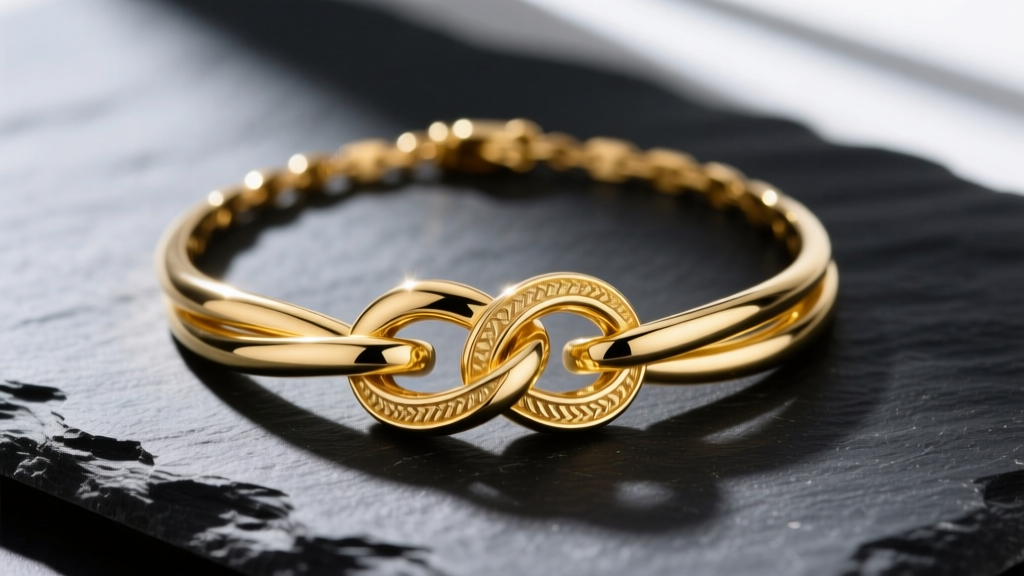
The Metallurgy of Gold Knots: Why Alloy Composition Matters
When selecting a knot gold necklace, most buyers focus purely on aesthetics, karat weight, and price. However, from a metallurgical perspective, a knot design is one of the most structurally demanding forms in jewelry making. Unlike a flat, stamped pendant or a simple cast band, a knot requires the metal to be bent, twisted, and tensioned. This physical manipulation introduces a phenomenon known as work hardening, where the crystal lattice of the gold becomes distorted, increasing localized hardness but also brittleness.
If the alloy composition is not carefully calibrated, the metal can develop micro-fractures at the apex of the bends during manufacturing, or worse, slowly deform and pull apart when worn. According to the Gemological Institute of America (GIA), the addition of alloying metals like copper, silver, and zinc doesn't just change the color of the gold; it fundamentally alters its tensile strength and malleability. Understanding these properties is essential for choosing a knot gold necklace that will maintain its structural integrity over decades of daily wear.
14K vs. 18K vs. 22K: Tensile Strength and Wearability
Pure 24-karat gold is exceptionally soft, registering a mere 25 to 30 on the Vickers Hardness (HV) scale. While beautiful, it is entirely unsuitable for knot designs; a 24k knot would slowly loosen and unbind under the gentle tension of a necklace chain. To solve this, jewelers alloy gold with other metals. Below is a technical comparison of the most common gold alloys used in knot necklaces, highlighting their mechanical properties and suitability for complex designs like Celtic, sailor, or love knots.
| Alloy / Metal | Purity | Vickers Hardness (HV) | Tensile Strength (MPa) | Knot Suitability |
|---|---|---|---|---|
| 24K Yellow Gold | 99.9% | 25-30 | 120 | Poor (Deforms easily) |
| 22K Yellow Gold | 91.6% | 55-70 | 250 | Fair (Simple, loose knots only) |
| 18K Yellow Gold | 75.0% | 125-140 | 450 | Excellent (Standard luxury) |
| 14K Yellow Gold | 58.3% | 150-170 | 550 | Superior (High durability) |
| 14K Rose Gold | 58.3% | 160-180 | 580 | Superior (High copper content adds strength) |
For a tight, complex sailor knot, 14k gold is often the metallurgical ideal. Its higher copper and zinc content provides the tensile strength required to hold a tight bend without springing back or warping. However, 18k gold remains the premium choice for fine jewelry, offering an optimal balance between the rich, warm luster of high-purity gold and the structural resilience needed for everyday wear. The World Gold Council notes that 18k gold accounts for the vast majority of high-end structural pendants due to this precise balance of luxury and durability.
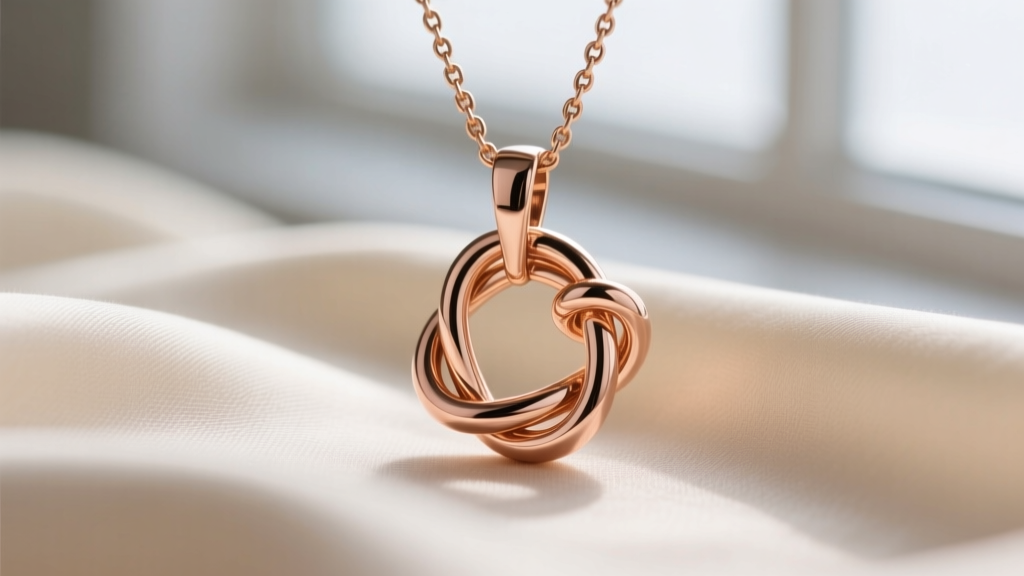
The Manufacturing Challenge: Annealing and Laser Welding
Creating a high-quality knot gold necklace involves more than just casting; it requires meticulous bench work. When a jeweler bends a straight wire of 18k gold into a knot, the metal work-hardens. If forced too far without relief, the gold will snap. To prevent this, master jewelers use a process called annealing—heating the gold to approximately 700°C and quenching it in water or alcohol. This realigns the crystal lattice, restoring the metal's malleability so the knot can be tied tightly without stress fractures.
Once the knot is formed, the loop must be closed. Historically, this was done using torch soldering, which required introducing a lower-karat solder alloy (often 10k or 8k) to ensure it melted before the main piece. In 2026, premium manufacturers have almost entirely transitioned to laser welding for knot closures. Laser welding fuses the exact same 14k or 18k gold alloy at the seam without adding foreign metals. This eliminates the risk of galvanic corrosion—a process where dissimilar metals in contact with sweat and chlorides create a micro-battery, leading to localized pitting and green skin discoloration.
Alternative Metals: Platinum and Palladium for Complex Knots
While gold is the traditional choice, platinum offers unique metallurgical advantages for highly intricate knot designs, such as interlocking Celtic knots or multi-loop love knots. Platinum (typically alloyed with 5% ruthenium or cobalt, known as 950 Platinum) has a lower Vickers Hardness than 14k gold but a significantly higher density and malleability.
Why Platinum Excels in Knot Designs
- No Metal Loss: When gold is scratched or polished, microscopic particles are removed. Platinum merely displaces metal, developing a patina without losing structural mass over time.
- Superior Tension Holding: Platinum's 'memory' and malleability allow it to be bent into incredibly tight, complex knot loops that will not spring back or loosen.
- Hypoallergenic Seams: Platinum is naturally white and hypoallergenic, meaning laser-welded seams require no rhodium plating, which often wears off at the high-friction intersection points of a gold knot.
However, platinum's density means a knot gold necklace of the exact same physical dimensions will weigh roughly 60% more if cast in 950 platinum, significantly increasing the raw material cost. Palladium (a platinum group metal) offers a lighter-weight, naturally white alternative that shares many of platinum's structural benefits, though it is notoriously difficult to cast and requires specialized bench jewelers to manipulate into knot forms.
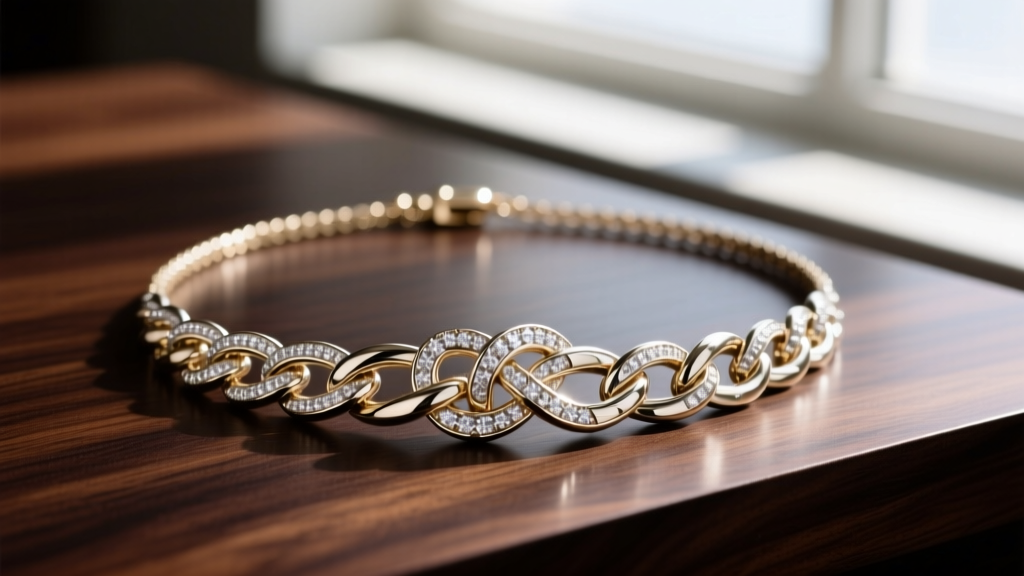
Structural Failure Modes to Inspect Before Buying
Even with the correct alloy, poor manufacturing can lead to premature failure. When evaluating a knot gold necklace, inspect the piece for these specific structural vulnerabilities:
- Apex Thinning: Check the outermost edge of the tightest bend in the knot. If the wire was stretched too far during bending without proper annealing, the metal will thin out, creating a weak point prone to snapping under sudden tension.
- Solder Joint Discoloration: Look closely at the seam where the knot loop closes. If you see a slight color mismatch or a dull line, traditional solder was used. Over time, this lower-karat seam will tarnish faster than the surrounding 18k or 14k gold.
- Bail Friction: The bail (the loop connecting the knot to the chain) experiences constant micro-friction. Ensure the bail is cast as a solid piece or securely laser-welded, rather than glued or lightly tension-fitted into the top loop of the knot.
Care and Maintenance for Work-Hardened Gold Knots
The intersecting loops of a knot necklace create tight crevices that trap sebum, dead skin cells, and environmental dust. This buildup not only dulls the gold's luster but can also accelerate localized corrosion if the alloy contains high copper (as in rose gold).
For routine cleaning, avoid ultrasonic cleaners if your knot necklace features any micro-pave diamonds or tension-set stones, as the high-frequency vibrations can shake them loose from their work-hardened settings. Instead, use a soft-bristled baby toothbrush with a mild solution of warm water and a few drops of phosphate-free dish soap. Gently agitate the bristles into the center of the knot where the metal crosses over itself. Rinse thoroughly and dry with a microfiber cloth to prevent water spots.
If your 18k white gold knot necklace begins to look yellowish at the intersection points, this is not a defect in the gold itself, but rather the rhodium plating wearing away due to friction against the chain and skin. A professional jeweler can easily re-plate the piece, restoring its bright, mirror-like finish. By understanding the metallurgy and structural demands of your jewelry, you can ensure your knot necklace remains a timeless, unbroken symbol of connection for generations.


