Anatomy of a Knotted Necklace Chain: Tensile Strength & Repair
Explore the structural engineering, metallurgy, and tensile strength of the knotted necklace chain. Expert guide on material grades and repair.

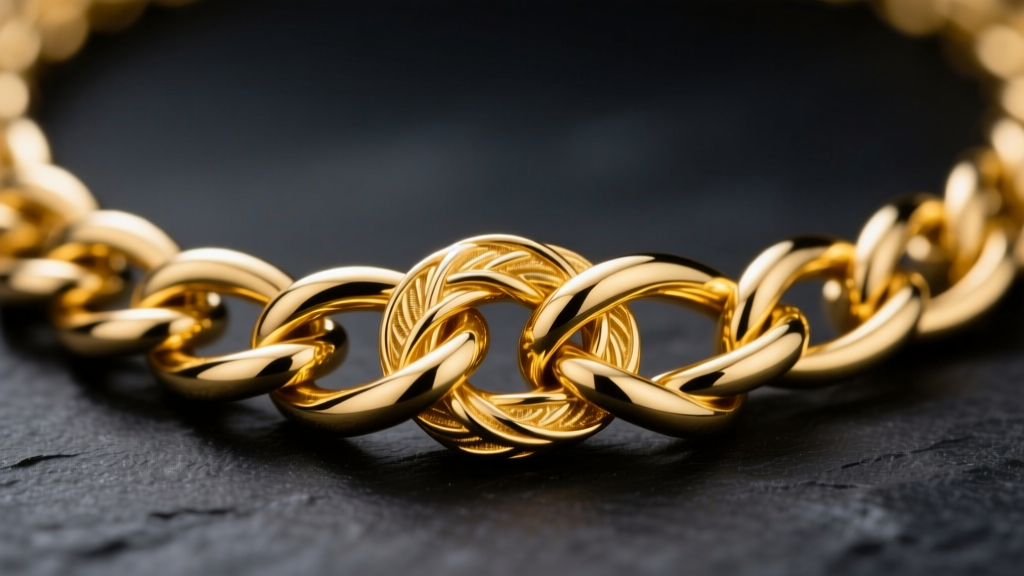
The Structural Dichotomy: Metal Weaves vs. Fiber Knotting
In the realm of fine jewelry, the term 'knotted necklace chain' represents a fascinating structural dichotomy. To the untrained eye, it may simply refer to a decorative metal chain featuring intricate, knot-like links. However, to a bench jeweler or gemologist, it equally encompasses the meticulous art of fiber-knotting between pearls and precious gemstones. Understanding the engineering, metallurgy, and tensile science behind both interpretations is critical for making informed purchasing decisions, executing proper maintenance, and preventing catastrophic jewelry failure.
This expert deep dive dissects the mechanical properties of metal knotted weaves—often categorized under cord or rope chain variants—and the material science of high-tensile fiber knotting used in bead stringing. By examining Vickers hardness ratings, alloy compositions, and synthetic cord tensile strengths, we can establish a definitive framework for evaluating the longevity and structural integrity of these essential jewelry components.
Metallurgy of Metal Knotted Chains
Metal knotted chains, frequently designed to mimic the fluid drape of textile cords, are manufactured through a complex process of wire drawing, weaving, and sometimes laser soldering. The structural integrity of a metal knotted necklace chain relies heavily on the specific alloy composition and its subsequent work-hardening treatment.
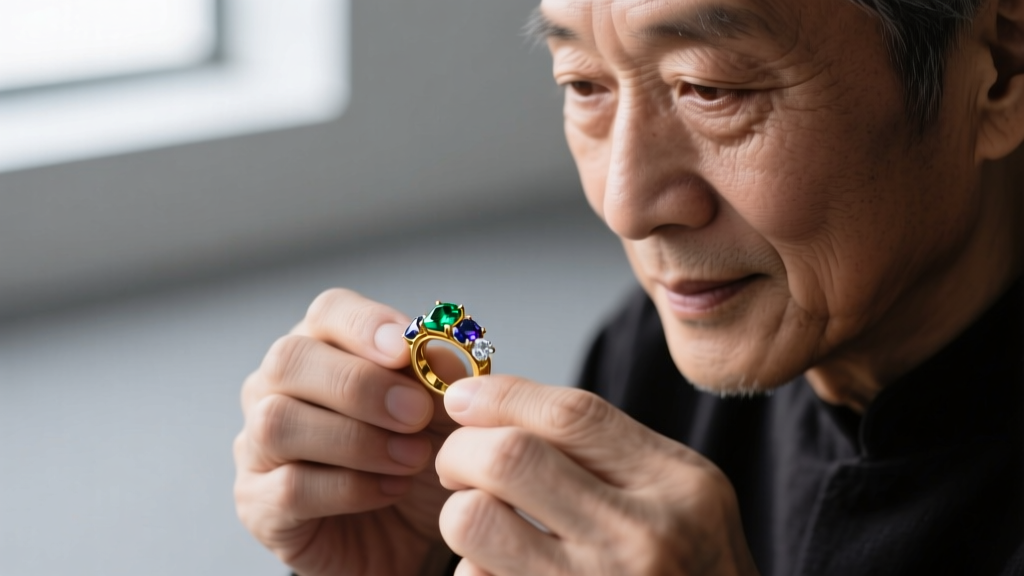
Alloy Composition and Vickers Hardness
The durability of gold chains is measured using the Vickers hardness (HV) scale. Pure 24k gold is exceptionally soft (approx. 25 HV), making it entirely unsuitable for the mechanical stress of a knotted chain weave. Therefore, master alloyers introduce specific hardening metals:
- 14k Yellow Gold (58.5% Au): Typically alloyed with silver, copper, and zinc. It achieves a Vickers hardness of roughly 130-140 HV, offering an optimal balance of tensile strength and malleability for complex knot weaves.
- 18k Yellow Gold (75% Au): Softer and more prone to deformation, averaging 110-115 HV. While it offers a richer color, an 18k knotted chain requires a thicker wire gauge (usually 1.2mm to 1.5mm minimum) to prevent structural stretching.
- Platinum 950 (Ruthenium alloy): Measuring around 130 HV, platinum possesses unique metallurgical properties. Unlike gold, which loses microscopic layers of metal when scratched or abraded, platinum merely displaces. This makes platinum knotted chains incredibly resilient to the friction inherent in interlocking link designs.
Work Hardening and Annealing
During the manufacturing of a knotted metal chain, the wire undergoes severe plastic deformation. This 'work hardening' increases the chain's tensile strength but makes it brittle. According to research presented at the Santa Fe Symposium on Jewelry Manufacturing Technology, manufacturers must carefully control the annealing process—heating the metal to a specific recrystallization temperature (e.g., 650°C for certain gold alloys) and quenching it—to relieve internal stresses without compromising the structural rigidity of the knot formations.
Fiber Tensile Science: Silk vs. Synthetic Cords
When discussing a knotted necklace chain in the context of pearls, jade, or heavy gemstone beads, the 'chain' is actually a high-tensile fiber cord secured with precision overhand knots. The spacing of these knots prevents bead-on-bead abrasion and ensures that if the strand breaks, only a single gemstone is lost.
The Evolution of Stringing Materials
Historically, natural silk was the undisputed standard for knotting. However, modern material science has introduced synthetic alternatives that drastically alter the tensile landscape. The Gemological Institute of America (GIA) notes that while natural silk offers unparalleled drape and traditional aesthetic value, it is highly susceptible to degradation from ultraviolet light, cosmetic chemicals, and human perspiration (which typically has a pH of 4.5 to 7.0, slowly dissolving protein-based fibers).
| Material Grade | Tensile Strength | Drape Quality | Abrasion & UV Resistance | Recommended Use |
|---|---|---|---|---|
| Griffin Natural Silk (Size 6) | ~12 lbs | Excellent | Poor (Degrades in 1-2 years) | Lightweight Akoya pearls |
| Nylon (Power Pro 10lb) | ~15 lbs | Good | Excellent (Highly durable) | Heavier South Sea pearls |
| Braided Kevlar Blend | ~40+ lbs | Stiff | Superior | Heavy gemstones, large beads |
| 18k Gold Metal Knot Chain | ~45 lbs | Fluid | Moderate (Prone to scratching) | Standalone metal necklaces |
The Critical Role of French Wire (Gimp)
The most vulnerable point of any fiber-knotted necklace chain is the termination point where the cord loops through the metal clasp. To prevent the metal edge from sawing through the fiber over time, expert stringers use 'French wire' or gimp. This is a micro-coiled wire, typically made of fine silver or gold-filled metal, with an outer diameter ranging from 0.3mm to 0.8mm. The cord passes through the hollow center of the coil, creating a sacrificial metal-on-metal friction point that preserves the structural integrity of the knot.
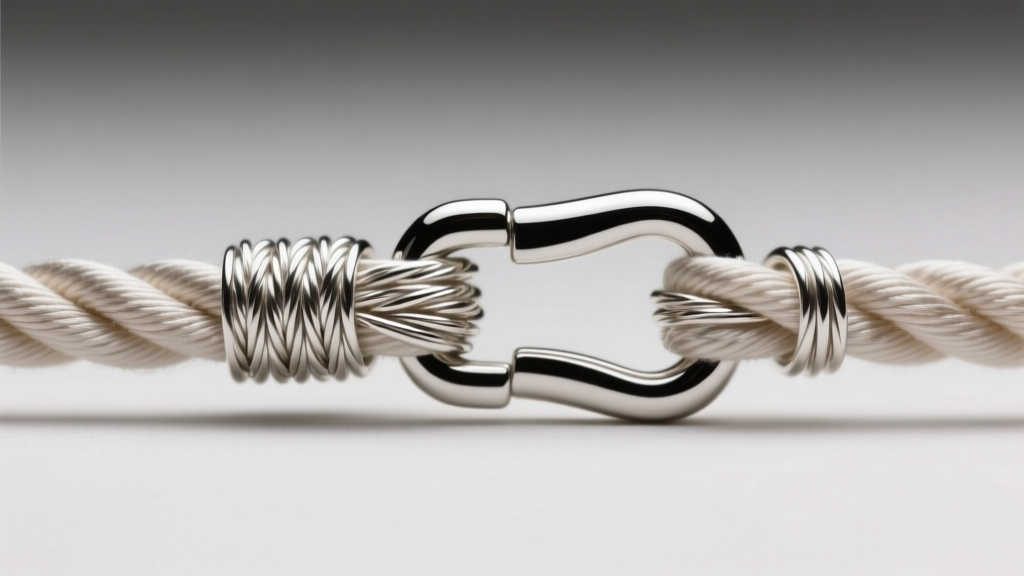
Failure Modes and Stress Fractures
Understanding how and why a knotted necklace chain fails is the cornerstone of preventive maintenance. The failure modes differ drastically between metal weaves and fiber strands.
Metal Chain Fatigue
In metal knotted chains, failure rarely occurs in the middle of a link. Instead, it happens at the 'knuckle'—the sharpest bend in the wire where stress concentrates. Repeated tension, such as catching the chain on clothing or sleeping in it, causes microscopic stress fractures. Furthermore, the jump ring connecting the chain to the clasp is a notorious failure point. If the jump ring is not soldered shut, lateral torque will pull the gap open, allowing the intricate knot weave to slip through and unravel.
Fiber Degradation and Stretch
For pearl and gemstone strands, failure is often preceded by visible stretching. Natural silk and nylon cords will elongate over time due to the cumulative weight of the beads and the absorption of skin oils. When the gaps between the knots become large enough for the beads to slide back and forth, the strand has reached critical structural failure. Continuing to wear a stretched knotted chain risks the cord snapping under the dynamic load of sudden movement.
Expert Maintenance and Repair Framework
Maintaining the structural integrity of your jewelry requires adherence to strict, material-specific protocols.
Metal Chain Repair: Laser vs. Torch
When a metal knotted chain snaps, traditional torch soldering is often too imprecise; the broad heat application can melt the delicate surrounding knots, fusing them into a solid, inflexible lump. Modern bench jewelers utilize laser welding. A laser welder concentrates a high-energy beam onto a microscopic focal point (often less than 0.5mm), melting a tiny piece of matching karat gold wire into the fracture without transferring heat to the adjacent links. This preserves the fluid drape of the knotted weave.
Fiber Restringing Intervals
There is no universal timeline for restringing a fiber-knotted necklace chain, as it depends entirely on wear frequency and environmental exposure. However, the industry standard framework dictates:
- Heavy Wear (Weekly): Restring annually using synthetic nylon or Kevlar blends.
- Moderate Wear (Monthly): Restring every 18 to 24 months.
- Heirloom/Light Wear: Inspect the knots under 10x magnification bi-annually. If the silk shows fraying or the bead holes exhibit a 'cone' shape from internal abrasion, immediate restringing is required.
By treating the knotted necklace chain not merely as an accessory, but as a precision-engineered assembly of metallurgy and tensile materials, collectors and wearers can ensure their pieces endure for generations without catastrophic failure.


