Knotted Necklace Engineering: Silk Grades, Tension, and Longevity
Discover the technical anatomy of a knotted necklace. We analyze silk thread grades, French wire finishing, and tension failure modes for fine jewelry.

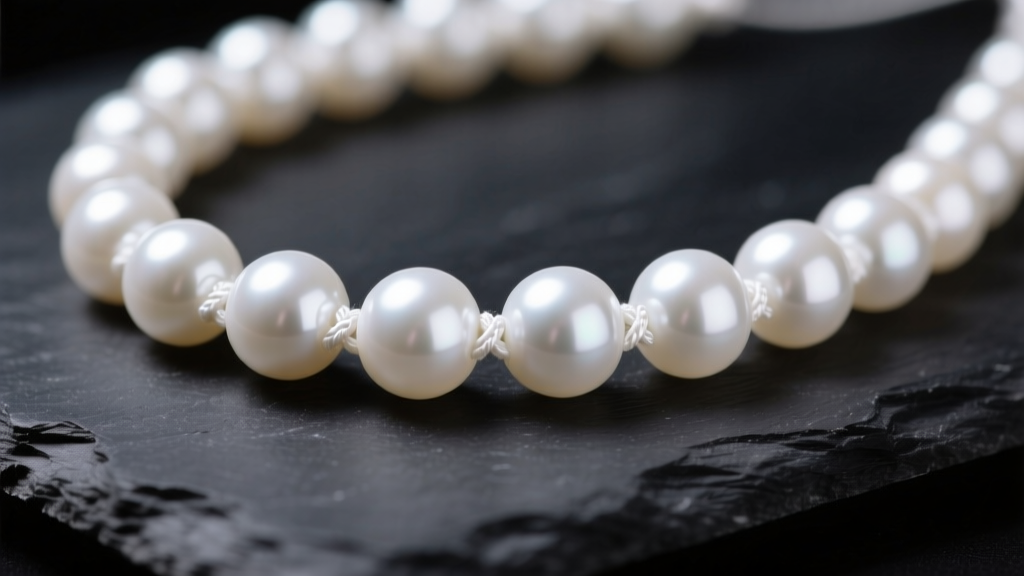
The Structural Purpose of Knotting
While often viewed as a purely aesthetic choice, the construction of a knotted necklace is fundamentally an exercise in mechanical engineering and material preservation. In high-end pearl and gemstone jewelry, knotting serves three critical structural purposes: abrasion prevention, catastrophic loss mitigation, and drape optimization. When hard gemstones or nacreous pearls rub against one another without a buffer, the friction gradually degrades the bead holes, leading to micro-chipping and the eventual destruction of the nacre or polish. By inserting a precisely tied knot between each bead, the jewelry maker creates a physical shock absorber that maintains the integrity of the drill holes over decades of wear.
Furthermore, a knotted necklace acts as a localized fail-safe. If a continuous strand of beads suffers a tensile failure (a snapped thread), the wearer risks losing the entire piece. With a properly knotted strand, a break results in the loss of a single bead, preserving the remainder of the investment. Finally, the cumulative flexibility provided by hundreds of micro-hinges (the knots) allows the necklace to conform fluidly to the clavicle, creating a superior drape that a rigid, unknotted wire or thick cord simply cannot achieve.
Silk Thread Grades and Tensile Strength
The industry standard for knotting fine pearls remains natural silk, specifically German-manufactured Griffin silk, which is graded by a numerical sizing system rather than standard denier. The selection of the correct silk gauge is a precise science; the thread must fill the bead's drill hole entirely to prevent lateral movement, yet remain pliable enough to tie a secure, microscopic knot. If the silk is too thin, the bead will wobble, causing the thread to saw against the interior of the drill hole. If the silk is too thick, the friction during the knotting process will fray the fibers before the necklace is even completed.
| Bead Hole Size (mm) | Griffin Silk Size | Thread Diameter (mm) | Recommended Application |
|---|---|---|---|
| 0.35 - 0.40 | #0 or #1 | 0.15 - 0.20 | Small seed pearls (2-3mm) |
| 0.45 - 0.50 | #2 or #4 | 0.25 - 0.30 | Standard Akoya pearls (5-6mm) |
| 0.60 - 0.70 | #6 or #8 | 0.40 - 0.50 | Larger Akoya / Freshwater (7-8mm) |
| 0.80 - 1.00 | #10 or #12 | 0.60 - 0.75 | South Sea / Tahitian (10mm+) |
| 1.10 - 1.50 | #14 or #16 | 0.85 - 1.05 | Heavy gemstone beads (Amber, Coral) |
Master stringers calculate the tensile load based on the specific gravity of the beads. A 32-inch opera-length strand of dense 12mm South Sea pearls exerts significant downward gravitational force on the lower knots, necessitating a heavier gauge silk and a doubled-thread technique at the clasp anchor points.
The French Wire Finish: Preventing Clasp Abrasion
The most vulnerable point of any knotted necklace is the termination point where the silk loops through the metal clasp. Metal, even polished 14k gold or platinum, acts as a micro-serrated blade against organic silk fibers. Over time, the repetitive tension of putting on and taking off the necklace causes the metal to saw through the thread. To prevent this, expert jewelers employ a component known as French wire, or gimp.
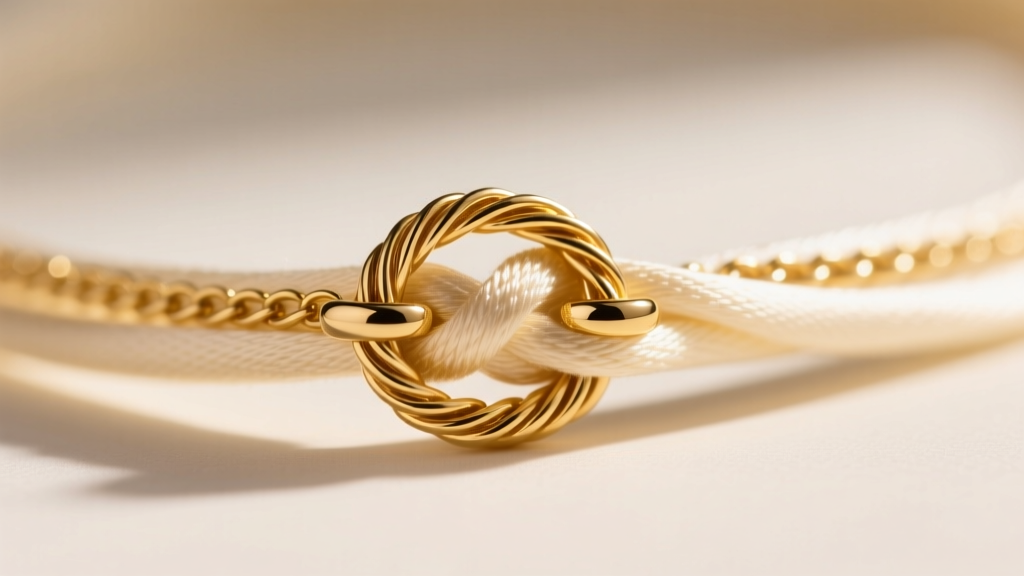
French wire is a microscopically fine, hollow coil of metal (usually silver, gold-filled, or solid gold) that resembles a tiny spring. The silk thread is passed through the hollow center of the coil before looping through the clasp ring. This ensures that the metal clasp rubs exclusively against the sacrificial metal coil rather than the delicate silk. In 2026, while some mass-market manufacturers attempt to cut costs by using clear nylon tubing or omitting the finish entirely, a genuine French wire finish remains the definitive hallmark of a high-end, expertly crafted knotted necklace.
Synthetic vs. Natural Silk in 2026
As we navigate the jewelry market in 2026, the debate between natural silk and high-tenacity synthetic threads (such as ultra-high-molecular-weight polyethylene or bonded nylon) continues. Synthetic threads offer vastly superior tensile strength and are entirely impervious to moisture, sweat, and UV degradation. For heavy, large-hole gemstone beads like turquoise or lapis lazuli, synthetics are often the superior technical choice.
However, for fine nacreous pearls, natural silk remains the undisputed champion among master stringers. Synthetics lack the specific coefficient of friction required to hold a microscopic knot tightly against a smooth pearl without slipping. Furthermore, synthetic threads possess a "memory" and stiffness that prevents the necklace from achieving the fluid, water-like drape that collectors demand from a premium knotted necklace. The slight elasticity of natural silk allows the knots to seat perfectly flush against the bead, a mechanical property that modern synthetics have yet to replicate flawlessly.
Knotting Techniques: Hand vs. Tool
The physical act of tying the knots requires immense manual dexterity and specialized techniques. There are three primary methods utilized in the trade:
- The Awl Method: The traditional, purist approach. The stringer uses a fine steel awl to push the knot down flush against the bead while pulling the thread taut. This yields the tightest, most uniform knots but requires years of muscle memory to avoid piercing the silk thread with the sharp awl tip.
- The Tweezers Method: Utilizing fine-tipped, serrated jewelers' tweezers to slide the knot into place. This is faster than the awl method and reduces the risk of thread damage, though it can sometimes result in slightly looser knots if the tension is not perfectly managed.
- The Bead Knotter Tool: A mechanical, pistol-grip device that automates the knotting process. While highly efficient for commercial production and uniform bead sizes, master artisans often avoid it for graduated strands or irregular baroque pearls, as the tool cannot dynamically adjust to the microscopic variations in bead geometry.
Failure Modes and Preventative Maintenance
Despite the structural brilliance of a knotted necklace, the organic nature of silk makes it susceptible to specific environmental failure modes. Understanding these mechanisms is crucial for long-term preservation.
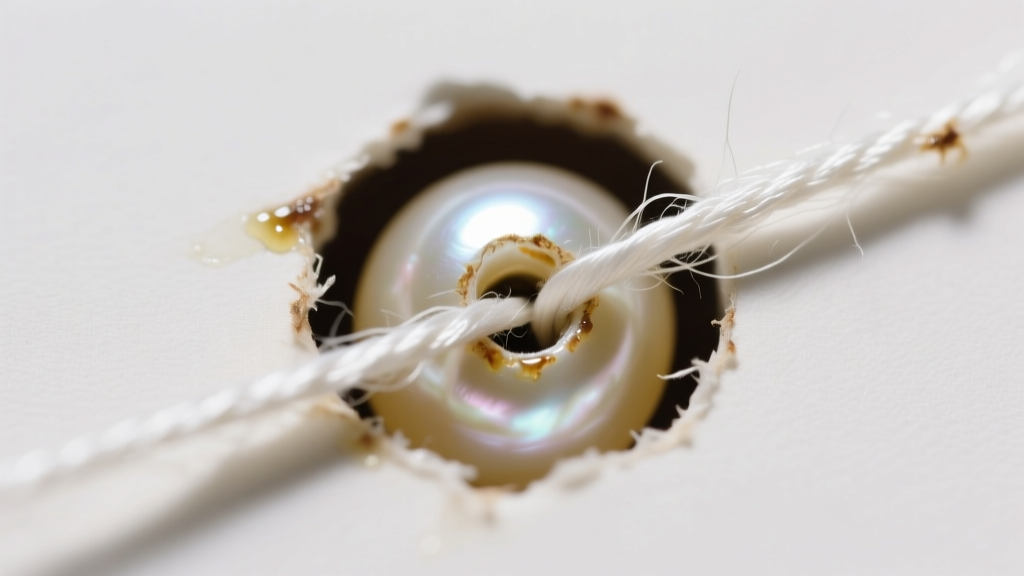
Expert Insight: The most common cause of catastrophic failure in pearl necklaces is not mechanical snapping, but the chemical degradation of silk proteins via cosmetic oils and acidic perspiration. Silk is a protein fiber; exposure to the pH levels found in human sweat and the chemical solvents in perfumes causes the fibroin proteins to denature and lose tensile strength.
To mitigate these risks, the Gemological Institute of America (GIA) strongly advises wiping pearls with a soft, damp cloth after every wear to remove acidic residues before they can seep into the drill holes and attack the silk. Furthermore, necklaces should never be hung on hooks for long-term storage. Hanging a heavy strand places continuous, static tension on the upper knots, causing the silk to permanently stretch and resulting in unsightly "gapping" between the beads. Always store a knotted necklace flat in a soft pouch.
Pricing and Valuation Metrics
When evaluating the cost of a knotted necklace, or the service of restringing an estate piece, pricing is dictated by the linear inch and the complexity of the bead geometry. As of 2026, professional master restringing services typically range from $4.00 to $8.00 per inch for standard, uniform pearls. However, this metric shifts dramatically for complex designs.
Graduated strands, where the bead size changes every few millimeters, require the stringer to constantly recalculate tension and potentially switch silk gauges mid-strand, pushing the price to $10.00 to $15.00 per inch. Multi-strand knotted necklaces with complex interwoven patterns or integrated gemstone spacers demand bespoke engineering and can easily exceed $500 in labor costs alone. When purchasing a vintage knotted necklace, always inspect the spaces between the pearls. If you can slide a fingernail between the knot and the bead, the silk has stretched beyond its yield point, and the piece requires immediate professional restringing to prevent catastrophic failure.
For further guidelines on evaluating jewelry craftsmanship and maintenance, resources provided by Jewelers of America offer excellent baseline standards for consumer care and professional servicing expectations. Ultimately, a meticulously crafted knotted necklace is not just an accessory; it is a masterclass in micro-engineering, designed to protect and showcase nature's most delicate gems for generations.