Knotting Necklace Buying Guide: Cord Types, Tension & Quality
Discover what to look for in a knotting necklace. Learn about silk vs. nylon cords, French wire finishes, and bead spacing in our expert buying guide.

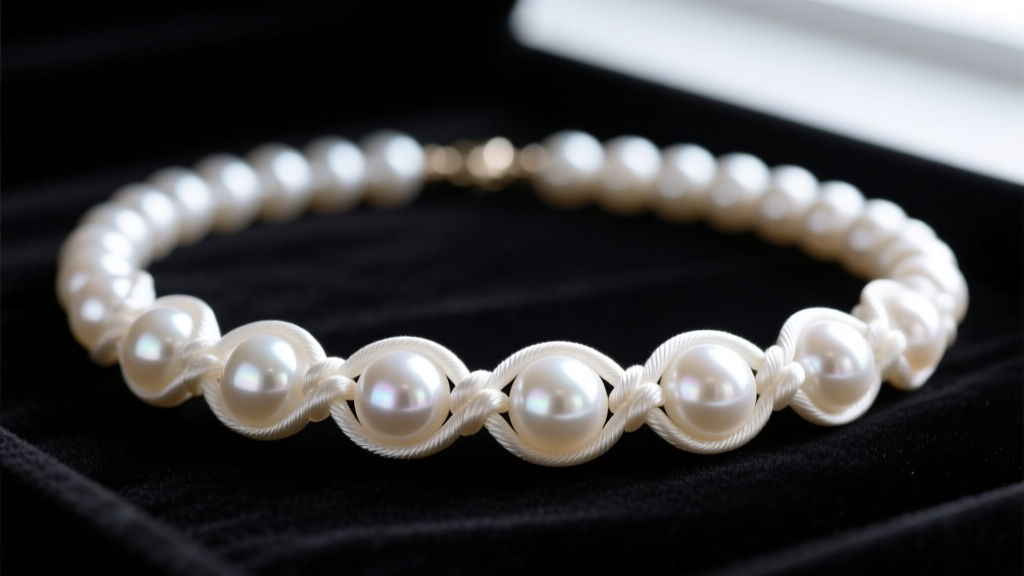
The Anatomy of a Knotted Strand: Beyond the Beads
When investing in fine beadwork, the untrained eye focuses entirely on the luster of the pearls or the color of the gemstones. However, the true structural integrity and longevity of the piece rely on the hidden architecture: the cord and the knots. A traditional knotting necklace is a masterclass in preventative jewelry design. By placing a hand-tied knot between every single bead, the artisan ensures that if the strand ever snaps, you lose only one bead rather than the entire necklace. Furthermore, these knots prevent the beads from rubbing against one another, preserving delicate nacre and soft gemstone surfaces.
As of 2026, advancements in synthetic polymers have challenged the historical dominance of natural silk, giving buyers more options than ever before. Yet, not all stringing materials are created equal. This comprehensive buying guide will teach you how to evaluate cord materials, assess knot tension, and identify the hallmarks of master-level finishing techniques.
Cord Materials: Silk vs. Nylon vs. Polyamide
The foundation of any knotting necklace is the thread. The material dictates the drape, the durability, and the required maintenance schedule. Here is a deep dive into the three primary materials used by master stringers today.
1. Natural Silk (The Gold Standard)
For centuries, 100% natural silk has been the undisputed champion for pearl and high-end coral necklaces. Silk is a protein fiber that offers an unparalleled, fluid drape, allowing the necklace to conform perfectly to the collarbone. The industry benchmark is German-made Griffin silk, which is graded by numerical sizes rather than millimeters. For example, a Size 6 (0.70mm) is standard for 6.0mm to 7.0mm pearls, while a Size 8 (0.80mm) is used for 8.0mm to 9.0mm beads.
The Drawback: Silk is highly susceptible to environmental degradation. According to the Gemological Institute of America (GIA), the acidic nature of human sweat, combined with cosmetics and perfumes, breaks down the peptide bonds in silk fibers over time. A silk knotting necklace worn daily against the skin must be professionally restrung every 12 to 18 months.
2. Nylon and Polyamide (The Modern Workhorse)
Synthetic threads, such as those detailed in the Beadalon Stringing Materials Guide, offer immense tensile strength and complete waterproofing. Nylon does not stretch when wet and is impervious to the acids in human sweat. It is the ideal choice for heavy gemstone beads (like quartz or agate) that would saw through natural silk over time.
The Drawback: Nylon lacks the buttery drape of silk. A knotting necklace made entirely of thick nylon can feel stiff and may not lay flat against the chest. Additionally, if the bead holes are not perfectly smooth, synthetic fibers can act like a microscopic saw blade, eventually fraying.
3. Hybrid Threads (Silk-Coated Synthetics)
The best innovation in modern stringing is the hybrid thread—a high-tensile nylon or polyamide core wrapped in a natural silk exterior. This provides the luxurious drape and traditional aesthetic of silk with the unbreakable, stretch-resistant core of a synthetic. If you are buying a high-value knotting necklace today, asking the jeweler if they use a hybrid core is a hallmark of an informed buyer.
Material Comparison & Maintenance Matrix
| Cord Material | Best Use Case | Drape Quality | Restringing Interval |
|---|---|---|---|
| 100% Natural Silk | Pearls, Coral, Amber | Exceptional / Fluid | 12 - 18 Months |
| 100% Nylon | Heavy Gemstones, Glass | Stiff / Structured | 3 - 5 Years |
| Silk-Coated Polyamide | All-Purpose Fine Jewelry | Very Good / Soft | 2 - 3 Years |
| Wire (Non-Knotted) | Heavy Crystal, Metals | Rigid | Inspect Annually |
Evaluating Knot Tension and the "Gapping" Flaw
The most critical aspect to inspect when purchasing a knotting necklace is the tension of the knots. A master stringer uses a specialized awl to push the knot flush against the bead before pulling it tight. When done correctly, the knot acts as a perfect, snug bumper.
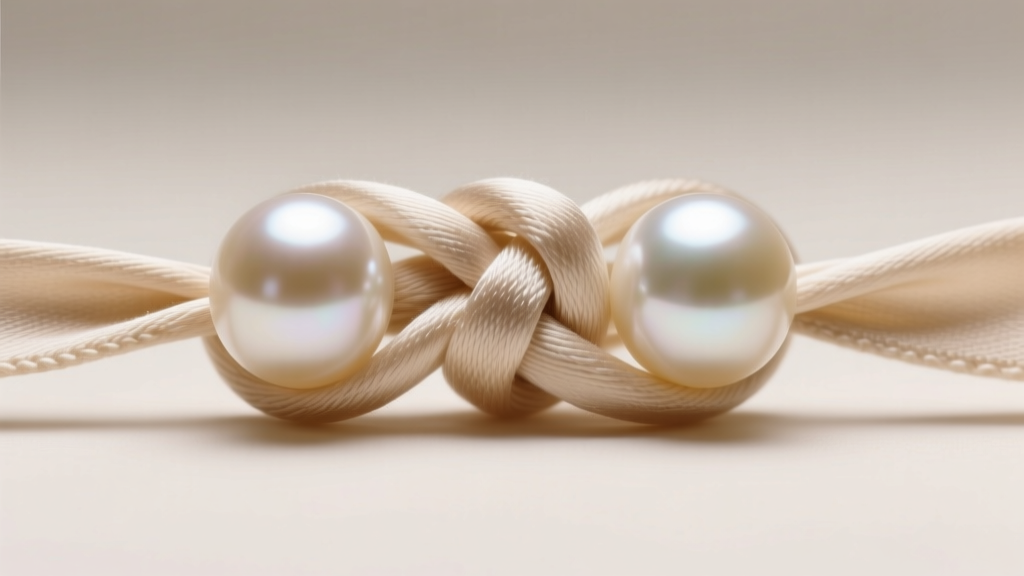
However, natural silk stretches significantly during the knotting process and continues to stretch during the first few weeks of wear. Lower-tier manufacturers do not pre-stretch their silk. As a result, you will often see "gapping"—a visible space between the knot and the bead. Gapping is not just an aesthetic flaw; it allows the beads to slide and bang against one another, defeating the primary purpose of the knots. When inspecting a strand in a jewelry case, run your thumb gently over the knots. They should feel like a continuous, tight chain. If you can slide a piece of paper between the knot and the bead, the necklace was strung improperly or is overdue for restringing.
The Hallmark of Luxury: French Wire Finishes
Turn your attention to the clasp of the knotting necklace. Where the silk thread loops through the metal ring of the clasp, it is highly vulnerable. Metal rubbing against silk will eventually saw through the fibers, leading to a catastrophic break. To prevent this, high-end jewelers use a component called French wire (also known as gimp).
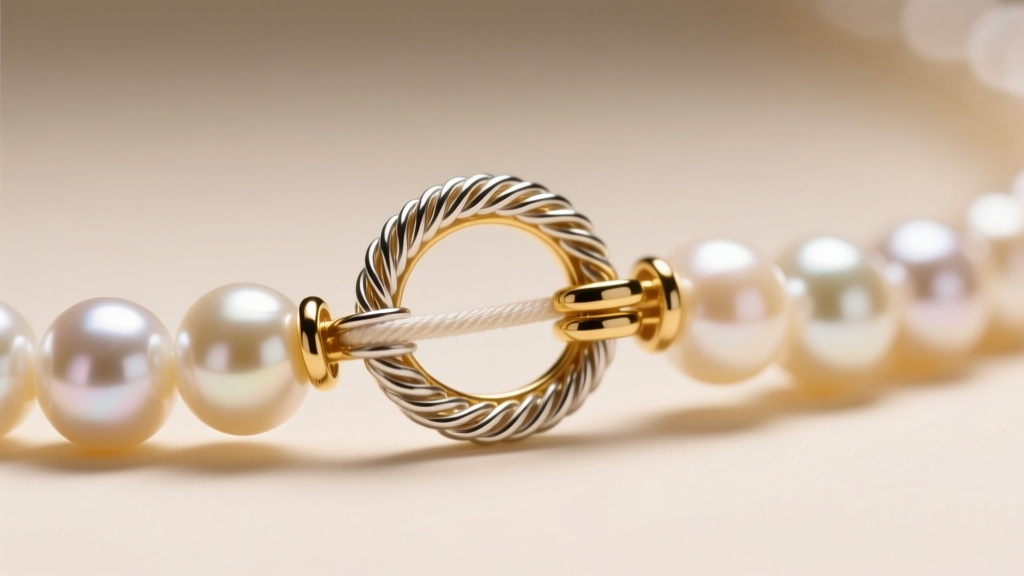
French wire is a microscopic, hollow coil of fine metal (usually sterling silver or gold-filled) that the silk thread passes through before looping through the clasp. It acts as a sacrificial metal shield. If you are buying a fine pearl or gemstone knotting necklace and the silk is looped directly through the metal clasp without this protective coiled wire, walk away. The omission of French wire is a universal indicator of mass-produced, low-quality stringing that will inevitably fail at the clasp point.
The Buyer's Inspection Checklist
Before finalizing your purchase, run the strand through this rapid, five-point physical inspection:
- The Drape Test: Hold the necklace by the clasp and let it hang. It should fall in a smooth, continuous "U" shape without rigid kinks or angular bends.
- The Tension Check: Inspect the first and last three knots near the clasp. These endure the most friction and are the first to show gapping or fraying.
- The Flush Test: Look closely at the bead holes. The knots should be perfectly centered. Off-center knots indicate that the bead holes were drilled at an angle, which will cause premature wear on the cord.
- The Clasp Security: Ensure the French wire is tightly coiled and does not slide back and forth over the metal clasp ring.
- The Color Match: The thread color should perfectly match the body color or overtone of the beads. Using bright white silk on cream-colored pearls creates a jarring visual contrast that cheapens the appearance of the necklace.
Maintenance and the "Stretch Test"
Even the finest knotting necklace requires vigilant aftercare. Never sleep, shower, or swim in a knotted strand. Water weakens the fibers, and the trapped moisture inside the bead holes can cause the silk to rot from the inside out.
To determine if your existing necklace needs professional restringing, perform the "Stretch Test." Hold a 6-inch section of the necklace taut between your hands and pull gently. If the thread elongates by more than 5% to 10%, or if you hear a faint "creaking" sound from the fibers, the structural integrity is compromised. Take it to a certified bench jeweler immediately. Remember, the cost of restringing is a fraction of the cost of replacing lost gemstones or pearls scattered across a hardwood floor.


