Kraft Macaroni Necklace: Material & Sealant Guide
Explore the material science behind a durable kraft macaroni necklace. Compare pasta substrates, sealants, and cordage for professional craft jewelry.

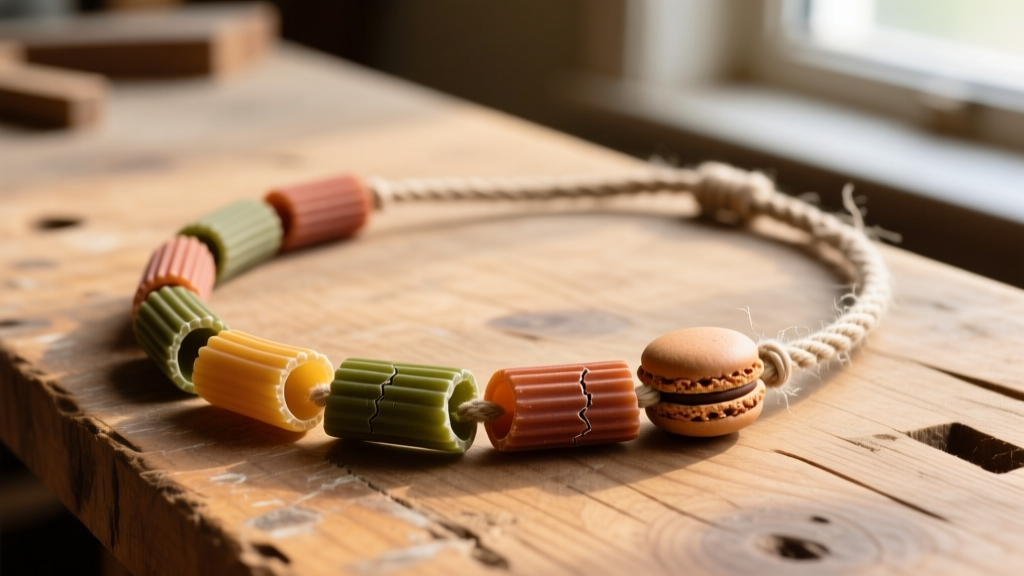
The Evolution of the Classic Pasta Jewel
In the 2026 sustainable jewelry movement, upcycled and nostalgic bio-jewelry has transcended its childhood camp origins. The classic kraft macaroni necklace is no longer just a fleeting arts-and-crafts project; it is a study in organic material science, starch preservation, and structural engineering. When working with extruded durum wheat semolina—the primary component of traditional Kraft brand macaroni—crafters must navigate the hygroscopic nature of starch. Without proper material selection and chemical sealing, a pasta-based necklace will absorb ambient moisture, lose its structural integrity, and eventually degrade. This guide breaks down the exact material properties, sealant chemistries, and cordage tensile strengths required to engineer a professional-grade, wearable kraft macaroni necklace.
Substrate Analysis: Choosing Your Pasta Base
Not all pasta is created equal when it comes to jewelry fabrication. The extrusion process, starch density, and protein content dictate how well the substrate will hold dye and resist cracking under the weight of a sealant. While the traditional kraft macaroni necklace relies on classic durum wheat elbows, modern crafters often experiment with alternative substrates to achieve different drape weights and dye absorptions.
| Substrate Type | Base Material | Porosity & Dye Uptake | Structural Density | Best Use Case |
|---|---|---|---|---|
| Classic Elbow (Kraft) | Durum Wheat Semolina | High (Excellent for alcohol inks) | Medium (Prone to snapping if bent) | Traditional nostalgic designs, lightweight layering |
| Gluten-Free Elbow | Rice & Corn Blend | Low (Requires extended dye soaking) | Low (Highly brittle, high failure rate) | Not recommended for durable jewelry |
| Legume Pasta | Chickpea / Red Lentil | Medium (Yields muted, earthy tones) | High (Dense, heavy, durable) | Statement pendants, heavy-gauge cordage |
According to material analyses of semolina extrusion, the high gluten protein network in durum wheat creates a rigid matrix that holds its tubular shape well after sealing. However, this same rigidity means that classic elbows have low flexural strength; they will snap rather than bend if subjected to lateral torque.
Dye Penetration and Colorfastness
Achieving vibrant, fade-resistant color in a starch-based substrate requires understanding solvent evaporation and pigment binding. Liquid watercolors and food coloring rely on water as a carrier. Because dried pasta is highly hygroscopic, water-based dyes can cause the starch granules to swell and gelatinize slightly, leading to a gummy surface that refuses to accept sealants later.
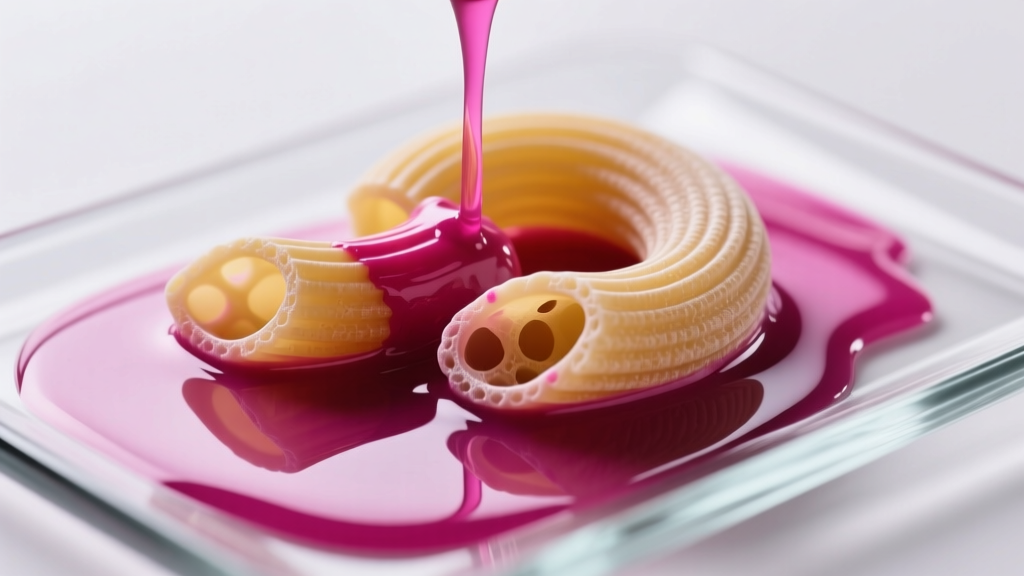
The professional standard for dyeing a kraft macaroni necklace is alcohol ink. The isopropyl alcohol carrier flash-evaporates within seconds, depositing concentrated pigment deep into the microscopic pores of the semolina without introducing moisture. For a batch of 50 elbows, submerging the pasta in 2 ounces of 99% isopropyl alcohol mixed with 15 drops of high-pigment alcohol ink for exactly 4 minutes yields a uniform, colorfast saturation that will not bleed when top-coated with resin.
Sealant Chemistry: Moisture and Pest Resistance
The most critical point of failure in bio-jewelry is moisture ingress. Unsealed starch is a primary food source for pantry pests and will rapidly soften in high-humidity environments. Selecting the correct topcoat is non-negotiable for a wearable piece.
PVA and Acrylic Emulsions (e.g., Mod Podge)
While accessible, Polyvinyl Acetate (PVA) sealants remain water-soluble to some degree even after curing. In the high-humidity conditions of human skin contact, PVA can become tacky, attracting dust and eventually clouding. It is best reserved for decorative, non-wearable display pieces.
Water-Based Polyurethane
Polycrylic or water-based polyurethane offers a harder shell than PVA and dries clear without the yellowing associated with oil-based variants. It requires 3 to 4 thin coats, with a 2-hour curing window between layers. The resulting finish is satin to semi-gloss and provides adequate moisture resistance for occasional wear.
UV-Curable Resin
For a glass-like, impermeable barrier, UV resin is the superior choice in 2026. Unlike two-part epoxy resins that require precise 1:1 volumetric mixing and generate exothermic heat (which can warp thin pasta walls), UV resin cures in 60 to 90 seconds under a 36W UV lamp. As noted in comprehensive resin guides, UV formulations create a highly cross-linked polymer network that is entirely waterproof, scratch-resistant, and inert once cured. Applying a single, even coat of UV resin to each dyed elbow and curing it on a silicone mat yields a professional, high-gloss finish that locks out moisture and pests permanently.
Cordage and Tensile Requirements
The stringing material must complement the organic aesthetic of the kraft macaroni necklace while providing sufficient tensile strength to support the weight of the sealed pasta. Standard cotton thread lacks the abrasion resistance required to survive the sharp, extruded edges of macaroni elbows, which can act like microscopic saws against soft fibers over time.
- 1.5mm Waxed Cotton Cord: The wax coating fills the interstitial gaps in the cotton braid, increasing abrasion resistance and providing a high-friction surface that holds overhand and surgeon's knots securely. Tensile strength averages 15-20 lbs, more than adequate for standard necklace lengths.
- 0.8mm Nylon Cord: Offers a sleeker, more modern drape with a tensile strength of roughly 10 lbs. However, nylon is highly slippery. Knots must be secured with a micro-drop of cyanoacrylate (super glue), and the ends must be melted with a thread burner to prevent fraying.
- 2mm Hemp Twine: Provides a deeply rustic, eco-friendly aesthetic. Hemp is naturally resistant to mold and UV degradation, making it an excellent pairing for outdoor or festival wear, though it lacks the refined drape of waxed cotton.
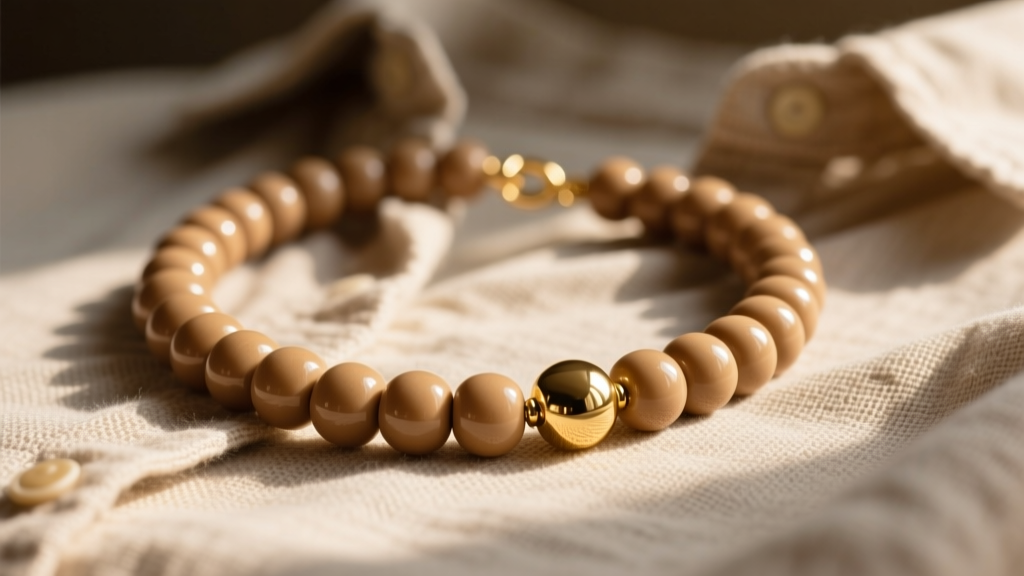
For professional finishing, integrating a metal clasp rather than relying on a tied slip-knot elevates the piece. According to jewelry findings experts, using a fold-over cord end with a built-in loop and a 5mm brass barrel clasp provides a secure, polished closure that protects the cord ends from fraying and sweat degradation.
Troubleshooting Common Material Failures
Even with precise material selection, crafters may encounter specific structural issues during assembly. Here is how to diagnose and resolve them:
Sticky Residue Post-Sealing
Cause: Incomplete curing of UV resin due to pigment opacity blocking UV light penetration, or applying the resin in a high-humidity environment which causes 'amine blush' in certain formulations.
Solution: Ensure your alcohol ink dye is fully flash-dried before sealing. Cure the necklace under a 36W or higher UV lamp for a full 120 seconds per side. Wipe any residual tackiness with 99% isopropyl alcohol.
Cord Snapping at the Elbow Edge
Cause: The extruded edge of the macaroni is sharp and abrasive, slowly cutting through the cord fibers during wear.
Solution: Before dyeing, use a fine-grit (400) sanding sponge to lightly bevel the inner and outer rims of each elbow. This removes the microscopic burrs left by the brass extrusion dies without altering the overall shape of the pasta.
Dye Bleeding into the Sealant
Cause: Using a solvent-based sealant (like certain spray lacquers) over alcohol ink, which reactivates the dye and causes it to run.
Solution: Always pair alcohol inks with a 100% solids UV resin or a water-based polyurethane. Never use aerosol acrylic sprays, as the propellants and solvents will instantly smear the hand-dyed finish.
Final Assembly Framework
To construct a balanced 18-inch kraft macaroni necklace, pre-cut your 1.5mm waxed cotton cord to 24 inches to allow for knotting and clasp attachment. Thread the sealed, dyed elbows onto the cord, alternating with 4mm brass spacer beads to prevent the pasta edges from rubbing against one another. This not only protects the resin coating from micro-scratches but also introduces a metallic element that bridges the gap between childhood craft and contemporary sustainable fashion. Secure the ends with fold-over cord crimps, attach a jump ring and lobster clasp, and apply a final micro-drop of jeweler's epoxy to the crimp interior for permanent adhesion.


