Lamar Jackson Necklace Troubleshooting: Fixing Fit, Tangles & Wear
Fix common issues with your Lamar Jackson necklace. Learn to stop layered chains from tangling, upgrade weak clasps, and prevent cheap replicas from tarnishing.
The Anatomy of a Lamar Jackson Necklace Setup
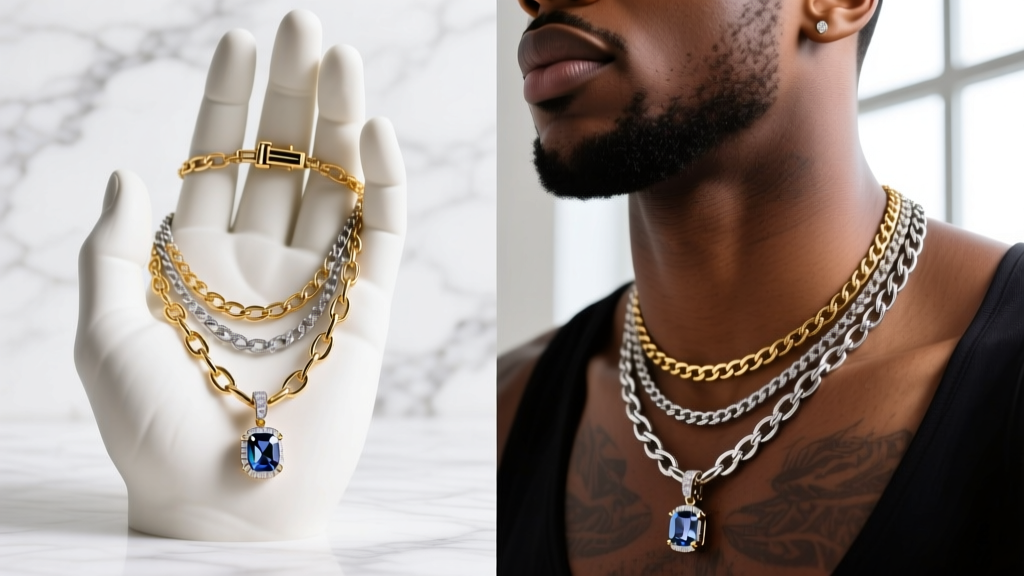
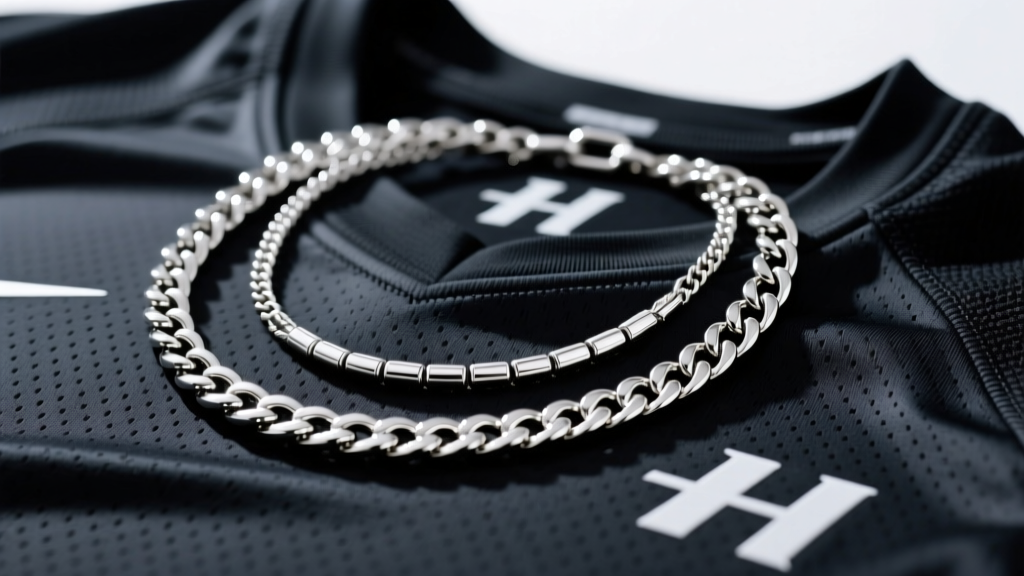
Lamar Jackson has undeniably reshaped the landscape of men's sports jewelry. From his MVP celebrations to his iconic pre-game tunnel fits, the Baltimore Ravens quarterback popularized a specific, high-impact layering technique. As we analyze the 2026 NFL season tunnel trends, the 'Lamar look' remains the gold standard for athletic jewelry: a thick, iced-out Cuban link chain paired with a mid-weight tennis or rope chain, often anchored by a custom number '8' or cross pendant.
However, fans and style enthusiasts attempting to replicate this exact stack frequently encounter three major mechanical and metallurgical failures: chronic chain tangling, clasp snapping under pendant weight, and rapid tarnishing from 'green neck' syndrome. Troubleshooting your Lamar Jackson necklace setup requires moving beyond basic styling advice and understanding the physics of chain friction, load-bearing clasp mechanics, and the electrochemistry of sweat-resistant alloys.
Troubleshooting Problem 1: The Layering Tangle Nightmare
The most common complaint among fans wearing a layered Lamar Jackson necklace stack is that the chains knot together within minutes of movement. This is not a matter of bad luck; it is a predictable failure of rotational friction and link geometry.
The Friction Fix: Chain Gauge and Width Ratios
Tangling occurs when the thinner chain's links are small enough to slip through the inner aperture (the empty space) of the thicker chain's links, creating a mechanical lock. For example, if you pair a 10mm Cuban link (which typically has an inner aperture of about 3.5mm to 4mm) with a 5mm rope chain, the rope chain will constantly slip through the Cuban links and knot.
The 40% Rule: To achieve a tangle-free drape, the secondary chain must be at least 40% narrower than the inner link aperture of the primary chain. According to GQ's layering guidelines, varying the texture and weight is crucial, but the mathematical width ratio is what actually prevents friction locks.
- Primary Chain (The Anchor): 12mm to 14mm Cuban Link. (Inner aperture approx. 4.5mm).
- Secondary Chain (The Layer): 3mm to 4mm Tennis or Box Chain. (Too wide to slip through the 4.5mm gap).
- Pendant Chain: If adding a heavy #8 pendant, use a rigid 5mm Franco chain, which lacks the rotational flexibility to knot.
Troubleshooting Problem 2: Clasp Failure on Heavy Pendants
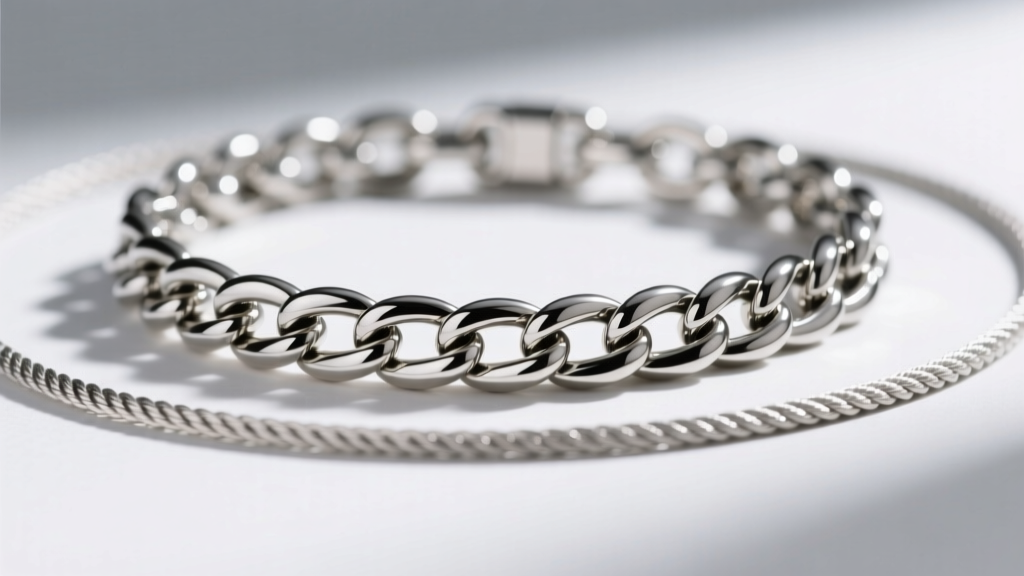
A signature element of the Lamar Jackson necklace aesthetic is the oversized, diamond-encrusted pendant. Whether it is a custom MVP trophy, a number 8, or a large cross, these pendants carry significant mass. Many replica and mid-tier jewelry brands equip heavy chains with standard 8mm lobster clasps to save on manufacturing costs. This is a critical failure point.
When a 60-gram pendant swings with the momentum of walking or running, it generates kinetic torque that easily bends the thin wire gate of a standard lobster clasp, causing the chain to snap and the pendant to drop.
Clasp Load-Bearing Matrix
To properly troubleshoot your setup, inspect your current clasp and upgrade based on the total weight of your chain and pendant. Consult the table below to match your hardware to the correct load-bearing clasp.
| Clasp Type | Max Weight Limit | Best For | Primary Failure Mode |
|---|---|---|---|
| Standard Lobster (8mm) | < 15g | Lightweight 3mm Tennis Chains | Spring mechanism fatigue |
| Reinforced Lobster (12mm) | < 45g | Medium 6mm Rope Chains | Clasp gate bending from torque |
| Box Clasp w/ Safety Latch | > 100g | Heavy 12mm+ Cuban Links & Pendants | Tongue metal fatigue (rare) |
The Fix: Take your chain to a local jeweler and request a 'box clasp with a double safety latch' soldered onto the ends. The box clasp uses a folding tongue that locks into a square housing, distributing the pendant's kinetic energy across the entire metal housing rather than relying on a tiny, vulnerable spring.
Troubleshooting Problem 3: Tarnishing and 'Green Neck' Syndrome
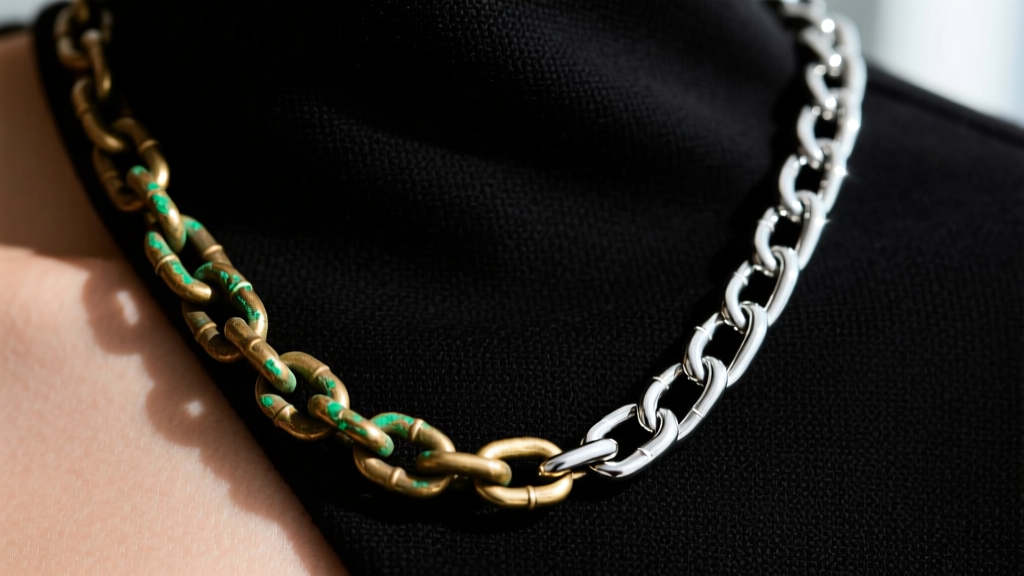
Nothing ruins a premium tunnel-fit aesthetic faster than a necklace turning your neck green. This issue plagues fans who purchase budget-friendly 'iced-out' replicas made from brass or zinc alloy bases with a microscopic layer of gold flash plating.
The Electrochemistry of Sweat and Alloys
Human sweat is mildly acidic, typically ranging from a pH of 4.5 to 6.0, and contains lactic acid, urea, and chloride ions. When this acidic moisture penetrates the porous flash plating of a cheap replica, it reaches the copper-rich brass base. The acid reacts with the copper to produce copper chloride and copper carbonate—the exact chemical compounds responsible for the green stain on your skin.
To solve this permanently, you must upgrade your base metals. The Gemological Institute of America (GIA) notes that gold alloys and alternative metals must be chosen based on their environmental resistance, especially for daily wear.
- Avoid: Gold Vermeil or Gold-Plated Brass. The plating will wear off in 3 to 6 months with daily athletic wear, exposing the reactive base metal.
- Upgrade to 316L Surgical Stainless Steel: This alloy contains molybdenum, which forms a passive, invisible oxide layer on the surface. This layer is highly resistant to the chloride ions found in human sweat, making it completely immune to the 'green neck' effect, even during intense workouts.
- The Premium Route (Solid 10k or 14k Gold): While 24k gold is too soft for heavy Cuban links, 10k and 14k gold are alloyed with silver, zinc, and copper in controlled ratios that resist severe tarnishing, provided they are polished regularly.
Sizing Framework: Getting the Jersey-Ready Drop
The final troubleshooting hurdle is the drape. Lamar Jackson is 6'2' with an athletic, 17.5-inch neck circumference. If a fan who is 5'9' with a 15-inch neck buys the exact same 24-inch chain Lamar wears, it will hang down to their sternum, completely losing the proportional, layered 'choker-to-chest' gradient that defines the look.
Use this sizing framework to adjust the Lamar Jackson necklace drop to your specific body mechanics:
- Under 5'8' (Neck < 15'): Subtract 2 inches from standard specs. Wear a 20' Cuban link as the base layer, and a 24' chain for the pendant. This ensures the pendant rests just above the collarbone, mimicking the visual proportion of a taller athlete.
- 5'8' to 6'0' (Neck 15'-17'): Subtract 1 inch. Wear a 21' Cuban link and a 26' pendant chain. This provides the ideal V-neck drape without looking oversized.
- Over 6'0' (Neck > 17'): Replicate exact specs. Use a 22' to 24' Cuban link base, layered with a 28' to 30' pendant chain to achieve the deep, relaxed tunnel-fit drop.
By addressing the mechanical geometry of your links, upgrading your load-bearing clasps, and selecting sweat-resistant 316L or solid gold alloys, you can transition your jewelry from a tangled, tarnished mess into a flawless, game-day-ready stack.


