Lapis Lazuli Gold Necklace: Material Grades & Buying Guide
Explore the material properties, origin grades, and gold karat pairings essential for choosing a premium lapis lazuli gold necklace.

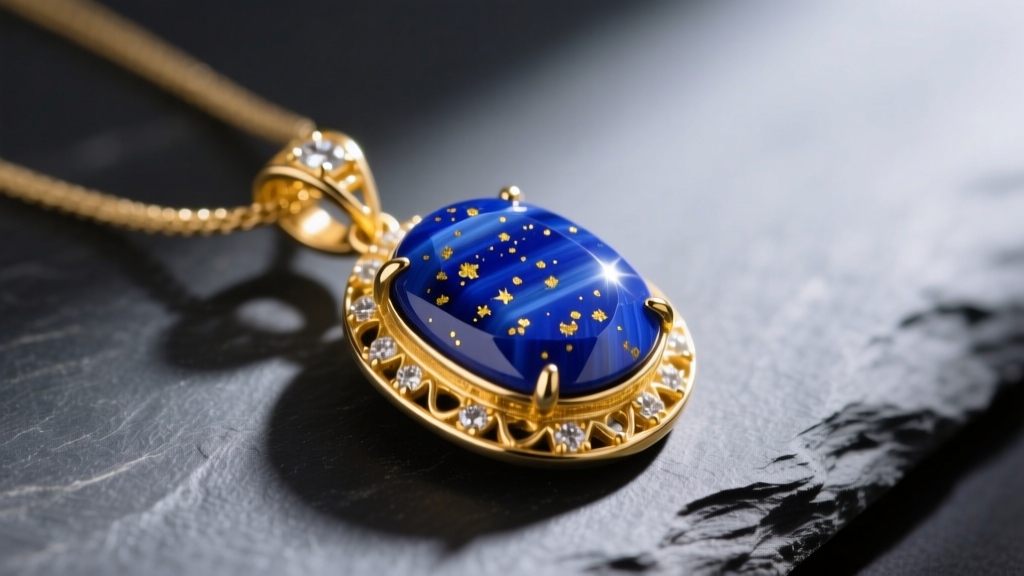
The Anatomy of a Premium Lapis Lazuli Gold Necklace
When evaluating a lapis lazuli gold necklace, you are not merely looking at a piece of jewelry; you are examining a complex geological composite. Unlike faceted gemstones such as diamonds or sapphires, lapis lazuli is not a single mineral. It is a metamorphic rock composed primarily of lazurite (which provides the signature deep blue), calcite (white streaks), and pyrite (metallic gold flecks). The interplay between these three components dictates the stone's value, durability, and visual appeal.
Pairing this relatively soft, porous rock with gold requires a nuanced understanding of metallurgy and gemology. The warm, reflective properties of yellow gold perfectly complement the ultramarine depths of high-grade lazurite, but the physical properties of both materials must be carefully balanced to ensure the necklace withstands daily wear. In this comprehensive guide, we break down the exact material grades, structural settings, and gemological treatments you need to know before investing in fine lapis jewelry.
Decoding Lapis Lazuli Grades: Afghan vs. Chilean vs. Russian
The geographical origin of lapis lazuli fundamentally alters its mineral composition and market value. According to the Gemological Institute of America (GIA), the most prized lapis exhibits a vivid, intense, medium-dark, slightly violetish blue color with evenly distributed pyrite flecks and no visible calcite.
| Origin | Lazurite Content | Pyrite Presence | Calcite Presence | Market Grade & Value |
|---|---|---|---|---|
| Afghanistan (Badakhshan) | High (Deep Royal Blue) | Fine, even flecks | Minimal to None | Premium / Collector |
| Chile (Andes Mountains) | Medium (Lighter, Greenish-Blue) | Rare or Absent | Heavy veining | Commercial / Moderate |
| Russia (Lake Baikal) | Medium-High (Medium Blue) | Prominent, bold flecks | Occasional patches | Mid-Tier / Artisan |
Afghan lapis, mined in the Sar-e-Sang region for over 6,000 years, remains the gold standard. The intense pressure and specific sulfur-rich geological conditions in this region produce lazurite with a high sulfur content, resulting in that coveted 'royal blue' hue. Chilean lapis, while more affordable, often contains heavy calcite matrices that dilute the blue color and increase the stone's porosity, making it more susceptible to chemical damage from perfumes and lotions.
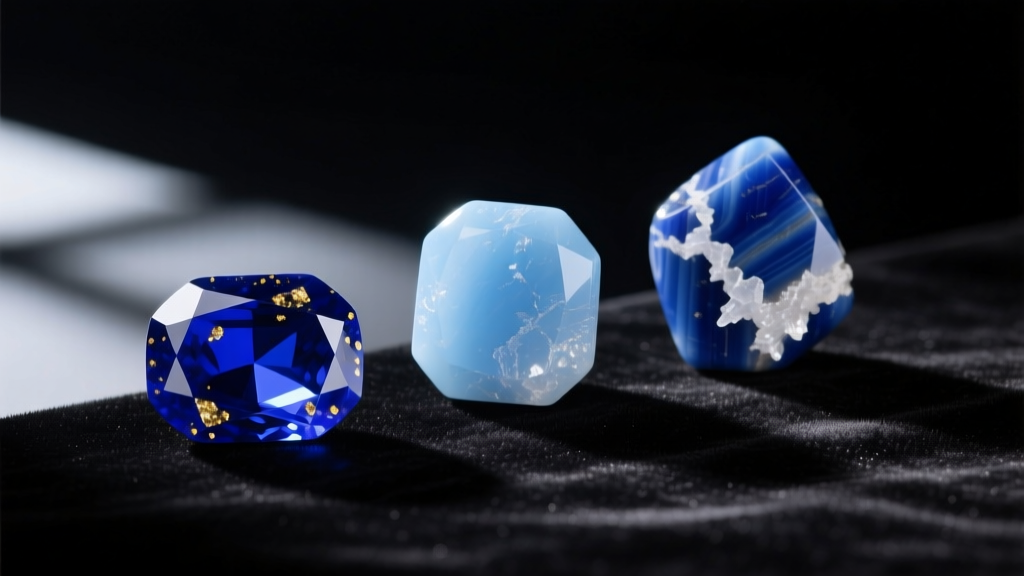
Gold Karat Selection: Balancing Purity and Durability
The choice of gold karat in a lapis lazuli gold necklace is not just an aesthetic decision; it is a structural necessity. Lapis lazuli has a specific gravity of 2.7 to 2.9, making it surprisingly dense and heavy for a cabochon stone. The chain and pendant bail must possess adequate tensile strength to support this weight without warping.
14K Gold (58.5% Pure Gold)
Alloyed with copper, silver, or zinc, 14K gold offers superior tensile strength. For a lapis lazuli pendant weighing over 15 grams, a 14K gold setting and a 1.5mm to 2.0mm cable or rope chain are highly recommended. The harder alloy resists scratching and bending, ensuring the bail does not thin out over years of friction.
18K Gold (75% Pure Gold)
The industry standard for fine jewelry, 18K gold provides the rich, buttery yellow hue that best contrasts with the deep blue lazurite. While slightly softer than 14K, it is more than adequate for bezel settings. However, chains should be kept to a minimum of 1.2mm in gauge to prevent stretching under the pendant's weight.
22K Gold (91.6% Pure Gold)
While historically accurate for Middle Eastern and South Asian lapis jewelry, 22K gold is exceptionally soft (Mohs hardness of roughly 2.5 to 3). It is generally unsuitable for the prongs or thin chains of modern daily-wear necklaces, as the metal will easily deform, potentially releasing the stone.
Prong vs. Bezel Settings for Soft Stones
Understanding the mineralogical properties of lapis lazuli is critical when evaluating how it is secured in a gold necklace. Lapis registers between 5 and 5.5 on the Mohs hardness scale. Furthermore, it possesses poor cleavage but is highly brittle, meaning it can chip or fracture upon sharp impact.
- Prong Settings: Generally discouraged for lapis lazuli. The localized pressure of metal prongs gripping the stone's girdle can cause micro-fractures. Additionally, prongs leave the edges of the cabochon exposed to accidental impacts against tables or doorframes.
- Bezel Settings: The optimal choice for a lapis lazuli gold necklace. A full gold bezel wraps entirely around the perimeter of the cabochon, protecting the brittle edges from chipping while distributing the holding pressure evenly across the stone's vertical sides.
- Flush/Gypsy Settings: Excellent for heavier, masculine gold chains where the lapis is set directly into a thick gold disk, offering maximum protection and a sleek, modern profile.
Treatments, Dyeing, and Synthetic Imitations
Because top-tier Afghan lapis is rare and expensive, the market is flooded with treated and simulated alternatives. As a discerning buyer, you must know how to identify these material alterations.
'A natural lapis lazuli stone will feel cool to the touch and will not yield color when swabbed with acetone. If a cotton swab turns blue, the stone has been heavily dyed to mask inferior calcite-heavy material.' — Gemological Appraisal Standards
Common Material Substitutes
Reconstituted Lapis: This is created by grinding low-grade lapis scraps into a powder, mixing them with an epoxy resin or polymer binder, and pressing them into blocks. While it contains real lapis material, the resin drastically alters the stone's porosity and light refraction. It lacks the natural depth and pyrite flash of solid stone.
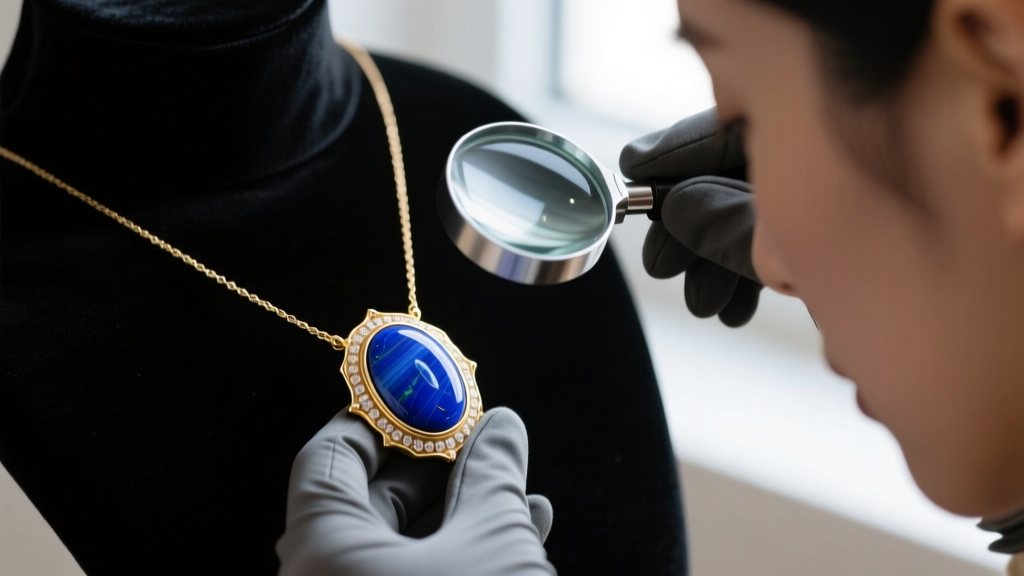
Dyed Jasper and Howlite: Often sold deceptively as lapis, these stones lack the characteristic pyrite inclusions. Dyed howlite will show concentrated dye pooling in its natural web-like fractures, visible under a 10x jeweler's loupe.
Gilson Synthetic Lapis: Created in a laboratory using a process similar to the Gilson turquoise method, synthetic lapis has a very uniform color and evenly spaced pyrite. Under magnification, synthetic pyrite appears as perfectly angular, geometric shards rather than the irregular, organic flecks found in natural geological formations.
Care and Maintenance Protocols
The material properties of lapis lazuli dictate strict care protocols. Because it is a porous rock, it readily absorbs chemicals, oils, and acids. Furthermore, the calcite inclusions (Mohs 3) are highly reactive to mild acids.
- Avoid Ultrasonic Cleaners: The high-frequency vibrations can easily shatter micro-fissures within the lazurite matrix. If the stone is reconstituted, the ultrasonic waves will dissolve the epoxy binder, causing the stone to crumble.
- Never Use Steam: Thermal shock from sudden temperature changes can cause the stone to crack.
- Chemical Exposure: Remove your lapis lazuli gold necklace before swimming (chlorine destroys calcite) or applying cosmetics. Hairspray and perfume can leave a dull, white film over the pyrite flecks, robbing the stone of its natural sparkle.
- Proper Cleaning Method: Use only lukewarm water, a drop of pH-neutral dish soap, and a soft baby toothbrush. Gently brush the gold setting and the surface of the stone, rinse quickly, and pat dry with a microfiber cloth. Store the necklace in a soft pouch away from harder gemstones like diamonds or sapphires, which will easily scratch the lapis surface.
By prioritizing high-grade Afghan material, selecting an appropriate 18K or 14K gold bezel setting, and adhering to strict maintenance protocols, your lapis lazuli gold necklace will remain a vibrant, enduring testament to both ancient geology and modern metallurgical craftsmanship.


