Is a Large Circle Pendant Necklace Worth the Investment? Value Guide
Assessing the true value of a large circle pendant necklace. We compare materials, chain gauges, and pricing tiers to help you invest wisely.

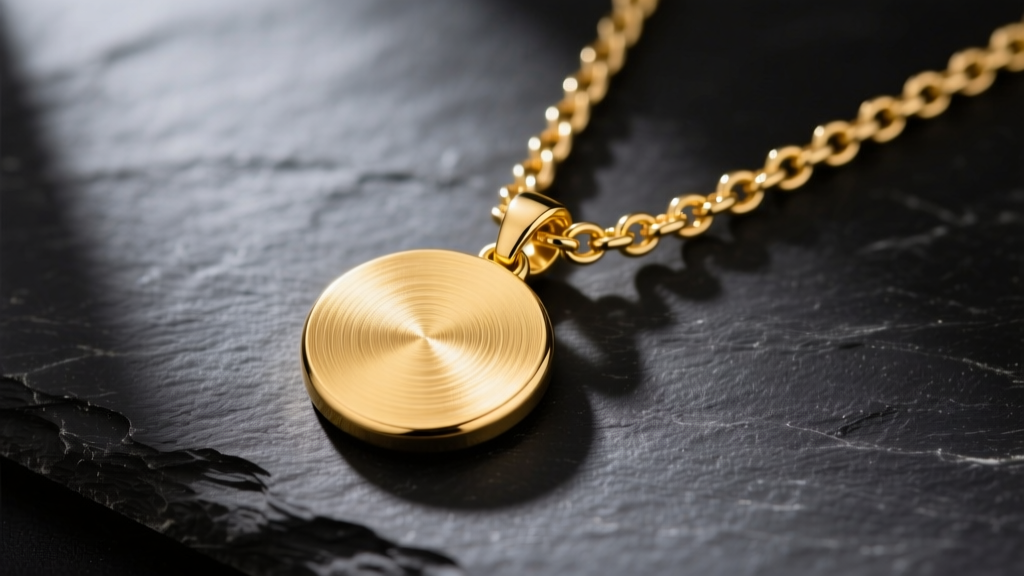
When evaluating a large circle pendant necklace, the primary cost driver isn't just the brand name—it is the sheer volume of metal required to maintain structural integrity across a broad surface area. A standard 15mm charm requires a fraction of the raw material compared to a 40mm to 60mm statement disc. This exponential increase in surface area creates a unique budget dilemma for consumers: how do you achieve the bold, minimalist aesthetic of an oversized geometric pendant without paying solid gold premiums for metal you don't necessarily need?
In this 2026 value assessment, we deconstruct the economics, manufacturing techniques, and structural failure modes of oversized circular pendants. Whether you are eyeing a heavy sterling silver piece or a lightweight gold vermeil option, understanding the intersection of weight, gauge, and material purity is critical to making a financially sound jewelry investment.
The Economics of Scale: Surface Area vs. Metal Density
The price of any solid metal jewelry is intrinsically tied to its gram weight. However, a large circle pendant necklace introduces a variable that smaller charms avoid: the need for rigidity. A thin, 1mm-wide chain can bend and warp without notice, but a 50mm flat metal disc will visibly dent, warp, or bend if it is struck against a hard surface and lacks adequate thickness.
To combat this, manufacturers use two primary techniques, which drastically affect the final retail value:
- Die-Striking: This process uses immense hydraulic pressure to stamp a pendant out of a sheet of metal. The compression work-hardens the metal, making it highly resistant to denting. Die-struck large pendants can be made thinner (e.g., 1.2mm to 1.5mm) while retaining rigidity, ultimately saving the consumer money on raw metal weight without sacrificing durability.
- Lost-Wax Casting: Cast pendants are poured into a mold. Because cast metal is more porous and softer, a 40mm cast pendant must be significantly thicker (often 2.0mm or more) to prevent bending. This adds substantial gram weight, pushing the price of solid 14k or 18k cast pendants well into the luxury tier.
Material Value Matrix: 2026 Market Pricing
Not all gold-toned or silver-toned metals hold their value or withstand daily friction. According to the Gemological Institute of America (GIA), the alloy mix in karat gold dictates both its color and its scratch resistance. For a large surface area that rests against the sternum and is prone to friction, alloy hardness is a vital consideration.
| Material | Composition & Standards | Avg. Weight (40mm) | Est. Price Range | Longevity & Tarnish |
|---|---|---|---|---|
| Sterling Silver (925) | 92.5% Silver, 7.5% Copper | 12g - 18g | $80 - $180 | High tarnish risk; requires polishing. Prone to deep scratching. |
| Gold Vermeil | Sterling core, 2.5+ microns 14k/18k gold (per FTC guidelines) | 12g - 18g | $120 - $250 | Moderate lifespan. Will eventually wear down to silver on high-friction edges. |
| Gold-Filled | Brass core, 1/20th total weight in solid gold (mechanically bonded) | 8g - 14g | $90 - $160 | Excellent longevity. Highly tarnish resistant, but limited to stamped/hollow designs. |
| Solid 14k Gold | 58.5% Gold, alloyed with copper/silver/zinc | 15g - 25g | $650 - $1,400+ | Lifetime durability. Will not tarnish. Can be polished to remove scratches. |
| Solid 18k Gold | 75% Gold, softer alloy mix | 16g - 28g | $1,100 - $2,500+ | Rich color but softer; large 18k discs are highly susceptible to warping and denting. |
The Hidden Cost of Structural Failure
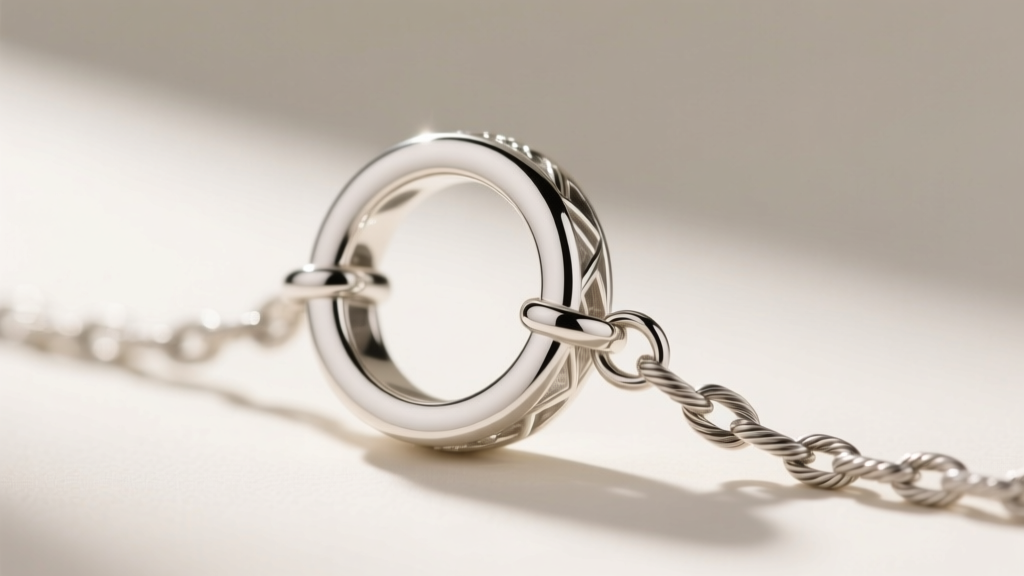
The most frequent point of failure in a large circle pendant necklace is not the pendant itself, but the chain and bail hardware. A 40mm to 50mm disc acts as a pendulum. Every time you move, lean over, or take off a coat, kinetic energy transfers to the bail (the loop connecting the pendant to the chain) and the clasp. If you pair a 15-gram oversized pendant with a delicate 0.9mm chain, you are practically guaranteeing a structural failure within six months.
Chain Gauge and Link Architecture
For pendants weighing between 8 and 15 grams, your chain must have a minimum thickness of 1.5mm to 2.2mm. However, thickness alone is not enough; link architecture matters. Box chains and snake chains are notorious for kinking and snapping under the lateral torque generated by heavy, swinging discs. Instead, allocate your budget toward rolo chains or welded cable chains, which distribute kinetic stress evenly across rounded, soldered links.
Clasp Mechanics for Heavy Pendants
Standard spring-ring clasps are engineered for lightweight chains and will easily pop open if a heavy circle pendant catches on a sweater. When budgeting for a high-quality piece, ensure the manufacturer utilizes a lobster clasp with a heavy-duty internal spring, or a locking box clasp for chains exceeding 2.5mm in width. Upgrading a clasp and chain to support a heavy pendant can add $40 to $90 to your total cost, but it prevents the catastrophic loss of the pendant itself.

Assessing Long-Term Value: Cost-Per-Wear Analysis
To accurately assess the value of a large circle pendant necklace, we must look beyond the initial price tag and calculate the cost-per-wear (CPW) over a realistic lifespan.
Consider a trendy 45mm gold vermeil disc necklace priced at $140. Because of the large surface area resting against the skin and clothing, the gold plating on the back and edges will likely wear through to the sterling silver core within 12 to 18 months of daily wear. Once the silver tarnishes and the two-tone look sets in, the piece is often relegated to a drawer. The CPW is roughly $0.25 per day over 1.5 years.
Now, consider a die-struck 14k solid gold 35mm disc necklace priced at $750. Because 14k gold is highly resistant to tarnish and can be professionally polished to remove micro-scratches, this piece will easily last 30+ years with basic care. Over a decade of daily wear, the CPW drops to $0.06 per day, and the piece retains intrinsic scrap and resale value that vermeil entirely lacks.
Final Verdict: How to Allocate Your Budget
Your budget allocation should be dictated entirely by your intended wear frequency and aesthetic goals. Here is our expert framework for purchasing a large circle pendant necklace:
- The Seasonal Trend Follower: If you view the oversized geometric pendant as a temporary fashion statement, do not overspend. Opt for Gold-Filled options in the $90–$140 range. The mechanical bonding of gold-filled metal offers vastly superior tarnish resistance compared to standard flash-plated brass, giving you 2 to 3 years of solid wear without the solid gold premium.
- The Everyday Minimalist: For a 30mm to 40mm disc intended for daily, year-round wear (including in the shower and at the gym), Solid 14k Gold is the only mathematically sound investment. Look for die-struck manufacturing to keep the gram weight (and price) manageable while ensuring the disc resists bending.
- The Statement Event Buyer: If the 50mm+ pendant is strictly for evening wear or occasional layering over heavy knits, Sterling Silver or high-micron Vermeil is perfectly acceptable. Just be prepared to factor in the time and cost of occasional silver polishing to maintain the mirror finish.
Ultimately, the true value of a large circle pendant necklace lies in the harmony between its weight, its chain's tensile strength, and its material integrity. By prioritizing structural mechanics over sheer size, you ensure your investment remains a staple in your wardrobe for years to come.


