Large Opal Necklace Trends: 2026 Styling and Buyer Guide
Discover 2026 trends for the large opal necklace. Learn how to style statement opals, distinguish solid from doublet stones, and buy with confidence.

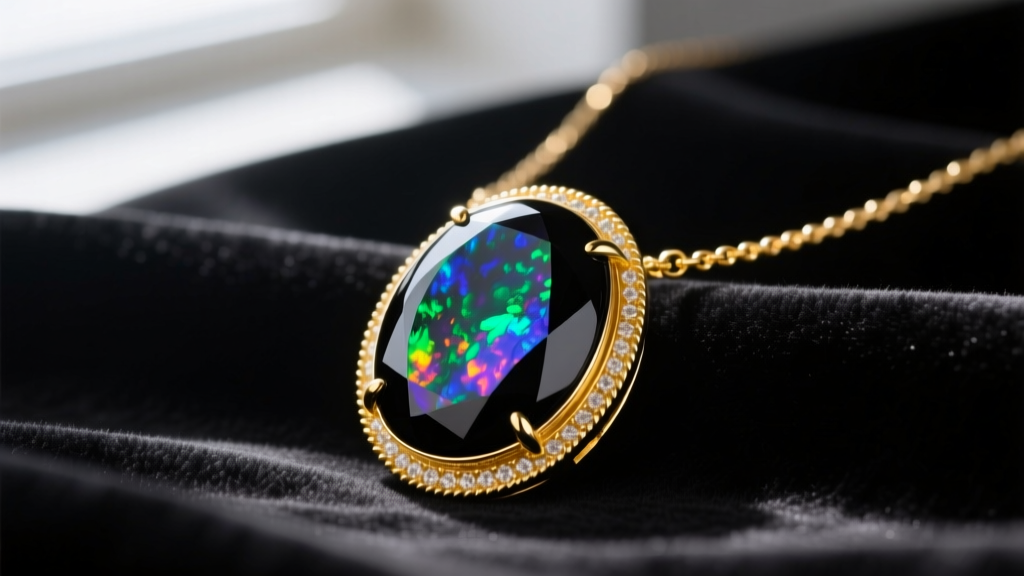
The Maximalist Shift: Why Large Opal Necklaces Dominate 2026
The jewelry landscape of 2026 has decisively pivoted away from the understated "quiet luxury" movement, embracing a new era of bold, expressive maximalism. At the forefront of this shift is the large opal necklace. No longer relegated to vintage estate sales or bohemian niche markets, oversized opal pendants—ranging from 15 to 40 carats—have become the ultimate statement piece for contemporary collectors and fashion-forward individuals. The allure lies in the gemstone's unparalleled play-of-color, offering a dynamic, multi-chromatic experience that static diamonds or sapphires simply cannot replicate. As designers push the boundaries of scale, understanding how to select, authenticate, and style a large opal necklace is essential for navigating this year's most captivating jewelry trend.
Decoding Opal Anatomy: Solid vs. Doublet vs. Triplet
When shopping for a substantial opal pendant, the physical anatomy of the stone dictates not only its price but its longevity. The Gemological Institute of America (GIA) categorizes opals into distinct structural types, which is critical knowledge when evaluating large stones where carat weight heavily influences cost.
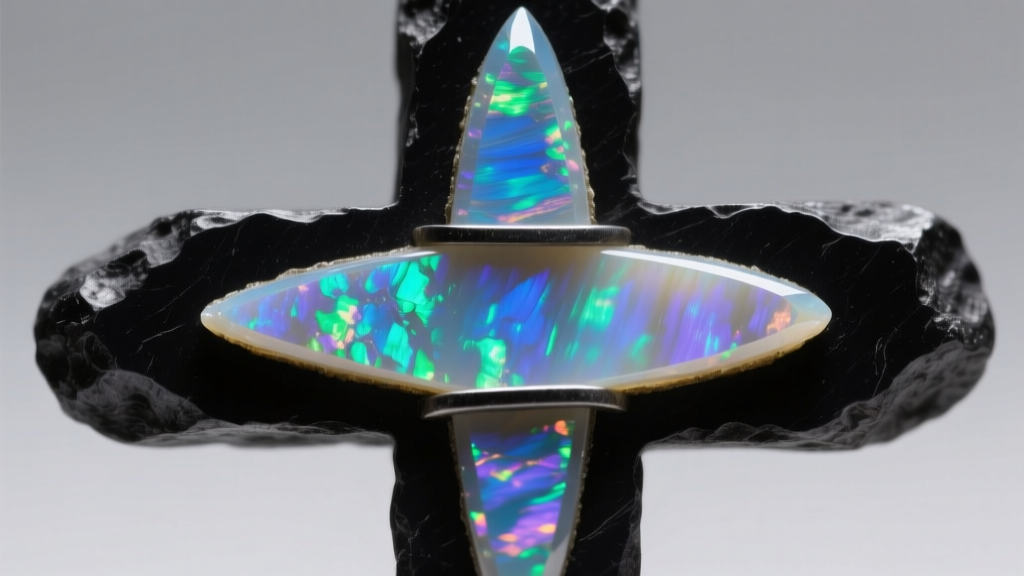
| Opal Type | Composition | Durability & Care | Market Value (Relative) |
|---|---|---|---|
| Solid Opal | 100% natural precious opal (cabochon cut). | Moderate (Mohs 5.5-6.5). Sensitive to extreme heat and sudden impacts. | Highest. Priced by body tone (N-scale), brilliance, and pattern. |
| Doublet | Thin slice of precious opal glued to a dark backing (ironstone or black glass). | High. The backing adds structural integrity, but water exposure can degrade the adhesive over decades. | Medium. Offers the look of a Black Opal at a fraction of the cost. |
| Triplet | Thin opal slice + dark backing + clear quartz/glass dome. | Very High. The quartz dome protects the soft opal from scratches. | Lowest. Considered commercial-grade; rarely used in high-end 2026 designer pieces. |
| Lab-Created | Synthetic silica spheres grown in a lab (e.g., Gilson process). | High. Consistent structure, lacks the natural water content vulnerabilities. | Low to Medium. Ethical alternative, but lacks investment value. |
For a true investment-grade large opal necklace, solid Australian Black Opals (from Lightning Ridge) or solid Ethiopian Welo Opals are the premier choices. However, buyers must be aware that Ethiopian Welo opals are hydrophane—they absorb water and can temporarily lose their play-of-color if submerged, requiring strict care protocols.
Chain Metallurgy & Setting Mechanics
A common failure point in statement jewelry is the chain. A 25-carat solid opal set in 18k gold can easily weigh between 12 and 18 grams. Standard 1mm cable chains will inevitably stretch, kink, or snap under this dynamic load. For a large opal necklace, structural metallurgy is paramount.
- Chain Width & Style: Opt for a minimum 2.5mm to 3.5mm width. Box chains, wheat chains, or heavy rope chains provide the necessary tensile strength and resist kinking.
- Clasp Engineering: Standard spring-ring clasps are insufficient. A heavy-duty lobster clasp or, ideally, a toggle clasp is recommended. Toggle clasps distribute the weight more evenly and are easier to manipulate when dealing with heavy pendants.
- Metal Purity: While 24k gold is too soft for settings, 18k yellow gold offers a rich warmth that amplifies the fiery reds and oranges in Australian opals. For cooler, blue-dominant opals, platinum or 18k white gold provides a striking, icy contrast.
The Bezel vs. Prong Debate for Cabochons
Opals are relatively soft and lack a defined crystalline cleavage plane, making them prone to chipping at the girdle (the edge). While classic claw prongs allow maximum light entry, a full or half-bezel setting is vastly superior for a large opal necklace intended for regular wear. A bezel encases the vulnerable perimeter in metal, absorbing lateral shocks that would otherwise fracture the stone.
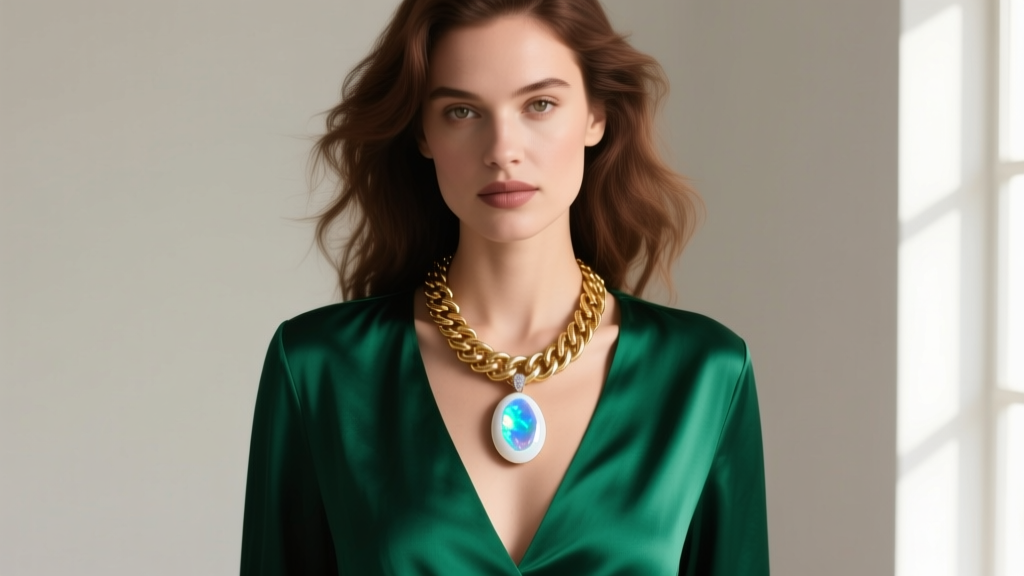
Styling Frameworks: Necklines and Layering
The sheer scale of a large opal pendant demands strategic styling. In 2026, the trend is to let the opal serve as the undisputed focal point, avoiding competition from other gemstones.
- The Deep V-Neck: The ideal canvas. A V-neckline naturally frames the sternum, drawing the eye directly down the chain to the opal. Pair a 20-carat teardrop opal with a silk emerald or navy blouse to make the stone's internal fire pop.
- The Boatneck / Bateau: Creates a horizontal line that contrasts beautifully with a long, 24-inch to 30-inch opera-length opal pendant, offering a sophisticated, architectural silhouette.
- Asymmetrical Layering: If layering, use texture rather than competing gems. Pair the large opal necklace with a matte-finish, oxidized sterling silver chain or a simple, unadorned gold snake chain of a vastly different length (e.g., 18" and 26").
Authentication: Spotting Synthetics and Hydrophane Risks
As the demand for oversized opals surges, so does the market for sophisticated synthetics. According to GIA identification protocols, lab-created opals (like the famous Gilson opals) can be identified using a 10x jeweler's loupe. Natural opals display a random, organic play-of-color. Synthetics often exhibit a "lizard skin" or "chicken wire" pattern when viewed from the side, and their color patches tend to be unnaturally uniform and columnar.
Furthermore, buyers must inquire about the stone's origin. If purchasing a large, milky-white opal with neon flashes, it is likely an Ethiopian Welo. While stunning, its hydrophane nature means it should never be worn in the shower, pool, or high-humidity environments, as water absorption can cause temporary color loss or, in extreme cases, structural cracking upon rapid drying.
"A large opal necklace isn't just an accessory; it's a wearable galaxy. The key to buying one is understanding that you are paying for the 'fire' and the 'pattern'—a broad, rolling flash of harlequin color will always outvalue a pinfire pattern of the same carat weight." — Senior Gemologist Appraisal Notes, 2025
Final Verdict: Investing in Statement Opals
The large opal necklace has firmly cemented its status as a cornerstone of 2026's maximalist jewelry renaissance. By prioritizing solid stones over triplets, investing in heavy-gauge chains and protective bezel settings, and understanding the specific care requirements of Australian versus Ethiopian varieties, collectors can secure a piece that is both visually arresting and structurally enduring. Whether chosen for its fiery red flashes or its deep, oceanic blues, a well-chosen oversized opal pendant transcends seasonal trends, offering a lifetime of chromatic brilliance.


