Large Turquoise Cross Necklace: Natural vs Stabilized Guide
Discover how to choose a large turquoise cross necklace by comparing natural, stabilized, and reconstituted stones, matrix patterns, and chain pairings.

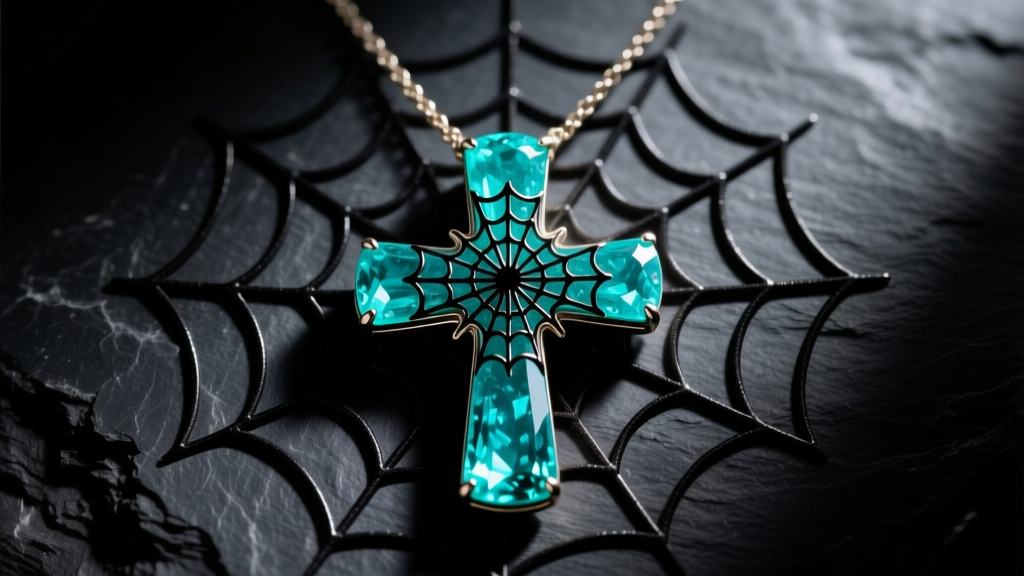
The Allure and Architecture of the Large Turquoise Cross
When selecting a statement piece of spiritual or regional jewelry, a large turquoise cross necklace stands out for its bold geometry and striking color. Typically measuring between 60mm and 80mm in height, these pendants require substantial cabochons of turquoise. However, because turquoise is a naturally porous and relatively soft gemstone, finding a large, flawless piece of untreated material is exceptionally rare and prohibitively expensive for most buyers. Understanding the material properties, treatment methods, and structural requirements for mounting heavy gemstones is critical before making an investment.
This guide breaks down the mineralogy of turquoise, compares natural versus stabilized options, and provides structural engineering advice for pairing heavy cross pendants with the correct chain hardware.
Understanding Turquoise Grades and Hardness
Turquoise is a hydrous phosphate of copper and aluminum. According to mineralogical data from Mindat.org, its Mohs hardness ranges wildly from 3.0 to 6.0, depending on its porosity and the presence of host rock inclusions. The copper content dictates the blue hues, while aluminum or iron impurities shift the color toward green or yellow.
For a large cross pendant, the stone must be cut into a wide, flat cabochon. This process exposes the stone's internal structure. High-grade natural turquoise (often referred to as 'hard' turquoise) is dense enough to take a high polish without chemical assistance. However, the vast majority of turquoise mined today is 'chalk' turquoise (Mohs 2.0 to 4.0), which is too soft and crumbly to be cut into large jewelry components without undergoing stabilization.
"A large turquoise cabochon is essentially a sponge of copper and aluminum phosphates. Without stabilization, decades of wear will inevitably alter its color profile and structural integrity due to oil absorption and dehydration."
Material Comparison: Natural vs. Stabilized vs. Reconstituted
When shopping for a large turquoise cross necklace, you will encounter three primary material categories. The Gemological Institute of America (GIA) outlines several acceptable treatments in the gem trade, but transparency is key to determining value.
| Material Type | Treatment Process | Mohs Hardness | Price Range (60x40mm Cab) | Durability Risk |
|---|---|---|---|---|
| High-Grade Natural | None (Cut and polished only) | 5.0 - 6.0 | $800 - $2,500+ | High (Crazing, oil absorption) |
| Stabilized (Epoxy) | Vacuum-impregnated with clear resin | 6.0 - 7.0 | $150 - $400 | Low (Resistant to oils and cracking) |
| Zachery Treated | Infused with potassium/silica (no plastic) | 5.5 - 6.5 | $400 - $900 | Low-Medium (Maintains natural feel) |
| Reconstituted (Block) | Turquoise dust bonded with resin and dye | 3.0 - 4.0 | $20 - $60 | High (Fading, chipping, low value) |
Stabilized Turquoise is the industry standard for large pendants. By placing the rough stone in a vacuum chamber and introducing a clear epoxy or acrylic resin, the stone's pores are filled. This permanently hardens the material, prevents it from absorbing skin oils (which causes natural turquoise to turn dark green over time), and prevents 'crazing'—a network of fine surface cracks caused by dehydration.
Zachery Treatment is a premium, proprietary stabilization method that uses potassium and silica rather than plastic resins. It increases hardness and reduces porosity while allowing the stone to retain a natural, non-plastic feel. It is highly sought after by collectors but commands a premium price.
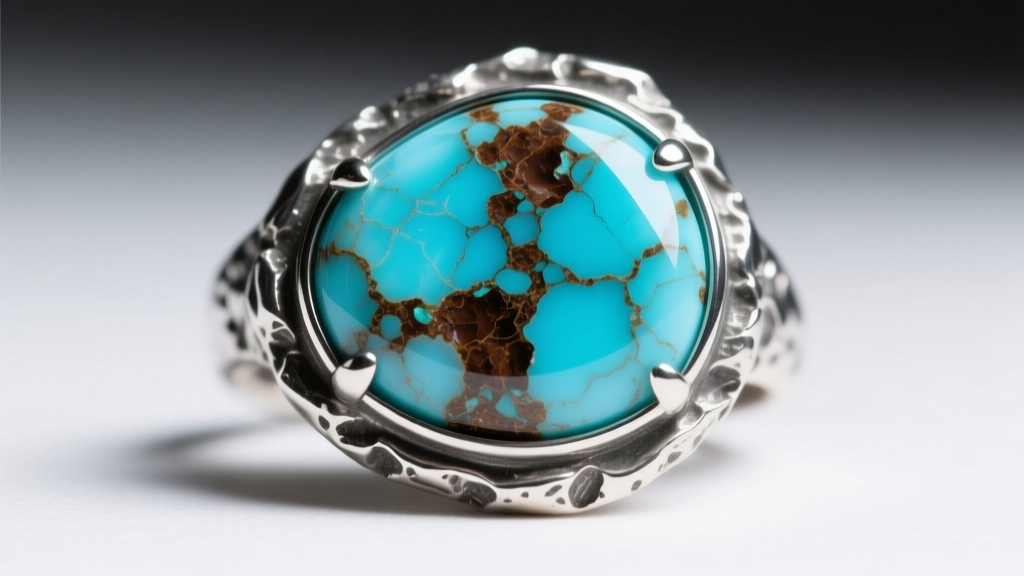
Decoding the Matrix: Spiderweb vs. Clear Skies
The 'matrix' refers to the remnants of the host rock (usually brown limonite or black sandstone) that remain within the turquoise. In large cross necklaces, the matrix pattern dramatically affects both the aesthetic and the structural integrity of the piece.
- Spiderweb Matrix: Characterized by a fine, net-like pattern of dark inclusions. While visually striking and highly prized in stones from the Kingman or Lander Blue mines, heavy matrix lines can act as fault lines. If a large cross is dropped, it is most likely to fracture along a thick matrix vein.
- Clear Skies (No Matrix): Stones with no visible host rock, famously sourced from the Sleeping Beauty mine. These are structurally more uniform and less prone to splitting along fault lines, making them ideal for large, uninterrupted cabochon cuts required for broad cross pendants.
Structural Engineering: Chain Selection for Heavy Pendants
A common failure mode in large turquoise jewelry is chain breakage. A solid turquoise cross measuring 65mm x 45mm, set in a 925 sterling silver bezel with a reinforced bail, can easily weigh between 25 and 45 grams. Standard 1mm or 1.5mm chains will suffer from link fatigue and snap under this dynamic load.
To properly support a heavy turquoise cross necklace, select chains within the following specifications:
- Wheat Chains (3.5mm - 5.0mm): The woven, multi-directional links of a wheat chain distribute weight evenly, making it the most durable option for heavy pendants. Ensure the chain is solid, not hollow-core.
- Rope Chains (3.0mm - 4.5mm): The twisted links offer excellent tensile strength and a vintage aesthetic that pairs beautifully with the rustic nature of turquoise. However, ensure the links are soldered to prevent unraveling.
- Figaro or Curb Chains (4.0mm+): Flat, interlocking links provide a masculine, heavy-duty foundation. A 4.5mm oxidized sterling silver curb chain offers a striking contrast to bright blue turquoise.
Crucial Hardware Note: The bail (the loop connecting the pendant to the chain) must have an internal diameter of at least 6mm x 10mm to accommodate a 4mm chain. Furthermore, avoid standard lobster clasps; opt for a heavy-duty 15mm lobster clasp or a secure spring-ring clasp to prevent accidental unclasping.
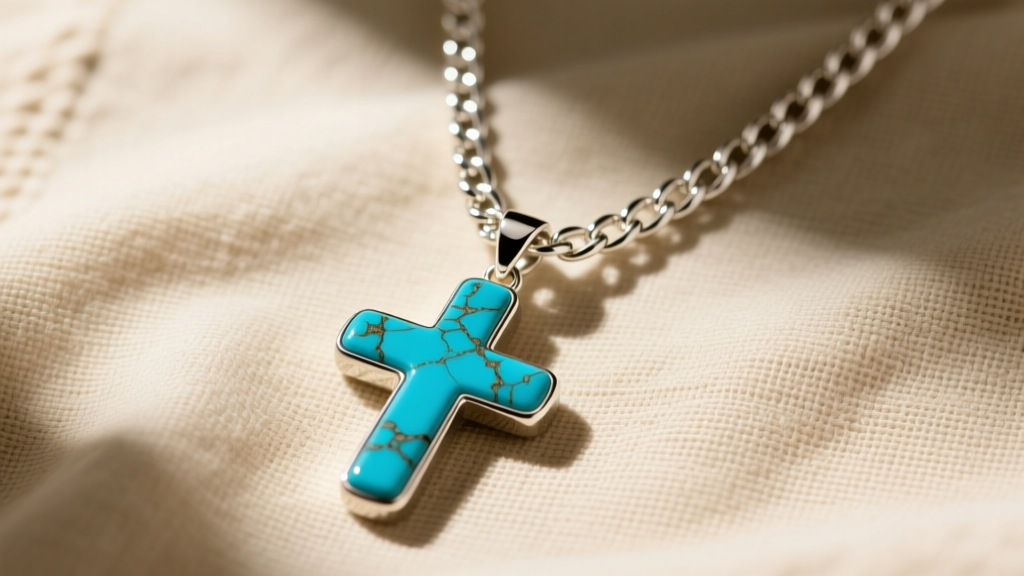
Long-Term Care and Failure Modes
Even stabilized turquoise requires specific care to maintain its luster and structural integrity over decades of wear. The most common failure modes for large turquoise pendants include bezel lifting and surface dulling.
Because turquoise has a different thermal expansion rate than sterling silver or gold, exposing the necklace to extreme temperature fluctuations (such as wearing it in a hot tub or leaving it on a car dashboard) can cause the metal bezel to expand and contract, eventually loosening its grip on the stone. Always remove your necklace before swimming, as chlorine and salt water can degrade the epoxy used in stabilized stones and severely damage natural stones.
To clean your turquoise cross, never use ultrasonic cleaners or steamers. The high-frequency vibrations can shatter the stone along hidden matrix fault lines. Instead, use a damp, lint-free microfiber cloth to gently wipe away skin oils and environmental dust. If the silver bezel tarnishes, apply a silver polishing cream to a Q-tip and carefully polish the metal, avoiding direct contact with the turquoise cabochon.
Final Verdict: Which Stone is Right for You?
If you are purchasing a large turquoise cross necklace for daily, heirloom-quality wear, a high-quality stabilized stone is the most pragmatic and durable choice. It ensures the vibrant blue color remains locked in place, immune to the acids and oils of your skin. However, if you are a purist or collector seeking an untreated, natural stone, be prepared to pay a significant premium for a high-grade, hard-stone cabochon, and commit to a rigorous, careful maintenance routine to prevent crazing and color shifts over time.


