Lavalier Necklace Care: Expert Cleaning & Maintenance
Learn how to properly clean, store, and maintain your lavalier necklace. Expert tips for protecting delicate drop pendants and chains.

The Unique Vulnerabilities of the Lavalier Design
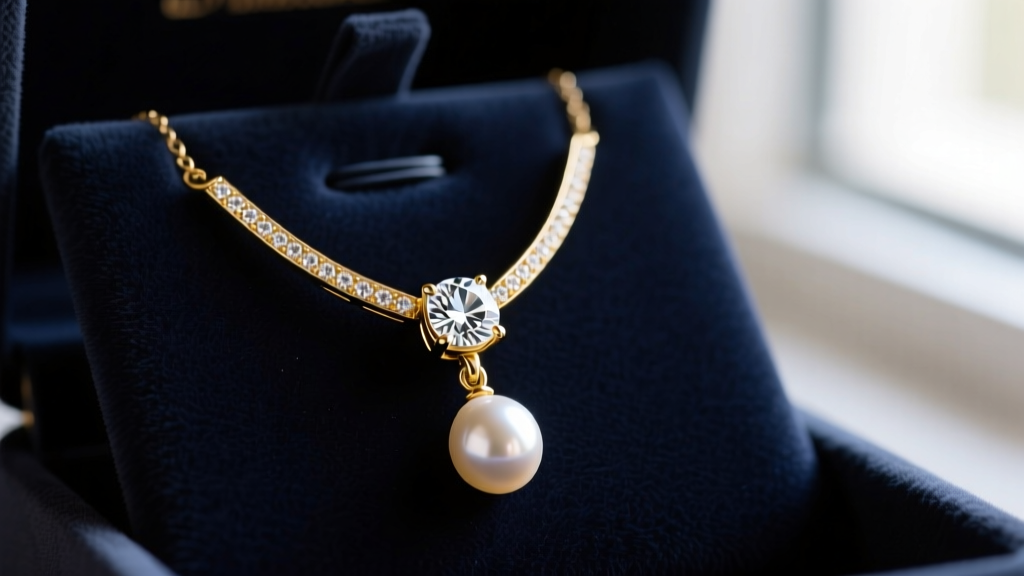
The lavalier necklace is a masterpiece of kinetic jewelry design. Characterized by a central pendant that suspends a secondary dangling element—often a teardrop gemstone, a pearl, or a delicate metal fringe—this style traces its roots back to 17th-century French aristocracy. However, the very feature that gives the lavalier necklace its signature elegance, the swinging drop, also introduces distinct structural vulnerabilities that require specialized care and maintenance.
Unlike a static solitaire pendant, the dangling drop of a lavalier is in constant motion. Every time you move, the drop swings, creating micro-tensions on the secondary jump ring and the bail. Over time, this kinetic friction can lead to metal fatigue, gapping in the jump rings, and accelerated wear on the prongs holding the drop stone. As we navigate the jewelry landscape in 2026, where consumers are increasingly investing in heritage and vintage-inspired pieces, understanding how to properly maintain this specific silhouette is crucial for preserving both its structural integrity and its brilliance.
Anatomy of a Lavalier: Identifying Failure Points
Before reaching for a cleaning solution, you must understand the mechanical stress points of your lavalier necklace. A thorough inspection using a 10x jeweler's loupe is the first step in preventative maintenance.
- The Secondary Jump Ring: This tiny ring connects the dangling drop to the central pendant. To maintain a delicate aesthetic, jewelers often use 20-gauge (0.81mm) or even 22-gauge (0.64mm) wire for this component. These thin gauges are highly susceptible to ovalization (stretching into an oval shape) under the weight of a heavy stone drop.
- The Drop Bail: The loop at the top of the dangling stone. Friction between the jump ring and the bail can slowly wear through the metal, especially if the lavalier is worn daily.
- The Primary Prongs: The central stone's prongs often catch on clothing. Because the eye is drawn to the dangling drop, wearers frequently neglect checking the prongs of the larger, static central stone.
The Step-by-Step Cleaning Protocol
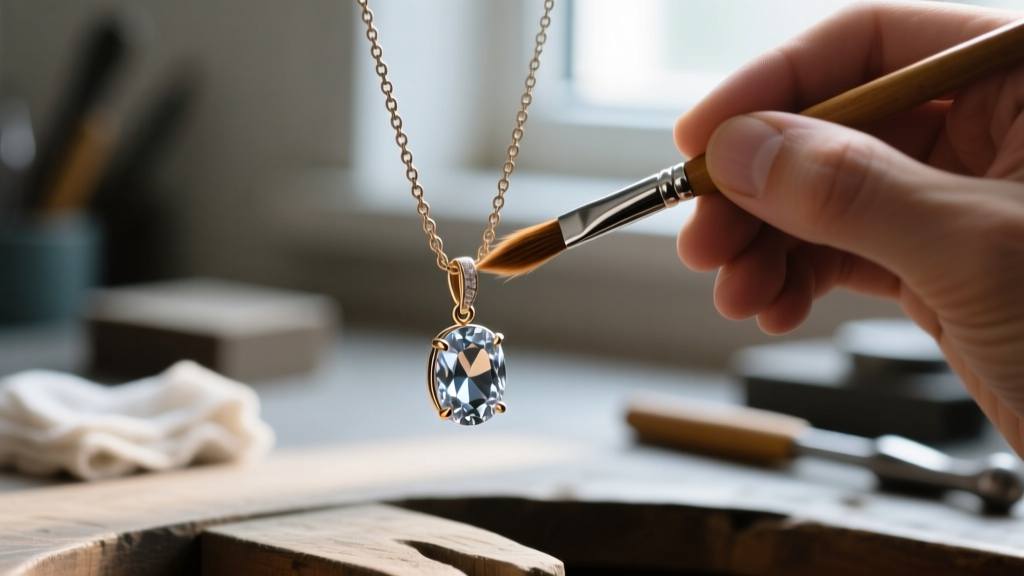
Cleaning a lavalier necklace requires a nuanced approach, primarily dictated by the material of the dangling drop. While the central chain and primary setting might withstand rigorous cleaning, the drop often features delicate or porous materials that can be destroyed by standard jewelry dips or ultrasonic machines.
Material-Specific Cleaning Matrix
| Drop Material | Safe Cleaning Method | Strictly Avoid | Drying Technique |
|---|---|---|---|
| Diamond / Sapphire / Ruby | Warm distilled water with a drop of mild dish soap; soft baby toothbrush. | Chlorine bleach (damages gold alloy settings). | Lint-free microfiber cloth; low-pressure air. |
| Pearl / Coral / Ivory | Damp, soft microfiber cloth only. Wipe gently. | Submersion in water, ultrasonic cleaners, ammonia, vinegar. | Air dry flat on a towel. Never use heat. |
| Emerald / Opal / Turquoise | Dry brushing with a soft makeup brush. Occasional damp cloth wipe. | Ultrasonic cleaners (will shatter opals and strip emerald oils), steam. | Pat dry immediately. Avoid compressed air. |
| Enamel / Guilloché | Mild soapy water, avoid scrubbing the enamel surface. | Abrasive polishing cloths, ultrasonic vibrations. | Pat dry with a soft cotton swab to reach crevices. |
For the metal chain and the primary central setting (assuming it contains hard stones), a 15-minute soak in a solution of warm distilled water and a few drops of ammonia-free dish detergent will loosen sebum and cosmetic buildup. Use a soft-bristled brush to gently agitate the area around the primary bail. According to the Gemological Institute of America (GIA), avoiding harsh chemicals like chlorine is paramount, as it can permanently weaken the molecular structure of gold alloys used in the settings.
Inspecting and Securing the Dangle Mechanism
Cleaning is only half the battle; mechanical maintenance is what keeps a lavalier necklace functional. The "paper test" is a highly effective, at-home method for checking the security of the drop.
The Paper Test: Take a piece of standard printer paper and gently slide the edge against the prongs holding your dangling drop stone. If the paper snags or catches, a prong has lifted and requires immediate professional burnishing. Because the drop swings and bumps against surfaces, prong lifting is 30% more common in lavalier drops than in static pendants.
Next, inspect the secondary jump ring. If you notice a visible gap where the two ends of the ring meet, do not attempt to squeeze it closed with standard pliers. Household pliers have serrated teeth that will mar the precious metal and can accidentally crush the delicate 20-gauge wire. Instead, take the piece to a jeweler who will use smooth-jawed chain-nose pliers to twist the jump ring open and closed laterally, realigning the ends without compromising the structural temper of the metal.
Managing Chain Tangles and Knots
The dangling drop of a lavalier necklace acts as a natural anchor, which paradoxically makes the chain above it highly prone to twisting and knotting, especially if it features a delicate cable or box chain. To untangle a lavalier without stressing the jump ring:
- Lay the necklace flat on a smooth, hard surface (like a glass table).
- Apply a micro-drop of baby oil or mineral oil directly to the center of the knot.
- Use two sewing needles to gently tease the chain links apart from the center outward.
- Never pull the chain taut, as this transfers the tension directly to the primary bail and the delicate drop mechanism.
Strategic Storage to Prevent Drop Damage
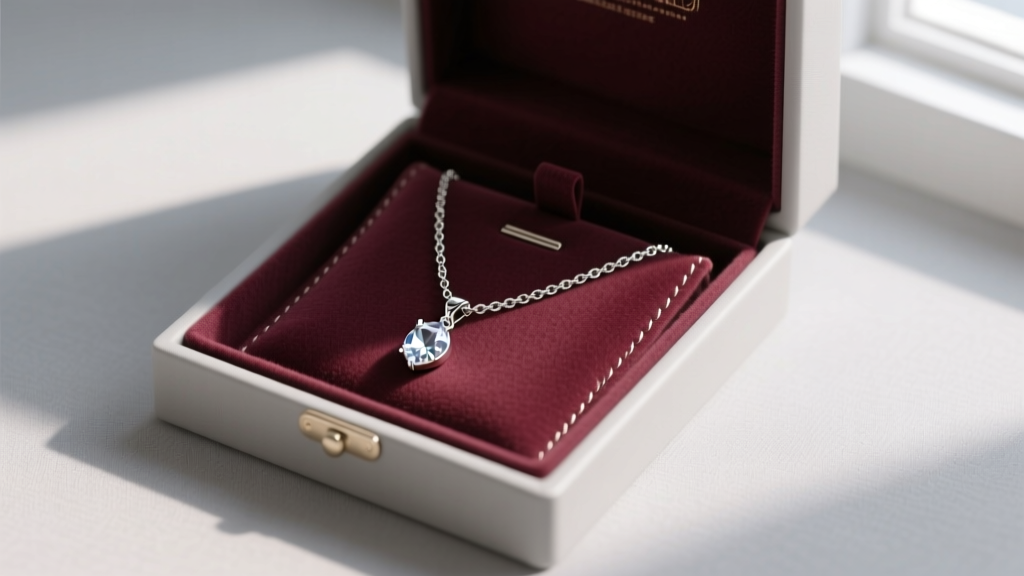
How you store your lavalier necklace is just as critical as how you clean it. Tossing this specific style into a communal jewelry box is a recipe for disaster. The dangling drop will inevitably swing and become entangled with other pieces, potentially bending the bail or scratching softer stones in the central setting.
The ideal storage method for a lavalier necklace involves immobilization. Lay the piece completely flat in a dedicated jewelry drawer with individual felt compartments. If the drop is particularly heavy or features a fragile material like an opal or a carved cameo, place a small, soft microfiber pad underneath the drop to elevate it slightly and prevent it from pressing into the chain. For travel, utilize a specialized jewelry roll that features a "drop pouch" or a snap-button strap that secures the lower half of the pendant, preventing the kinetic swinging that causes travel-related damage.
When to Seek Professional Jeweler Intervention
While home maintenance is excellent for surface cleaning and basic inspections, the complex architecture of a lavalier necklace necessitates professional servicing. The Jewelers of America recommends professional inspection for kinetic jewelry pieces at least once a year.
You should immediately consult a master jeweler if you notice any of the following:
- Audible Clicking: If you hear a faint clicking sound when the drop swings, the bail hole has likely worn into an oval shape and is striking the jump ring. A jeweler can install a new bail or add a protective metal sleeve.
- Discoloration at the Joint: If the jump ring connecting the drop shows a dark or greenish line, it may indicate stress corrosion cracking or a failing solder joint.
- White Gold Fading: If your lavalier is crafted from white gold, the rhodium plating will wear off fastest at the friction points—specifically where the drop bail rubs against the jump ring. Professional re-plating requires disassembling the drop to ensure an even coat.
By treating your lavalier necklace not just as a static accessory, but as a dynamic piece of wearable engineering, you ensure that its captivating movement and brilliance will endure for generations. Proper cleaning, rigorous mechanical inspection, and strategic storage are the cornerstones of preserving this historically rich and visually stunning necklace style.


