How to Layer and Clean a 14k Gold Multi Gemstone Necklace
Learn how to expertly layer, clean, and store your 14k gold multi gemstone necklace with our step-by-step guide on gemstone hardness and gold care.

The Metallurgical Advantage of 14k Gold for Multi-Gemstone Settings
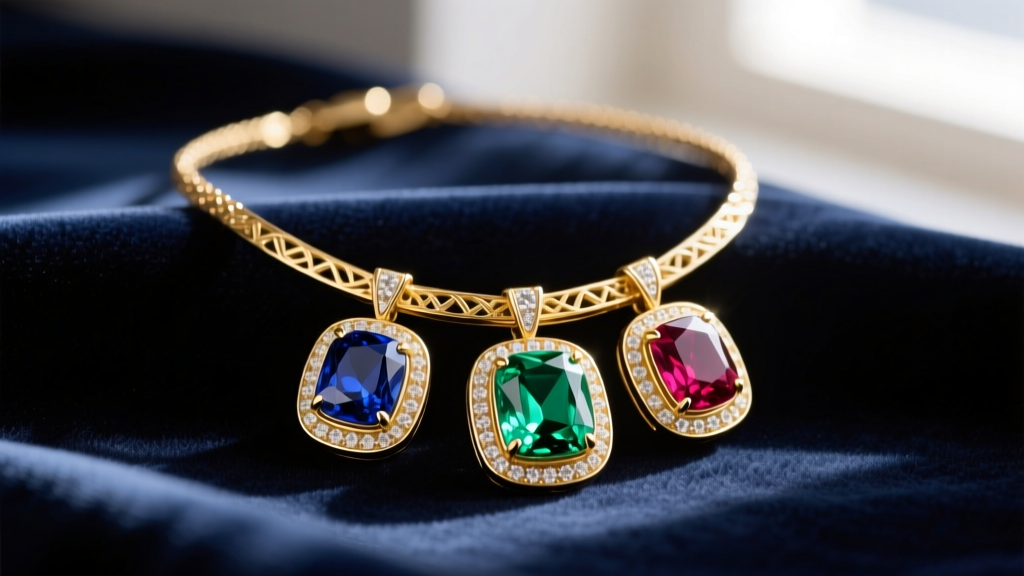
When investing in a 14k gold multi gemstone necklace, you are choosing a piece that perfectly balances luxurious aesthetics with structural integrity. Pure 24k gold is far too soft to securely hold multiple gemstone settings, while 18k gold can still be prone to prong wear over time. 14k gold, composed of 58.3% pure gold and 41.7% alloy metals (typically copper, silver, and zinc), offers a Vickers hardness of roughly 120-140 HV. This specific alloy matrix provides the necessary tensile strength to secure the numerous prongs, bezels, or channel walls required in a multi-gemstone design without warping or losing stones during daily wear.
However, owning a piece with varying gemstones introduces unique challenges in styling, layering, and maintenance. Because different gems possess vastly different physical properties, treating your necklace as a single uniform material can lead to irreversible damage. This step-by-step guide will walk you through the exact protocols for layering, cleaning, and preserving your multi-gemstone investment.
Step 1: Map Your Gemstone Hardness and Vulnerabilities
Before you attempt to clean or layer your necklace, you must identify the gemstones it contains. The Mohs scale of mineral hardness dictates how easily a stone can be scratched or abraded. In a multi-gemstone piece, a harder stone can easily scratch a softer one if they are allowed to rub together continuously. According to the Gemological Institute of America (GIA), understanding these hardness disparities is the first line of defense in gemstone care.
| Gemstone | Mohs Hardness | Vulnerability Profile | Ultrasonic Safe? |
|---|---|---|---|
| Sapphire / Ruby | 9.0 | Highly durable, but can scratch softer adjacent gems. | Yes |
| Spinel / Topaz | 8.0 | Durable, but topaz has perfect cleavage (can split if struck). | Yes (with caution) |
| Emerald / Beryl | 7.5 - 8.0 | Brittle; often fracture-filled with oils or resins. | No |
| Quartz / Amethyst | 7.0 | Good durability, but prolonged heat can fade color. | Yes |
| Opal / Turquoise | 5.0 - 6.5 | Porous and soft; highly sensitive to chemicals and heat. | No |
Expert Rule of Thumb: If your 14k gold multi gemstone necklace contains even one soft or treated stone (like emerald, opal, or turquoise), you must treat the entire piece as if it were fragile. Never assume a piece is ultrasonic-safe just because it features diamonds or sapphires alongside softer gems.
Step 2: Mastering the Layering Technique Without Tangling
Layering a vibrant multi-gemstone piece requires strategic spacing to prevent the gold chains from knotting and the gemstones from chipping against one another. Follow this precise framework to achieve a flawless, tangle-free stack.
The 2-Inch Length Rule
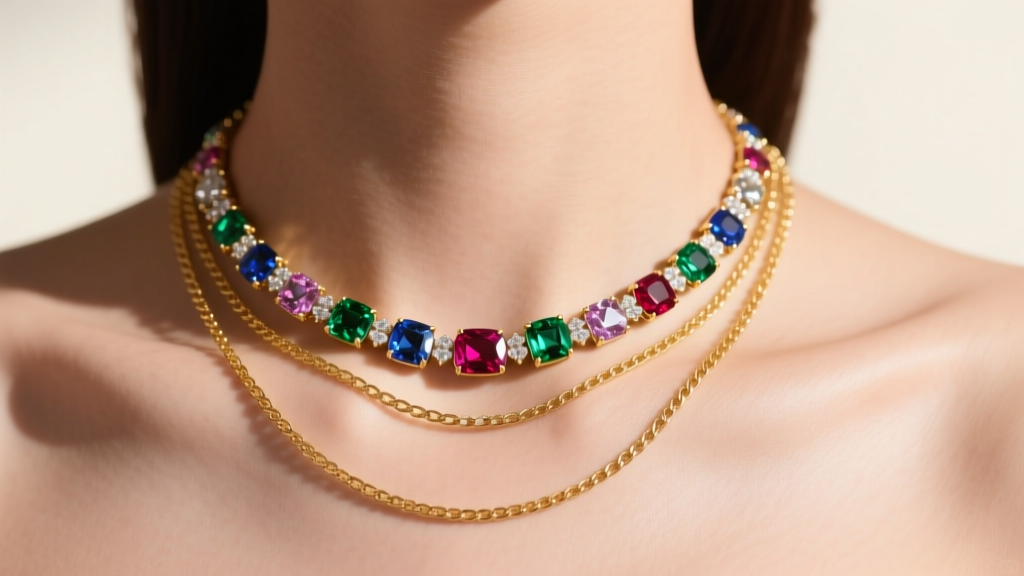
To prevent the clasps and pendants from catching on each other, maintain a minimum 2-inch difference between layered necklaces. If your 14k gold multi gemstone necklace sits at 18 inches, pair it with a simple 14k gold cable chain at 16 inches, and perhaps a 20-inch solid gold rope chain. This spacing ensures the gemstones remain the focal point without competing with adjacent pendants.
Utilize a Spacer Clasp for Heavy Stacks
If you are layering three or more chains, friction between the gold links can cause microscopic wear over time. The Jewelers of America recommends minimizing metal-on-metal friction. Invest in a 14k gold separator clasp (often called a multi-strand spacer). This device locks the chains in place at the back of your neck, guaranteeing they remain perfectly spaced at the front and completely eliminating the risk of tangling.
Balance the Visual Weight
Because a multi-gemstone necklace carries significant visual and physical weight, balance it with solid, unadorned chains. Avoid layering it with other intricate pendants or charm-heavy pieces, which will create a cluttered neckline and increase the likelihood of gemstone abrasion.
Step 3: The Proper Cleaning Protocol for Mixed Stones
The most common mistake jewelry owners make is using commercial jewelry dips or ultrasonic cleaners on multi-gemstone pieces. Ultrasonic waves create microscopic cavitation bubbles that can shatter brittle stones like emeralds or strip the protective oil treatments from fracture-filled gems. Furthermore, harsh chemical dips can permanently discolor porous stones like turquoise. Here is the only safe, professional-grade cleaning method for your necklace.
Materials Needed:
- Distilled water (never tap water, as chlorine and hard minerals can spot porous gems)
- Mild, phosphate-free dish soap (e.g., original Dawn)
- A brand-new, extra-soft baby toothbrush
- A lint-free microfiber cloth
- A ceramic or glass bowl (avoid metal bowls that can scratch the gold)
Step-by-Step Cleaning Process:
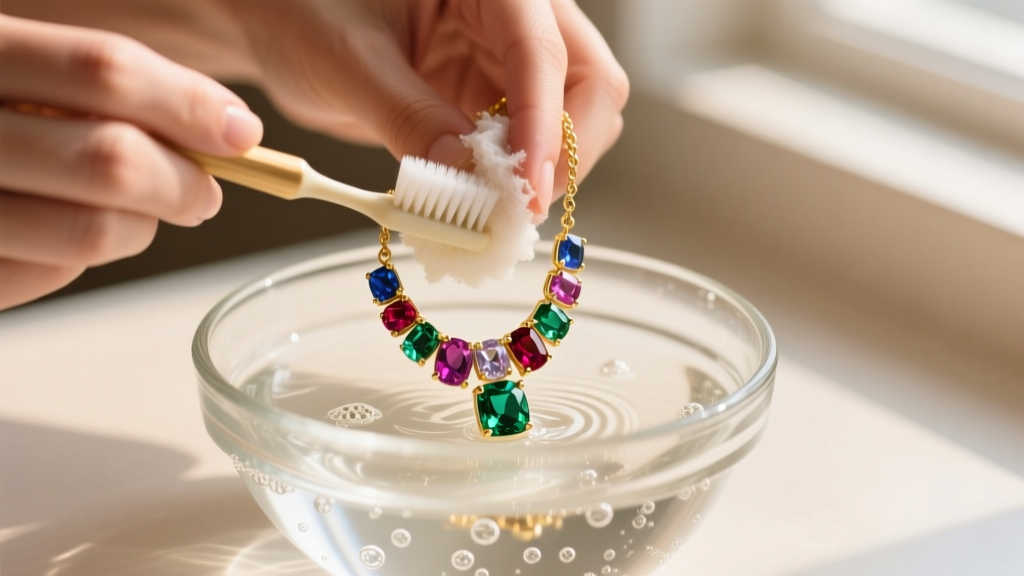
- Prepare the Solution: Mix exactly one drop of mild dish soap into 8 ounces of lukewarm (never hot) distilled water in your glass bowl.
- Soak Briefly: Submerge the 14k gold multi gemstone necklace for no more than 3 to 5 minutes. This loosens body oils and lotions trapped behind the gemstone settings without compromising any stone treatments.
- Gentle Agitation: Using the extra-soft baby toothbrush, gently sweep the bristles across the back of the gemstone settings and along the gold chain links. Do not scrub the face of the gemstones aggressively.
- Rinse Carefully: Rinse the necklace under a gentle stream of lukewarm distilled water. Ensure the drain is securely plugged or use a mesh strainer to prevent accidental loss.
- Dry Thoroughly: Pat the piece dry with a microfiber cloth. Use a wooden toothpick to gently wick away any remaining moisture from the tight spaces between the prongs and the gemstone girdles.
Step 4: Storage and Maintenance to Prevent Scratching
How you store your necklace is just as critical as how you clean it. The Federal Trade Commission's Jewelry Guides emphasize the importance of proper material handling to maintain the integrity of precious metals and gems. When you toss a multi-gemstone necklace into a communal jewelry box, the harder gemstones (like sapphires) will act like sandpaper against the 14k gold chain and any softer gems present.
Pro Storage Tip: Always store your 14k gold multi gemstone necklace in an individual, soft-lined polyurethane pouch. For added protection against tarnish and moisture, drop a small silica gel packet or an anti-tarnish strip into the pouch before sealing it. This is especially crucial if your piece contains copper-heavy alloys or silver components that are prone to oxidation.
Regular Prong Inspections
Because multi-gemstone necklaces feature a higher volume of settings, the statistical probability of a loose prong increases. Every six months, perform the 'shake test.' Hold the necklace close to your ear and gently shake it. If you hear a faint rattling sound, a gemstone is loose in its setting. Stop wearing the piece immediately and take it to a professional jeweler for prong re-tipping. Catching a loose prong early will save you from losing a precious gemstone and the cost of a complex replacement.
Conclusion
A 14k gold multi gemstone necklace is a masterclass in color and metallurgy, offering a vibrant, personalized aesthetic that single-stone pendants simply cannot match. By respecting the Mohs hardness scale, adhering to the 2-inch layering rule, and strictly avoiding ultrasonic cleaners, you ensure that both the gold and the gemstones remain pristine. Treat your jewelry with the specialized care it demands, and it will retain its brilliance and structural integrity for generations to come.


