How to Layer Your Coco Crush Necklace: Step-by-Step Guide
Master the art of fine jewelry layering with our step-by-step guide to styling your Coco Crush necklace for any neckline and occasion.

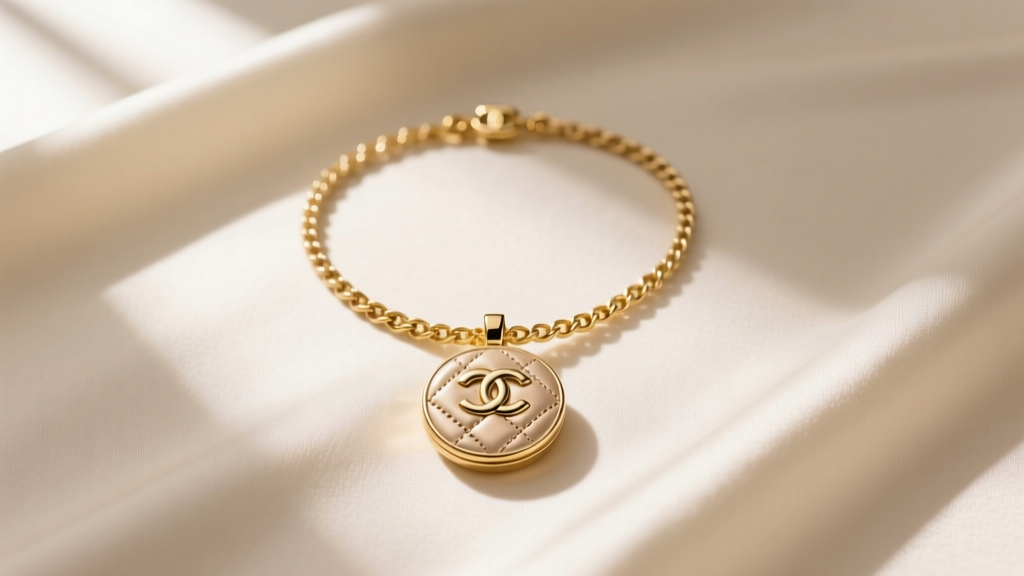
The Architecture of the Coco Crush
Since its introduction, the Chanel Coco Crush collection has redefined modern fine jewelry by translating the iconic matelassé quilting of the 2.55 flap bag into wearable, sculptural gold. But as jewelry trends have evolved toward highly personalized, curated stacks, wearing a single pendant is no longer the only way to showcase this masterpiece. Layering a coco crush necklace requires an understanding of metal hardness, chain geometry, and visual weight. Unlike costume jewelry, fine 18k gold requires strategic spacing to prevent micro-abrasions and tangling.
In this comprehensive guide, we break down the exact mechanics of layering your Coco Crush necklace, from selecting the right secondary chains to engineering the perfect drop length for your specific neckline. Whether you own the Mini, Standard, or Large pendant, these step-by-step instructions will elevate your styling precision.
Understanding Your Pendant Anatomy
Before adding secondary chains, you must understand the physical properties of your anchor piece. The Coco Crush pendant is typically crafted in 18k Yellow Gold, White Gold, or Chanel's proprietary Beige Gold. Beige Gold is an exclusive alloy comprising 75% pure gold, with a carefully calibrated mix of copper and silver that yields a warm, sun-kissed hue without the pinkish undertones of traditional rose gold.
Pendant Dimensions and Weight
- Mini Coco Crush: Approximately 8mm in width. Lightweight, ideal for delicate 2-inch drop layering.
- Standard Coco Crush: Approximately 12mm in width. The most versatile size, carrying enough visual weight to anchor a 3-chain stack.
- Large Coco Crush: Approximately 16mm+ in width. Acts as a statement piece; requires heavy-gauge secondary chains to maintain visual balance.
The standard chain provided by the maison is typically a 1.2mm cable chain, adjustable from 40cm (15.7 inches) to 45cm (17.7 inches) via discrete jump rings. This adjustability is the foundation of your layering framework.
Step 1: Establishing the Anchor Drop
The first rule of fine jewelry layering is establishing a definitive anchor. Your Coco Crush necklace will serve as the focal point, meaning its pendant must rest precisely in the hollow of your clavicle or slightly below, depending on your anatomy.
Fasten the Coco Crush chain at the 40cm mark. This shorter length ensures the quilted motif sits high on the chest, leaving ample negative space below it for secondary chains. Ensure the proprietary spring-ring clasp, which often features a subtle CC or Camellia charm, is secured tightly. The added weight of the clasp charm can cause the necklace to shift to the side of your neck; to counter this, position the clasp at the nape of your neck and allow the chain to settle naturally before moving the pendant to the center.
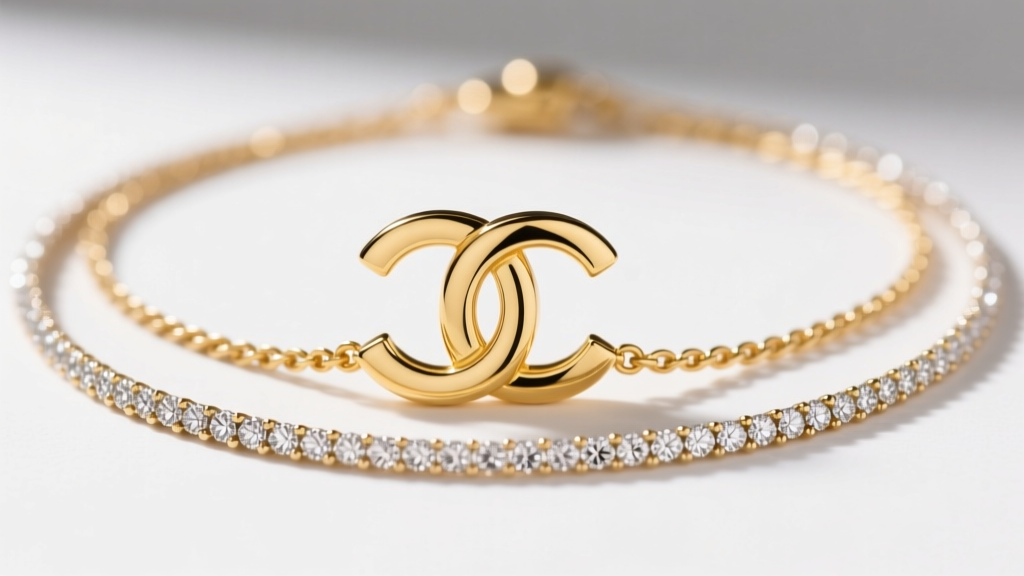
Step 2: Selecting the Spacer Chain
The most common mistake in layering fine jewelry is placing two chains of the same weave and thickness together. This not only causes severe tangling but also creates a muddy, cluttered visual. To complement the geometric, quilted lines of the Coco Crush, your secondary chain must offer textural contrast.
Recommended Chain Weaves for Layering
- Box Chain (1.0mm): The smooth, square links of a box chain reflect light differently than the matte-and-polish contrast of the matelassé pattern. It provides a modern, architectural backdrop.
- Rolo Chain (1.5mm): The round, uniform links of a rolo chain add a vintage, organic feel that softens the sharp edges of the quilted pendant.
- Diamond-Station Chain: A delicate cable chain featuring bezel-set solitaire diamonds (typically 0.03ct to 0.05ct each) adds necessary sparkle without competing with the goldwork of the Coco Crush.
Critical Sizing Rule: Your spacer chain must be exactly 5cm (2 inches) longer than your anchor chain. If your Coco Crush is fastened at 40cm, your spacer chain must be 45cm. This precise 2-inch drop prevents the metal edges of the quilted pendant from striking the secondary chain, which could lead to surface scratching over time.
Step 3: Adding the Tertiary Accent
For a complete, curated stack, a third chain introduces an asymmetric element that draws the eye. According to Vogue's fine jewelry styling guidelines, the third layer should break the pattern established by the first two.
If your Coco Crush is in 18k Yellow Gold and your spacer is a yellow gold box chain, use the tertiary chain to introduce a mixed-metal element or a contrasting gemstone. A 50cm (20-inch) white gold or platinum chain featuring a single, bezel-set sapphire or a simple 3mm gold bead creates a stunning tri-level cascade. The tertiary chain should always be the lightest and most delicate of the three, acting as a subtle frame rather than a competing focal point.
The secret to layering fine jewelry isn't about adding more; it's about engineering the negative space between the metals to let each piece breathe.
Metal Friction and Mohs Hardness Considerations
When layering high-karat gold, understanding the Mohs scale of mineral hardness is essential for preserving your investment. Pure 24k gold is exceptionally soft, and while 18k gold (75% pure) is alloyed for durability, it still ranks around 2.5 to 3 on the Mohs scale. The deeply engraved, polished edges of the Coco Crush quilted pattern can act as micro-abrasives if they constantly rub against a softer secondary chain.
To mitigate friction damage, avoid layering your Coco Crush with high-polish, hollow-core chains. The solid, sculpted weight of the Coco Crush will easily dent hollow links. Furthermore, if your Coco Crush features pavé diamonds, ensure the secondary chain does not have sharp, exposed prongs that could catch on the delicate milgrain or bead-setting of the pendant. As noted by the Gemological Institute of America (GIA), regular inspection of layered pieces is vital to catch wear patterns before structural failure occurs.
The Neckline Pairing Matrix
A perfectly layered Coco Crush stack can be visually ruined if paired with the wrong garment neckline. Use the matrix below to determine the optimal chain lengths and pendant configurations for your wardrobe.
| Neckline Type | Optimal Anchor Length | Stack Configuration | Styling Notes |
|---|---|---|---|
| Deep V-Neck | 45cm (18 inches) | Coco Crush + 50cm Diamond Station | Follow the V-shape; keep pendants centered and elongated. |
| Crew Neck | 40cm (16 inches) | Coco Crush + 45cm Box Chain + 50cm Bead | Sit above the fabric line; creates a collar-like effect. |
| Turtleneck | 50cm (20 inches) | Large Coco Crush only, or layered over a long 60cm lariat | Fabric adds bulk; requires larger pendants and longer drops to avoid looking choked. |
| Off-the-Shoulder | 35cm (14 inches) Choker | Mini Coco Crush on shortest setting | Highlight the exposed collarbones; avoid long chains that dangle into the bodice. |

Maintenance and Clasp Security
Layering increases the physical stress on your jewelry. The constant pulling and adjusting of multiple chains can weaken spring-ring clasps and stretch jump rings. Once a month, perform a tactile inspection of your Coco Crush clasp. Press the release mechanism to ensure it snaps back with a firm, audible click. If the tension feels loose, the internal spring requires professional servicing by a Chanel boutique jeweler.
When cleaning your layered stack, never use ultrasonic cleaners on the Coco Crush pendant if it features pavé diamonds, as the high-frequency vibrations can loosen the bead settings over time. Instead, use a soft-bristled baby toothbrush, a drop of mild dish soap, and lukewarm water. Gently brush the quilted grooves to remove trapped skin oils and lotions, which can dull the contrast between the matte and polished gold finishes. Dry thoroughly with a microfiber cloth before storing the pieces individually in soft flannel pouches to prevent them from scratching one another in your jewelry box.
Final Thoughts on Personalization
Mastering the art of layering your Coco Crush necklace is an exercise in precision and personal expression. By respecting the physical properties of 18k gold, adhering to strict drop-length mathematics, and pairing your stack with complementary necklines, you transform a singular beautiful object into a dynamic, multi-dimensional styling signature. Take the time to adjust your jump rings, experiment with mixed metals, and let the architectural brilliance of the matelassé motif guide your curated aesthetic.


