Expert Guide: How to Layer Pearl Necklace Strands Safely
Master the art of the layer pearl necklace. Learn technical stringing specs, nacre friction prevention, and exact length differentials for styling.

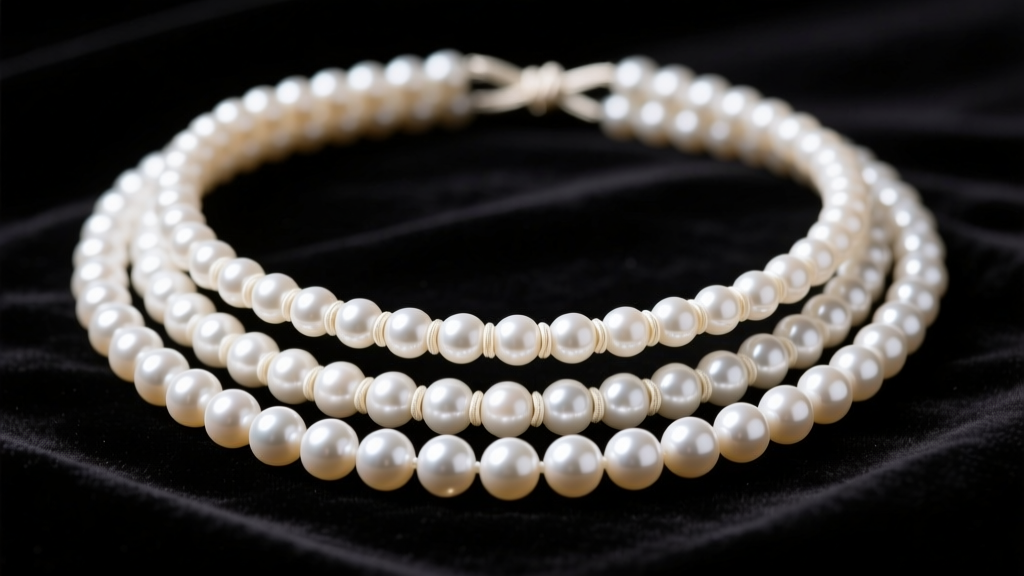
When you layer pearl necklace strands, you are combining two of the most elegant elements in jewelry design with one of the most destructive physical forces: kinetic friction. While the aesthetic of cascading nacre is timeless, the technical execution requires a deep understanding of material science, tensile strength, and spatial geometry. Many enthusiasts and even some jewelers overlook the structural mechanics required to protect the delicate surface of cultured pearls when worn in multi-strand configurations. This expert deep dive explores the precise engineering, stringing materials, and length differentials necessary to build and wear a layered pearl necklace without compromising the nacre's structural integrity or optical luster.
The Physics of Pearl Friction: Why Nacre Scratches
To understand why layering requires technical precision, we must first look at the Mohs Hardness Scale. Cultured pearls typically rank between 2.5 and 3.0 on the Mohs scale, making them exceptionally soft compared to diamond (10) or sapphire (9). However, the real danger in a layer pearl necklace setup is not scratching from other gemstones, but pearl-on-pearl friction and contact with metal hardware.
According to the Gemological Institute of America (GIA), the luster and orient of a pearl are determined by the microscopic aragonite platelets that make up the nacre. When two pearl strands are layered too closely, the continuous rubbing caused by the wearer's movement creates micro-abrasions. Over time, this wears down the outer layers of nacre, permanently dulling the pearl's light refraction. Furthermore, if the pearls are not individually knotted, a break in the stringing material can cause the beads to slide against one another with high velocity, resulting in catastrophic surface scratching.
Optimal Length Differentials for Multi-Strand Layering
The most common failure mode in layered pearl styling is inadequate length separation. If the gap between strands is too small, the pearls will constantly collide. If the gap is too large, the visual cohesion of the layer pearl necklace effect is lost, and the strands will swing independently, increasing the risk of tangling. The ideal differential depends entirely on the millimeter diameter of the pearls being used.
| Pearl Diameter (mm) | Minimum Length Gap | Clasp Clearance | Ideal Stringing Tension |
|---|---|---|---|
| 4.0 - 6.0mm (Seed) | 1.5 inches | 0.5 inches | Low (Flexible drape) |
| 7.0 - 8.5mm (Akoya) | 2.0 inches | 0.75 inches | Medium (Firm knotting) |
| 9.0 - 11.0mm (South Sea) | 3.0 inches | 1.0 inches | High (Reinforced wire) |
| 12.0mm+ (Edison/Baroque) | 4.0+ inches | 1.5 inches | Maximum (Heavy-duty) |
As noted by the Cultured Pearl Association of America (CPAA), maintaining these minimum gaps ensures that the natural swing arc of the human neck allows the strands to rest in parallel planes rather than intersecting at the clavicle.

Stringing Materials: Silk vs. Bead Wire vs. Synthetic
The backbone of any layer pearl necklace is its stringing material. The choice of thread dictates the drape, the knot security, and the long-term durability of the piece.
Traditional Silk Thread
Griffin silk (typically size F or FF for 7mm pearls) is the historical standard. It allows for tight French knotting between each pearl, which prevents bead-on-bead friction if the strand breaks. However, silk is a natural protein fiber that stretches over time and degrades when exposed to the acidic pH of human sweat and cosmetics. If you wear a silk-strung layered piece frequently, it requires professional re-stringing every 18 to 24 months.
Braided Polyethylene (PowerPro)
For modern jewelers, braided polyethylene fishing line (like 10lb test PowerPro) has become a favored alternative. It offers zero stretch, incredible tensile strength, and complete resistance to moisture and chemicals. The primary technical challenge is knotting; polyethylene is slippery, requiring specialized surgeon's knots and a micro-drop of cyanoacrylate adhesive to secure the knots against the pearl drill holes.
Coated Bead Wire (Soft Flex)
As detailed by stringing experts at Soft Flex Company, multi-strand woven stainless steel wire coated in nylon (0.019-inch diameter) is ideal for heavy South Sea or Edison pearls. Wire cannot be knotted between pearls; instead, it requires crimp beads and wire protectors. Because there are no knots to act as buffers, wire-strung pearls must be separated by microscopic silicone spacers or rely entirely on the 3-to-4-inch length differentials mentioned in the table above to prevent nacre damage.
Clasp Mechanics and Weight Distribution
When you layer pearl necklace strands, the cumulative weight of the nacre and the stringing material puts immense stress on the clasp hardware. A standard single-strand spring ring clasp will fail under the multi-directional shear forces of a three-strand setup.
The Spacer Bar Solution
For a flawless drape, the best technical solution is a multi-strand locking spacer bar clasp. This 14k gold or platinum hardware anchors all strands at a fixed distance at the nape of the neck, completely eliminating clasp migration and tangling. The spacer bar distributes the kinetic load evenly across the entire width of the neck rather than concentrating it on a single jump ring.
Fishhook vs. Magnetic Clasps
If individual clasps are preferred for versatility, a multi-strand fishhook clasp is the most secure. It uses a tension-based locking mechanism that actually tightens when pulled. Conversely, magnetic clasps are highly discouraged for layered pearls. While they offer excellent pull-strength (straight apart), they have near-zero shear-strength. When layered strands shift and slide across the collarbone, the lateral sliding force will easily snap a magnetic clasp open, resulting in a dropped and potentially damaged necklace.
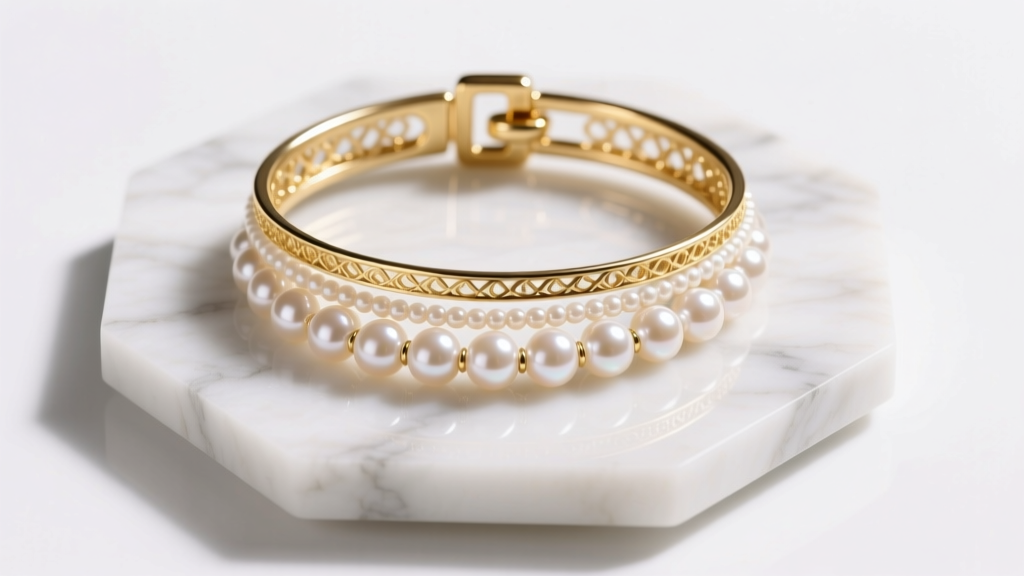
Troubleshooting Common Layering Failures
Even with precise planning, wearers often encounter structural and aesthetic issues. Here is how to troubleshoot the most common layer pearl necklace failures:
- The 'Twist' Effect: If your strands constantly twist around one another, your length differential is too narrow for the specific pearl size. Increase the gap by at least 0.5 inches and ensure the stringing tension is relaxed enough to allow the pearls to roll freely on the thread.
- Clasp Migration (Creep):strong> If the clasp continually slides from the back of the neck to the front, the clasp hardware is too heavy relative to the pearls. Swap a solid gold lobster clasp for a lightweight, hollow-core fishhook or use a small gold counterweight bead on the back of the strand.
- Nacre Dulling at the Drill Hole: If you notice a chalky, white ring forming around the drill holes where the pearls meet, the stringing material is too abrasive, or the knots are too loose. Re-string using a finer silk thread and ensure the knot is pulled flush against the bead using a specialized knotting tool or tweezers.
- Asymmetrical Draping: If one side hangs lower than the other, the pearls were likely not sorted by exact millimeter size before stringing. A professional jeweler will use a digital caliper to ensure every pearl in the front-facing 'focal zone' is matched to within 0.1mm to maintain a symmetrical weight distribution.
The Golden Rule of Pearl Layering: Never store a layered pearl necklace hanging on a standard jewelry tree. The cumulative weight of the strands will stretch the silk or polyethylene thread, permanently altering your carefully calibrated length differentials. Always store the piece flat in a soft, anti-tarnish flannel pouch with a micro-silica desiccant packet to control ambient moisture.
Mastering the technical nuances of pearl layering transforms a fragile fashion statement into a durable, heirloom-quality configuration. By respecting the Mohs hardness of nacre, calculating exact spatial differentials, and selecting the appropriate tensile stringing materials, you can enjoy the cascading elegance of a multi-strand setup with absolute structural confidence.


