Is the Heart of the Ocean Necklace Real? A Gemological Deep Dive
Discover if the Heart of the Ocean necklace is real. We analyze the gemology, history, and technical specs of Titanic's iconic blue diamond.

The Cinematic Myth vs. Gemological Reality
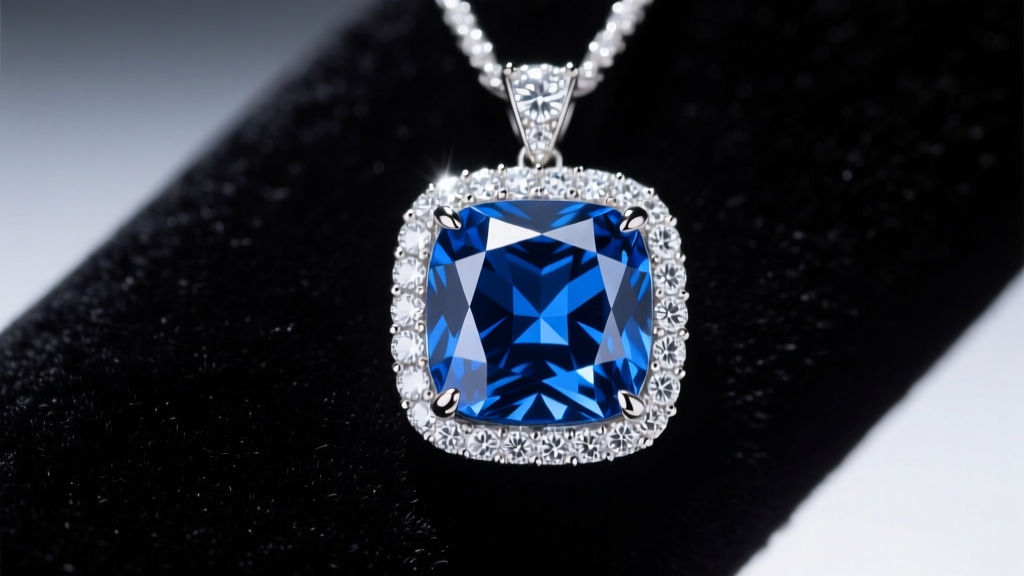
When collectors and cinema enthusiasts search for the heart of the ocean necklace real origins, they are often met with a tangled web of Hollywood fiction and high jewelry history. In James Cameron’s 1997 epic Titanic, the necklace is presented as a fictional, priceless blue diamond commissioned by Louis XVI. Historically, no such necklace existed on the ill-fated RMS Titanic. However, the cultural impact of the film birthed a very real lineage of high jewelry pieces designed to replicate the cinematic masterpiece.
To understand the technical reality of this iconic pendant, we must separate the original movie props from the authentic, gemological masterpieces created in its wake, and examine the actual science behind large-format blue gemstones.
The Asprey & Garrard Prop: Technical Specifications
The original necklace used during the filming of Titanic was not a diamond. It was a custom prop crafted by the historic London jewelry house Asprey & Garrard. The center stone was a custom-cut blue zircon (often misidentified as tanzanite in early press releases) set in 18-karat white gold. Zircon was chosen for its high refractive index (1.92-1.98) and strong birefringence, which allowed it to mimic the fiery dispersion of a diamond under the intense, hot lighting of a movie set without the prohibitive cost or security risks of a real gemstone.
The True Inspiration: The Hope Diamond
While the Heart of the Ocean is fictional, its narrative DNA is heavily borrowed from the Smithsonian National Museum of Natural History's Hope Diamond. The Hope Diamond is a 45.52-carat Fancy Deep Grayish-Blue diamond. From a gemological standpoint, the Hope Diamond is a Type IIb diamond, meaning it contains trace amounts of boron and is semi-conductive—a rare trait found in less than 0.1% of all natural diamonds.
Gemological Breakdown: Type IIb Boron-Rich Diamonds
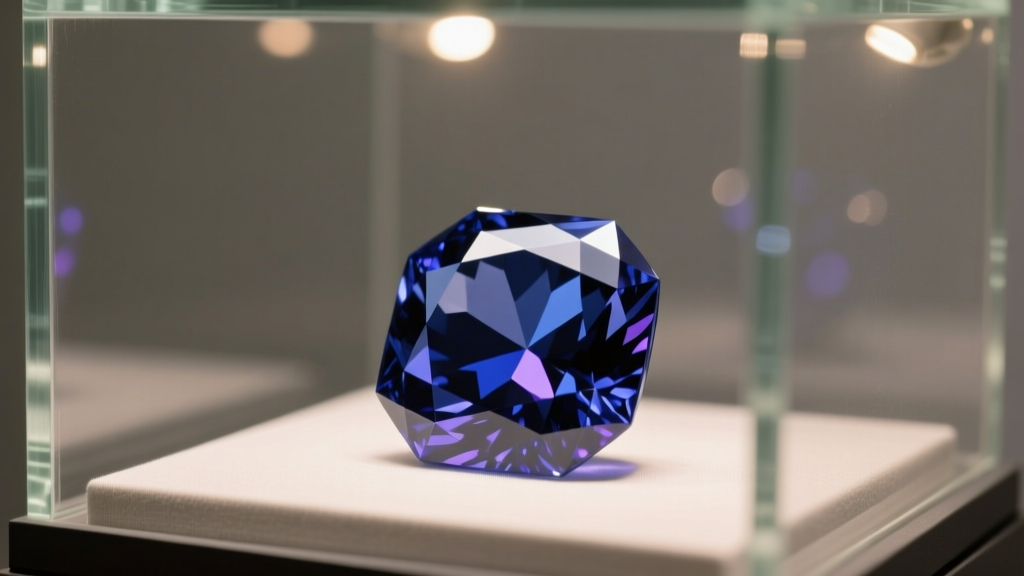
The distinct blue hue in natural diamonds is not caused by physical inclusions, but by atomic substitution. During the diamond's formation deep within the Earth's mantle, boron atoms replace carbon atoms in the crystal lattice. This boron impurity creates an electron hole that absorbs red, yellow, and green light from the visible spectrum, allowing only blue light to be transmitted to the observer's eye.
Creating a genuine, natural blue diamond necklace of the sheer scale seen in the film (estimated at 15 to 20 carats for the center stone) is a feat of extreme rarity. According to the Gemological Institute of America (GIA), a natural Fancy Vivid Blue diamond of that size would command upwards of $3 million to $4 million per carat at auction, pushing the total value of the center stone alone past $60 million.
Creating a "Real" Heart of the Ocean: Material Alternatives
Because natural blue diamonds of this magnitude are virtually unobtainable, master jewelers tasked with creating "real" versions of the necklace for red-carpet events and private collectors rely on advanced metallurgy and alternative gemstones. Following the film's release, Harry Winston created a genuine 15-carat blue diamond necklace for actress Gloria Stuart to wear to the 1998 Academy Awards. Concurrently, Asprey & Garrard produced a replica using a 17-carat Ceylon blue sapphire.
For modern bespoke commissions, jewelers must weigh the optical and physical properties of various blue gemstones. Below is a technical comparison of the materials used to replicate the iconic pendant.
| Material | Mohs Hardness | Refractive Index | Specific Gravity | Est. Price/Carat (USD) |
|---|---|---|---|---|
| Natural Blue Diamond (Type IIb) | 10 | 2.417 | 3.52 | $1.5M - $3.5M+ |
| CVD Lab-Grown Blue Diamond | 10 | 2.417 | 3.52 | $800 - $2,500 |
| Ceylon Blue Sapphire | 9 | 1.76 - 1.77 | 4.00 | $3,000 - $12,000 |
| AAA Tanzanite | 6.5 - 7 | 1.69 - 1.70 | 3.35 | $400 - $1,200 |
While tanzanite offers a striking violet-blue trichroism that closely matches the cinematic prop, its Mohs hardness of 6.5 makes it highly susceptible to scratching and cleavage if worn daily. Sapphire and lab-grown diamonds remain the superior choices for structural longevity.
Setting and Fabrication Techniques for Large Center Stones
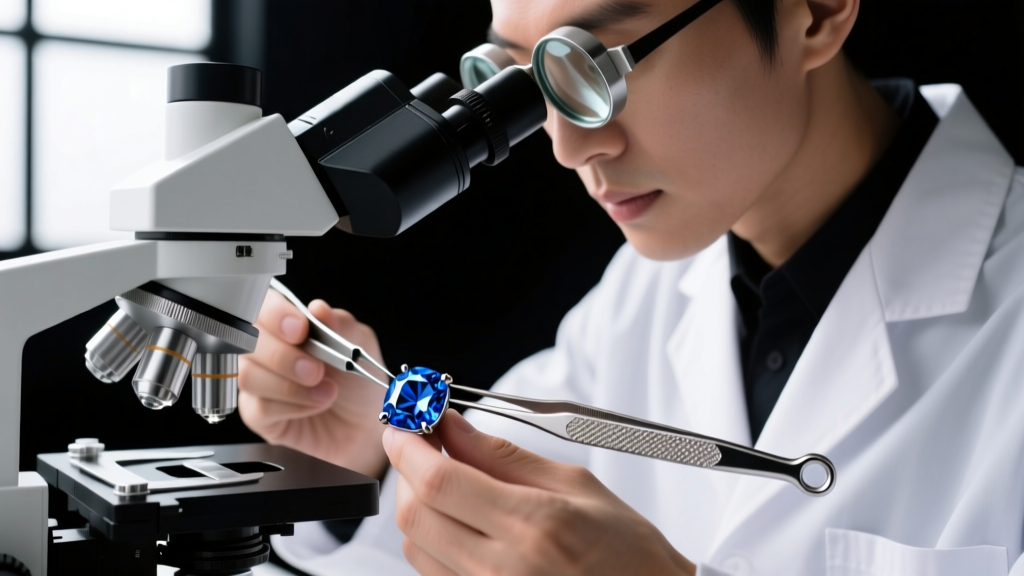
Setting a 15-carat cushion-cut gemstone (which measures approximately 14mm x 14mm) requires rigorous structural engineering. A standard jewelry setting will fail under the sheer weight and kinetic force of a stone this large. Master fabricators employ specific techniques to ensure the Heart of the Ocean replica survives generations of wear.
Prong vs. Bezel: Securing a 15-Carat Cushion Cut
A full bezel setting offers maximum protection but obscures the girdle and reduces light return, dulling the gemstone's brilliance. Therefore, a modified basket setting with reinforced prongs is the industry standard for this specific design. The basket must be cast in Platinum 950/Ruthenium (Pt950/Ru). Unlike the more common Platinum 950/Iridium alloy, which has a Vickers hardness of roughly 90 HV, the Ruthenium alloy achieves a hardness of 135 HV, providing the necessary yield strength to prevent the prongs from bending backward upon impact.
Furthermore, the corners of a cushion-cut stone are its most vulnerable points. Jewelers must utilize V-prongs at the four corners to encapsulate the sharp edges, preventing chipping. The prong wire itself must be drawn to a minimum thickness of 1.4mm (approximately 15-gauge) before being filed and polished.
Bail Engineering and Chain Selection
The bail—the loop that connects the pendant to the chain—bears the entire dynamic load of the necklace. A standard cast bail will eventually snap under the pendulum effect of a heavy 20-gram pendant. Expert fabricators forge the bail from a solid billet of platinum or use a 10-gauge (2.3mm) platinum wire, securing the joints with laser welding rather than traditional soldering to maintain the metal's structural integrity. This must be paired with a heavy-duty chain, such as a 4.5mm solid wheat or Cuban link chain, secured by a lobster clasp equipped with a secondary figure-8 safety catch.
Conclusion: Wearing the Legend
The question of whether the Heart of the Ocean is "real" depends entirely on your definition of reality. While the specific diamond from the film never existed in the hold of the RMS Titanic, the gemological science, the historical precedent of the Hope Diamond, and the extraordinary high jewelry replicas crafted by houses like Harry Winston and Asprey & Garrard are very real. For the modern collector, achieving this legendary look requires a deep understanding of material science, precision metallurgy, and a willingness to invest in master-level fabrication.