How to Layer a Raindrop Necklace: Step-by-Step Guide
Master the art of styling a raindrop necklace with our step-by-step layering guide, material breakdowns, and neckline pairing tips.


The Anatomy of a True Raindrop Necklace
The raindrop necklace is a masterclass in fluid geometry, drawing the eye downward to elongate the neck and frame the collarbone. Unlike standard circular or geometric pendants, a true raindrop silhouette relies on specific lapidary cuts—most notably the briolette or the pear cut. According to the GIA Gem Encyclopedia, a briolette is a three-dimensional, fully faceted teardrop shape that is typically top-drilled, allowing it to dangle freely and catch light from every angle. In contrast, a pear cut is generally flat-backed and set in a bezel or prong mount. Understanding this distinction is critical when selecting your focal piece, as the way the stone moves and reflects light will dictate the rest of your layering strategy.
Standard briolette raindrop pendants range from a subtle 8x5mm for minimalist, everyday wear to a dramatic 15x10mm for evening statements. When choosing your raindrop necklace, pay close attention to the bail (the loop that connects the pendant to the chain). A fixed bail will keep the raindrop perfectly centered, while a sliding bail allows the stone to move laterally, offering a more organic, kinetic feel against the skin.

Step-by-Step Guide to Layering Your Raindrop Necklace
Layering a raindrop necklace requires a strategic approach to chain weaves, lengths, and visual weight. If you simply stack three identical chains, you will end up with a tangled, visually muddy mess. Follow this three-step framework to build a balanced, professional-looking stack.
Step 1: Establish the Base Layer (14 to 16 Inches)
Your base layer acts as the visual anchor near the collarbone. Opt for a delicate chain weave, such as a 1.0mm to 1.2mm cable or rolo chain in 14k or 18k gold. The base chain should sit snugly, functioning almost like a choker. Avoid placing a pendant on this layer; the goal is to create a subtle metallic line that frames the face without competing with the raindrop silhouette below it. A simple 4mm spring ring clasp is ideal here to keep the front profile completely unobstructed.
Step 2: Position the Raindrop Focal Point (18 Inches)
The 18-inch length is the "princess" standard, allowing the raindrop pendant to rest perfectly in the hollow of the collarbone or just above the bust line. This is where your briolette or pear-cut stone takes center stage. To ensure the raindrop doesn't get lost, the chain holding it should be slightly thicker than your base layer—aim for a 1.5mm to 2.0mm box or wheat chain. These weaves offer a fluid, fabric-like drape that complements the liquid geometry of the raindrop pendant without introducing distracting textures.
Step 3: Add the Anchor Chain (22 to 24 Inches)
To complete the triad, introduce a longer anchor chain that falls below the raindrop. This layer should feature a drastically different chain geometry to prevent tangling and add visual contrast. A 3.0mm to 5.0mm paperclip chain or an elongated figaro works beautifully. The open, rectangular links of a paperclip chain provide a modern, architectural counterpoint to the organic, curved facets of the raindrop gemstone. You can leave this chain bare or add a small, simple geometric charm (like a 3mm gold bead or a tiny horizontal bar) to balance the visual weight of the raindrop above it.
The Physics of Tangling: A Troubleshooting Guide
The most common failure mode in necklace layering is tangling. Necklaces tangle due to the physics of their chain links: if the links of one chain are large enough to pass through the gaps of another, they will inevitably knot together with movement. To prevent this, you must leverage "link size differentials."
- The 3x Rule: Ensure the link size of your thickest chain is at least three times larger than the link size of your thinnest chain. For example, pair a 1.0mm cable chain with a 4.0mm paperclip chain. The 1.0mm links are too small to catch on the thick wire of the paperclip links, and the paperclip links are too large to slip through the 1.0mm gaps.
- Mix Chain Geometries: Never layer two chains of the exact same weave (e.g., two rolo chains). The identical gaps will interlock like gears. Always mix rounded links (cable/rolo) with flat or elongated links (box/paperclip).
- Clasp Placement: Always fasten your clasps at the back of your neck, but stagger them slightly off-center. This prevents the bulky clasps from stacking on top of each other and creating an uncomfortable pressure point against your cervical spine.
Matching Chain Lengths to Necklines
The raindrop necklace is incredibly versatile, but its elongating effect must be matched correctly to your garment's neckline to avoid visual clutter. Refer to the data table below for optimal pairings.
| Chain Length | Style Category | Ideal Necklines | Raindrop Suitability |
|---|---|---|---|
| 14" - 16" | Choker / Collar | Off-shoulder, Boatneck, Scoop | Low (Best for bare chains or tiny studs) |
| 18" | Princess | V-Neck, Sweetheart, Button-down | High (Perfect focal point placement) |
| 20" - 22" | Matinee | Crew neck, Turtleneck, Halter | Medium (Requires larger 15mm+ briolettes) |
| 24" - 30" | Opera / Lariat | High-neck blouses, Evening gowns | High (Creates a dramatic, plunging line) |
Material Grades and Durability Considerations
When investing in a raindrop necklace, the metal grade dictates both the longevity of the piece and its interaction with your skin chemistry. The FTC Jewelry Guides strictly regulate metal stamping, ensuring that when you buy a stamped piece, you are getting the exact alloy promised.
- 14k Gold (58.5% pure gold): The industry standard for everyday layering. It offers an excellent balance of rich color and structural rigidity. A 14k gold chain will resist bending and stretching far better than higher karats, making it ideal for supporting heavier briolette pendants.
- 18k Gold (75% pure gold): Prized for its deep, buttery yellow hue. However, 18k gold is softer. If your raindrop pendant exceeds 5 grams, an 18k cable chain may slowly stretch over time at the stress points near the clasp. Opt for box or wheat weaves in 18k to mitigate stretching.
- Platinum (95% pure platinum): The ultimate choice for heirloom-quality raindrop necklaces, particularly those set with diamonds or sapphires. Platinum is incredibly dense and durable, and unlike white gold, it does not require periodic rhodium plating to maintain its bright white luster. It is, however, significantly heavier and more expensive.
Maintenance and Care for Briolette Stones
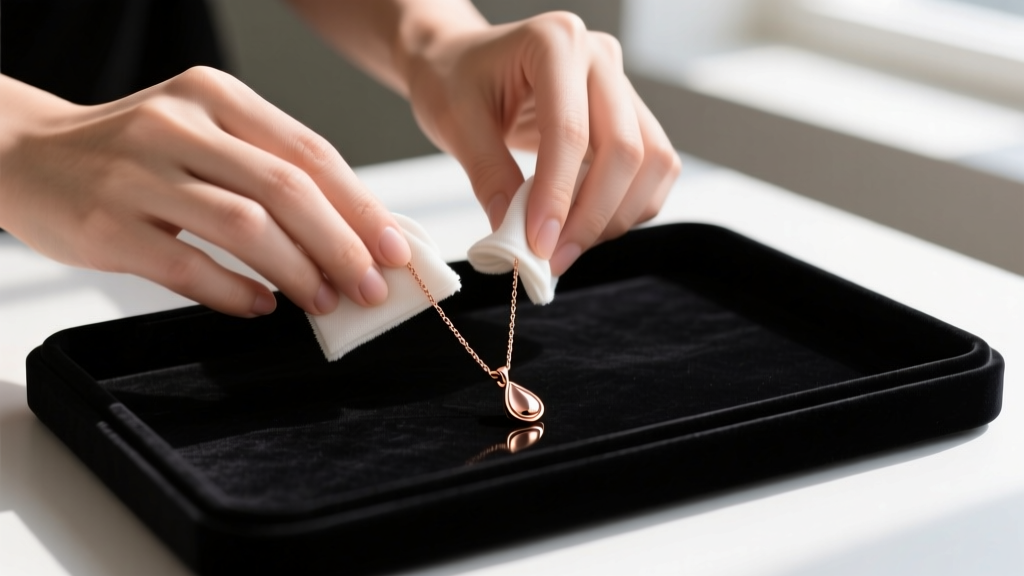
Cleaning a raindrop necklace requires specific care, particularly if the pendant features a top-drilled briolette. Because the drill hole is incredibly narrow (often less than 1.0mm in diameter), it traps sebum, lotion, and environmental dust. According to Jewelers of America, improper cleaning can dull the stone or damage the delicate wire wrapping that secures it.
What to Avoid: Never place a top-drilled briolette raindrop necklace in an ultrasonic cleaner. The high-frequency vibrations can cause micro-fractures in the stone, particularly if it is a softer gemstone like quartz, aquamarine, or opal. Furthermore, the vibrations can loosen the wire-wrapping or the adhesive used in the bail.
The Correct Cleaning Method: 1. Prepare a lukewarm solution of distilled water and a few drops of mild, phosphate-free dish soap. 2. Submerge the necklace for exactly 3 to 5 minutes to loosen debris. 3. Use an extra-soft, baby-hair brush to gently sweep the top drill hole and the pavilion (bottom) facets of the raindrop stone. 4. Rinse thoroughly under a gentle stream of lukewarm water, ensuring the drain is securely plugged. 5. Pat dry with a lint-free microfiber cloth. Never air-dry, as hard water spots will ruin the optical clarity of the faceted raindrop.
Final Styling Thoughts
The raindrop necklace is more than just a piece of jewelry; it is a strategic styling tool that manipulates proportion and light. By understanding the anatomy of the briolette cut, respecting the physics of chain link differentials, and matching your lengths to your garment's architecture, you can elevate a simple pendant into a masterful, layered composition. Whether you opt for a minimalist 14k gold cable chain with a subtle 8mm quartz teardrop or a dramatic platinum paperclip stack featuring a 15mm sapphire briolette, the key lies in intentional, calculated placement.


