The Science of Layering Two Necklaces: Anti-Tangle Mechanics
Master the mechanics of layering two necklaces. Learn exact length differentials, chain weave friction, and clasp weights to prevent tangling.

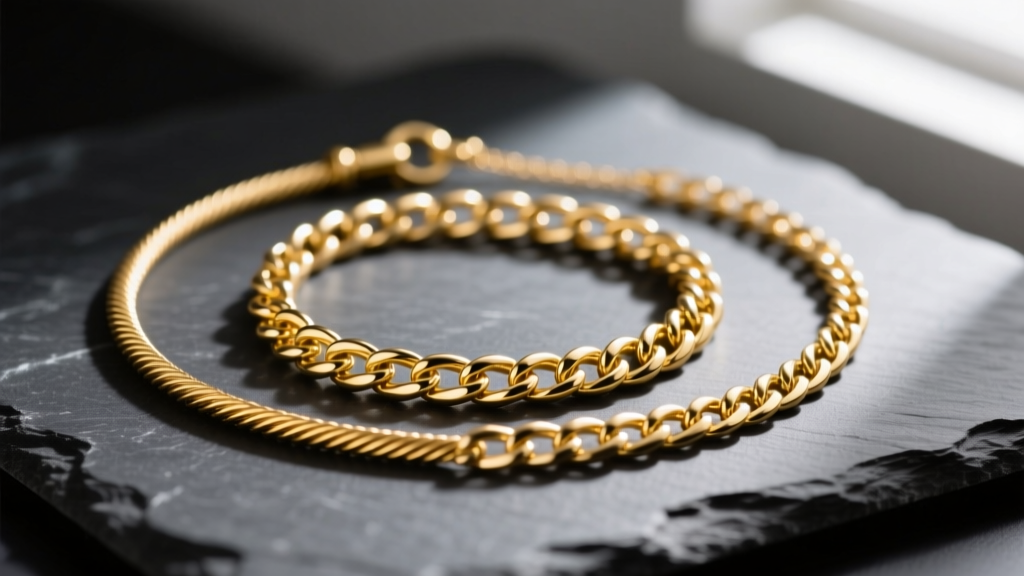
The Physics of Necklace Entanglement
Layering exactly two necklaces is a deceptively complex mechanical challenge. While fashion blogs often suggest simply choosing different lengths, the reality of preventing tangles is governed by knot theory and classical mechanics. According to a landmark study on spontaneous knotting published in the Proceedings of the National Academy of Sciences (PNAS), flexible strings agitated in a confined space have a near 100% probability of forming complex knots once they exceed a critical length threshold. When you wear two necklaces, your body's natural movement provides the kinetic agitation, while the V-shape of your neckline acts as the confined space that forces the chains to intersect.
To successfully layer two necklaces without them twisting into an inseparable mass, we must move beyond aesthetic guesswork and apply precise engineering principles. This requires analyzing the coefficient of friction between specific chain weaves, calculating the pendulum arc of varying pendant weights, and understanding the center of mass regarding clasp hardware. By treating your jewelry as a mechanical system, you can achieve a flawless, tangle-free layered look that lasts from morning until night.
The Golden Ratio of Length Differentials
The most common mistake in layering is relying on a standard two-inch gap regardless of the chain's physical properties. The required length differential between your top and bottom necklace is entirely dependent on the width of the chains and the gravitational pull of the pendants. When a pendant swings, it acts as a plumb bob, seeking the lowest gravitational point at the sternum. If both pendants share the same XYZ coordinate at the bottom of their swing, they will collide, transfer kinetic energy, and eventually wrap around one another.
Below is a technical matrix for determining the minimum length gap required based on chain gauge and pendant mass. These measurements assume a standard neck circumference of 14 to 15 inches.
| Top Chain Width | Bottom Chain Width | Minimum Length Gap | Max Pendant Weight Differential |
|---|---|---|---|
| 1.0mm - 1.5mm | 2.0mm - 3.0mm | 2.0 inches (50mm) | < 3 grams |
| 1.5mm - 2.5mm | 3.0mm - 5.0mm | 3.0 inches (75mm) | < 5 grams |
| > 3.0mm | > 5.0mm | 4.0 inches (100mm) | N/A (No pendants recommended) |
For example, if your top necklace is a delicate 1.2mm cable chain with a 2-gram solitaire pendant, and your bottom necklace is a 3.5mm Cuban link chain, you must maintain at least a 3-inch gap. If the bottom chain also features a pendant, ensure the heavier pendant is on the shorter chain to alter the pendulum swing arcs and prevent intersection.
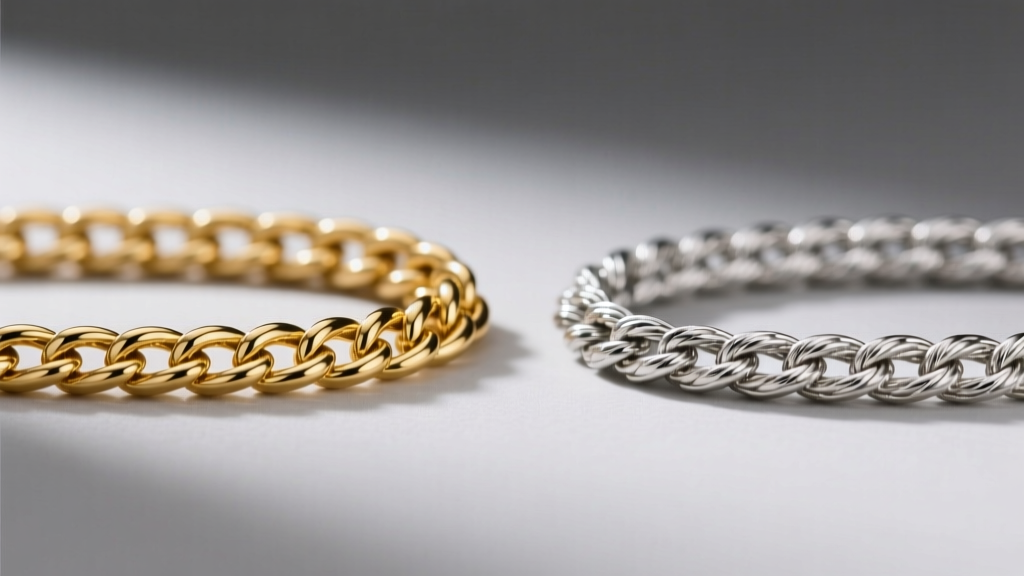
Chain Weave Compatibility & Friction Profiles
Not all chain links are created equal. The geometry of the individual links dictates the chain's surface friction, which is the primary culprit in micro-tangling (where chains don't knot, but simply twist together in a spiral). When selecting two necklaces to layer, you must pair a low-friction weave with a high-friction weave, or use two low-friction weaves. Never pair two high-friction weaves together.
High-Friction Weaves (Avoid for Bottom Layer)
- Box Chains: Constructed from square links with sharp 90-degree inner corners. These corners act as mechanical catches that will easily snag the smooth outer links of a cable chain.
- Rope Chains: The helical, twisted grooves of a rope chain act like the teeth of a gear. If a rope chain rubs against a wheat or herringbone chain, the grooves will grab the opposing links, forcing them to twist.
- Herringbone Chains: While flat and seemingly smooth, the overlapping V-shaped links have micro-serrations on their edges that act like Velcro against delicate jump rings.
Low-Friction Weaves (Ideal Pairings)
- Cable Chains: The simplest and most reliable weave. The uniform, smooth oval links offer minimal surface area for catching. Ideal for the top layer.
- Curb Chains: The links are flattened and interlock tightly, creating a smooth outer profile that allows other chains to slide over them effortlessly. Ideal for the bottom layer.
- Figaro Chains: Similar to curb chains but with a varied link pattern. The flattened surface makes them an excellent, stylish base layer that resists tangling.
Clasp and Jump Ring Mechanics: The Forward Slide
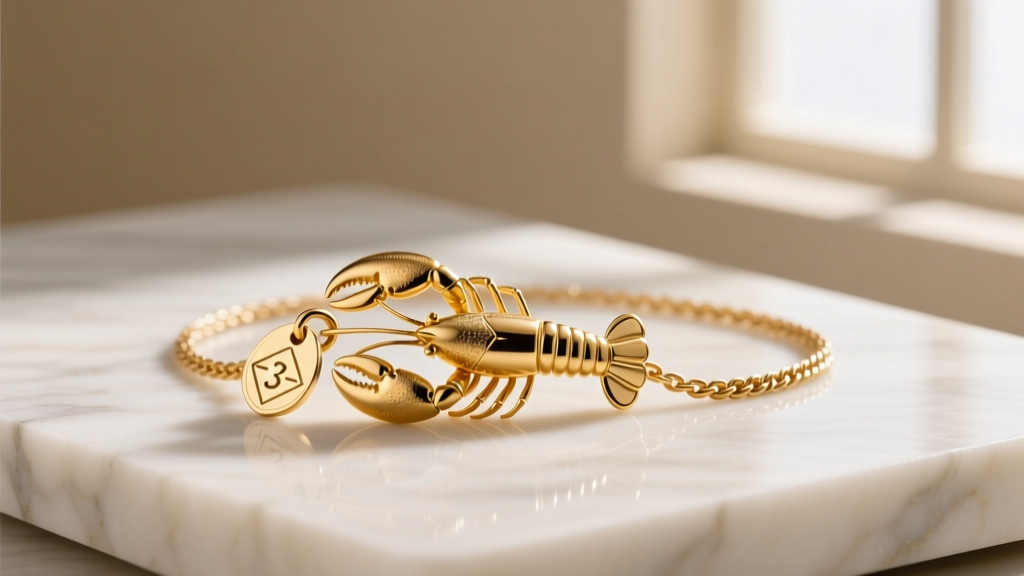
A frequent frustration when wearing two necklaces is the 'forward slide,' where the clasp of the necklace migrates from the nape of the neck to the front, resting awkwardly next to the pendant. This is a center-of-mass issue. If you have a lightweight 1mm wheat chain (total weight: 2.5 grams) equipped with a heavy, oversized 14k gold lobster clasp (weight: 4 grams), the clasp becomes the heaviest point on the continuous loop. Gravity will naturally pull the heaviest point to the lowest possible position, which is the front of your chest.
To engineer a solution, you must balance the chain's weight distribution. Professional jewelers solve this by soldering a small, dense counterweight tag (usually 2 to 3 grams of tungsten or gold) to the jump ring directly opposite the clasp. For a non-destructive at-home fix, thread a tiny, clear silicone jewelry stopper bead onto the chain and position it at the exact nape center. The high-friction silicone grips the skin and hair, anchoring the clasp in place regardless of the weight imbalance.
Metallurgical Considerations: Galvanic Corrosion
When layering two necklaces made of different metals—for instance, a sterling silver chain paired with a 14k yellow gold pendant chain—you are inadvertently creating a galvanic cell. Human sweat contains sodium chloride, which acts as a highly effective liquid electrolyte. When the two dissimilar metals touch in the presence of this electrolyte, galvanic corrosion occurs.
According to the Gemological Institute of America (GIA), understanding metal reactivity is crucial for jewelry longevity. Sterling silver (which contains 7.5% copper) is more anodic than the copper-silver-gold alloy of 14k gold. In a galvanic cell, the anodic metal will sacrifice itself, leading to accelerated oxidation, pitting, and permanent surface degradation precisely at the points where the two chains rub together. If you must layer mixed metals, ensure the chains are separated by a physical barrier, such as a leather cord or a silk ribbon layer in between, or apply a microscopic coat of clear jewelry lacquer to the contact points of the more anodic chain.
Troubleshooting Common Layering Failures
Even with perfect length differentials and compatible weaves, mechanical anomalies can occur. Use this diagnostic framework to troubleshoot persistent layering issues:
- Failure Mode: Pendants keep flipping upside down.
Diagnosis: The bail (the loop connecting the pendant to the chain) is too light relative to the pendant's center of gravity.
Technical Fix: Insert a microscopic, lead-free tungsten bead into the hollow cavity of the pendant bail using a drop of cyanoacrylate adhesive. This lowers the center of mass, forcing the pendant to remain upright. - Failure Mode: The bottom chain continuously spirals and twists on itself.
Diagnosis: Residual torsional stress from the manufacturing drawing process. The metal lattice is 'wound' and seeks to release tension.
Technical Fix: Suspend the chain vertically and attach a 15-gram weight to the bottom. Submerge the weighted chain in a glass of warm (120°F) water mixed with a drop of mild dish soap for ten minutes. The heat and tension will relax the crystalline structure of the metal, permanently removing the spiral memory. - Failure Mode: The two necklaces magnetically cling together.
Diagnosis: Work-hardening of nickel-containing alloys or magnetic inclusions in lower-grade stainless steel findings.
Technical Fix: Demagnetize the clasps by slowly passing them through a commercial degausser, or replace the spring rings with non-magnetic 18k gold or titanium lobster clasps.
Final Engineering Thoughts
Successfully layering two necklaces is not a matter of luck; it is an exercise in applied physics and materials science. By respecting the pendulum arcs of your pendants, matching the friction coefficients of your chain weaves, and balancing the center of mass at the clasp, you transform a frustrating daily tangle into a seamless, engineered aesthetic. Treat your jewelry box like a laboratory, and your layered neckline will remain as flawless at midnight as it was at dawn.


