Necklace Rings Material Guide: Jump Rings, Pendants & Durability
Discover the best materials for necklace rings, from structural jump rings to decorative pendants. Compare durability, tensile strength, and tarnish.

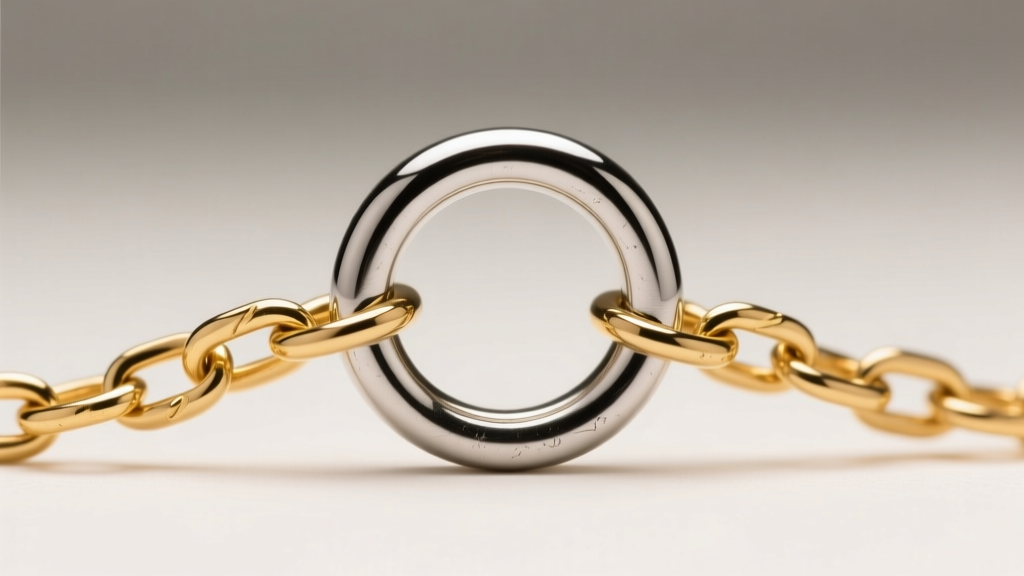
When evaluating fine and fashion jewelry, consumers and designers alike obsess over the primary chain, the clasp mechanism, or the center gemstone. Yet, the structural backbone of any piece relies on its unsung heroes: necklace rings. Whether functioning as the microscopic jump rings holding a heavy pendant, the split rings securing a lobster clasp, or the bold decorative ring pendants acting as the focal point, the metallurgical properties of these circular components dictate the lifespan of the jewelry. In 2026, with the rise of mixed-metal layering and heavier modular charms, understanding the material science behind necklace rings is no longer optional for serious collectors and jewelers.
The Architecture of Necklace Rings
To properly compare materials, we must first bifurcate necklace rings into two distinct categories, as their functional requirements are entirely different:
- Structural Rings: These include jump rings, split rings, and soldered O-rings. Their primary job is load-bearing. They must resist tensile stress, lateral pulling, and abrasion without deforming.
- Decorative Rings: These are ring pendants, slider rings, and geometric focal circles. Their primary job is aesthetic, requiring high polish retention, tarnish resistance, and specific weight distributions to hang correctly on a chain.
Using a soft metal for a structural ring will result in a lost pendant. Using a harder metal for a decorative ring pendant on a softer chain will result in the chain being sawed in half over time due to friction.
Structural Integrity: Jump Rings and Split Rings
The most common point of failure in any necklace is the jump ring connecting the clasp or the pendant bail. The durability of these necklace rings is determined by two factors: wire gauge and material hardness.
Wire Gauge and Tensile Load
For lightweight chains (under 5 grams), an 18-gauge (1.02mm) or 20-gauge (0.81mm) jump ring is sufficient. However, for modern heavy-link chains or solid gemstone pendants, structural necklace rings must be upgraded to 16-gauge (1.29mm) or even 14-gauge (1.63mm). According to sourcing standards from Rio Grande, a 16-gauge jump ring offers nearly double the tensile resistance of an 18-gauge ring of the exact same alloy, drastically reducing the risk of the ring pulling open under sudden kinetic shock (e.g., the necklace getting snagged on clothing).
The Danger of Work Hardening
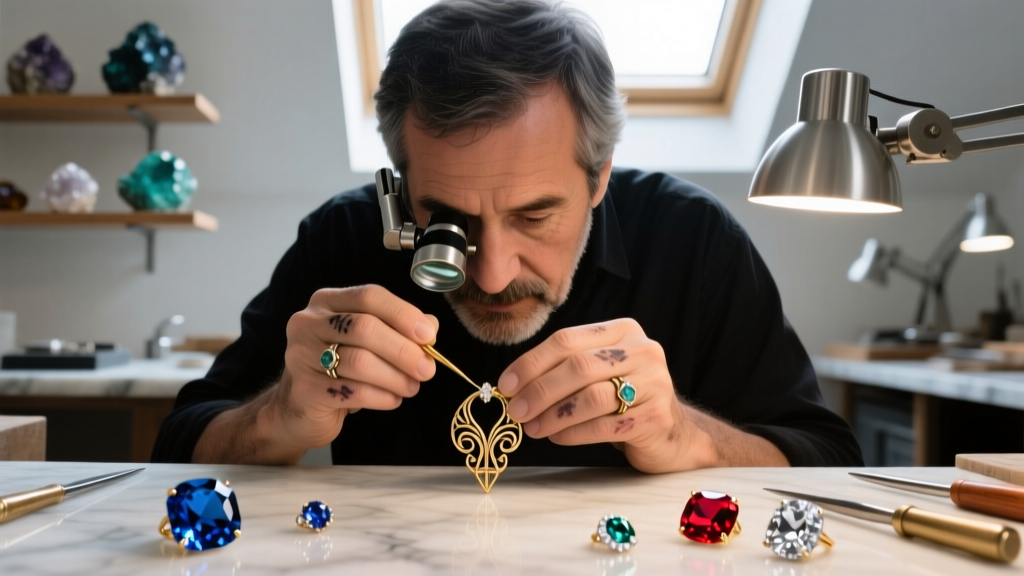
A critical metallurgical concept often ignored in jewelry manufacturing is work hardening. When a jeweler opens and closes a jump ring, the crystalline structure of the metal compresses and hardens. If a ring is opened and closed multiple times, it becomes brittle and will eventually snap rather than bend. This is particularly problematic with sterling silver and lower-karat golds. To combat this, high-end manufacturers use soldered structural necklace rings or laser-welded O-rings for any pendant exceeding 10 grams, completely eliminating the lateral weakness of a split seam.
Decorative Necklace Rings: Pendants and Sliders
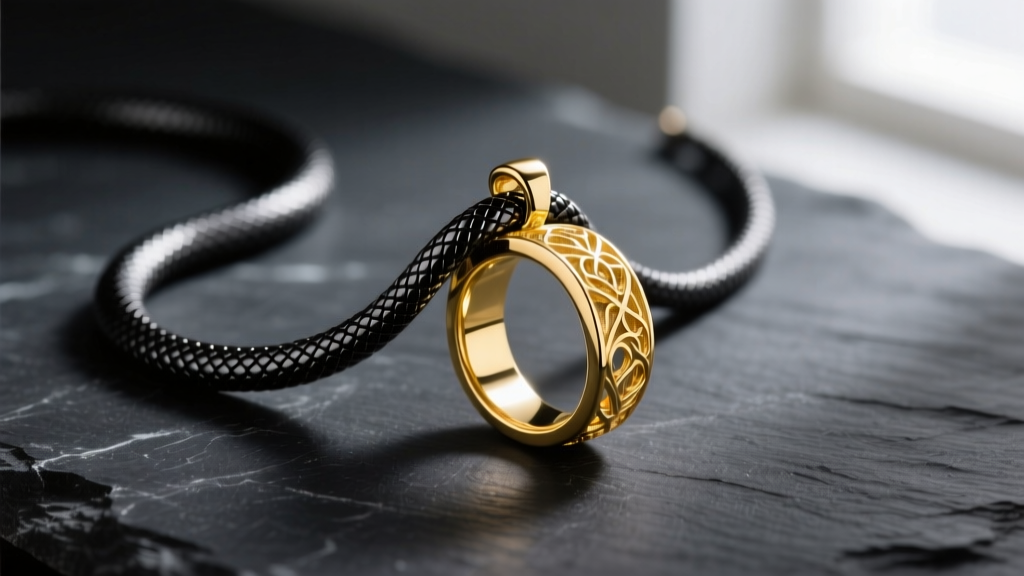
When the ring itself is the pendant, material properties shift from pure tensile strength to surface hardness and friction dynamics. A decorative ring pendant slides against the interior of the chain's links. If the necklace ring is made of a material with a higher Vickers Hardness (HV) than the chain, the ring acts as a microscopic file.
For example, pairing a 316L stainless steel ring pendant (approx. 150-190 HV) with a delicate sterling silver chain (approx. 60-80 HV) will result in the steel ring wearing through the silver links within months of daily wear. To prevent this, the hardness of the decorative necklace ring must be equal to or softer than the chain it slides upon, or the chain must be upgraded to match the pendant's hardness.
Comprehensive Material Comparison Matrix
The following table breaks down the most common metals used for necklace rings, comparing their physical properties and ideal use cases based on current metallurgical data and ASTM International jewelry standards.
| Material | Vickers Hardness (HV) | Tensile Strength | Tarnish Resistance | Best Use Case |
|---|---|---|---|---|
| 316L Stainless Steel | 150 - 190 | Very High | Excellent | Structural jump rings, heavy split rings |
| Grade 5 Titanium | 334 | Extreme | Perfect | Hypoallergenic structural rings, medical-grade findings |
| 14k Yellow Gold | 120 - 150 | High | Good | Decorative pendants, premium soldered O-rings |
| 18k Yellow Gold | 110 - 130 | Medium | Good | Decorative rings, light-duty bail rings |
| Sterling Silver (925) | 60 - 80 | Low-Medium | Poor | Decorative pendants, lightweight chains |
| Niobium | 60 - 130 | Low | Excellent | Anodized colorful decorative rings |
"The alloy composition of gold drastically alters its suitability for structural rings. While 18k gold is prized for its rich color in decorative pendants, its higher pure gold content makes it too soft for load-bearing jump rings. 14k gold, with its higher copper and zinc content, provides the necessary crystalline rigidity to prevent structural necklace rings from pulling open." — Gemological Institute of America (GIA) Metallurgy Guidelines.
Real-World Troubleshooting: Why Your Necklace Rings Fail
Even with high-quality materials, necklace rings can fail due to environmental and chemical factors. Here are the most common failure modes and how to prevent them:
1. Galvanic Corrosion (Mixed Metal Electrolysis)
When two dissimilar metals (e.g., a sterling silver chain and a brass jump ring) come into contact in the presence of an electrolyte (human sweat), a microscopic battery is formed. The less noble metal (brass) will rapidly corrode and disintegrate. Solution: Always match the base metal of your structural necklace rings to the chain, or use an inert bridge metal like Grade 5 Titanium or Platinum for the jump ring.
2. Creep Deformation in Silver
'Creep' is the tendency of a solid material to move slowly or deform permanently under the influence of mechanical stresses. Sterling silver is highly susceptible to creep. A heavy pendant hanging on a 20-gauge sterling silver jump ring will slowly stretch the ring into an oval shape over a year, eventually causing the seam to gap and the pendant to fall. Solution: Use work-hardened sterling silver or upgrade to a 14-gauge steel ring for heavy loads.
3. Clasp Slip on Split Rings
Split rings (keyring style) are often used to connect lobster clasps to the chain. However, if the split ring is made of soft gold or silver, the tension of the clasp spring can slowly wedge the split coils apart, creating a gap where the clasp slips off. Solution: Split rings should exclusively be made from spring-hardened stainless steel or white gold to maintain coil tension.
Sourcing and Final Recommendations
For jewelers and consumers looking to upgrade their necklace architecture, sourcing the right findings is paramount. Avoid generic bulk packs from uncertified marketplaces, as the wire temper (soft vs. hard) is rarely specified. Instead, procure structural necklace rings from dedicated jewelry suppliers that specify the exact alloy and temper state. For decorative ring pendants, prioritize the Vickers Hardness match with your chain to ensure the piece survives years of friction-free wear. By respecting the metallurgy of these small but vital components, you ensure the longevity and security of the entire necklace.


