How to Safely Clean and Preserve a Sentimental Keepsake Necklace
Learn expert methods to safely clean, polish, and preserve your keepsake necklace without damaging delicate photos, resin, or engraved metals.

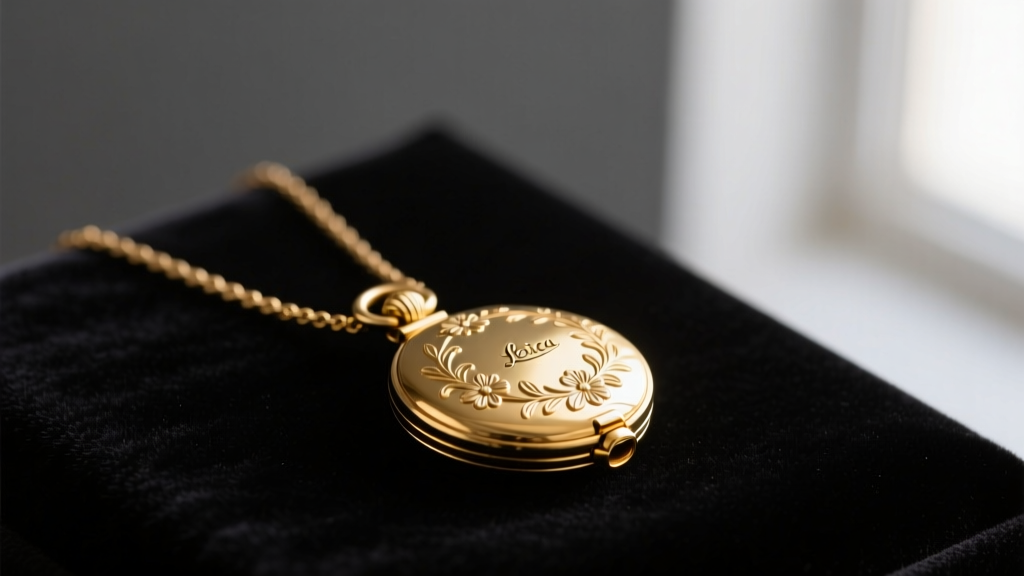
A keepsake necklace is far more than a simple accessory; it is a wearable archive. Whether it holds a lock of hair, a pinch of cremation ashes, a tiny rolled photograph, or a deeply engraved fingerprint, these pieces carry immense emotional weight. Because they often combine precious metals with fragile, irreplaceable organic inclusions, standard jewelry cleaning methods can be disastrous. Understanding the exact material composition and structural vulnerabilities of your keepsake necklace is the first step in ensuring it survives for generations.
Identifying Your Keepsake Necklace Materials
Before applying any cleaning agent, you must identify both the metal and the inclusion. Most high-quality keepsake jewelry is crafted from 925 sterling silver, 14k or 18k solid gold, or 316L surgical stainless steel. However, the true challenge lies in the secondary materials:
- Glass and Bezels: Vintage lockets often use friction-fit soda-lime glass, while modern memorial pieces might use shatter-resistant borosilicate glass.
- Resins: Cremation and botanical keepsakes frequently use either UV-cured resin or two-part epoxy resin. UV resin is highly susceptible to yellowing and clouding when exposed to harsh alcohols.
- Organic Inclusions: Paper, hair, and fabric are highly porous and will wick moisture, leading to mold or ink bleeding.
The Risk Matrix: What Never Touches a Keepsake
The most common mistake owners make is treating a keepsake necklace like a standard diamond pendant. According to conservation guidelines from the Victoria and Albert Museum, mixed-media historical pieces require highly specific, non-invasive care. Below is a risk matrix detailing common cleaning agents and their catastrophic failure modes on keepsake jewelry.
| Cleaning Agent / Method | Material at Risk | Specific Failure Mode |
|---|---|---|
| Ultrasonic Cleaners | Lockets, Glass, Resin | High-frequency vibrations shatter friction-fit glass and shake loose the internal O-ring seals in cremation pendants. |
| Ammonia-Based Dips | Oxidized Silver | Strips the intentional black patina from engraved fingerprint or handwriting grooves, ruining the visual contrast. |
| Isopropyl Alcohol | UV Resin, Pearls | Degrades the chemical bonds in UV resin, causing permanent clouding; dries out organic pearls and hair. |
| Commercial Silver Polish | Paper/Photo Inclusions | Vapors and accidental smears cause chemical burns to antique albumen photographs and degrade paper fibers. |
Step-by-Step Cleaning Protocols by Keepsake Type
To safely maintain your piece, you must tailor your approach to the specific engineering of the pendant. Here are the expert protocols for the three most common keepsake necklace styles.
1. Glass and Metal Lockets (Protecting the Interior)
The primary enemy of a locket is moisture ingress. Never submerge a locket in water. Instead, use a barely damp microfiber cloth to wipe the exterior metal. For the glass window, use a dry, lint-free optical cloth. If there is stubborn tarnish on the metal hinge or bale, apply a tiny amount of silver polish to a cotton swab, carefully avoiding the seam where the glass meets the metal. Immediately buff away any residue. If your locket contains a paper photograph, avoid opening it in high-humidity environments (like a bathroom), as the sudden shift in moisture can cause the paper to curl and press against the glass, potentially sticking to it over time.
2. Cremation and Resin Memorial Jewelry
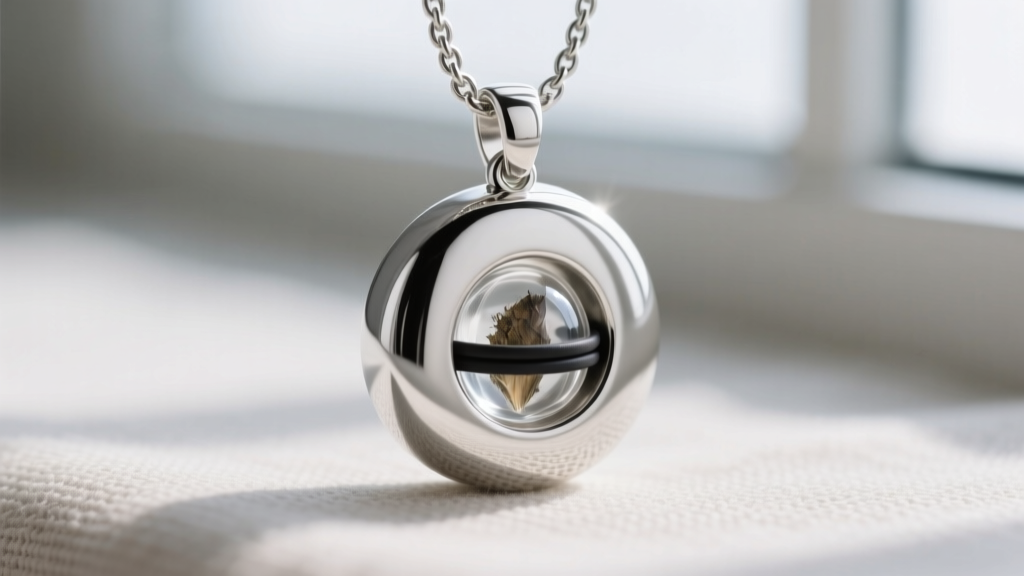
Modern cremation necklaces often feature a threaded screw-top bail secured by a microscopic rubber O-ring gasket. To clean the exterior metal, use a soft-bristled baby toothbrush dipped in a mild solution of distilled water and pH-neutral dish soap. Gently brush the metal, taking extreme care not to scrub the threaded joint, as abrasive bristles can degrade the rubber O-ring over time. If the resin window has become cloudy from skin oils, gently buff it with a dry jeweler’s cloth. Never use glass cleaner on a resin window; the ammonia will cause irreversible micro-fractures in the acrylic or UV resin surface.
3. Deeply Engraved Fingerprint or Handwriting Pendants
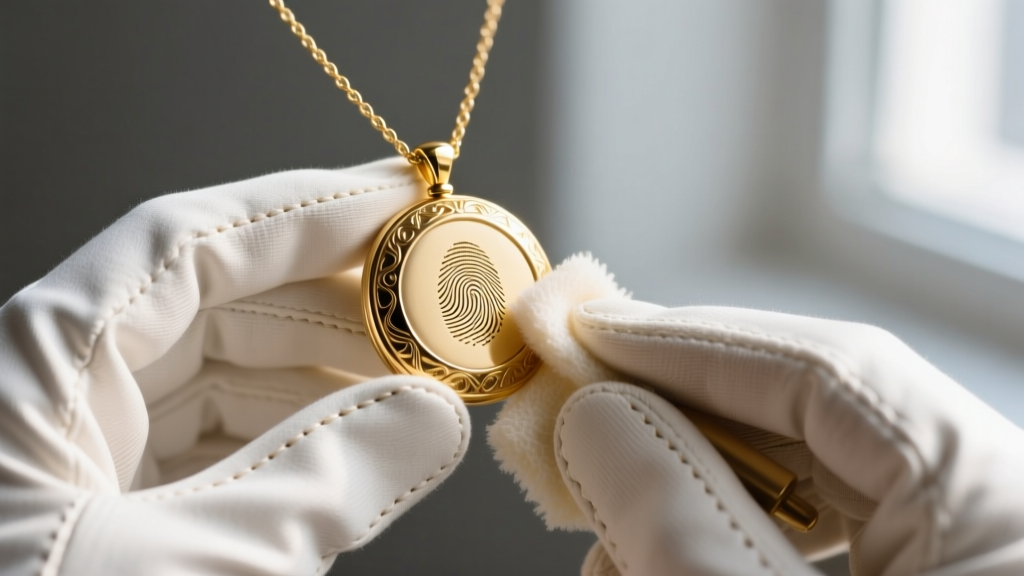
Fingerprint and handwriting keepsake necklaces rely on oxidation—the dark tarnish left intentionally in the grooves—to make the design legible. If you use a liquid silver dip, you will strip this contrast, leaving a flat, illegible piece of metal. To clean the high-polish raised areas without touching the grooves, use a polishing cloth treated with a mild abrasive (like a Sunshine cloth). Fold the edge of the cloth to reach tight corners, but never force it into the engraved lines. For deep crevices that have accumulated lotion or dead skin, use a wooden toothpick to gently dislodge the debris without scratching the surrounding silver or gold.
Chain Maintenance and Clasp Mechanics
The chain and clasp of a keepsake necklace endure significant mechanical stress and chemical exposure from the skin. Lobster clasps frequently fail not because the metal breaks, but because the internal spring mechanism becomes clogged with sebum, lotion, and dust.
To service a sticky lobster clasp, do not apply oil or WD-40, which will attract more dirt and stain your clothing. Instead, use a wooden toothpick or a clean, dry interdental brush to gently sweep out the crevices of the trigger mechanism. Follow this by running the clasp under warm distilled water and drying it thoroughly with a hairdryer on a cool setting. Additionally, inspect the jump ring connecting the chain to the pendant. If the gap in the jump ring has widened beyond 0.5 millimeters, take it to a jeweler to be soldered shut. Losing a sentimental pendant due to a fatigued, unsoldered jump ring is a preventable tragedy.
Long-Term Archival Storage
When you are not wearing your keepsake necklace, how you store it dictates its lifespan. The Smithsonian Museum Conservation Institute emphasizes that fluctuating humidity and sulfur in the air are the primary catalysts for silver tarnish and paper degradation.
- Use Pacific Silvercloth: Store sterling silver keepsakes inside a Pacific Silvercloth pouch. This specialized fabric is embedded with microscopic silver particles that intercept and absorb sulfur gases before they can reach your necklace.
- Avoid Cardboard and PVC: Never store keepsake jewelry in standard cardboard boxes or PVC plastic bags. Cardboard is highly acidic and will off-gas, degrading paper photos and hair. PVC releases hydrochloric acid over time, which will aggressively tarnish metals and melt resin.
- Climate Control: Store the piece in a room with stable humidity (ideally 40-50%). Avoid placing silica gel packets directly inside a locket, as they can create a micro-environment that is too dry, causing antique paper or hair to become brittle and snap.
By treating your keepsake necklace as a delicate historical artifact rather than everyday fashion jewelry, you ensure that the memories it holds remain physically intact, allowing the piece to be passed down safely to the next generation.


