Anatomy of a Fine Violin Necklace: Metals, Articulation & Styling
Discover the technical anatomy of fine violin necklaces. We explore lost-wax casting, 18k gold vs. sterling silver, articulation mechanics, and chain pairing.

Beyond Novelty: The Rise of Anatomically Correct Violin Pendants
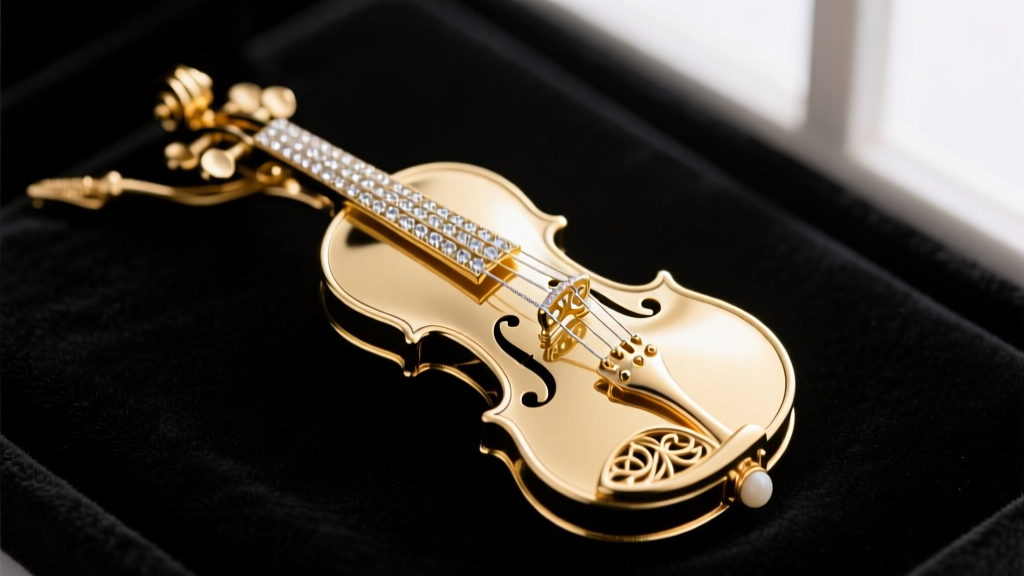
When most consumers search for a violin necklace, they are met with a sea of mass-produced, zinc-alloy novelties intended for children or casual wear. However, within the niche of fine jewelry for musicians, luthiers, and orchestra professionals, a highly specialized market exists for anatomically correct, precision-crafted violin pendants. These are not mere silhouettes; they are miniature, three-dimensional sculptures that demand advanced metallurgical techniques and micro-mechanical engineering.
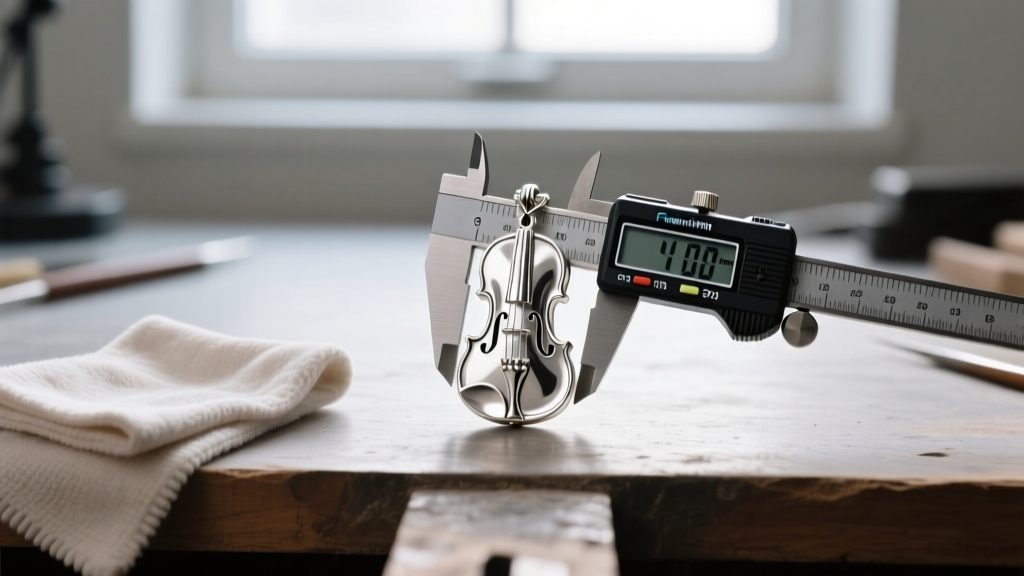
A standard full-size violin measures approximately 355mm in body length. Translating this into a proportional fine jewelry pendant usually results in a piece measuring between 32mm and 40mm. At this 1:10 scale, the margin for error is microscopic. The f-holes, scroll volute, and bridge must be rendered with exacting precision. This deep dive explores the technical anatomy, material science, and structural mechanics that separate a master-crafted violin necklace from a costume accessory.
Metallurgy & Material Grades: What Separates Fine Jewelry from Costume
The choice of metal in a fine violin necklace dictates not only the aesthetic warmth of the piece but also its structural integrity, particularly regarding the delicate micro-prongs used to secure gemstone 'strings.' According to the Gemological Institute of America (GIA), the alloy composition of gold dramatically affects its Vickers hardness (HV), which is critical for jewelry subjected to daily wear.
While 18k gold (75% pure gold) offers a rich, luxurious color, its relatively low hardness (approx. 90-100 HV) makes it a risky choice for the micro-prongs holding melee diamonds. A slight snag on a musician's clothing can bend an 18k gold prong, resulting in a lost stone. Therefore, master jewelers often prefer 14k gold or platinum for the structural components of articulated violin pendants.
| Metal Grade | Vickers Hardness (HV) | Best Application in Violin Pendant | Estimated Price Range (35mm) |
|---|---|---|---|
| 925 Sterling Silver | 60-70 HV | Solid cast body, non-articulated bows | $150 - $350 |
| 14k Yellow/White Gold | 130-150 HV | Micro-prongs for strings, hinges, bail | $800 - $1,800 |
| 18k Yellow Gold | 90-100 HV | Solid body casting, bezel settings | $1,500 - $3,200 |
| Platinum (950) | 110-130 HV | High-wear articulation points, micro-pave | $2,500 - $5,000+ |
Articulation & Micro-Mechanics: Strings, Bridges, and Bows
The hallmark of an elite violin necklace is articulation. A static, solid-cast pendant feels lifeless. High-end pieces feature a bow that swings independently from the body, and occasionally, strings that possess micro-tension. Achieving this requires advanced lost-wax casting and micro-hinge fabrication.
The F-Hole Inlay and Enamel Techniques
The f-holes of a violin are notoriously difficult to cast cleanly at a 35mm scale. The interior curves are roughly 1.5mm wide, making traditional polishing wheels useless. Jewelers must use specialized rubberized abrasive pins and wooden pegs charged with diamond compound to smooth the interior walls. To create depth, many artisans use vitreous enamel fired at 800°C to black out the interior of the f-holes, or they precision-set custom-cut black onyx slivers. Avoid pendants that use black rhodium plating for the f-holes or fingerboard; rhodium is a surface treatment that will inevitably wear away with friction, revealing the pale silver or gold beneath.
Micro-Pave Diamond 'Strings'
To represent the four strings of the violin, master setters use micro-pave techniques, channel-setting or bead-setting melee diamonds ranging from 0.8mm to 1.2mm in diameter. The GIA's diamond quality guidelines emphasize that even in melee sizes, the cut quality dictates the light return. Because the 'strings' are incredibly thin lines of metal, the setter must raise microscopic beads of metal from the shank itself to secure the stones, as traditional prongs would overwhelm the 1mm-wide fingerboard space. This requires a microscope and absolute precision to ensure the diamonds sit perfectly flush, preventing them from snagging on silk blouses or sheet music.
Chain Selection: Matching the Bail and Pendant Weight
A beautifully crafted 14k gold violin pendant measuring 38mm will typically weigh between 7 and 11 grams. Pairing this with an inadequate chain is a common failure point. The Federal Trade Commission (FTC) provides strict guidelines on jewelry marketing, but structural pairing is left to the expertise of the jeweler and consumer. A dynamic wearer—such as a violinist performing on stage—subjects the chain to sudden kinetic loads.
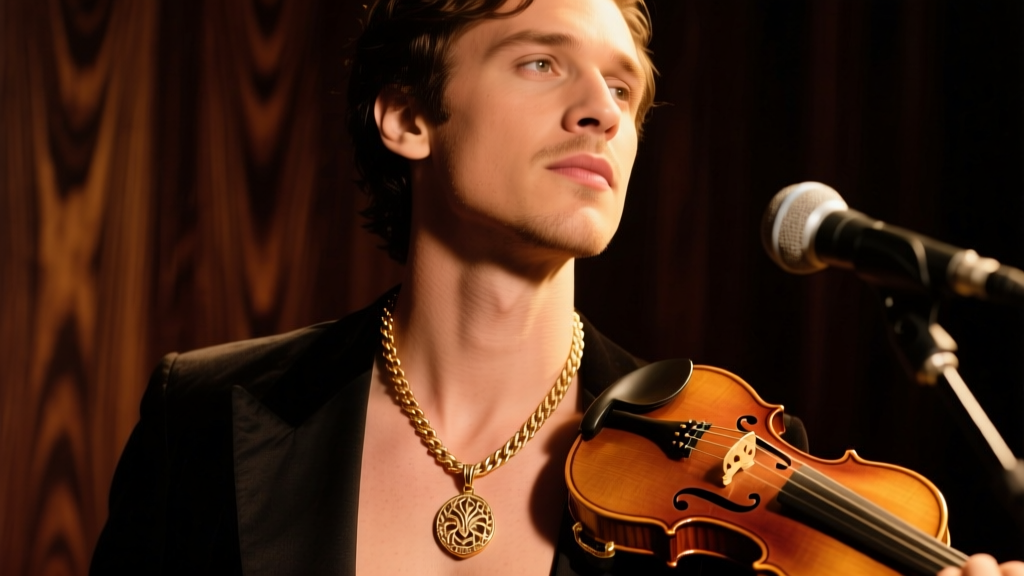
To ensure longevity, the chain's break strength must far exceed the static weight of the pendant. Here is a technical framework for pairing chains with fine violin pendants:
- 1.0mm Cable Chain: Break strength of ~3 kg. Verdict: Too weak for a solid gold 10g pendant during active wear. High risk of snapping at the jump ring.
- 1.2mm Box Chain: Break strength of ~6 kg. Verdict: Acceptable for light, daily office wear. The square links distribute weight evenly, but the bail must be perfectly smooth to prevent internal link abrasion.
- 1.5mm Wheat (Spiga) Chain: Break strength of 12+ kg. Verdict: The optimal choice for musicians. The woven, directional links offer immense tensile strength and a fluid drape that mimics the elegance of the instrument.
- Bail Dimensions: Ensure the pendant's bail has an interior clearance of at least 4mm x 3mm to accommodate a 1.5mm chain without forcing the links, which can cause metal fatigue over time.
Care & Maintenance for Articulated Musician Jewelry
Maintaining a fine violin necklace requires an understanding of its micro-mechanics. The most critical rule is to never place an articulated or enameled violin pendant in an ultrasonic cleaner. The high-frequency cavitation bubbles can easily shatter 0.9mm melee diamonds, crack vitreous enamel inlays, and loosen the microscopic hinge pins that hold the bow in place.
Instead, clean the piece using a gentle steam cleaner or a soft-bristled baby toothbrush with a mild, phosphate-free dish soap and warm water. Pay special attention to the area beneath the bridge and the scroll, where skin oils and rosin dust (if worn during practice) tend to accumulate. If the articulation of the bow becomes stiff, a jeweler can apply a microscopic drop of synthetic watch oil to the hinge pin—never use household lubricants, which contain solvents that will degrade the metal alloys and attract abrasive dust.
Conclusion
A true fine jewelry violin necklace is a triumph of miniature engineering and metallurgical science. By prioritizing anatomical accuracy, selecting appropriate gold alloys for micro-prong security, and pairing the pendant with a high-tensile wheat chain, musicians and collectors can invest in a piece that honors the complexity of the instrument while enduring a lifetime of wear.


