Letter J Necklace Gold: An Expert Technical Deep Dive
Explore the metallurgy, manufacturing, and structural engineering of a letter J necklace gold pendant in this expert technical guide.

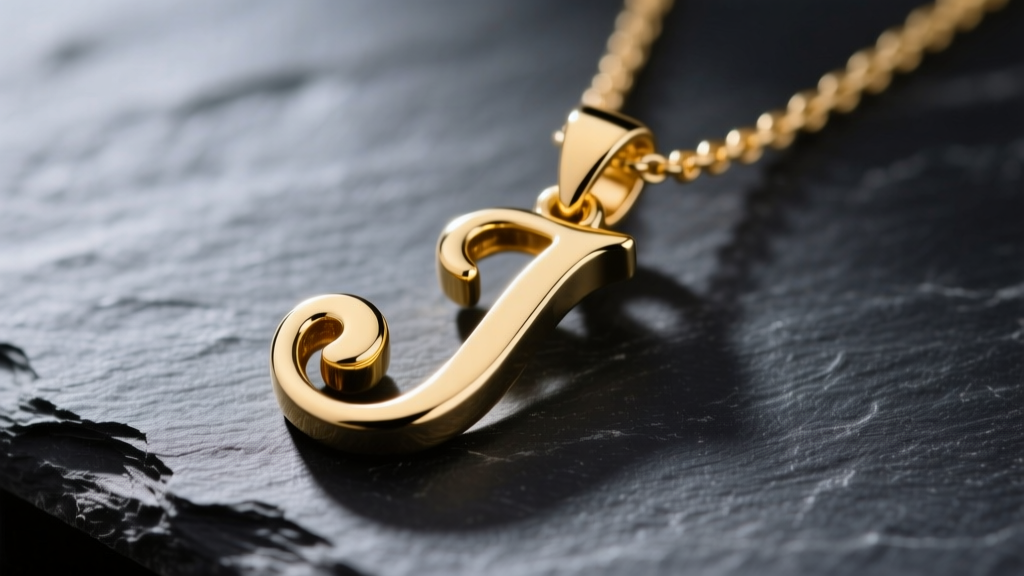
When evaluating initial jewelry, most consumers focus solely on aesthetics. However, from a metallurgical and structural engineering perspective, the letter 'J' presents a unique set of challenges and opportunities. Unlike symmetrical letters such as 'O' or 'H', the letter J features a pronounced descender hook that acts as a cantilevered stress point. If you are investing in a letter J necklace gold pendant, understanding the technical nuances of gold alloys, manufacturing methods, and bail engineering is critical to ensuring the piece withstands daily wear without deformation.
In this comprehensive technical deep dive, we will deconstruct the anatomy of the gold letter J pendant, analyze the Vickers hardness of various karat weights, and provide a definitive framework for selecting a piece that balances structural integrity with luxury craftsmanship in 2026.
The Structural Anatomy of the Letter J
The primary vulnerability of any letter J pendant lies in its lower curve—the descender hook. In physics terms, this hook acts as a lever arm. When the pendant snags on a garment or is subjected to lateral tension, the force is multiplied at the base of the curve where it meets the vertical stem.
Minimum Thickness and Gauge Requirements
For a standard 20mm to 25mm letter J pendant, the cross-sectional thickness of the gold at the base of the hook must be a minimum of 1.2mm if crafted in 14K gold, and 1.5mm if crafted in 18K gold. Pendants stamped or milled thinner than 1.0mm are highly susceptible to plastic deformation (permanent bending). Furthermore, the transition from the vertical stem to the hook should feature a slight fillet (a rounded internal corner) rather than a sharp 90-degree angle, which concentrates stress and increases the risk of micro-fractures over time.
Gold Metallurgy: Alloy Selection for Initial Pendants
Gold in its pure 24K state is far too malleable for everyday jewelry. To create a durable letter J necklace gold piece, master jewelers alloy pure gold with metals like copper, silver, zinc, and palladium. The resulting karat weight dictates not only the color and price but the tensile strength and Vickers hardness (HV) of the pendant.
| Karat | Gold Purity | Vickers Hardness (HV) | Alloy Composition | Structural Verdict for 'J' |
|---|---|---|---|---|
| 10K | 41.7% | ~160 HV | High Copper/Zinc | Extremely rigid, but prone to tarnish and skin reactions. |
| 14K | 58.5% | ~135 HV | Balanced Cu/Ag | Optimal. Perfect balance of tensile strength and rich color. |
| 18K | 75.0% | ~115 HV | Higher Silver/Palladium | Good for cast ornate serifs, but the hook requires thicker milling. |
| 22K | 91.6% | ~60 HV | Minimal Alloy | Too soft. The descender hook will bend under minor tension. |
According to the Gemological Institute of America (GIA), 14K and 18K gold remain the industry standards for fine jewelry. For a letter J necklace, 14K yellow or white gold is generally the superior technical choice due to its higher copper or nickel/palladium content, which provides the necessary rigidity to protect the delicate lower hook.
Manufacturing Methods: Die-Struck vs. Cast vs. Laser-Cut
How your letter J pendant is formed at the molecular level drastically affects its longevity. There are three primary manufacturing techniques used in 2026 for initial pendants:
1. Die-Striking (Cold Forging)
Die-striking involves using immense hydraulic pressure to stamp a sheet of gold between two hardened steel dies. This process compresses the gold molecules, aligning the grain structure and increasing the tensile strength by up to 30% compared to cast gold. A die-struck 14K letter J pendant is incredibly dense, resistant to porosity, and ideal for sleek, modern, sans-serif typography.
2. Lost-Wax Casting
If you prefer a vintage, ornate letter J with intricate serifs, filigree, or milgrain detailing, casting is required. A wax model is 3D-printed or hand-carved, encased in investment plaster, and burned out. Molten gold is then forced into the cavity via centrifuge or vacuum. While casting allows for limitless design complexity, it leaves the gold in an annealed (softer) state. To mitigate this, expert jewelers will work-harden the cast J pendant through careful tumbling and polishing.
3. Laser-Cutting and CNC Milling
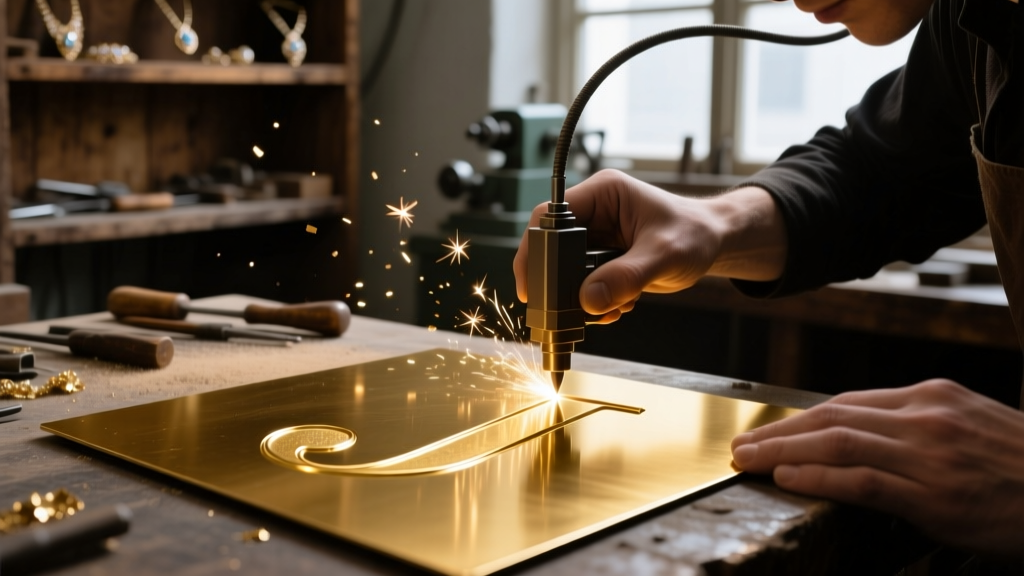
For ultra-thin, contemporary designs, pendants are laser-cut from flat gold sheet stock. While precise, this method leaves sharp, 90-degree edges that require extensive hand-filing and tumbling to soften. If purchasing a laser-cut J, inspect the edges closely; poorly finished laser-cut pendants can act like microscopic blades, fraying silk clothing and scratching the skin.
Bail Engineering and Chain Pairing Mechanics
The bail—the loop that connects the pendant to the chain—is a critical, often overlooked component. The letter J is inherently asymmetrical. If a standard, centered loop bail is soldered to the top of a heavily serifed 'J', the pendant will hang off-plumb, tilting awkwardly to the left.
The Hidden Bail Solution
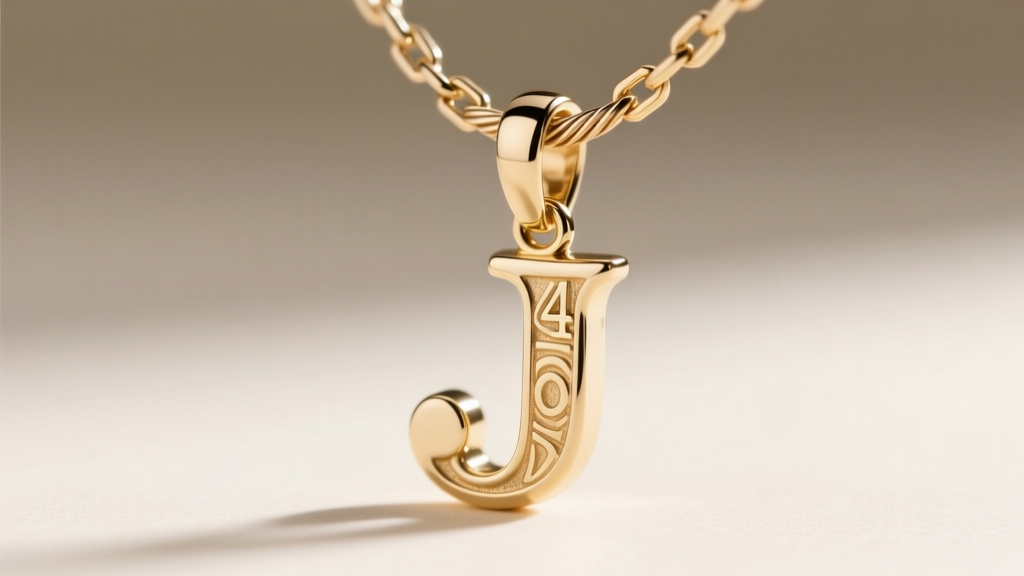
To counteract the asymmetric weight distribution of the letter J, high-end manufacturers utilize a 'hidden bail' or a 'soldered V-bail' positioned slightly off-center on the upper back of the pendant. This shifts the center of gravity, ensuring the vertical stem of the J hangs perfectly parallel to the floor.
Chain Friction and Wear
The interior of the bail is subject to constant friction. When pairing your pendant with a chain, avoid box chains or chains with sharp, angular links, as these will act like files, slowly wearing through the gold bail over a period of 3 to 5 years. Instead, opt for a 1.0mm to 1.5mm smooth cable chain or a rounded rope chain. According to guidelines outlined by the Federal Trade Commission (FTC) Jewelry Guides, manufacturers must ensure that structural components like bails are proportionate to the weight of the pendant to prevent premature failure.
Pricing Framework and Authenticity Verification
When shopping for a letter J necklace gold piece, consumers should understand the pricing matrix, which is divided into melt value and craftsmanship premium.
- Melt Value: Calculate the weight of the pendant in grams multiplied by the current spot price of gold, adjusted for karat purity. For example, a 2.5-gram 14K gold J pendant contains roughly 1.46 grams of pure gold.
- Craftsmanship Premium: This covers the CAD design, casting/striking, polishing, and hallmarking. A basic laser-cut 14K J pendant may retail for $150 to $250, representing a low premium. Conversely, a hand-engraved, die-struck 18K J pendant from a heritage jeweler can command $450 to $800+ due to the intensive labor and superior finishing techniques.
'A well-engineered initial pendant should feel substantial in the hand. If a gold letter J pendant weighs less than 1.5 grams, it is likely too thin to survive the rigors of daily wear without warping at the descender hook.' — Master Bench Jeweler
Always verify the hallmark. In the US, a '14K' or '585' stamp is legally required, often accompanied by a maker's mark. Use a 10x jeweler's loupe to inspect the stamp inside the bail or on the flat back of the pendant stem. If the stamp is blurry, shallow, or missing, the piece may be gold-plated rather than solid gold.
Conclusion
Selecting the perfect letter J necklace gold pendant requires looking past the surface shine and evaluating the structural engineering beneath. By prioritizing 14K or 18K gold, ensuring the descender hook meets minimum thickness requirements, and paying close attention to bail placement and chain friction, you can secure a piece of personalized jewelry that is not only beautiful but built to last a lifetime. Whether you choose the molecular density of a die-struck piece or the ornate detailing of a cast heirloom, technical knowledge is your best safeguard against premature wear and deformation.


