The Ultimate Lightweight Necklace Buying Guide
Discover how to choose the perfect lightweight necklace. Compare metal densities, chain gauges, and clasp weights for all-day comfort.

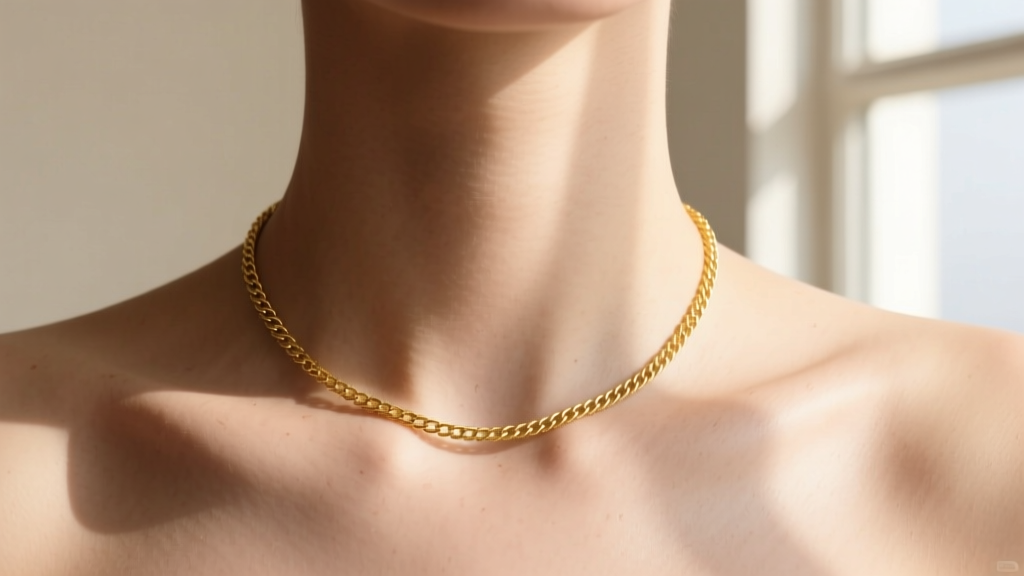
The Physics of a Lightweight Necklace: Why Weight Matters
The demand for sensory-friendly, 'barely-there' jewelry has surged in 2026, driven by a collective shift toward all-day comfort and minimalist layering. However, finding a necklace lightweight enough for 24/7 wear requires navigating a complex intersection of metallurgy, structural engineering, and ergonomic design. A truly lightweight necklace isn't just about thin metal; it is about weight distribution, tensile strength, and the specific gravity of the alloys used.
When a chain is too heavy, it pulls on the cervical spine, causes skin friction, and stretches the delicate skin of the décolletage over time. Conversely, if a chain is too thin without the proper alloy strength, it becomes a liability, snapping under the micro-tensions of daily movement. According to the Federal Trade Commission (FTC) Jewelry Guides, manufacturers must accurately represent metal compositions, but they rarely disclose the exact gram weight or structural vulnerabilities of ultra-fine chains. This guide decodes the science of lightweight necklaces, giving you the exact specifications needed to make an informed purchase.
Best Metals for Ultra-Lightweight Necklaces
The foundational element of any lightweight piece is the specific gravity (density) of the metal. Platinum, for instance, has a density of 21.45 g/cm³, making it entirely unsuitable for ultra-fine, lightweight designs. To achieve a featherlight drape, you must look to low-density metals and specific gold alloys.
| Metal / Alloy | Density (g/cm³) | Avg. Weight (18' 1mm Chain) | Durability & Notes |
|---|---|---|---|
| Anodized Aluminum | 2.70 | ~1.2 grams | Extremely light, but soft. Prone to bending and scratching. |
| Titanium (Grade 5) | 4.43 | ~2.8 grams | Exceptional strength-to-weight ratio. Hypoallergenic and rigid. |
| 14k Yellow Gold | ~13.0 | ~6.5 grams | Standard for fine jewelry. Alloyed with copper/silver for tensile strength. |
| 18k Yellow Gold | ~15.6 | ~8.2 grams | Heavier and softer than 14k. Less ideal for ultra-thin, high-tension chains. |
For the absolute lightest feel, aerospace-grade titanium (Ti-6Al-4V) is the undisputed champion. It weighs nearly half as much as stainless steel but offers superior tensile strength, meaning a 0.8mm titanium chain can withstand more pulling force than a 1.2mm sterling silver chain. If you prefer the warmth of precious metals, 14k gold is preferable to 18k for lightweight designs. The Gemological Institute of America (GIA) notes that the additional copper and zinc in 14k gold not only lower the overall density but significantly increase the yield strength of the wire, preventing the chain from stretching out of shape.
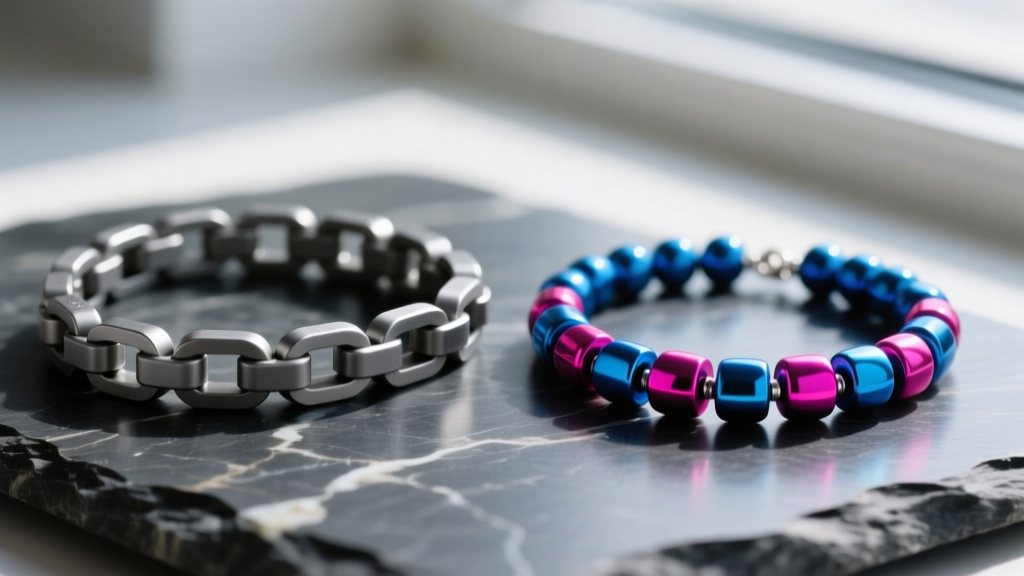
Chain Styles That Minimize Weight Without Sacrificing Durability
The architecture of the chain link dictates how it moves, drapes, and ultimately, how heavy it feels against the skin. Not all 1mm chains are created equal.
The Cable and Box Chain Advantage
For lightweight profiles, the cable chain (uniform oval links) and the box chain (square, interlocking links) are optimal. A 0.9mm box chain distributes tension evenly across four flat planes within each link, reducing the 'pinch points' that cause metal fatigue. Cable chains, while simpler, allow for high flexibility without adding excess metal volume.
Hollow vs. Solid Links: The Durability Trade-Off
Many jewelers offer 'hollow' gold chains (often seen in thick rope or herringbone styles). These are created via electroforming, a process that deposits a microscopic layer of gold over a wax or resin core, which is later melted away. While a 4mm hollow gold chain might weigh the same as a 1.5mm solid chain, it comes with a severe warning: hollow links dent irreparably. If you are buying a lightweight necklace for daily wear, avoid hollow constructions. The micro-impacts of typing at a desk or leaning against a steering wheel will crush hollow links, leading to sharp edges and eventual snapping.
The Pendant-to-Chain Ratio: Avoiding the 'Snap' Factor
A common mistake when buying lightweight necklaces is pairing a delicate chain with a disproportionately heavy pendant. This creates a fulcrum effect at the nape of the neck, concentrating all the kinetic energy on a single 1mm link.
The 1:3 Rule of Thumb: The total weight of your pendant (including the bail) should never exceed three times the weight of the chain's linear inch. For practical shopping, if you are buying a standard 16-inch 14k gold cable chain that weighs roughly 4.5 grams in total, your pendant should not exceed 3 grams. If you love heavy, oversized gemstone pendants, you must upgrade to a heavier gauge chain (1.5mm to 2.0mm) or opt for a reinforced wheat chain, which braids multiple micro-links together to distribute the pendant's downward drag.
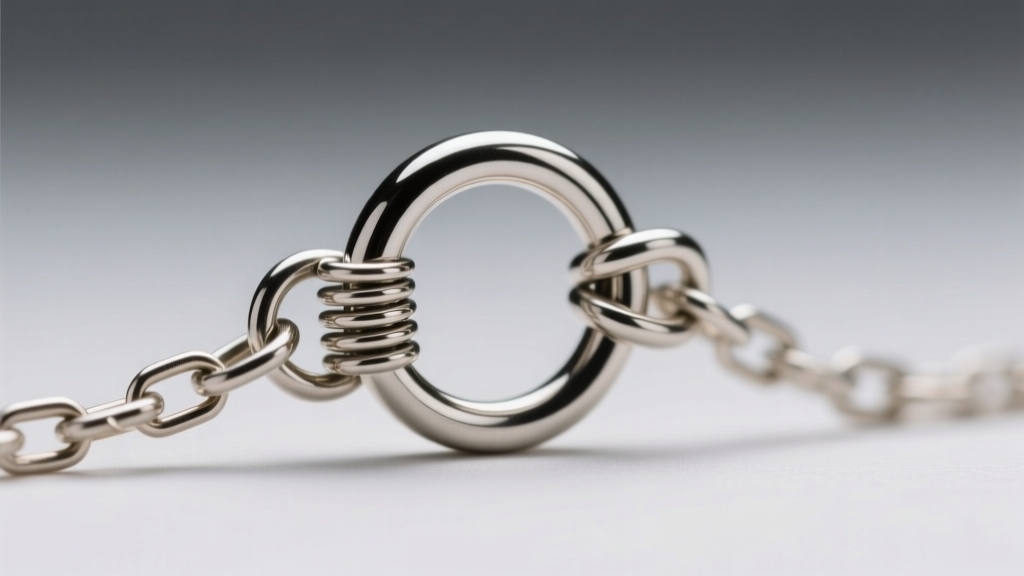
Clasps and Findings for Delicate Chains
The clasp is often the heaviest single component on a fine necklace. A standard 12mm 14k gold lobster clasp can weigh up to 1.8 grams. On an ultra-lightweight chain that weighs only 2.5 grams overall, a heavy clasp will pull the necklace backward, causing the chain to constantly slide off-center and the clasp to rest annoyingly on your collarbone.
- Spring Ring Clasps (5mm - 7mm): Weighing between 0.2 and 0.4 grams, these are the best choice for ultra-lightweight chains. While they require two hands to operate, they preserve the perfect drape and balance of the necklace.
- Micro-Lobster Clasps (8mm): A modern compromise. They offer the one-handed security of a lobster clasp but are scaled down to weigh roughly 0.7 grams.
- Magnetic Clasps: While excellent for accessibility, neodymium magnetic clasps encased in steel or gold often add 3 to 5 grams to the ends of the chain. Avoid these if your primary goal is a featherlight feel.
2026 Pricing Guide: What Should You Pay?
Pricing for lightweight necklaces varies wildly based on manufacturing techniques and metal purity. Here is what you should expect to pay in the current market for an 18-inch, 1mm lightweight chain:
- Anodized Aluminum / Niobium: $25 - $60. (Often artisan-made, highly colorful, but less durable).
- Grade 2 & 5 Titanium: $45 - $120. (Excellent value for hypoallergenic, high-strength daily wearers).
- Sterling Silver (0.8mm - 1.2mm): $30 - $85. (Prone to tarnishing, requires maintenance).
- 14k Solid Gold (0.8mm - 1.2mm): $150 - $350. (The gold standard for lightweight, waterproof, permanent jewelry).
Warning: Be highly skeptical of 'gold-plated' lightweight chains marketed under $30. The electroplating on ultra-thin wires wears off rapidly at the friction points (near the clasp and the nape of the neck), exposing base metals like brass or copper, which can cause severe contact dermatitis.
Final Checklist Before You Buy
Before adding a lightweight necklace to your cart, run it through this quick E-E-A-T verification checklist:
- Verify the Gauge: Ensure the chain is at least 0.8mm thick. Anything below 0.7mm is essentially decorative thread and will snap if caught on a sweater.
- Check the Alloy: For gold, insist on 14k for tensile strength. For alternative metals, look for Grade 5 Titanium or surgical-grade 316L stainless steel.
- Weigh the Clasp: Ensure the clasp is proportionate (under 1 gram) to prevent the necklace from sliding backward.
- Avoid Hollow Links: Confirm the chain is solid metal, especially if you plan to wear it to sleep or the gym.
By prioritizing material density, structural link architecture, and balanced findings, you can invest in a lightweight necklace that feels like a second skin while surviving the rigors of daily life.


