How to Style a Little Black Dress With Necklace Materials
Discover the best metal and gemstone materials to pair with your little black dress. Compare durability, luster, and skin-safe properties for flawless styling.


The Science of Contrast: Why Material Matters
When curating the ultimate evening wardrobe, the combination of a little black dress with necklace accessories is a timeless staple. However, the material science behind this pairing is frequently overlooked by stylists and consumers alike. Black fabric—whether it is a matte cotton crepe, a light-absorbing velvet, or a sleek silk charmeuse—possesses an albedo (light reflectivity) of roughly 0.04. This means it absorbs nearly 96% of all visible light that hits it. Because the dress acts as a visual void, the necklace you choose must either serve as a high-contrast reflector to draw the eye, or act as a deliberate textural juxtaposition to create a moody, avant-garde aesthetic. Understanding the optical and physical properties of precious metals, gemstones, and alternative alloys is essential for mastering this contrast. As jewelry preferences evolve in 2026, buyers are increasingly prioritizing material integrity and optical performance over simple brand recognition, making a deep understanding of metallurgy and gemology more valuable than ever.
Precious Metals: Grading the Classics for Black Fabric
The metal chain or setting of your necklace dictates the baseline contrast against a black backdrop. Different alloys interact with light and skin chemistry in vastly different ways, which directly impacts how they look when resting against dark fabrics.
Platinum (Pt950) vs. White Gold: The Cool Tone Dilemma
Platinum and white gold are often mistaken for interchangeable metals, but their behavior against black fabric is entirely different. Platinum used in fine jewelry is typically stamped Pt950, meaning it is 95% pure platinum and 5% alloy (usually ruthenium or cobalt for hardness). Because it is naturally white-gray and highly dense (21.45 g/cm³), a platinum chain possesses a heavy, liquid drape that pulls the neckline down elegantly. More importantly, its color is intrinsic; it will never fade or yellow over time, maintaining a crisp, icy contrast against stark black fabric indefinitely.
Conversely, 18k white gold is 75% yellow gold alloyed with white metals like palladium or nickel. To achieve a bright white finish, it is electroplated with a microscopically thin layer of rhodium (typically 0.75 to 1.0 microns thick). According to the World Gold Council, gold alloys naturally retain a warm undertone. When styling a little black dress with necklace pieces made of white gold, you must account for rhodium wear. After 12 to 24 months of friction against the skin and clothing, the rhodium wears thin, revealing the yellowish-white alloy beneath. Against a pure black dress, this slight yellow tint does not look like 'warm gold'; it looks like tarnished or dirty silver, creating a visually dissonant clash. For a reliable, maintenance-free cool-toned contrast, Pt950 is the superior investment.
Yellow and Rose Gold: Warmth and Chromatic Contrast
If your goal is maximum visual pop, 18k yellow gold is the undisputed champion. The alloy composition (75% gold, 12.5% copper, 12.5% silver) reflects light in the 570–590 nanometer wavelength range (yellow-orange). Because black absorbs all wavelengths, the warm reflection of yellow gold creates a striking, high-chroma boundary that frames the face and draws immediate attention to the neckline. Rose gold, which utilizes a higher copper content (up to 22.5% in some 18k formulations), offers a softer, vintage contrast. However, the high copper content introduces a specific failure mode: skin chemistry reactions.
Gemstone Optical Properties on Dark Backgrounds
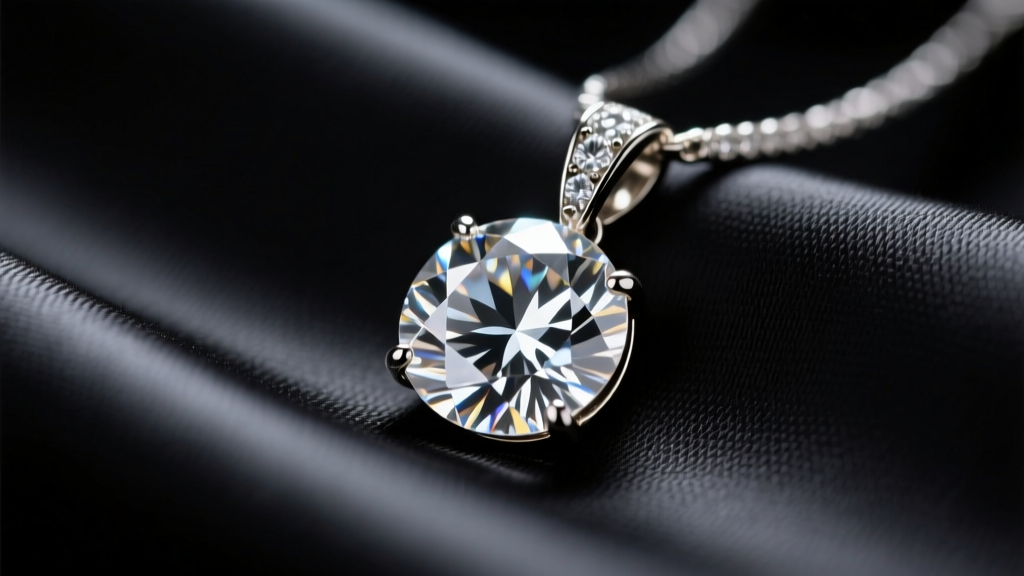
When a gemstone rests against a black dress, it lacks the secondary light bounce that normally comes from light-colored clothing. Therefore, the stone's internal light performance—dictated by its Refractive Index (RI) and cut precision—becomes the sole driver of its visual impact. The GIA Gem Encyclopedia defines refractive index as the measure of how much light is bent, or refracted, when entering a material. Here is how popular pendant gemstones perform against a black void:
| Gemstone Material | Refractive Index (RI) | Mohs Hardness | Visual Effect on Black Fabric |
|---|---|---|---|
| Diamond (Natural/Lab) | 2.42 | 10 | Maximum scintillation; sharp, icy flashes of white and spectral fire. |
| Moissanite | 2.65 | 9.25 | Hyper-fiery; the doubled refraction can look overly rainbow-heavy and artificial on dark backgrounds. |
| White Sapphire | 1.76 | 9 | Muted, glassy reflection; lacks the internal fire to stand out against black without direct spotlighting. |
| Black Onyx | 1.53 | 6.5 - 7 | Stealth monochrome; relies entirely on surface polish (luster) rather than internal light return. |
For a classic, brilliant look, a well-cut diamond (or high-quality lab-grown equivalent) is unmatched. The black fabric acts as a perfect darkroom backdrop, allowing the diamond's scintillation (the flashing of light as the stone moves) to take center stage without competing with the colors of a patterned dress. Conversely, if you prefer an understated, architectural look, a highly polished black onyx or black spinel pendant creates a 'stealth wealth' monochrome aesthetic, relying on the sleekness of the stone's surface to catch ambient room lighting.
Alternative & Avant-Garde Materials
Not every occasion calls for traditional precious metals. For fashion-forward events, alternative materials offer unique structural and optical properties that pair beautifully with the starkness of a black dress.
Titanium and Niobium: Voltage-Controlled Color
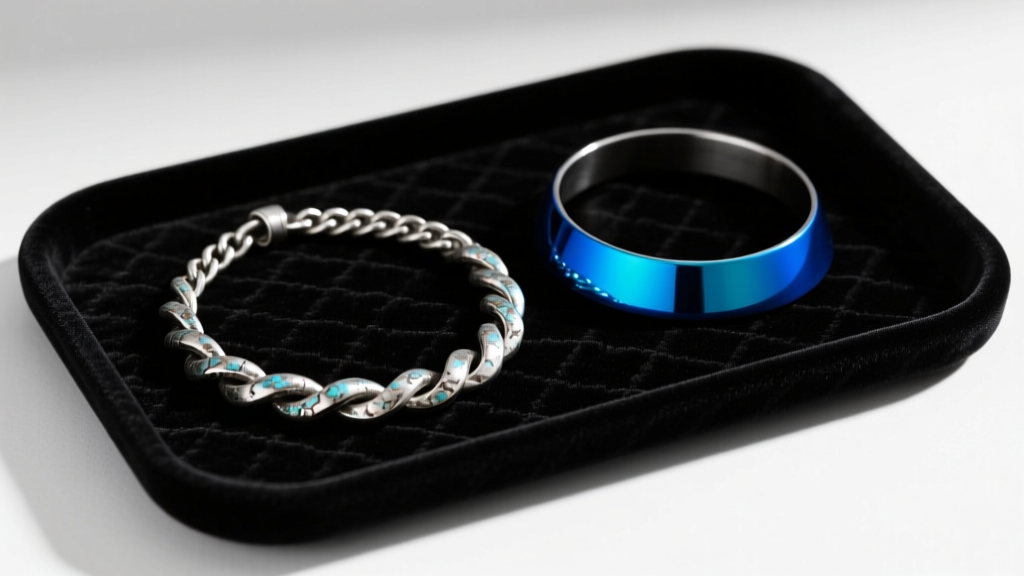
Grade 5 Titanium (Ti-6Al-4V) and pure Niobium are highly reactive metals that can be anodized to produce vibrant, permanent colors without the use of dyes or plating. By altering the voltage during the anodizing process, jewelers can grow a microscopic oxide layer on the metal's surface that interferes with light, producing structural colors like electric blue, deep purple, or iridescent magenta. Because these colors are structural rather than chemical, they will never flake or fade. A vivid, anodized titanium choker or lariat necklace provides a modern, cyberpunk-inspired contrast to a traditional black silk slip dress, offering a lightweight, hypoallergenic alternative to heavy precious metals.
Oxidized Sterling Silver: The Monochrome Texture
Sterling silver (92.5% silver, 7.5% copper) is naturally bright white, but when intentionally exposed to sulfur compounds, it develops a layer of silver sulfide—a process known as oxidation or 'blackening.' An oxidized silver necklace features deep, matte gray-black crevices that contrast with polished, raised silver edges. When worn with a little black dress, this creates a sophisticated, tonal look. The texture of the oxidized metal prevents the jewelry from disappearing into the fabric, allowing the intricate details of gothic, Art Deco, or organic botanical pendant designs to remain visible through differences in surface sheen rather than color contrast.
Skin Chemistry, Tarnish, and Fabric Staining
A critical, often ignored aspect of pairing a necklace with a black dress is the potential for chemical transfer. Black fabrics, particularly natural fibers like silk and cotton, are highly susceptible to showing metallic tarnish and cosmetic residue.
- The Copper Transfer Problem: As mentioned, rose gold and some sterling silver alloys contain significant copper. When copper reacts with the acidic pH of human sweat or the chemicals in setting sprays and perfumes, it can form copper chloride or copper carbonate (verdigris). This greenish-black compound can easily rub off onto the neckline of a light-colored garment, but on a black dress, it manifests as a dull, greasy-looking smudge that is notoriously difficult to clean from delicate silks.
- The Rhodium Flaking Issue: Low-quality white gold or silver jewelry plated with excessively thick rhodium (over 1.5 microns) can become brittle. Micro-flaking of the rhodium can leave tiny, dull gray scratches on the surface of the jewelry and deposit microscopic metallic dust onto dark fabrics, which appears as a persistent gray haze on the black material.
- Preventative Framework: To protect your garments, always apply perfumes, hairsprays, and lotions at least 15 minutes before putting on your necklace. For vintage or high-copper alloy pieces, consider having a jeweler apply a professional-grade, nano-ceramic protective coating (such as e-coating) to the back of the pendant and the chain links that rest against the skin and fabric.
Decision Matrix: Occasion vs. Material
To finalize your styling strategy, use this quick decision matrix to match the material properties to your specific event and dress fabric:
- Black Tie / Formal Gala (Silk or Satin Dress): Opt for Pt950 with a brilliant-cut diamond or sapphire pendant. The high density of the platinum provides an elegant drape, while the high RI of the gemstone catches the dim, ambient lighting of a formal venue.
- Cocktail Party / Evening Dinner (Crepe or Velvet Dress): Choose 18k yellow gold with a bold, geometric design or a vibrant colored gemstone like a Tsavorite garnet. The warm metal cuts through the light-absorbing texture of velvet or matte crepe.
- Art Gallery Opening / Fashion Event (Architectural or Slip Dress): Experiment with anodized titanium or heavily oxidized sterling silver. These materials offer an edgy, textural contrast that elevates the outfit from 'classic' to 'curated.'
Ultimately, mastering the art of pairing a little black dress with necklace materials requires looking beyond the design and understanding the physics of light, the chemistry of alloys, and the tactile drape of metals. By selecting materials that intentionally interact with the light-absorbing nature of black fabric, you transform a simple garment into a deliberate, high-contrast canvas for fine jewelry.


