Long Black Beaded Necklace Guide: Gemstone Grades & Stringing Tech
Discover the technical details of a long black beaded necklace. Learn about onyx vs. obsidian grades, stringing tension, and clasp mechanics.

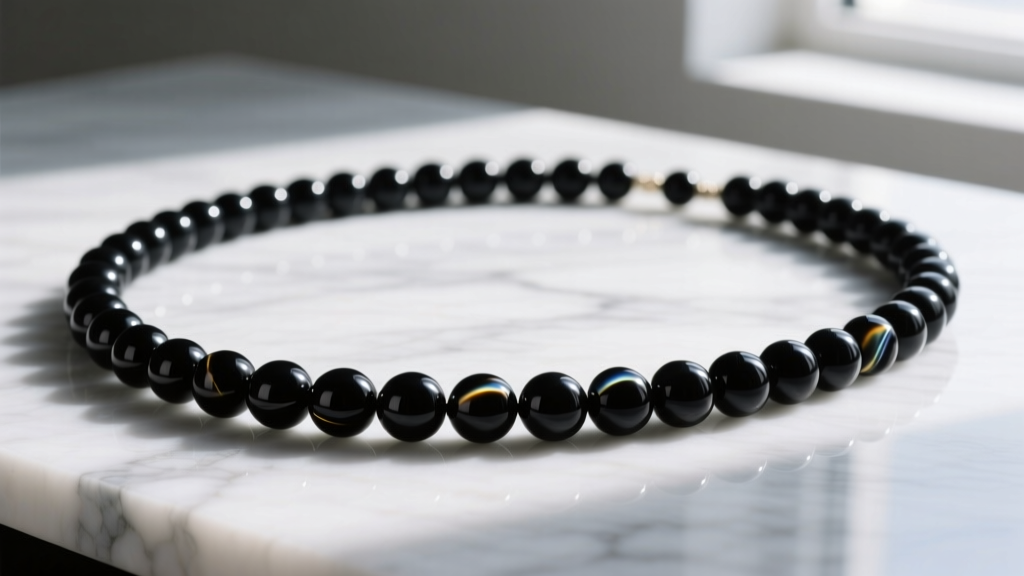
The Physics of Rope-Length Beaded Strands
When evaluating a long black beaded necklace—typically defined in the industry as an opera (28-34 inches) or rope (over 45 inches) length—the primary concern extends far beyond aesthetic appeal. The physics of a heavy, swinging strand introduces significant kinetic stress on the stringing material and clasp assembly. A standard 45-inch rope necklace crafted from 8mm solid black onyx beads weighs approximately 130 to 150 grams. During normal movement, the pendulum effect multiplies the shear force exerted on the clasp loop, often exceeding 5 pounds of dynamic tension.
Understanding this mechanical stress is critical for both collectors and jewelry designers. Failure to account for the weight-to-tension ratio results in premature stringing fatigue, crimp tube slippage, and ultimately, catastrophic strand failure. In 2026, advanced micro-braided stringing technologies have mitigated some of these risks, but the foundational principles of weight distribution and material hardness remain paramount.
Material Breakdown: Black Gemstones vs. Glass
The term 'black bead' encompasses a wide spectrum of materials, each with distinct gemological properties, specific gravities, and durability profiles. Identifying the exact material is the first step in assessing the longevity and value of the piece.
| Material | Mohs Hardness | Specific Gravity | Key Characteristics & Treatments |
|---|---|---|---|
| Black Onyx (Chalcedony) | 6.5 - 7.0 | 2.60 - 2.65 | Typically dyed via sugar-acid carbonization. Excellent durability, takes a high polish. |
| Obsidian (Volcanic Glass) | 5.0 - 5.5 | 2.35 - 2.60 | Amorphous structure. Prone to conchoidal fracturing if dropped. Lightweight for its size. |
| Jet (Lignite Coal) | 2.5 - 4.0 | 1.30 - 1.34 | Organic origin. Extremely lightweight, warm to the touch. Will float in saturated salt water. |
| Black Spinel | 8.0 | 3.58 - 3.61 | Rare in pure black. Highly refractive, exceptional scratch resistance. Premium pricing tier. |
| Murano / Lampwork Glass | 5.5 - 6.0 | 2.20 - 2.80 | Man-made. Can feature internal metallic foils or silver-glass reactions. Susceptible to thermal shock. |
According to the GIA Gem Encyclopedia, the vast majority of commercial black onyx on the market is not naturally occurring. It is created by soaking gray or white chalcedony in a hot sugar solution, followed by a sulfuric acid bath that carbonizes the sugar, resulting in a permanent, deep black color. While this treatment is stable and universally accepted in the gem trade, it means that natural, untreated black onyx commands a significant premium and requires spectroscopic verification.
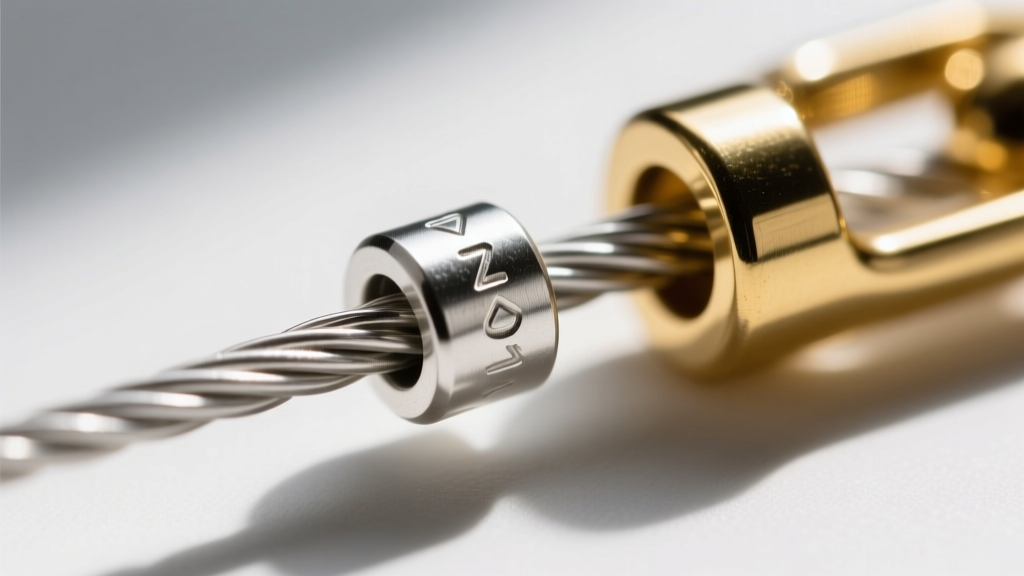
Stringing Mechanics and Failure Modes
The backbone of any heavy beaded strand is its stringing material. For a heavy long black beaded necklace, traditional silk thread is largely obsolete due to its susceptibility to moisture degradation and stretch over time. Modern master stringers rely on specialized metallic cables.
49-Strand Micro-Braided Wire
The industry standard for heavy gemstone strands is a 49-strand micro-braided stainless steel core, encased in a abrasion-resistant nylon sheath. A 0.018-inch (0.46mm) diameter wire provides an optimal balance of flexibility and tensile strength, capable of supporting over 20 pounds of static weight. The 49-strand construction ensures that the wire drapes like fabric, preventing the stiff, artificial 'hoop' effect seen in cheaper 7-strand or 19-strand alternatives.
The French Wire Guard Technique
The most common failure point in beaded jewelry is the clasp loop, where the wire bends sharply and rubs against the metal jump ring. To prevent the wire from sawing through its own nylon coating, experts use a 'French wire' or 'bullion' guard. This is a microscopic, hollow coil of sterling silver or gold-filled wire that acts as a sacrificial shock absorber. If you inspect the clasp of a high-end necklace and see bare wire looping directly through the metal clasp, it is a hallmark of mass-produced, low-durability construction.
Evaluating Bead Drill Holes and Symmetry
The quality of the lapidary work directly impacts both the visual flow and the structural integrity of the necklace. When examining high-grade black spinel or onyx beads, the drill hole is the most revealing indicator of manufacturing precision.
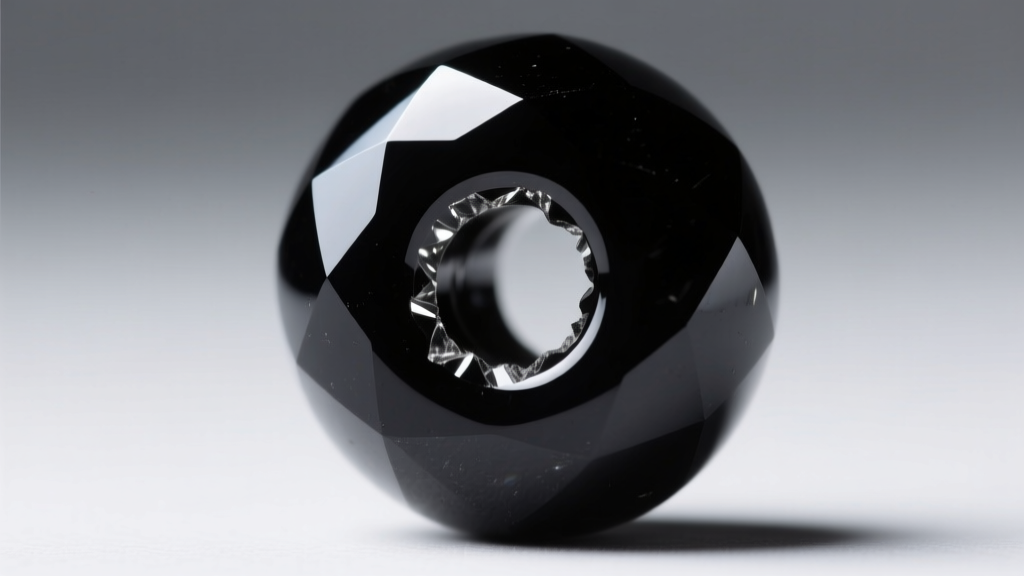
Premium beads are drilled using diamond-tipped core drills with continuous water cooling. This prevents thermal shock and ensures a perfectly cylindrical channel. Conversely, mass-produced beads are often drilled from both sides using high-speed steel bits, leading to several observable defects:
- Blowout (Chipping): As the drill bit exits the bead, it can chip the edges of the hole. In black stones, this exposes the lighter, unpolished interior matrix, creating a visible white or gray ring around the stringing wire.
- Off-Center Alignment: Beads drilled slightly off-axis will not sit flush against one another, creating microscopic gaps that disrupt the fluid drape of a 45-inch rope strand.
- Tapered Channels: If drilled from only one side, the hole tapers inward, creating a sharp internal edge that can slowly abrade the nylon coating of the stringing wire.
Clasp Engineering for Heavy Strands
Selecting the correct clasp for a heavy, long black beaded necklace is a matter of mechanical engineering. Magnetic clasps, while convenient, are highly discouraged for rope-length strands weighing over 100 grams. The dynamic shear force generated when the wearer bends over or turns quickly can easily exceed the 4-to-6-pound pull-force rating of standard neodymium magnetic clasps, resulting in the necklace snapping open and scattering beads.
For heavy strands, the optimal choices are:
- Locking Push-Pull Barrel Clasp: Features a secondary locking mechanism that prevents accidental unthreading.
- Soldered Lobster Clasp: Ensure the jump ring connecting the lobster clasp to the wire guard is soldered shut. An open jump ring will inevitably pull apart under the kinetic load of a swinging rope necklace.
Care, Storage, and Environmental Protocols
Proper storage is critical to maintaining the polish and stringing integrity of black gemstone beads. Obsidian and glass beads are highly susceptible to 'bead rub'—a phenomenon where the constant friction of beads knocking together in a jewelry box creates microscopic scratches, dulling the high-gloss polish over time.
"Never hang a heavy, long beaded necklace on a standard jewelry stand for extended periods. The constant gravitational pull will cause permanent plastic deformation in the nylon wire coating, resulting in a permanent kink that ruins the drape of the strand."
Instead, store the necklace laid flat in a lined drawer, or coiled loosely in a dedicated anti-tarnish pouch. For black onyx and spinel, an occasional wipe with a damp microfiber cloth is sufficient to remove skin oils and environmental dust. Avoid ultrasonic cleaners, especially for obsidian or jet, as the high-frequency vibrations can exploit microscopic internal fractures, causing the beads to shatter.
By understanding the material science, lapidary precision, and mechanical engineering behind these pieces, collectors and designers can ensure their jewelry remains both structurally sound and visually striking for decades. For further technical specifications on jewelry making supplies and wire tensile strengths, resources like Rio Grande Jewelry Supply offer exhaustive data sheets on modern stringing mediums.


