Long Rhinestone Necklace Buying Guide: 2026 Edition
Discover what to look for in a long rhinestone necklace. Our 2026 buying guide covers crystal grades, chain lengths, weight distribution, and clasp types.


Decoding Rhinestone Grades: Acrylic, Glass, and Crystal
When shopping for a long rhinestone necklace in 2026, understanding the optical and physical properties of the stones is your first line of defense against overpriced costume jewelry. The term "rhinestone" is historically a catch-all, but modern gemology separates them into three distinct tiers. According to the Gemological Institute of America (GIA), the refractive index (RI) is the primary metric for evaluating a stone's brilliance and light return.
Acrylic Rhinestones: With an RI of roughly 1.49, acrylic stones are injection-molded, exceptionally lightweight, and lack optical depth. While they are ideal for massive, theatrical 60-inch rope necklaces where weight is a primary concern, they scratch easily and offer a flat, glassy reflection that fails to mimic real gemstones.
Crown Glass Rhinestones: These offer a step up with an RI of 1.52. They are heavier and provide a sharper, more convincing sparkle. Machine-cut glass stones are the workhorses of mid-tier evening wear, offering excellent durability against cosmetic chemicals and body oils.
Lead-Free Crystal: Modern premium crystals (like those from Preciosa) use barium oxide and zinc oxide to achieve an RI of 1.65 to 1.70, mimicking the legendary brilliance of traditional lead glass without the toxicity. The light return on a well-cut crystal rhinestone is unparalleled, creating the prismatic "fire" necessary for high-end gala jewelry.
| Material Grade | Refractive Index | Weight (per 36" strand) | Avg. Price Range | Best Application |
|---|---|---|---|---|
| Acrylic | ~1.49 | 40 - 60 grams | $25 - $60 | Theatrical, ultra-long layering |
| Crown Glass | ~1.52 | 120 - 160 grams | $80 - $180 | Standard evening wear, office-to-dinner |
| Lead-Free Crystal | 1.65 - 1.70 | 150 - 220 grams | $250 - $800+ | Black-tie events, bridal, heirloom pieces |
Chain Lengths and the Physics of Weight Distribution
A long rhinestone necklace is defined by its drop. In jewelry design, "long" typically begins at the Opera length (28 to 36 inches), extends to the Rope length (37 to 60 inches), and includes the clasp-less Lariat style (40+ inches). However, adding dense glass or crystal stones to a 40-inch chain introduces serious biomechanical considerations that most buyers overlook.
When you walk, a 40-inch strand acts as a pendulum. The kinetic energy at the bottom of the swing multiplies the static weight of the necklace by up to 1.5x. This means a 150-gram necklace exerts over 225 grams of dynamic force on the clasp and the nape of your neck. If the chain is too thin or the jump rings are unsoldered, the necklace will not only snap but also cause cervical spine strain. For necklaces exceeding 150 grams, look for a spiga (wheat) chain or a rope chain with a minimum thickness of 2.5mm. These structures distribute the kinetic load evenly across the nape of the neck, preventing the "wire-cutter" effect that thin cable chains inflict on the skin.
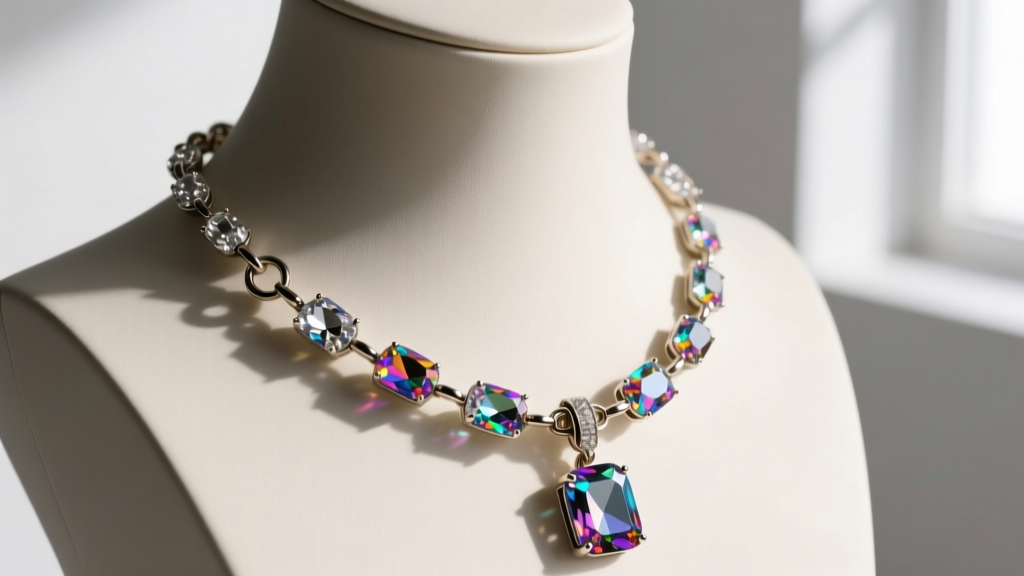
Selecting the Right Clasp for Heavy Strands
The clasp is the most common point of failure in long, heavy necklaces. Avoid standard spring-ring clasps entirely; the internal tension spring will warp under the pendulum swing of a heavy rhinestone strand. Instead, look for:
- Lobster Claw (Medium to Large): Reliable for strands up to 150g. Ensure the lever action is smooth and the internal spring is thick enough to resist deformation.
- Box Clasp with Figure-8 Safety Latch: The gold standard for heavy opera and rope necklaces. The tongue is compressed to slide into the box, expanding once inside to lock securely. The figure-8 safety wire acts as a secondary fail-safe, hooking over a small pin on the opposite side of the clasp.
- Neodymium Magnetic Clasps: Excellent for accessibility, but must be rated for at least 10 lbs of pull force to prevent accidental detachment when the long strand catches on clothing or seatbelts.
Base Metals and Plating Thickness
Rhinestones are only as valuable as the metal holding them. In 2026, discerning buyers must look past the color of the metal and investigate the plating micron thickness. According to manufacturing standards outlined by jewelry suppliers like Rio Grande, the longevity of a plated piece depends entirely on the barrier layers and the final micron count.
Flash Plating (0.1 to 0.5 microns): Common in fast-fashion long necklaces. This microscopic layer of gold or rhodium will wear off within weeks of friction against the skin and clothing, exposing the brass or zinc alloy beneath, which will quickly oxidize and turn your skin green.
Gold Vermeil (Minimum 2.5 microns): By definition, vermeil requires a sterling silver base plated with at least 2.5 microns of gold. This is the minimum threshold you should accept for a premium long rhinestone necklace. The silver base prevents allergic reactions, and the thick gold layer ensures the piece survives years of wear.
Rhodium over Brass: For silver-toned necklaces, rhodium is highly durable and tarnish-resistant. Ensure the piece has a palladium or nickel-free barrier layer beneath the rhodium to comply with modern hypoallergenic standards.
Styling Framework: Necklines and Occasions
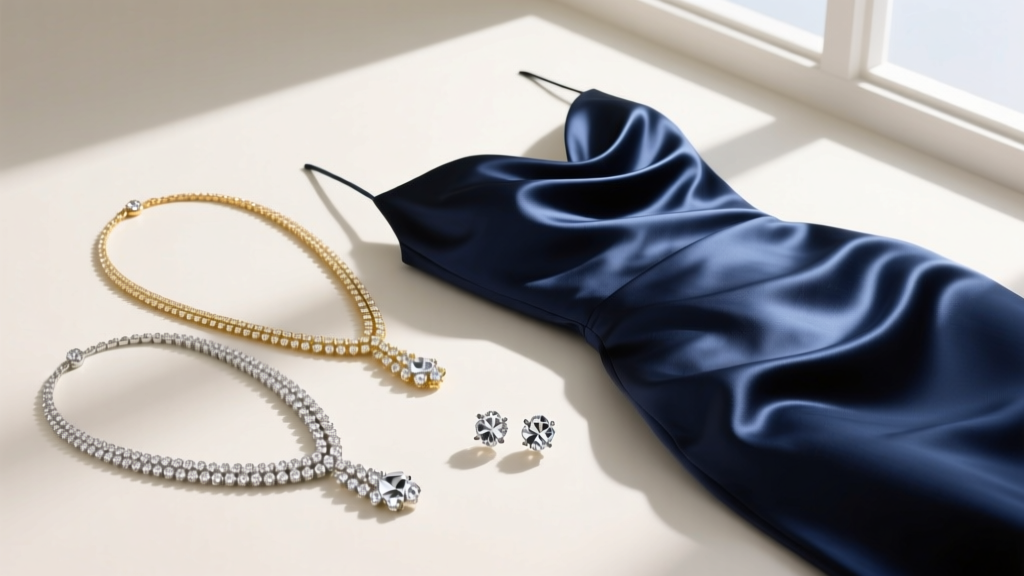
Styling a long rhinestone necklace requires an understanding of visual geometry. The goal is to create unbroken vertical lines that elongate the torso without competing with the garment's architecture.
- The Deep V-Neck: Pair with a 32-inch opera strand that terminates just an inch above the apex of the V. This frames the décolletage and draws the eye downward. Avoid lariats here, as they will tangle with the hem of the V and ruin the clean lines of the dress.
- The Strapless / Sweetheart: This is the ideal canvas for a multi-strand 40-inch rope necklace. You can double-wrap a long strand to create a dense, cascading bib effect that sits flush against the collarbone while the remainder drapes down the bodice.
- The High Crew / Turtleneck: Opt for a single, heavy 45-inch lariat or rope strand. The dark, opaque fabric of a turtleneck acts as a light-absorbing backdrop, maximizing the prismatic fire of crystal rhinestones. Keep the stone size large (12mm+) so they don't get visually lost in the fabric texture.
Care, Maintenance, and Storage
The greatest mistake owners make with rhinestone jewelry is treating it like solid diamond or sapphire. As noted by care guidelines from Jewelers of America, many rhinestones—especially vintage or lower-tier glass—are foil-backed. A microscopic layer of metallic foil is glued to the pavilion (bottom) of the stone to act as a mirror, enhancing light return.
If water, perfume, or ultrasonic vibrations penetrate the setting and reach the foil, it will instantly oxidize, turning the stone black or cloudy. This damage is entirely irreversible and ruins the optical performance of the necklace.
The Cleaning Protocol: Never submerge a long rhinestone necklace in water or chemical dips. Lay it flat on a microfiber cloth. Use a soft, dry makeup brush to gently sweep away dust and skin oils from the prongs. If a stone is heavily soiled, use a cotton swab very lightly dampened with isopropyl alcohol, carefully avoiding the base of the setting where the adhesive resides.
Storage Mechanics: Never toss a long strand into a jewelry box. The pendulum weight of the stones will cause the chain to knot aggressively, leading to bent links and lost stones. Always hang long rhinestone necklaces on a padded velvet hook in a climate-controlled environment, or lay them perfectly flat in a divided tray, ensuring the stones do not overlap, as glass and crystal can easily scratch one another during transit.


