Lord of the Rings Elf Necklace: Budget & Value Assessment
Discover the true value of a Lord of the Rings elf necklace. We compare materials, pricing tiers, and replica accuracy to help you invest wisely.

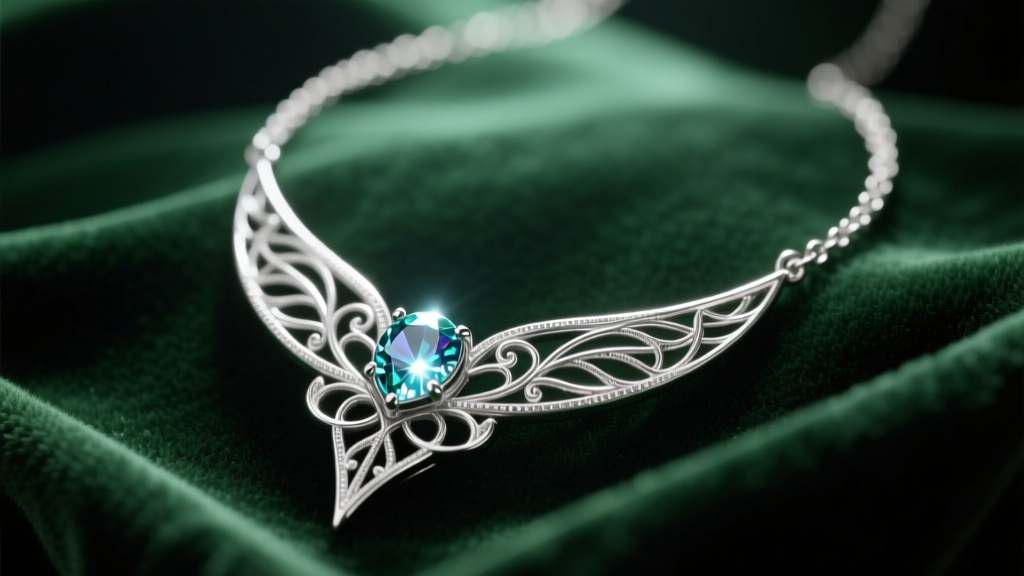
The Allure of Elven Jewelry: Beyond the Cinematic Hype
Since Peter Jackson’s cinematic trilogy first graced screens, the demand for a high-quality Lord of the Rings elf necklace has remained a dominant force in the fantasy jewelry market. Whether you are searching for Arwen’s iconic Evenstar pendant, Galadriel’s Nenya-inspired phial, or Tauriel’s delicate acorn motif, elven jewelry represents a unique intersection of intricate filigree, nature-inspired design, and deep lore. However, as we navigate the 2026 replica market, buyers are faced with a sprawling spectrum of quality. From fast-fashion zinc alloys that degrade within months to heirloom-grade 925 sterling silver pieces crafted via lost-wax casting, understanding the true budget and value assessment of these pendants is critical. This guide dissects the metallurgical realities, gemstone grades, and structural integrity of elven necklaces, ensuring your investment honors the craftsmanship of Middle-earth without falling prey to inflated novelty pricing.
Material Breakdown: What Are You Actually Paying For?
When evaluating a Lord of the Rings elf necklace, the base metal dictates not only the price but the lifespan and skin-safety of the piece. The market is currently segmented into three primary manufacturing tiers, each with distinct failure modes and value propositions.
Zinc Alloy (Zamak) vs. Brass vs. 925 Sterling Silver
Zinc Alloy (Zamak): The vast majority of sub-$30 elven pendants are die-cast from Zamak. While this allows for mass production of complex shapes like the Evenstar’s sweeping wings, Zamak is highly porous and prone to "pot metal" degradation. Over time, exposure to humidity and skin acids causes the internal crystalline structure to oxidize, leading to pitting and catastrophic snapping at the bail (the loop connecting the pendant to the chain).
Brass and Bronze: Stepping into the $40–$90 range, brass offers superior tensile strength and captures sharper details in leaf and vine motifs. However, unsealed brass will react with sweat to produce copper chloride, leaving a green residue on the décolletage. High-value brass replicas must feature a thick, clear epoxy or rhodium flash-plating to act as a barrier.
925 Sterling Silver: The gold standard for premium replicas. Crafted using lost-wax casting, 925 silver captures the microscopic bark textures and elven runes with breathtaking fidelity. It is hypoallergenic and holds intrinsic scrap value. According to the Tolkien Estate, licensed premium jewelry partners exclusively utilize precious metals to ensure the pieces reflect the immortal, untarnished nature of the Elves.
| Material | Casting Method | Expected Lifespan | Price Range (2026) | Tarnish / Corrosion Risk |
|---|---|---|---|---|
| Zinc Alloy (Zamak) | Die-Casting | 1–3 Years | $12 – $28 | High (Pitting, structural failure) |
| Solid Brass | Centrifugal / Sand | 5–10 Years | $45 – $95 | Medium (Surface oxidation, skin staining) |
| 925 Sterling Silver | Lost-Wax Investment | Lifetime / Heirloom | $160 – $450+ | Low (Surface silver sulfide, easily polished) |
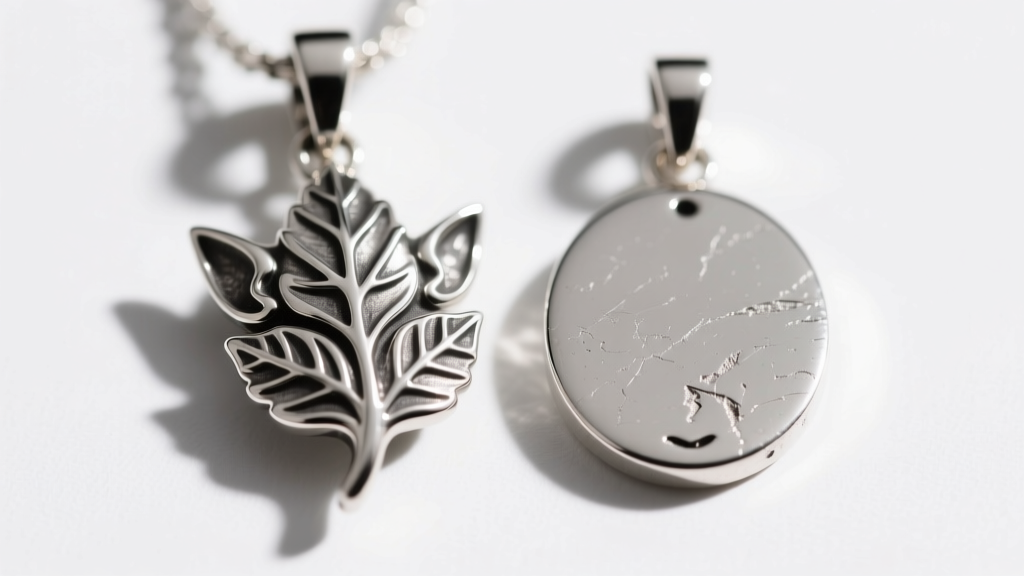
Gemstone Quality: Glass, CZ, or Lab-Grown?
The centerpiece of many elven pendants—particularly the Evenstar and the Phial of Galadriel—relies on a central gemstone to capture the "light of Eärendil." Budget assessment requires looking past the sparkle and examining the Mohs hardness scale and optical dispersion.
- Molded Glass / Acrylic (Mohs 5-6): Found in budget tiers. These stones are glued into place and scratch easily against clothing or storage boxes. They lack internal refraction, appearing flat and lifeless under natural sunlight.
- Cubic Zirconia (CZ) (Mohs 8-8.5): The mid-tier standard. CZ offers exceptional brilliance and a high dispersion rate (fire). According to the Gemological Institute of America (GIA), CZ is an excellent diamond simulant, but it is slightly porous and can attract oils, requiring regular ultrasonic cleaning to maintain its elven glow.
- Lab-Grown Sapphire / White Topaz (Mohs 8-9): The 2026 premium market has seen a surge in lab-grown corundum (sapphire) being used in high-end replicas. These stones are virtually scratch-proof, chemically identical to mined gems, and are typically set using secure prong or bezel settings rather than cheap epoxy glues.
Chain Quality & Clasp Mechanics: The Hidden Costs
A common failure point in fantasy jewelry is the chain. A $200 sterling silver pendant is rendered useless if it is hung on a cheap, hollow cable chain that snaps under the pendant's weight. When assessing value, inspect the chain gauge and the clasp mechanism.
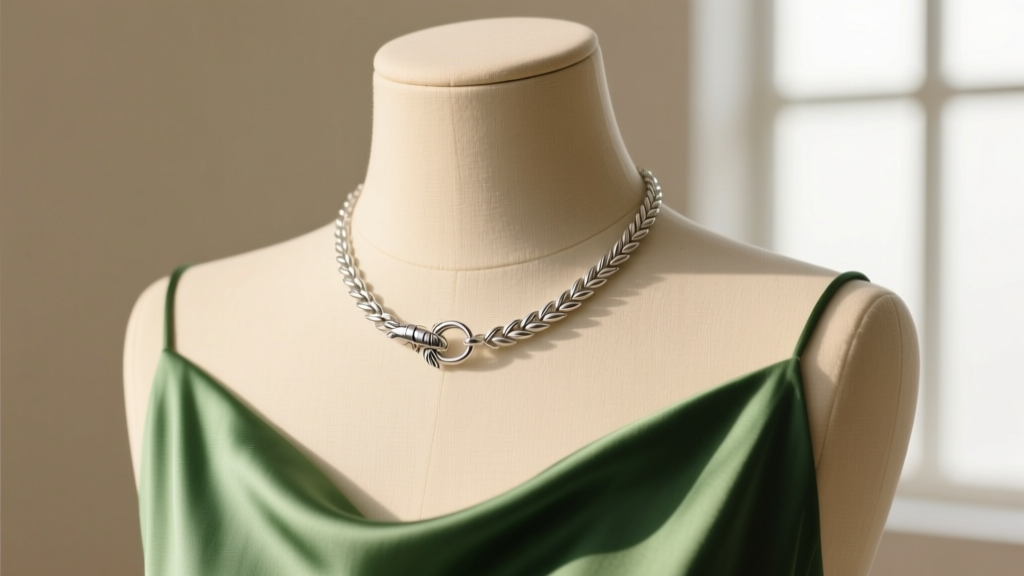
Chain Gauges and Weaves: Elven pendants are notoriously heavy due to their wide, sprawling wing designs. A standard 0.8mm cable chain will inevitably kink and break. For optimal value, seek out a 1.2mm to 1.5mm wheat or rope chain. These weaves distribute the weight of the pendant evenly and resist kinking, ensuring the necklace drapes elegantly over the collarbone without twisting.
Clasp Mechanics: Avoid spring-ring clasps, which feature weak internal springs that fail over time. A high-value Lord of the Rings elf necklace will utilize a lobster claw clasp or a custom-designed toggle clasp forged from the same metal as the chain, providing a secure lock that won't accidentally unlatch when catching on a sweater or cloak.
Authenticity, Licensing, and the 3D Printing Disruption
Historically, Badali Jewelry held the most prominent official licensing agreements for Tolkien-inspired pieces, setting the benchmark for accuracy and metallurgical quality. Their pieces command a premium ($200–$600) but guarantee exact screen-accurate dimensions and premium gemstone settings.
However, the 2026 market has been disrupted by high-resolution SLA (Stereolithography) 3D printing. Independent artisans now use castable jewelry resins to create incredibly accurate molds, bypassing the expensive tooling costs of traditional manufacturing. While this has driven down the price of highly detailed brass and silver replicas, it has also flooded the market with unlicensed, slightly warped digital scans of the original movie props. When assessing value, always check for hallmarks (such as a "925" stamp and a maker's mark) and verify the seller's licensing status if screen-accuracy is your primary purchasing driver.
Care and Maintenance of Elven Replicas
To preserve the ethereal shine of your elven jewelry, proper maintenance is non-negotiable. Sterling silver will naturally react with sulfur in the air to form silver sulfide (tarnish). Store your necklace in an anti-tarnish cloth pouch with a silica gel packet to control humidity. Avoid wearing Zamak or brass pieces in the shower, as the heat and chlorine will accelerate porous degradation and strip away protective clear-coats. For gemstone care, use a soft-bristled baby toothbrush and mild dish soap to clean behind the stone's pavilion, where skin oils and lotions accumulate and dull the light return.
Final Verdict: How to Maximize Your Elven Investment
When budgeting for a Lord of the Rings elf necklace, bypass the $15–$30 zinc alloy novelty tier entirely; the cost-per-wear is abysmal due to rapid structural failure. The true "sweet spot" for value lies in the $120–$250 range, where you can secure a solid 925 sterling silver pendant with a CZ or lab-grown stone, paired with a durable 1.5mm wheat chain and a lobster clasp. At this price point, you are no longer buying a fragile movie prop replica; you are investing in a durable, heirloom-quality piece of wearable art that honors the timeless elegance of Rivendell and Lothlórien.


