The Granddaughter Necklace From Grandma: Technical Heirloom Guide
Discover how to design a lasting granddaughter necklace from grandma. Explore heirloom metals, chain gauges, and engraving techniques.

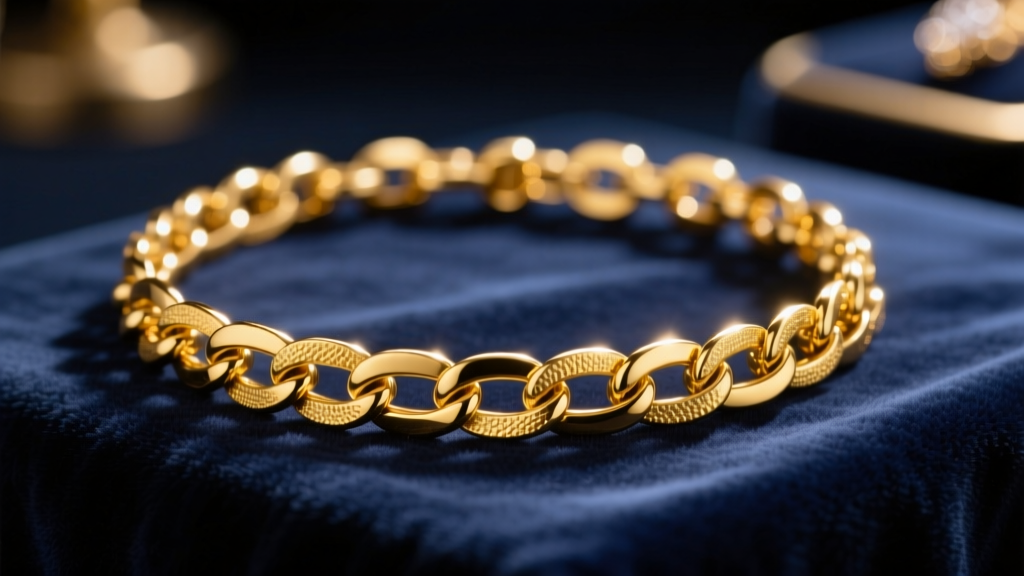
The phrase "granddaughter necklace from grandma" evokes deep sentimental value, representing a tangible bridge between generations. However, from a metallurgical and mechanical standpoint, most jewelry marketed as "heirloom quality" fails to survive the 30 to 50 years required to actually become one. Tangled chains, worn-out prongs, and illegible engravings are the norm rather than the exception. To craft a true generational piece, we must look past aesthetic trends and focus on material science, tensile strength, and archival craftsmanship. This technical deep dive will guide you through the exact specifications required to engineer a necklace that will outlast its original wearer and remain pristine for the next generation.
Metallurgy for Generational Wear: Choosing the Right Alloy
The foundation of any heirloom necklace is its base metal. While sterling silver (92.5% Ag, 7.5% Cu) is a popular choice for affordable sentimental jewelry, it is fundamentally unsuited for multi-generational daily wear. Silver is highly susceptible to sulfur-induced tarnishing and possesses a relatively low Vickers hardness (approx. 60-70 HV), making it prone to severe scratching and structural fatigue over decades.
For a true granddaughter necklace from grandma, you must select a high-noble metal alloy. The two premier choices are 18-karat gold and 950 platinum, but their mechanical behaviors differ vastly.
18-Karat Gold vs. 14-Karat Gold
18k gold (75% pure gold) offers superior tarnish resistance and a rich, warm hue that does not fade. However, its Vickers hardness sits around 120-140 HV, depending on the alloy mix (copper and silver). 14k gold (58.5% pure gold) is harder (approx. 150-170 HV) and more resistant to scratching, but it contains higher levels of base metals that can oxidize or cause skin reactions over a 50-year timeline. For heirloom lockets and pendants, 18k is the superior choice for its chemical stability.
950 Platinum Alloys
Platinum is the undisputed king of heirloom jewelry, but the specific alloy matters. According to Platinum Guild International, the 950/Ru (95% Platinum, 5% Ruthenium) alloy is ideal for cast chains and lockets. Ruthenium increases the hardness to roughly 135 HV and improves castability. Unlike gold, which loses microscopic layers of metal when scratched, platinum merely displaces, developing a soft patina that actually protects the piece without compromising its structural integrity.
| Metal Alloy | Composition | Vickers Hardness (HV) | Heirloom Longevity Rating |
|---|---|---|---|
| Sterling Silver | 92.5% Ag, 7.5% Cu | 65 HV | Poor (Tarnishes, fatigues) |
| 14k Yellow Gold | 58.5% Au, Ag/Cu mix | 160 HV | Good (Prone to base metal oxidation) |
| 18k Yellow Gold | 75% Au, Ag/Cu mix | 135 HV | Excellent (Chemically stable) |
| 950 Platinum (Ru) | 95% Pt, 5% Ru | 135 HV | Superior (Displaces, never loses mass) |
Chain Mechanics: Gauge, Link Style, and Tensile Strength
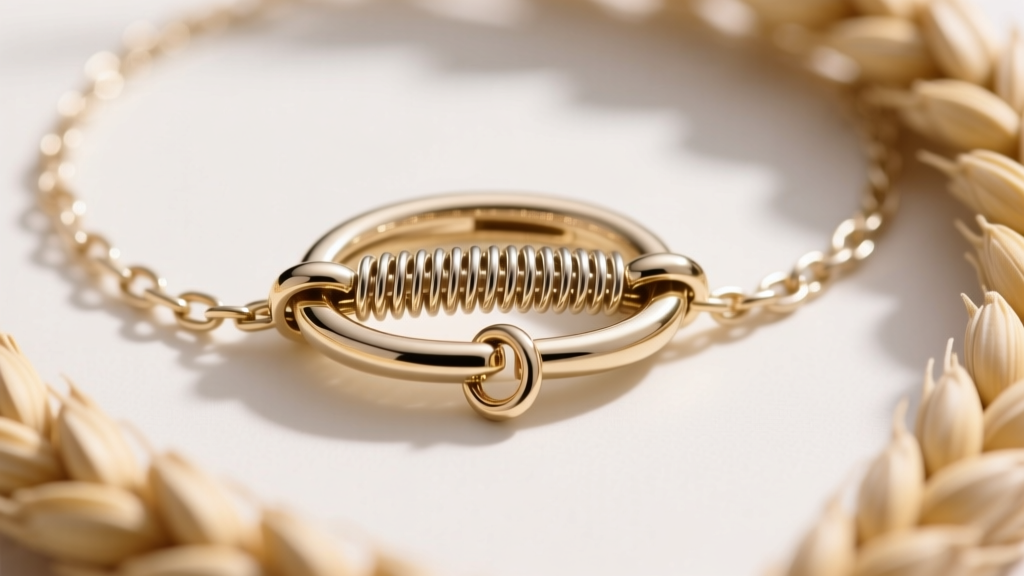
The most common point of failure in any pendant necklace is the chain. A delicate 0.8mm cable chain might look elegant in the showroom, but it cannot withstand the "pendulum effect"—the repetitive, low-grade tensile stress caused by the wearer's daily movement. Over 20 years, this friction will saw through thin links and unsoldered jump rings.
Optimal Gauge and Link Geometry
For a pendant weighing between 3 and 8 grams, the chain must have a minimum thickness of 1.2mm to 1.5mm. Furthermore, the link geometry dictates the tensile strength:
- Box Chains: Composed of square, interlocking links that distribute weight evenly. They offer high tensile strength and resist kinking, making them an ideal, modern choice for heirloom pendants.
- Wheat (Spiga) Chains: Woven in a continuous, braided pattern. The friction between the oval links provides exceptional structural integrity and a fluid drape.
- Snake Chains: Avoid for heirlooms. The tightly joined metal rings create a smooth tube, but they are notorious for trapping hair and kinking permanently under pressure.
The Critical Role of the Clasp and Jump Ring
Never rely on a stamped sheet-metal lobster clasp for an heirloom piece. Commission a cast lobster clasp, which possesses a thicker, more robust internal spring mechanism. Equally important is the jump ring connecting the clasp to the chain. It must be flash-soldered shut. An unsoldered jump ring will inevitably pull apart under the dynamic load of a swinging pendant.
The Pendant: Stone Selection and Setting Security
If the granddaughter necklace from grandma features a central gemstone, the selection must be governed by the Mohs scale of hardness and the gem's cleavage planes. The Gemological Institute of America (GIA) emphasizes that hardness (scratch resistance) and toughness (resistance to chipping) are distinct properties.
Gemstone Durability Matrix
- Diamond (Mohs 10): Unmatched scratch resistance, but possesses perfect cleavage planes, meaning a hard blow at the right angle can split the stone.
- Sapphire/Ruby (Corundum, Mohs 9): The ultimate heirloom stones. They have no true cleavage, making them exceptionally tough and resistant to both scratching and chipping.
- Emerald (Mohs 7.5-8): Highly discouraged for generational daily wear. Emeralds are heavily included and inherently brittle; decades of minor impacts will likely fracture the stone.
- Pearl/Opal: Far too soft and sensitive to environmental changes (humidity, acids in skin oils) for a 50-year lifespan without meticulous, climate-controlled storage.
Bezel vs. Prong Settings
While prong settings maximize light return, they are vulnerable to snagging on textiles, which can bend the prongs and dislodge the stone over time. For an heirloom piece meant to be worn frequently, a full bezel setting is mandatory. A bezel encases the gemstone's girdle in a continuous rim of metal, protecting the edges from impact and ensuring the stone remains secure even if the necklace is subjected to physical stress.
Archival Engraving: Laser vs. Rotary Techniques
A personalized inscription is what transforms a beautiful piece of jewelry into a deeply emotional granddaughter necklace from grandma. However, the method of engraving can impact the metal's structural integrity, especially on thin lockets or the interior of heavy pendants.
Rotary Engraving
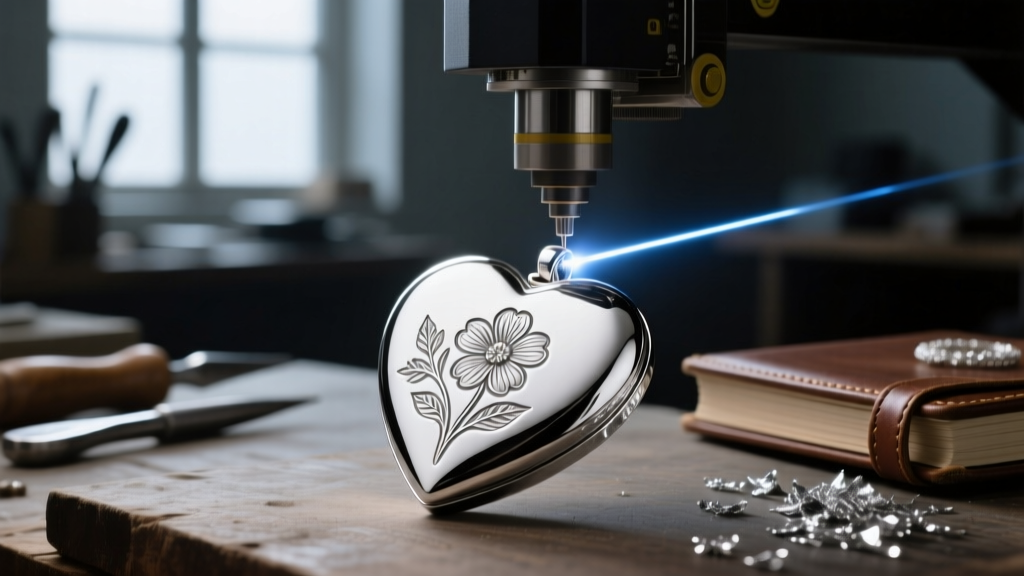
Traditional rotary engraving uses a diamond or carbide bit to physically cut grooves into the metal. While it produces a deep, tactile cut that can be filled with enamel, it removes physical mass from the piece. On a thin 1mm locket wall, deep rotary engraving can create stress points that lead to cracking over decades of opening and closing the hinge.
Fiber Laser Engraving
Modern fiber laser engraving (YAG) operates by vaporizing metal at a microscopic level, typically removing only 0.01mm to 0.05mm of material. This preserves the structural integrity of the piece while allowing for hyper-detailed typography, fingerprints, or even micro-photographs. For archival lockets, laser engraving combined with a dark oxidized fill provides high-contrast legibility without compromising the metal's tensile strength.
Commissioning the Heirloom: A Technical Checklist
When sitting down with a bespoke jeweler to design this piece, bypass the standard sales pitch and ask these specific technical questions to ensure your investment survives the decades:
- "Is the bail articulated and lined?" An articulated bail (which moves independently of the pendant) reduces stress on the chain. A lined bail (often with a platinum or hard gold insert) prevents the chain from sawing through the bail hole over 30 years of friction.
- "Are all jump rings laser-welded or flash-soldered?" Ensure no structural rings are merely pressed shut.
- "What is the exact alloy composition of the platinum/gold?" Verify the use of 950/Ru for platinum or a nickel-free 18k gold alloy to prevent future allergic reactions in the recipient.
- "Is the hinge on the locket a piano hinge or a standard pin hinge?" A piano hinge (running the full length of the locket edge) distributes mechanical stress far better than a single-point pin hinge, preventing the locket door from drooping over time.
Conclusion
Creating a genuine granddaughter necklace from grandma requires a departure from fast-fashion jewelry mentalities. By prioritizing high-noble metallurgy, selecting high-tensile chain geometries, securing gemstones in protective bezels, and utilizing non-destructive laser engraving, you are not just buying a piece of jewelry. You are engineering a wearable archive—a structurally sound, chemically stable artifact capable of carrying your family's narrative safely into the next century.


