Beginner Guide: Styling a Silver Necklace With Silver Beads
Discover how to choose, layer, and care for a silver necklace with silver beads. Our beginner guide covers sterling grades, bead sizes, and styling tips.


Why Choose a Silver Beaded Necklace?
A silver necklace with silver beads is a foundational piece in any jewelry collection. Unlike solid chains that reflect light uniformly, beaded silver necklaces offer a textured, multi-dimensional sparkle due to the individual facets and curves of each bead. For beginners, this style bridges the gap between casual everyday wear and refined elegance. However, not all beaded necklaces are created equal. The market is flooded with options ranging from $20 costume pieces to $300 artisan-crafted jewels. Understanding the metallurgy, stringing mechanics, and structural components will ensure you invest in a piece that lasts a lifetime rather than one that snaps or tarnishes within a month.
Decoding Silver Grades: What You Are Actually Buying
When shopping for a silver necklace with silver beads, the hallmark stamped on the clasp or end bead tells you everything you need to know about its durability and tarnish resistance. According to the Gemological Institute of America (GIA), pure silver is too soft for jewelry, meaning it must be alloyed with other metals.
| Silver Grade | Composition | Tarnish Resistance | Best Use Case |
|---|---|---|---|
| 925 Sterling | 92.5% Ag, 7.5% Copper | Moderate | Classic beaded necklaces, everyday wear |
| Argentium 935 | 93.5% Ag, Germanium | High | Low-maintenance, bright white finish |
| Fine 999 | 99.9% Pure Silver | Very High | Pendants only; too soft for bead stringing |
For a beaded necklace, 925 Sterling is the industry standard. The copper adds necessary tensile strength. However, if you hate polishing, seek out Argentium 935. The addition of germanium creates a transparent, tarnish-resistant barrier that keeps the beads brilliantly white for years.
The Hidden Hero: Stringing Materials
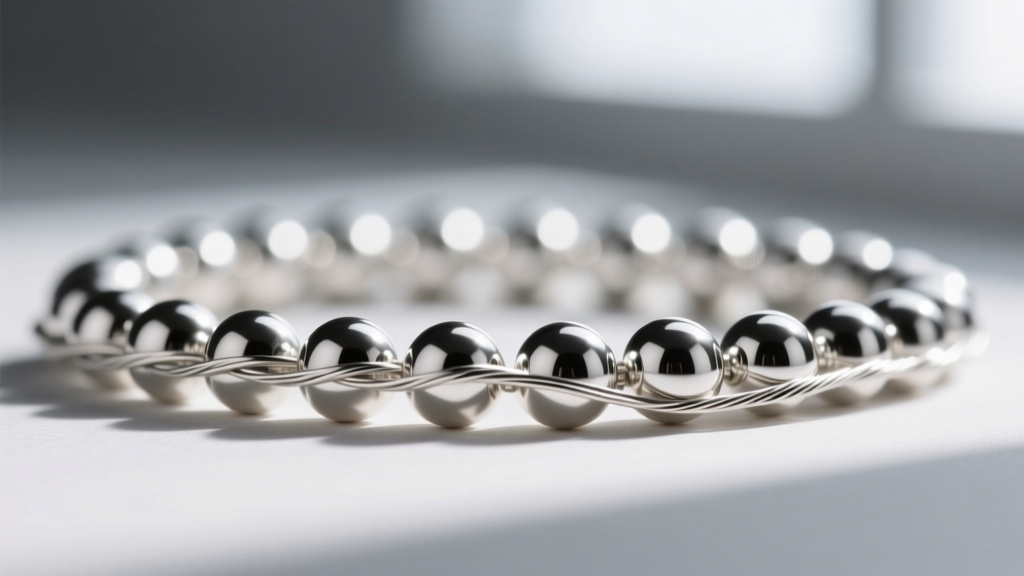
The beads themselves are only half the equation. How they are strung dictates the necklace's lifespan. Cheap necklaces use elastic or single-strand wire that kinks and snaps. High-quality pieces use 49-strand micro-wire (often branded as Soft Flex) with a diameter of 0.018 inches. This aerospace-grade stainless steel wire is coated in nylon, allowing the silver beads to drape like liquid metal while supporting up to 20 pounds of tensile weight. For knotted designs, look for size E silk thread with French wire (gimp) protectors at the clasp to prevent friction wear.
Bead Size and Visual Weight: A Sizing Chart
The millimeter (mm) size of the beads drastically alters the formality and visual weight of the necklace. Here is a practical framework for choosing the right diameter:
- 2mm - 3mm (Tin Cup / Delicate): Weighs under 10 grams. Perfect for layering over silk blouses or wearing as a subtle, shimmering baseline under V-neck sweaters.
- 4mm - 5mm (Everyday Standard): Weighs 15-25 grams. The most versatile size. Provides noticeable texture without overwhelming a collarbone.
- 6mm - 8mm (Statement): Weighs 30-50 grams. Acts as a focal point. Best worn solo over crew necks or simple turtlenecks where the beads can rest flat against the fabric.
- 10mm+ (Bold / Chunky): Weighs 60+ grams. Requires heavy-duty clasps and wire. Ideal for evening wear or high-fashion editorial styling.
Clasp Mechanics: Security Meets Aesthetics
A heavy silver necklace with silver beads will easily snap a flimsy 5mm spring ring. Always inspect the clasp hardware. An 18mm lobster claw is the gold standard for security, featuring a robust internal spring mechanism. For necklaces with 6mm beads or larger, a 15mm toggle clasp is highly recommended. Toggles distribute the weight of the beads evenly and are significantly easier to fasten behind your neck. Ensure the toggle bar is at least 2mm longer than the interior diameter of the ring to prevent accidental slipping.
The 3-Step Layering Framework
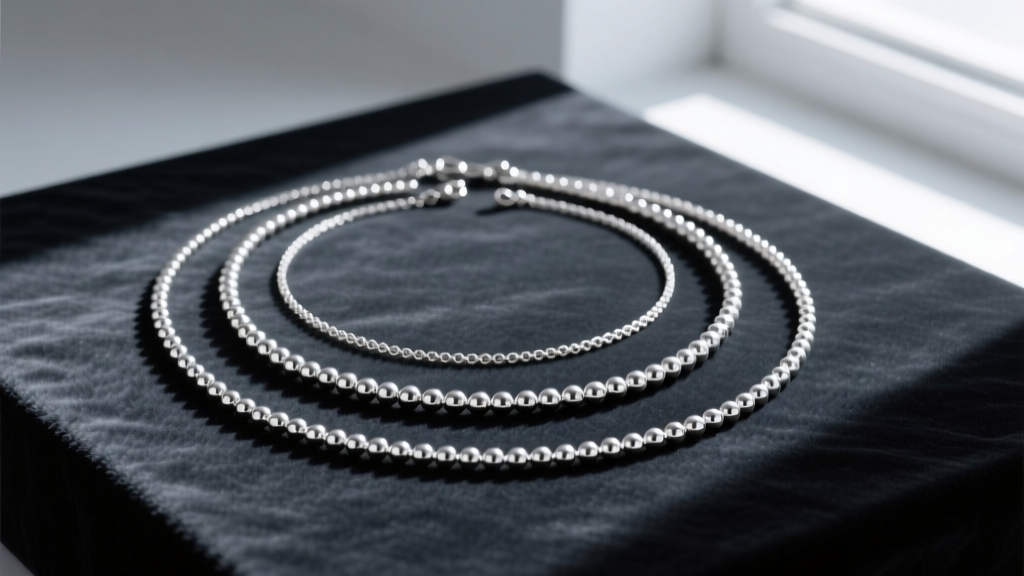
Layering a silver necklace with silver beads requires strict adherence to length intervals to prevent tangling and visual clutter.
- The Anchor (16 inches): Start with a 2mm or 3mm beaded choker that sits tightly at the base of the throat.
- The Core (18 inches): Add a 4mm beaded princess-length necklace. This should rest exactly on the collarbone.
- The Pendant (22 inches): Finish with a longer, solid silver chain holding a single geometric pendant. The contrast between the textured beads and the smooth chain creates depth.
Pro Tip: Always use necklaces with varying chain thicknesses or bead sizes. Layering three identical 4mm beaded necklaces will look like a single, messy, tangled strand.
Tarnish Prevention and Daily Care
Sterling silver beads tarnish when exposed to sulfur and moisture. To maintain your necklace, follow the guidelines recommended by Jewelers of America. Never wear your beaded necklace in swimming pools (chlorine pits the silver) or hot tubs. When storing, do not simply toss it into a wooden jewelry box, as wood finishes can emit acidic vapors.
Expert Storage Trick: Place your silver necklace inside an airtight zip-lock bag along with a 3M anti-tarnish strip and a piece of standard chalk. The chalk absorbs ambient moisture, while the strip neutralizes sulfur gases, keeping your beads mirror-bright for up to two years without polishing.
When cleaning is necessary, avoid harsh liquid dips which can degrade the nylon coating on the internal stringing wire. Instead, use a microfiber polishing cloth specifically treated with silver anti-tarnish agents, gently rubbing each individual bead to restore its luster without stressing the wire core.


