LR Necklace Guide: Lab Ruby vs. Natural Stone Properties
Compare LR necklace materials in 2026. We break down lab-grown ruby properties, hardness, refractive index, and pricing vs natural stones.

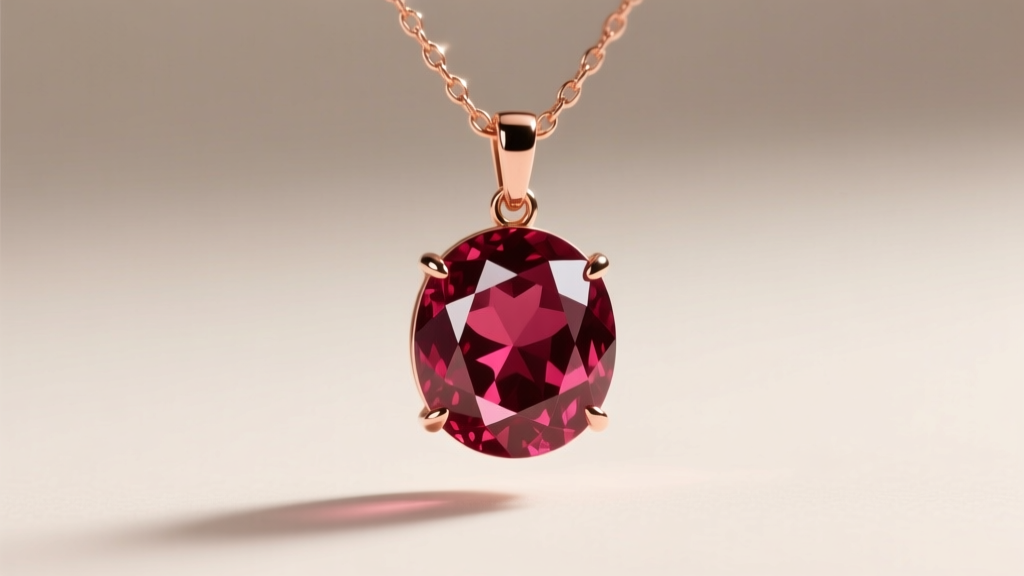
What Exactly is an LR Necklace?
When shopping for fine jewelry in 2026, the term "lr necklace" has become a prominent search query among savvy collectors and everyday wearers alike. But what does LR actually stand for in the gemological community? In wholesale and high-end jewelry manufacturing, LR is the standard abbreviation for Lab-grown Ruby. Unlike natural rubies mined from the earth over millions of years, an LR necklace features a corundum crystal cultivated in a controlled laboratory environment. According to the Gemological Institute of America (GIA), lab-grown rubies share the exact same chemical composition (Al2O3 with trace chromium) and crystal structure as their natural counterparts, but they offer superior clarity and a fraction of the cost.
However, not all LR stones are created equal. The physical properties, internal inclusions, and ultimately the value of your lr necklace depend entirely on the synthesis method used to grow the crystal. Understanding these nuances is critical for making an informed purchase.
The Three Synthesis Methods of LR Corundum
To evaluate the quality of an lr necklace, you must first identify how the gemstone was grown. There are three primary methods used in modern gemology, each yielding vastly different visual and structural results:
1. Flame Fusion (Verneuil Process)
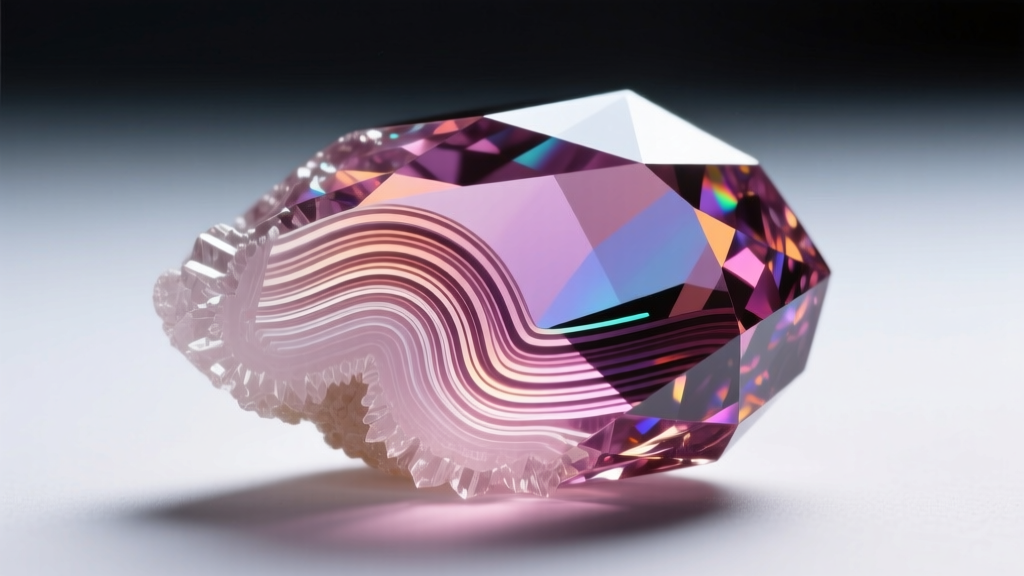
Developed in the early 1900s, this method involves melting aluminum oxide powder with chromium using an oxyhydrogen flame. The molten material drips onto a rotating pedestal, forming a cylindrical "boule." While highly affordable, Verneuil LR stones often exhibit curved striae (growth lines) and microscopic gas bubbles, which are dead giveaways to a trained gemologist. They are structurally sound but lack the prestige of higher-tier lab stones.
2. Flux Growth
Flux-grown LR is the gold standard for high-end necklaces. The crystal is grown from a molten lead-lithium-borate flux at temperatures exceeding 1,000°C over several months. This slow cooling process mimics natural geological conditions, resulting in stones with exceptional clarity and natural-looking "silk" inclusions. If you are buying a luxury lr necklace, flux-grown is the material you want.
3. Czochralski (Pulling) Method
Often used for industrial lasers and high-tech optics, this method pulls a seed crystal from a molten crucible. While it produces incredibly pure corundum, it is rarely used for fine jewelry due to the high cost of production and the overly "perfect," sterile appearance of the resulting gems.
Crystallography and Wearability
One of the main reasons an lr necklace is highly recommended for daily wear is the inherent durability of corundum. On the Mohs scale of mineral hardness, ruby scores a 9, making it the second hardest natural gemstone after diamond. This means your pendant is highly resistant to scratching from everyday environmental dust, which contains quartz particles (Mohs 7).
Furthermore, corundum has no true cleavage planes. Instead, it exhibits a conchoidal fracture. In practical terms, this means that if your lr necklace is accidentally dropped on a hard surface, it is far less likely to split or shatter compared to gems like tanzanite, emerald, or topaz. The International Gem Society (IGS) notes that lab rubies also possess a high specific gravity of 4.00 and a refractive index of 1.762 to 1.770, giving them that signature dense, heavy feel and brilliant light return when properly faceted.
The Role of Pleochroism in LR Cutting
Corundum is strongly pleochroic, meaning it shows different colors when viewed from different crystallographic angles (typically purplish-red and orangy-red). Expert lapidaries orient the table of the LR stone parallel to the c-axis to ensure the face-up color is a pure, vibrant red. When inspecting an lr necklace, look through the side of the stone; if you notice a heavy orange or purple shift, the cutter may have prioritized carat weight over optimal color orientation.
Material Comparison Matrix: LR vs. Natural vs. Simulants
It is vital to distinguish genuine LR (lab-grown ruby) from cheap simulants like red glass, cubic zirconia, or red spinel. Below is a technical breakdown of how an authentic LR necklace compares to other common red gemstones on the market.
| Property | Lab-Grown Ruby (LR) | Natural Ruby | Red Spinel | Red Cubic Zirconia |
|---|---|---|---|---|
| Chemical Formula | Al2O3 (Cr) | Al2O3 (Cr) | MgAl2O4 | ZrO2 |
| Mohs Hardness | 9.0 | 9.0 | 8.0 | 8.0 - 8.5 |
| Refractive Index | 1.762 - 1.770 | 1.762 - 1.770 | 1.712 - 1.762 | 2.15 - 2.18 |
| Specific Gravity | 4.00 | 4.00 | 3.58 - 3.61 | 5.6 - 6.0 |
| UV Fluorescence | Strong Red (LW) | Strong Red (LW) | Weak/Moderate Red | None/Variable |
| Avg. Price per Carat | $15 - $150 | $10,000+ | $500 - $2,000 | $1 - $5 |
Optimal Settings and Chain Pairings
The structural integrity of your lr necklace relies just as much on the metalwork as it does on the gemstone. Because LR corundum is so hard, it requires precise setting techniques.
Prong vs. Bezel Settings
For active lifestyles, a bezel setting is highly recommended. A full bezel wraps the metal entirely around the girdle of the LR stone, protecting the vulnerable edges from chipping upon impact. If you prefer a prong setting to maximize light entry, ensure the jeweler uses V-prongs for any pear, marquise, or trillion cuts. Standard rounded prongs are sufficient for oval and cushion cuts, provided they are crafted from a durable metal.
Selecting the Right Chain Gauge
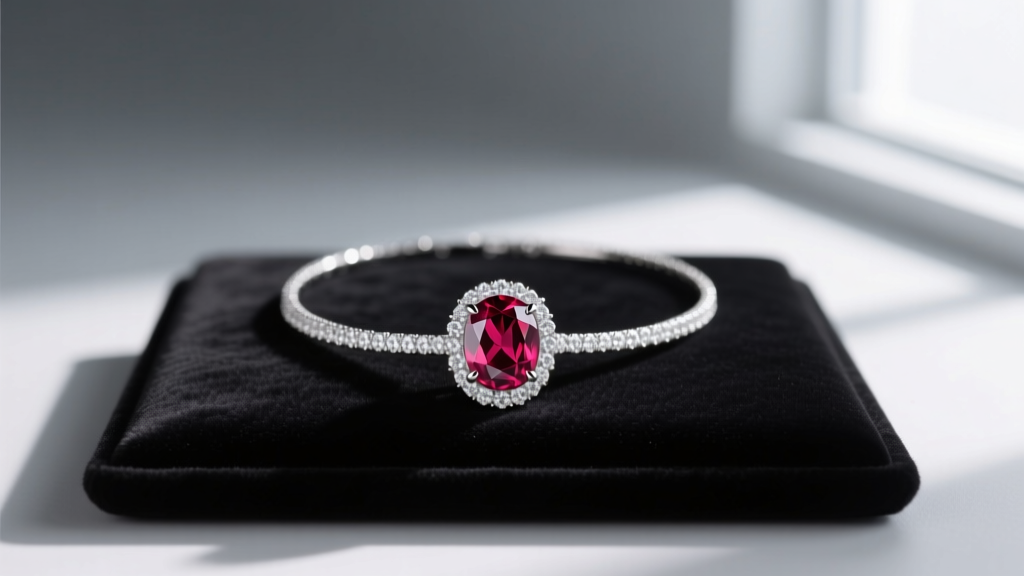
A common mistake buyers make is pairing a heavy LR pendant with a delicate chain. A 2-carat oval LR stone weighs approximately 1.6 grams. Once you add the weight of an 18k gold setting and a potential diamond halo, the total pendant weight can easily exceed 4 grams.
- 0.8mm Box Chains: Too fragile. Prone to kinking and snapping under the weight of a 2-carat LR pendant.
- 1.2mm - 1.5mm Rope or Cable Chains: The ideal sweet spot. They offer excellent tensile strength while remaining flexible and visually proportional to medium-to-large pendants.
- Lobster Clasps: Always ensure the clasp is stamped with the metal purity (e.g., 14K or 18K) and features a robust internal spring mechanism to prevent accidental loss.
2026 Pricing Realities and Value Retention
The market for lab-grown gemstones has matured significantly. In 2026, consumers understand that an lr necklace is a purchase of beauty and durability, not an investment vehicle for financial appreciation.
Verneuil flame-fusion LR stones are incredibly inexpensive, often retailing for $5 to $20 per carat. These are frequently found in mass-market silver jewelry. Conversely, premium flux-grown LR stones command $50 to $150 per carat. While this is a massive discount compared to the $10,000+ per carat demanded by natural, unheated "pigeon blood" Burmese rubies, flux-grown LR still retains a baseline intrinsic value due to the high energy and time costs required for their synthesis. When buying, expect to pay between $400 and $1,200 for a complete, high-quality 14k gold lr necklace featuring a 1.5 to 2.0-carat flux-grown center stone.
How to Verify Your LR Necklace Certification
Because LR and natural ruby are chemically identical, standard handheld testers cannot tell them apart. Advanced gemological equipment, such as a Raman spectrometer or advanced microscopy, is required to identify the specific growth structures (like flux fingerprints or Verneuil curved striae). Always demand a grading report from a reputable, independent laboratory such as the GIA, IGI, or GCAL. The report will explicitly state "Laboratory-Grown" or "Synthetic" under the identification section, ensuring you are paying the correct market price for your lr necklace.


