LV Button Necklace Guide: Metal Properties & Wear Analysis
Discover the metallurgy behind the LV button necklace trend. Learn how brass alloys, plating, and enamel hold up against skin contact and sweat.

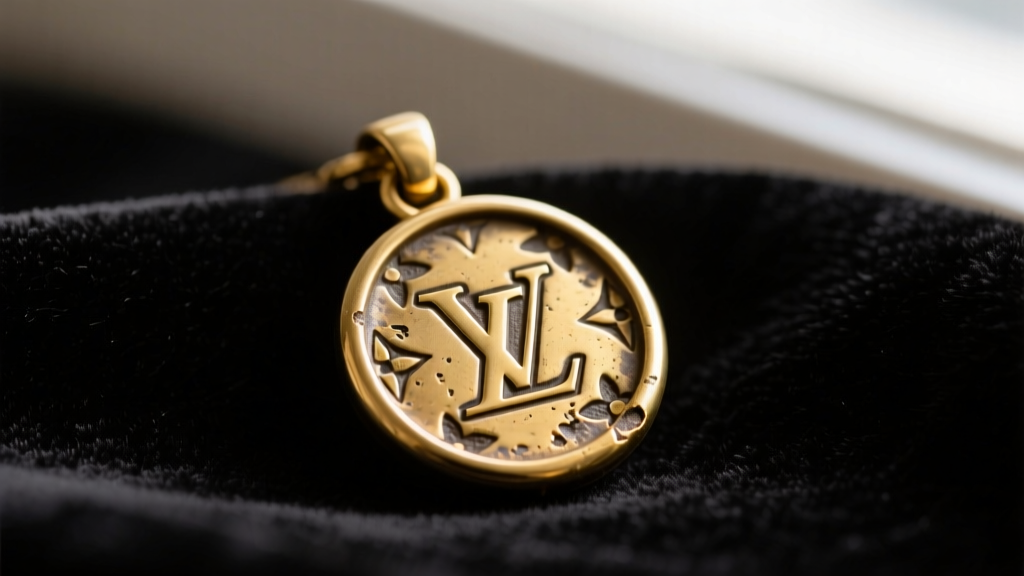
The Anatomy of an LV Button Necklace
The upcycling of vintage luxury hardware into bespoke jewelry has made the lv button necklace a highly sought-after accessory among collectors and fashion enthusiasts. Repurposing a vintage Louis Vuitton garment button into a pendant bridges high-fashion history with modern, sustainable jewelry practices. However, transforming a clothing fastener into a skin-contact pendant introduces severe material challenges that fine jewelry buyers must understand. Unlike traditional pendants cast from solid precious metals, vintage luxury buttons were engineered for structural garment fastening, not continuous dermal exposure.
Most vintage LV buttons produced between the 1970s and 1990s are constructed from a stamped or cast brass base. The iconic gold-tone finish is typically a flash plating—often less than 0.5 microns thick—applied over a nickel or palladium barrier layer. The monogram details are frequently filled with epoxy resin or vitreous enamel. While these materials look spectacular on a tweed jacket, their behavior changes drastically when subjected to the acidic, high-friction environment of the human décolletage. Understanding these material properties is critical for anyone looking to wear, restore, or craft a button pendant that will survive long-term use without degrading.
Metallurgical Breakdown: Button Alloys vs. Fine Jewelry
To understand how a repurposed button will wear over time, we must compare its base metallurgy to standard fine jewelry alloys. Brass is an alloy of copper and zinc (typically CuZn30 or CuZn39 in vintage hardware). It is highly malleable, inexpensive, and takes plating beautifully, but it is fundamentally reactive. Below is a comparative analysis of the materials you will encounter.
| Material Property | Vintage Brass Button | 14k Solid Gold | 925 Sterling Silver |
|---|---|---|---|
| Core Alloy | CuZn (Copper/Zinc) | Au/Ag/Cu (Gold/Silver/Copper) | Ag/Cu (Silver/Copper) |
| Surface Finish | Flash Plating (<0.5μm) | Solid Alloy (No plating) | Solid Alloy (No plating) |
| Tarnish Rate | High (Verdigris formation) | None | Moderate (Silver sulfide) |
| Skin Reaction Risk | High (Nickel/Copper exposure) | Very Low | Low |
| Structural Hardness | High (Work-hardens quickly) | Medium (Malleable) | Medium-Soft |
As highlighted by the Gemological Institute of America (GIA), the primary concern with vintage fashion jewelry is the presence of nickel in the plating barrier layers, which can cause contact dermatitis once the microscopic gold flash wears away. Furthermore, the copper content in the brass core is highly susceptible to oxidation when exposed to moisture and salts.
The Chemistry of Skin Contact and Verdigris
When you wear an unsealed brass button pendant against your chest, it interacts directly with your skin's microenvironment. Human sweat has a pH ranging from 4.5 to 7.0 and contains water, sodium chloride (salt), and lactic acid. This combination acts as a potent electrolyte. When the thin gold plating on the button inevitably micro-fractures from friction against clothing or skin, the underlying copper is exposed.
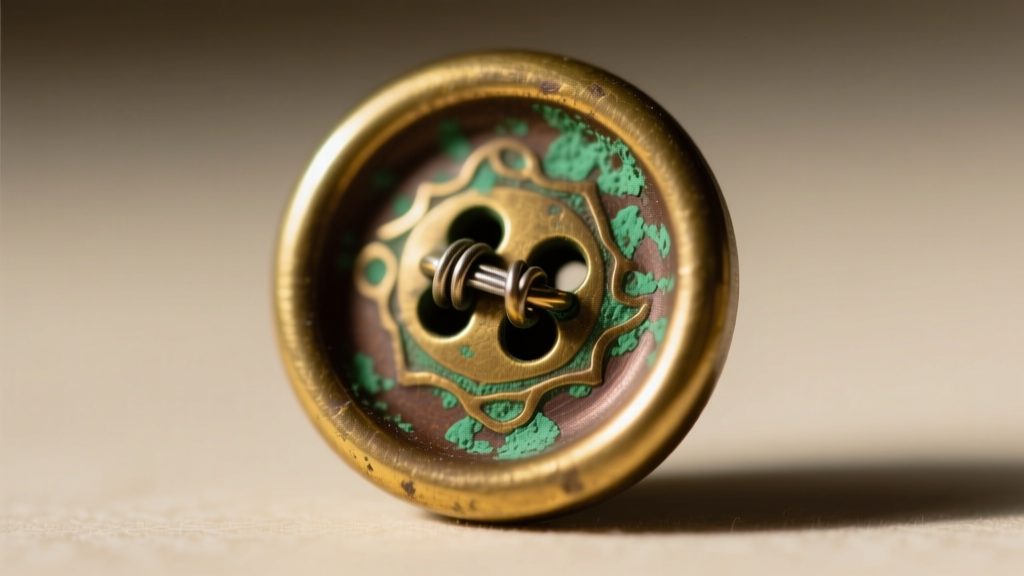
The copper reacts with the chlorides and acetates in your sweat to form copper chloride and copper acetate—commonly known as verdigris. This manifests as a powdery, toxic-looking green crust on the back of the pendant and leaves a green stain on the wearer's skin. According to conservation guidelines published by the Getty Conservation Institute, once active verdigris (bronze disease) begins, it can continue to corrode the metal even in low-humidity environments if the chlorides are not chemically neutralized or sealed away from oxygen and moisture.
Structural Weaknesses: The Shank Problem
Beyond chemical degradation, the physical anatomy of a button presents a major structural vulnerability when converted into a necklace. Buttons feature a 'shank'—a small metal loop on the back used for sewing. In vintage luxury buttons, this shank is usually made of brass wire and attached via a single spot-weld or a small dab of silver solder.
The Danger of Bending the Shank
Many amateur jewelry makers attempt to bend the shank upward so the button lays flat against the chest when hung from a chain. This is a critical error. Brass is highly susceptible to work hardening. Bending the thick brass wire shank introduces micro-fractures at the weld point. Over time, the repetitive stress of walking, bending, and the weight of the chain will cause metal fatigue, resulting in the shank snapping off entirely and the loss of the pendant.
Professional Bail Conversion
The correct methodology for converting an LV button into a pendant involves completely removing the shank. A jeweler will use flush cutters to snip the shank at the base, followed by a needle file to smooth the back flat. A proper sterling silver or gold-filled 'glue-on bail' is then affixed to the flat back using a high-strength, two-part jeweler's epoxy (such as G-S Hypo-Tough or Devcon 5-Minute Epoxy). This distributes the mechanical stress across the entire surface area of the button back rather than concentrating it on a single, fragile weld point.
Sealing and Preservation Protocols
If you intend to wear your lv button necklace regularly, sealing the metal is not optional; it is mandatory. You must create an impermeable barrier between the reactive brass core and the wearer's skin. There are two industry-standard methods for achieving this without altering the visual aesthetic of the vintage hardware.
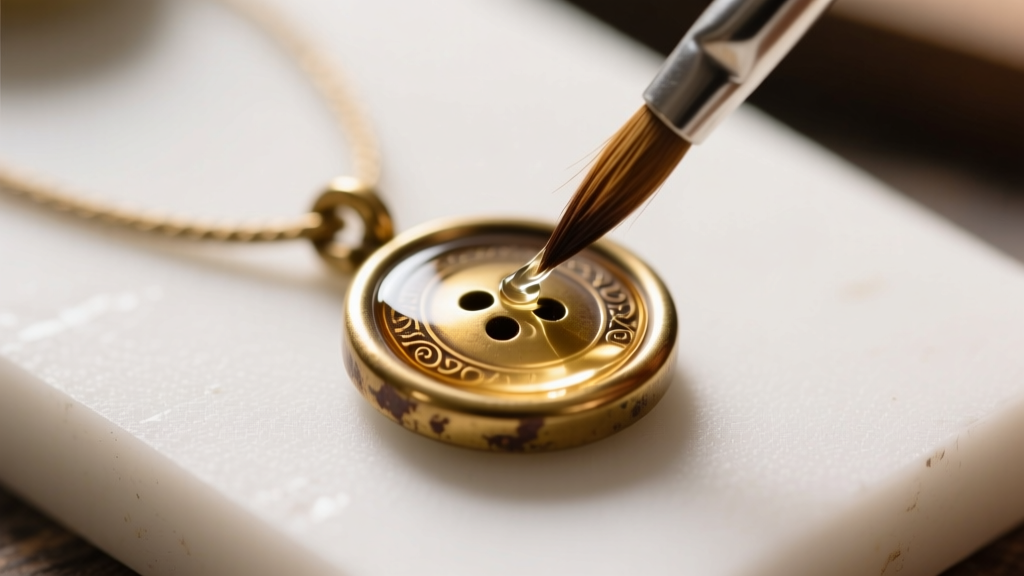
- Polymer Coatings (e.g., ProtectaClear or Eternal Jewelry Coating): These are clear, two-part polyurethane or acrylic resins specifically formulated for jewelry. They are brushed onto the back and edges of the button, creating a flexible, skin-safe, and completely waterproof barrier. They resist peeling and can withstand mild soaps, though they should be kept away from harsh solvents like perfume or acetone.
- Micro-Crystalline Wax (e.g., Renaissance Wax): Originally developed by the British Museum for artifact preservation, this wax is buffed into the metal to displace moisture and halt active oxidation. While excellent for display pieces or occasional wear, wax requires reapplication every few months and will eventually wear off through friction against the skin, making polymers the superior choice for daily-wear necklaces.
Chain Pairing and Galvanic Corrosion
The final material consideration is the chain you select to pair with your button pendant. When two dissimilar metals are in physical contact in the presence of an electrolyte (like sweat or high humidity), they form a galvanic cell. The more reactive metal (the anode) will corrode at an accelerated rate to protect the less reactive metal (the cathode).
If you hang a bare brass button directly onto a sterling silver chain, and the necklace gets wet, the brass will act as the anode and corrode rapidly, while the silver remains pristine. To prevent this galvanic corrosion, you must introduce a barrier. Always use a stainless steel, gold-filled, or heavily plated brass jump ring to connect the pendant bail to the chain. Alternatively, pairing the pendant with a high-quality stainless steel or titanium chain eliminates the risk of the chain itself tarnishing or reacting with the brass hardware. For comprehensive advice on metal pairings and allergy prevention, the Fire Mountain Gems metal guide offers excellent benchmarks for jewelry makers.
Final Verdict: Fashion Artifact vs. Heirloom Jewelry
An lv button necklace is a stunning conversation piece that carries the weight of fashion history, but it must be treated as a mixed-media artifact rather than a traditional fine jewel. By understanding the reactive nature of cartridge brass, the fragility of spot-welded shanks, and the necessity of polymer sealants, you can safely integrate these vintage luxury components into your daily wardrobe. Proper preparation and mindful chain pairing will ensure that your repurposed pendant remains a pristine emblem of style, rather than a source of green stains and broken hardware.


