M Necklace Silver Buying Guide: 2026 Trends & Tips
Discover how to choose the perfect m necklace silver in 2026. Compare 925 vs Argentium alloys, chain gauges, and font styles in our expert buying guide.

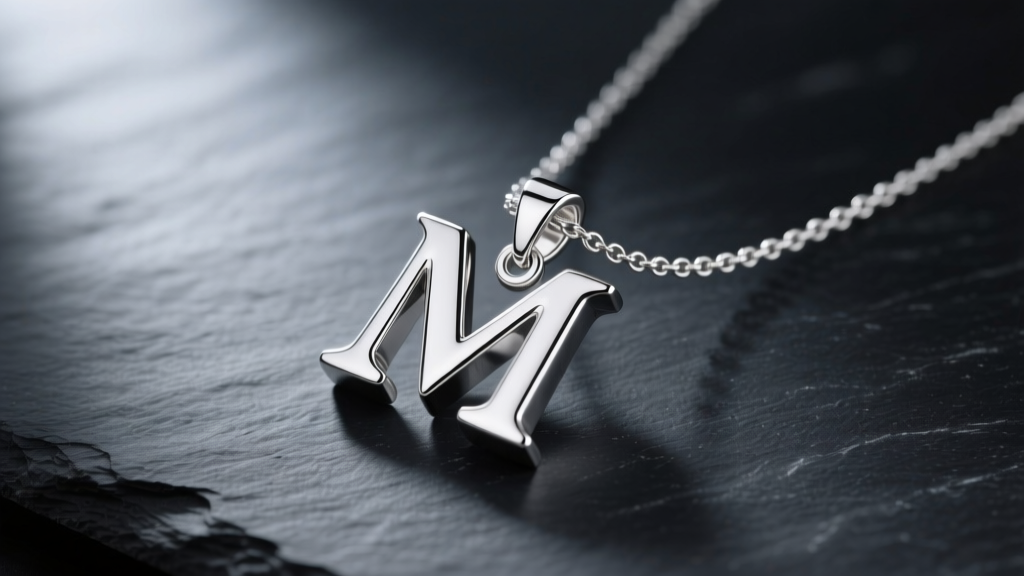
Initial jewelry has transcended fleeting trends to become a permanent fixture in modern wardrobes. As we navigate the 2026 jewelry landscape, the demand for personalized, high-quality staples continues to surge. When selecting an m necklace silver piece, buyers are no longer satisfied with flimsy, mass-produced trinkets. Today’s consumers demand metallurgical integrity, precise proportions, and versatile layering capabilities. Whether the 'M' represents a first name, a family surname, or a meaningful mantra, understanding the nuances of silver alloys, chain mechanics, and pendant engineering is critical for making a lasting investment.
Decoding Silver Alloys: 925 Sterling vs. Argentium
The foundation of any premium m necklace silver design lies in its alloy composition. Pure silver (999 fine silver) is too malleable for daily wear; a 1mm thick pure silver pendant will bend and warp under minimal pressure. Therefore, alloying metals are introduced to increase tensile strength. According to hallmarking standards outlined by the UK Assay Office, the traditional standard is 925 sterling silver. However, modern metallurgy has introduced superior alternatives.
Standard 925 sterling silver consists of 92.5% pure silver and 7.5% copper. While the copper provides necessary hardness, it is also the culprit behind tarnish. When copper reacts with sulfur and moisture in the air, it forms copper sulfide, creating that familiar black patina. In contrast, Argentium silver (typically 935 or 960) replaces a portion of the copper with germanium. This addition creates a transparent, self-healing germanium oxide layer on the surface, making Argentium up to seven times more tarnish-resistant than traditional sterling.
| Alloy Type | Composition | Tarnish Resistance | Avg. Price Range (15mm Pendant) |
|---|---|---|---|
| 925 Sterling Silver | 92.5% Ag, 7.5% Cu | Moderate (Requires regular polishing) | $45 - $85 |
| Argentium 935 | 93.5% Ag, Cu, Germanium | High (Low maintenance) | $75 - $130 |
| Fine 999 Silver | 99.9% Ag | Very High (No copper to tarnish) | $60 - $110 (Rare for pendants due to softness) |
Chain Mechanics and Bail Durability
A common failure point in initial jewelry is the connection between the chain and the pendant. When evaluating an m necklace silver piece, inspect the bail—the loop that connects the letter to the chain. Avoid 'pinch bails' or glued jump rings, which frequently snap under the kinetic stress of daily movement. Instead, look for a soldered loop bail or an integrated hidden bail that is laser-welded directly to the top curve of the 'M'.
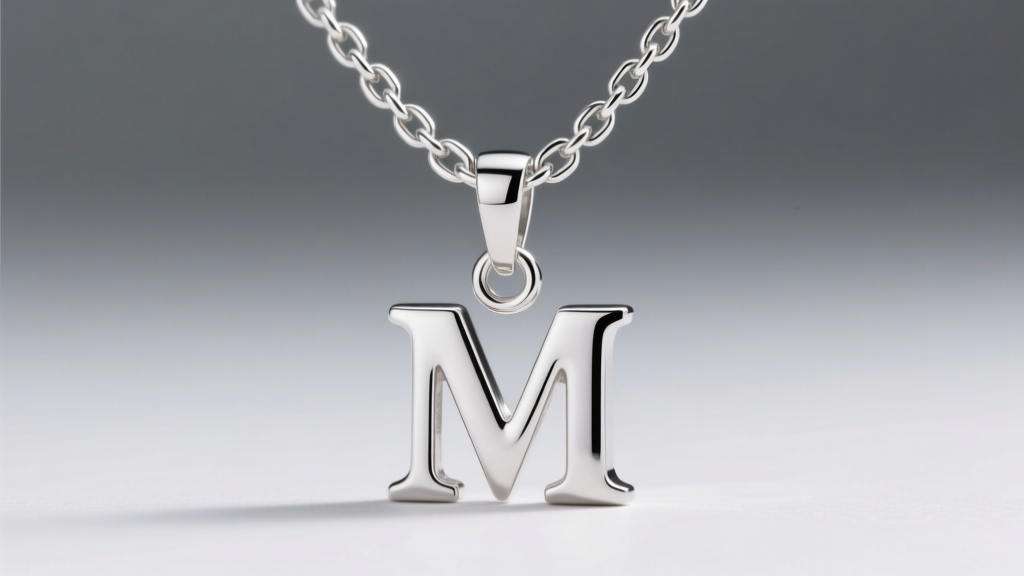
Chain gauge is equally critical. For a standard 10mm to 15mm silver M pendant weighing between 1.5 and 3 grams, a chain thickness of 0.9mm to 1.2mm is optimal. Thinner chains (0.5mm to 0.7mm) are prone to kinking and snapping, while heavier chains (1.5mm+) will visually overwhelm the delicate typography of the initial. In 2026, the 1.0mm box chain and the 1.2mm rounded cable chain remain the top recommendations for their balance of tensile strength and fluid drape. Always ensure the clasp is a sturdy lobster claw rather than a fragile spring ring, which often fails at the internal tension spring.
Font Selection and Silhouette Proportions
The typography of your initial dictates its overall aesthetic and how it interacts with different necklines. Jewelers generally categorize initial pendants into three distinct silhouette families:
- Classic Serif: Features elegant, flared terminals (e.g., Times New Roman style). Best suited for formal wear, V-necklines, and traditional styling. The varying stroke width requires a minimum metal thickness of 1.2mm to prevent the thin serifs from snapping.
- Minimalist Sans-Serif: Characterized by uniform stroke width and clean, geometric lines (e.g., Helvetica). This is the most versatile choice for modern, everyday layering. A thickness of 0.9mm is sufficient due to the even weight distribution.
- Flowing Script: Mimics cursive handwriting with interconnected loops. Script 'M' pendants are inherently wider and more complex. Ensure the internal negative spaces (counters) are adequately reinforced, as thin script loops are highly susceptible to bending.
Regarding proportions, the sweet spot for an adult's initial pendant is 12mm to 15mm in height. Anything smaller than 10mm becomes illegible from a conversational distance, while anything larger than 18mm transitions from a subtle personal talisman to a loud statement piece.
The 2026 Layering Framework for Initial Pendants
Mastering the necklace stack requires precise mathematical spacing to prevent tangling and visual clutter. The most effective framework for showcasing an m necklace silver piece is the '2-4-8 Rule', which dictates the drop distance between layered chains.
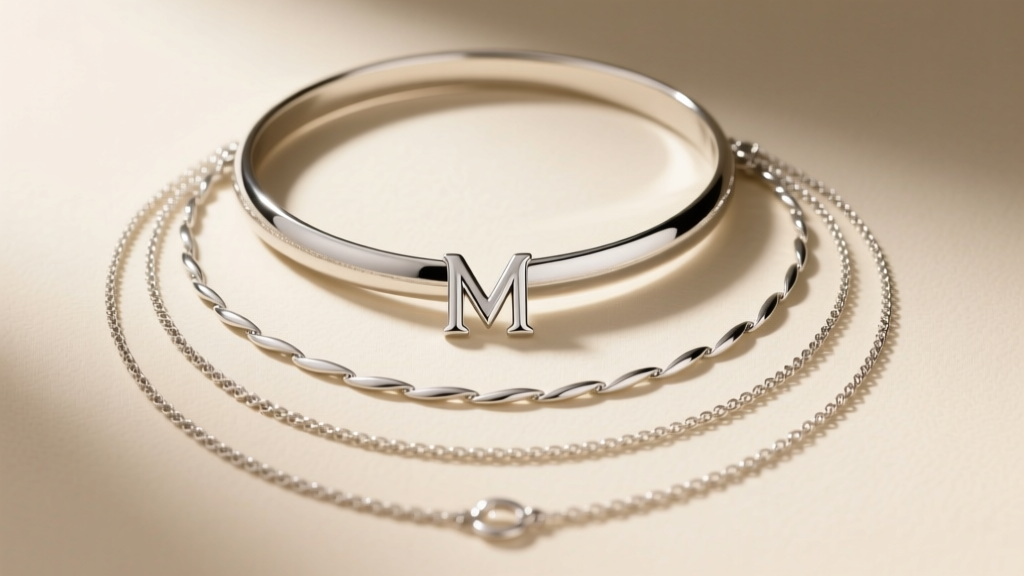
- Base Layer (14 to 15 inches): Start with a lightweight silver choker or a simple collar chain that sits snugly at the base of the throat. This frames the face and anchors the stack.
- Focal Layer (18 inches): This is where your silver M pendant resides. An 18-inch chain allows the initial to rest perfectly on the sternum, catching the light and drawing the eye downward.
- Anchor Layer (22 to 24 inches): Finish with a heavier, longer chain, such as a 22-inch silver lariat or a chain featuring a larger geometric pendant. This creates a cascading visual effect.
By maintaining at least a 4-inch gap between the focal pendant and the anchor chain, you eliminate the friction that causes chains to knot together, a common frustration noted by Jewelers of America in their daily wear guidelines.
Tarnish Prevention and Daily Maintenance
Even the highest quality 925 sterling silver requires proactive maintenance to retain its brilliant luster. The oils from your skin can actually help slow tarnish on frequently worn pieces, but environmental factors are the true enemy. Remove your silver M necklace before swimming in chlorinated pools, applying sulfur-based skincare products, or using household cleaning agents.
For storage, never leave silver exposed to ambient humidity. Store the necklace in an airtight polyethylene ziplock bag alongside a 3M anti-tarnish strip, which absorbs airborne sulfur compounds. When polishing is necessary, bypass liquid chemical dips—which strip away microscopic layers of silver and accelerate future tarnishing—and opt instead for a treated Pacific cloth or a microfiber polishing cloth designed specifically for precious metals. By adhering to these metallurgical and stylistic guidelines, your silver initial necklace will remain a pristine, deeply personal artifact for decades to come.


