Magnet Camera Necklace Care: 2026 Cleaning & Maintenance Guide
Learn how to safely clean, maintain, and protect your magnet camera necklace. Expert tips on lens care, magnetic clasp upkeep, and metal polishing.

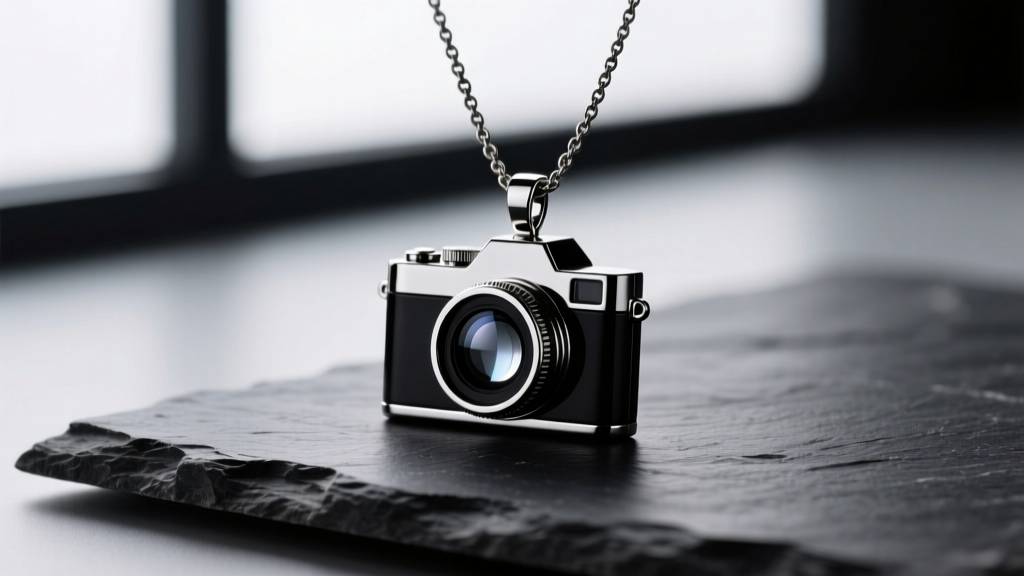
The Anatomy of a Magnet Camera Necklace
As wearable POV technology continues to dominate the creator and minimalist fashion spaces in 2026, the magnet camera necklace has evolved from a niche gadget into a sophisticated jewelry-tech hybrid. Unlike traditional pendants, these devices house precision optics, rare-earth neodymium magnets, and lithium-ion batteries within a decorative metal chassis. Caring for a magnet camera necklace requires a dual-discipline approach: you must maintain the aesthetic brilliance of fine jewelry while preserving the delicate electronic and magnetic components.
Standard models typically feature a base plate and chain crafted from 316L surgical stainless steel, titanium, or sterling silver, while the camera module itself is shielded by polycarbonate or tempered sapphire glass. The magnetic coupling mechanism—usually relying on N42 or N52 grade neodymium magnets—allows the camera to snap seamlessly onto the necklace base or alternative magnetic mounts on clothing. Understanding the material science behind these components is the first step toward establishing a proper maintenance routine.
Daily Maintenance: Protecting the Lens and Sensors
The most vulnerable component of your magnet camera necklace is the primary lens. Because it rests against the chest, it is constantly exposed to skin oils, cosmetic powders, and environmental dust. The lens is coated with an anti-reflective (AR) and oleophobic layer designed to repel fingerprints and reduce glare.
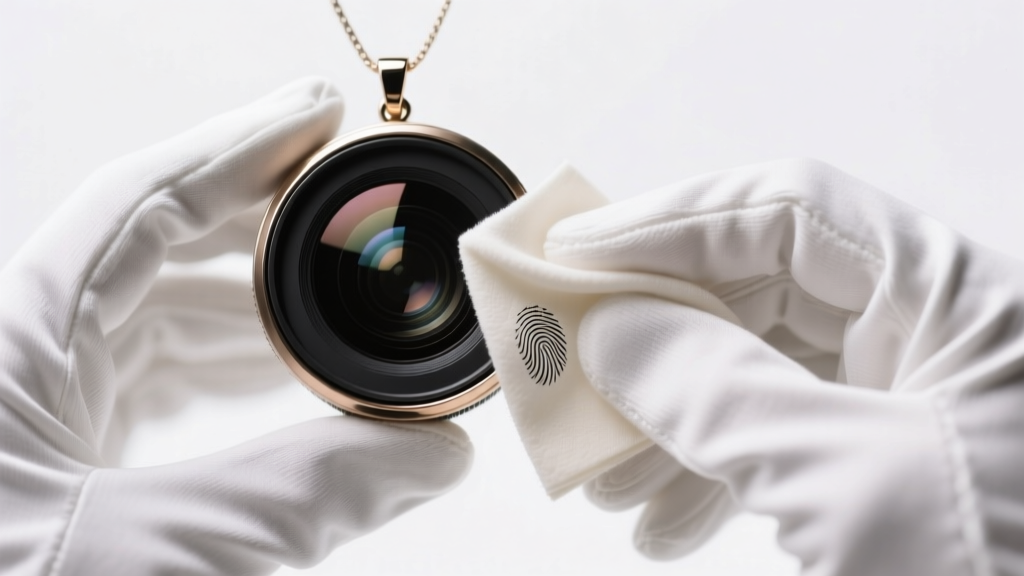
What to Avoid
Never use household glass cleaners, ammonia-based solutions, or isopropyl alcohol concentrations higher than 70%. According to optical maintenance guidelines from B&H Photo Video, harsh solvents will permanently strip the AR and oleophobic coatings, leading to permanent smudging and light flaring in your footage.
The Proper Cleaning Protocol
- Dry Wipe First: Use a clean, lint-free optical microfiber cloth to gently brush away loose dust and silica particles. Wiping a dusty lens without removing particles first can cause micro-scratches on the glass.
- Targeted Solvent Use: For stubborn sebum or makeup, apply a single drop of dedicated lens cleaning fluid (such as Zeiss or Pancro) to the cloth, never directly onto the lens. Wipe in a gentle, concentric circular motion from the center outward.
- Sensor Vents: Use a manual silicone air blower to clear dust from the microphone ports and thermal vents. Avoid compressed air cans, as the propellant can freeze and damage internal microphone membranes.
Deep Cleaning the Metal Base and Chain
While the camera module requires delicate optical care, the necklace chain and magnetic base plate demand traditional jewelry maintenance. Skin acidity, combined with environmental humidity, accelerates tarnishing and galvanic corrosion, especially where dissimilar metals meet.
Titanium and 316L Surgical Steel
Titanium and 316L stainless steel are highly resistant to corrosion, making them ideal for daily-wear tech jewelry. To clean these chains, prepare a solution of warm distilled water and a few drops of mild, phosphate-free dish soap. Submerge the detached chain for 10 minutes, then gently agitate. Use a soft-bristled baby toothbrush to clean the chain links and the crevices of the magnetic base plate. Rinse with distilled water and pat dry with a microfiber towel. Note: Never submerge the camera module itself, even if it boasts an IP68 water-resistance rating, as soap surfactants can compromise the acoustic mesh.
Sterling Silver and Gold-Plated Bases
Sterling silver (925) is prone to silver sulfide tarnishing when exposed to sulfur compounds in the air and sweat. For silver chains and base plates, use a specialized silver polishing cloth impregnated with micro-abrasives. The Gemological Institute of America (GIA) recommends avoiding liquid silver dips, as they can leave chemical residues that may degrade the adhesive seals on the camera module if accidentally transferred. For gold-plated or PVD-coated bases, stick to a simple damp microfiber wipe; aggressive polishing will wear through the micron-thin plating layer.
Preserving Magnetic Strength and Clasp Integrity
The magnetic coupling is the defining feature of the magnet camera necklace. Most premium models utilize Neodymium-Iron-Boron (NdFeB) magnets due to their incredible pull force relative to their small size. However, these rare-earth magnets are highly susceptible to environmental degradation if mishandled.
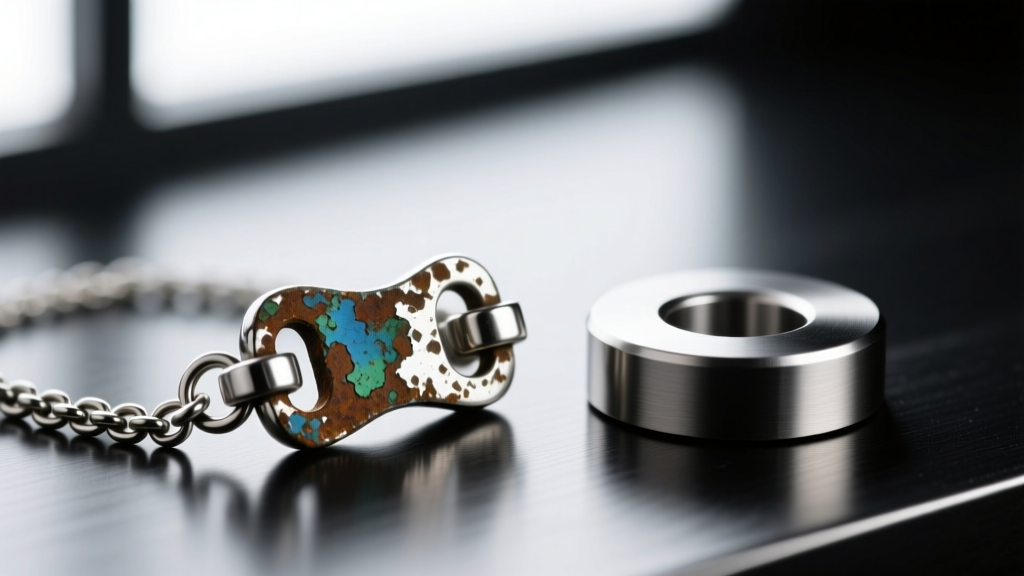
The Threat of Heat and Corrosion
Standard NdFeB magnets begin to suffer irreversible demagnetization when exposed to temperatures exceeding their maximum operating threshold. Leaving your necklace on the dashboard of a hot car or exposing it to high-heat environments (like a sauna) will permanently weaken the magnetic grip, causing the camera to detach unexpectedly.
Furthermore, neodymium magnets are highly reactive to moisture and chlorides found in human sweat. To prevent this, they are typically plated with a Nickel-Copper-Nickel (Ni-Cu-Ni) tri-layer. If this plating chips or wears away due to friction against the collarbone, the core magnet will rapidly oxidize, expanding and crumbling into a fine powder.
Magnet Grade Comparison and Care Requirements
| Magnet Grade | Typical Use Case | Max Operating Temp | Sweat/Corrosion Risk | Recommended Care |
|---|---|---|---|---|
| N42 (Standard) | Lightweight pendants, indoor use | 80°C (176°F) | Moderate | Wipe dry after wear; store in low humidity. |
| N52 (High Pull) | Heavy camera modules, active lifestyles | 80°C (176°F) | High (if plated poorly) | Inspect plating monthly; avoid direct skin contact with bare magnet. |
| SmCo (Samarium Cobalt) | Premium/Industrial tech jewelry | 250°C+ (482°F+) | Very Low | Highly durable; standard dry cloth wiping. |
Data synthesized from rare-earth material handling standards outlined by K&J Magnetics.
Storage and Battery Longevity
Proper storage of your magnet camera necklace extends both the lifespan of the lithium-ion battery and the structural integrity of the jewelry components.
Expert Rule of Thumb: Never store your magnet camera necklace in a cluttered jewelry box. The powerful neodymium base can attract loose metallic findings, scratching the camera lens and potentially short-circuiting exposed charging contacts.
Battery Health Optimization
Lithium-ion batteries degrade fastest when stored at 100% or 0% charge for extended periods. If you plan to store the necklace for more than a week, discharge or charge the camera module to approximately 50%. Store it in a dedicated, non-conductive pouch (like a microfiber drawstring bag) in a cool, dry environment, ideally between 15°C and 25°C (59°F - 77°F).
Magnetic Isolation
Store the necklace away from pacemakers, credit cards, RFID key fobs, and mechanical watches. The localized magnetic field generated by the base plate is strong enough to erase magnetic strips and magnetize the hairsprings in automatic watches, causing them to run inaccurately.
Troubleshooting Common Maintenance Issues
Even with meticulous care, hybrid tech-jewelry can develop issues. Here is how to address the most common problems without voiding your warranty:
- Weak Magnetic Grip: If the camera feels loose on the base plate, inspect both the camera magnet and the base plate for accumulated metallic dust or iron filings. Use a piece of Scotch tape or a soft wax to gently lift the debris from the magnet surface. Do not use metal tools to scrape the magnet.
- Muffled Audio Recording: Skin oils and dead skin cells frequently clog the microscopic acoustic mesh. Apply a small piece of Blu-Tack or specialized cleaning putty to the mesh and pull it away rapidly to extract embedded debris without pushing it deeper into the microphone cavity.
- Galvanic Skin Discoloration: If the base plate leaves a green or black mark on your chest, it indicates a reaction between your skin's pH and the copper alloys beneath the plating. Coat the back of the base plate with a thin layer of clear, hypoallergenic nail polish to create a biocompatible barrier.
By treating your magnet camera necklace as both a precision optical instrument and a piece of fine jewelry, you ensure that it remains a reliable, stylish companion for capturing life's moments in pristine quality throughout 2026 and beyond.


