Best Magnetic Therapy Necklace Materials: Copper, Titanium & Steel
Compare copper, titanium, and steel in a magnetic therapy necklace. Discover metal grades, Gauss ratings, and skin reactivity.

The Science of the Magnetic Therapy Necklace: Beyond the Hype
When exploring alternative wellness jewelry, the magnetic therapy necklace remains a highly sought-after accessory. While the National Center for Complementary and Integrative Health notes that clinical evidence regarding static magnetic fields and pain relief remains inconclusive, the physical materials used to construct these necklaces are rooted in hard metallurgical science. The base metals and magnetic cores dictate the jewelry's structural longevity, corrosion resistance, and dermatological safety.
As a jewelry metallurgist and style analyst, I evaluate these pieces not just on their aesthetic appeal, but on their material integrity. A poorly constructed magnetic necklace can degrade rapidly when exposed to the acidic pH of human sweat, leading to skin irritation or structural failure. This guide breaks down the exact material properties, alloy grades, and magnetic specifications you need to know before investing in a magnetic therapy necklace.
Core Base Metals: A Metallurgical Breakdown
The outer casing and chain of a magnetic therapy necklace must house the internal magnets while resting flush against the highly reactive environment of human skin. Here is how the three most common base metals perform.
Copper (C11000): The Traditional Conductor
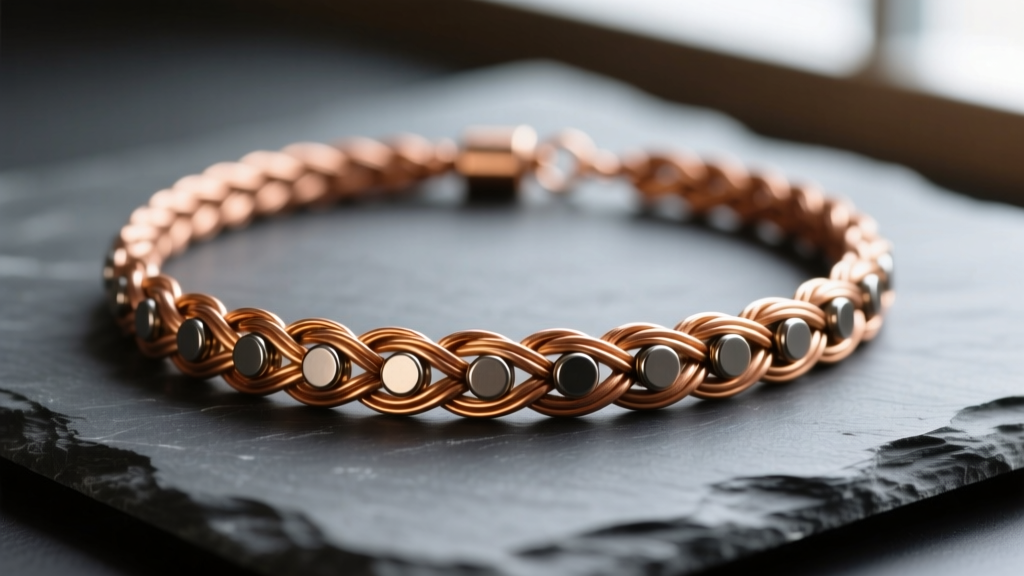
Copper has been used in therapeutic jewelry for centuries. Commercially pure copper (alloy C11000) is highly malleable, making it easy to craft into intricate braided or solid link designs. Copper exhibits the oligodynamic effect, meaning it naturally resists bacterial growth on its surface. However, its major drawback is oxidation. When copper reacts with the lactic acid and salts in human sweat, it forms copper chelates, which absorb into the stratum corneum and leave a harmless but unsightly green residue on the skin. High-end copper necklaces often feature an interior rhodium or clear polymer plating to prevent this galvanic reaction while maintaining the exterior copper aesthetic.
Titanium (Grade 2 & Grade 5): The Hypoallergenic Standard
Titanium is the premier choice for sensitive skin. Materials science databases highlight titanium's exceptional strength-to-weight ratio and total biocompatibility. Grade 2 (commercially pure) titanium is softer and easier to machine into smooth, comfortable necklace links, while Grade 5 (Ti-6Al-4V) is an aerospace-grade alloy used for heavy-duty clasps. Titanium is entirely nickel-free and will not oxidize or tarnish, even when exposed to saltwater or high-acidity sweat. It is also non-magnetic itself, ensuring that the metal casing does not interfere with or dilute the magnetic field of the internal neodymium cores.
316L Surgical Stainless Steel: The Durable Workhorse
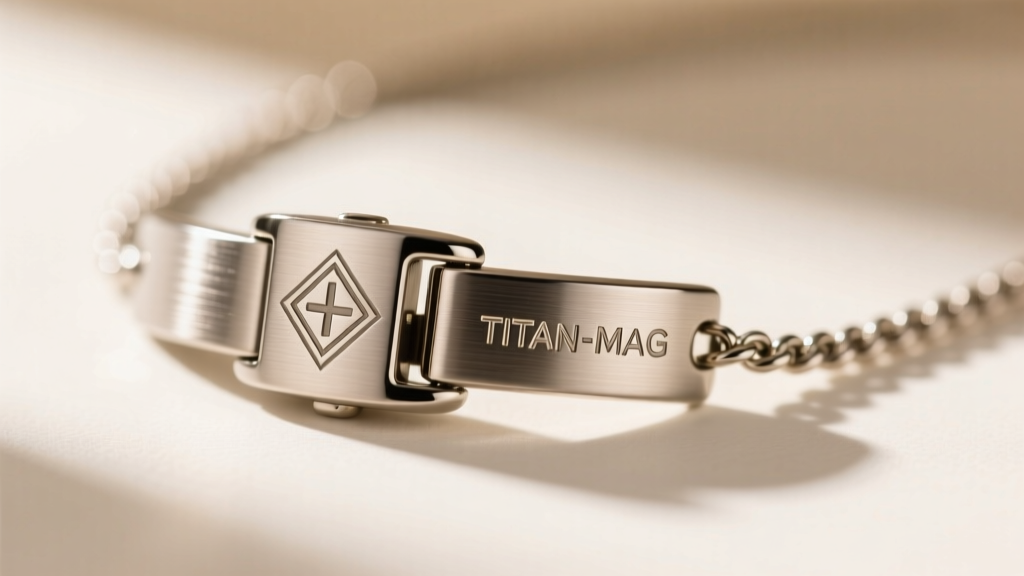
Often marketed simply as 'surgical steel,' 316L stainless steel is an austenitic alloy containing chromium, nickel, and molybdenum. The 'L' stands for low carbon, which drastically reduces the risk of carbide precipitation and intergranular corrosion. The addition of molybdenum specifically protects against pitting corrosion from chlorides (like salt in sweat). However, 316L contains 10-14% nickel. While the nickel is tightly bound within the alloy matrix, individuals with severe contact dermatitis may still experience localized allergic reactions from prolonged, direct skin contact.
The Magnets Inside: Neodymium vs. Ferrite vs. Hematite
The therapeutic claim of the necklace relies entirely on the magnetic core. The strength of a magnet is measured in Gauss (or Tesla, where 1 Tesla = 10,000 Gauss). A genuine therapeutic necklace typically requires a surface gauss rating between 1,500 and 4,500 to penetrate the dermal layers effectively.
| Magnet Type | Material Composition | Surface Gauss Rating | Corrosion Resistance | Average Price Premium |
|---|---|---|---|---|
| Neodymium (N42-N52) | Neodymium, Iron, Boron (NdFeB) | 2,000 - 4,500+ Gauss | Low (Requires Ni-Cu-Ni plating) | High ($$$) |
| Ferrite (Ceramic) | Iron Oxide, Strontium Carbonate | 400 - 1,200 Gauss | Extremely High | Low ($) |
| Hematite | Natural Iron Oxide Mineral (Fe2O3) | 50 - 200 Gauss (Weak) | High (Can rust if unsealed) | Very Low ($) |
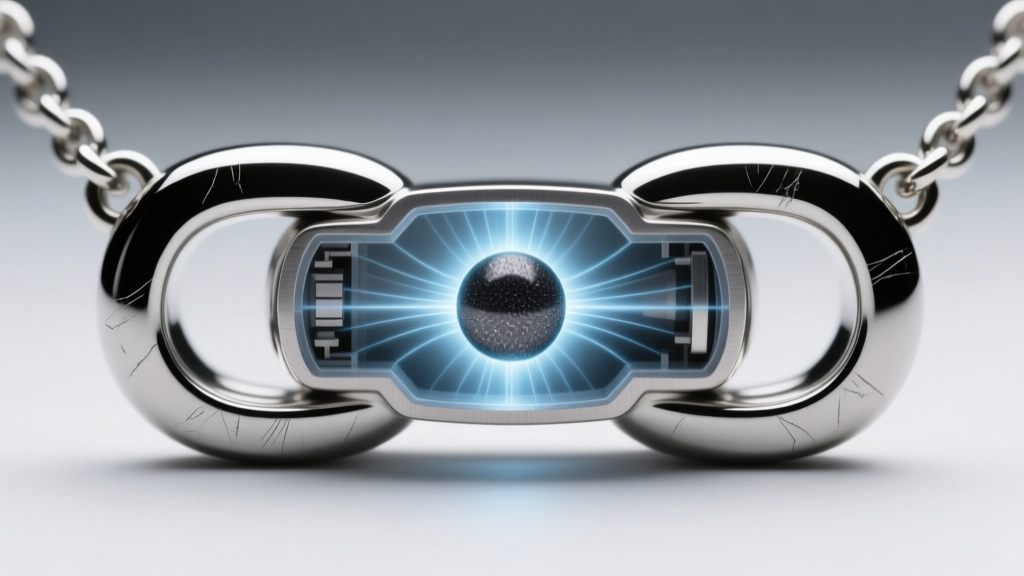
Neodymium magnets are the gold standard for high-end magnetic therapy necklaces. They provide a concentrated, powerful magnetic field in a very small physical footprint, allowing for sleeker jewelry designs. However, raw neodymium is highly susceptible to oxidation. Premium manufacturers triple-plate their neodymium cores with Nickel-Copper-Nickel before sealing them inside the base metal links. Ferrite magnets, while much weaker, are virtually indestructible and corrosion-proof, making them common in budget-friendly or sport-oriented magnetic necklaces.
Skin Reactivity and Oxidation Profiles
Understanding how your skin's specific pH interacts with your necklace is vital for long-term wear. The average human skin pH ranges from 4.5 to 5.5 (slightly acidic), but heavy perspiration can push this closer to neutral or slightly alkaline, accelerating metal degradation.
- Galvanic Reactions: If a magnetic necklace uses mixed metals (e.g., a copper chain with stainless steel clasps), the presence of sweat creates an electrolytic cell. This micro-galvanic reaction will cause the less noble metal (copper) to corrode rapidly at the connection points. Always ensure the necklace uses uniform metals or inert jump rings.
- Nickel Leaching: In cheap, unverified stainless steel alloys, the chromium oxide passive layer can break down under high-acidity conditions, releasing nickel ions. Always verify that steel necklaces are certified 316L or 304 grade.
- Magnet Safety: The U.S. Food and Drug Administration has issued strict warnings regarding high-powered magnetic jewelry, particularly concerning small, loose neodymium magnets that can be swallowed by children, causing severe internal damage. Ensure any magnetic necklace you purchase features mechanically locked or deeply resin-sealed magnet housings.
How to Choose the Right Material for Your Lifestyle
Selecting the optimal magnetic therapy necklace requires matching the metallurgical properties to your daily environment and biological profile.
For Active and Sweaty Environments
If you plan to wear the necklace during workouts, outdoor labor, or in high-humidity climates, avoid pure copper and unsealed ferrite designs. Opt for a Grade 2 Titanium chain housing epoxy-sealed Neodymium (N42) magnets. Titanium will not pit or tarnish when exposed to heavy chloride (sweat) loads, and the epoxy seal prevents the neodymium from oxidizing if the outer casing is micro-scratched.
For Sensitive Skin and Metal Allergies
For those with known contact dermatitis or nickel allergies, Titanium is the only foolproof metallic choice. Alternatively, look for necklaces constructed from medical-grade silicone or Teflon-coated braids that feature isolated magnetic nodes. These non-metallic casings eliminate the risk of heavy metal ion transfer entirely while still allowing the magnetic field to pass through unimpeded.
For Office and Formal Wear
If the necklace is strictly for indoor, climate-controlled environments where sweat exposure is minimal, a high-polish Copper or Rose Gold-plated 316L Steel necklace offers superior aesthetic warmth and weight. Copper develops a beautiful, rich patina over time if left unsealed, appealing to those who appreciate a rustic, evolving aesthetic in their wellness jewelry.
Conclusion: Balancing Aesthetics and Material Science
A magnetic therapy necklace is ultimately a marriage of alternative tradition and modern materials engineering. By looking past the marketing jargon and examining the specific alloy grades, magnet compositions, and structural sealing methods, you can select a piece that not only aligns with your wellness routines but also stands up to the rigors of daily wear. Whether you choose the antimicrobial warmth of copper, the aerospace durability of titanium, or the robust affordability of surgical steel, understanding the metal is the first step to making an informed, lasting investment.


