Expert Care and Cleaning Tips for a 16 Necklace Chain
Learn expert cleaning, storage, and maintenance tips to keep your 16 necklace chain tarnish-free, untangled, and shining brilliantly for years.

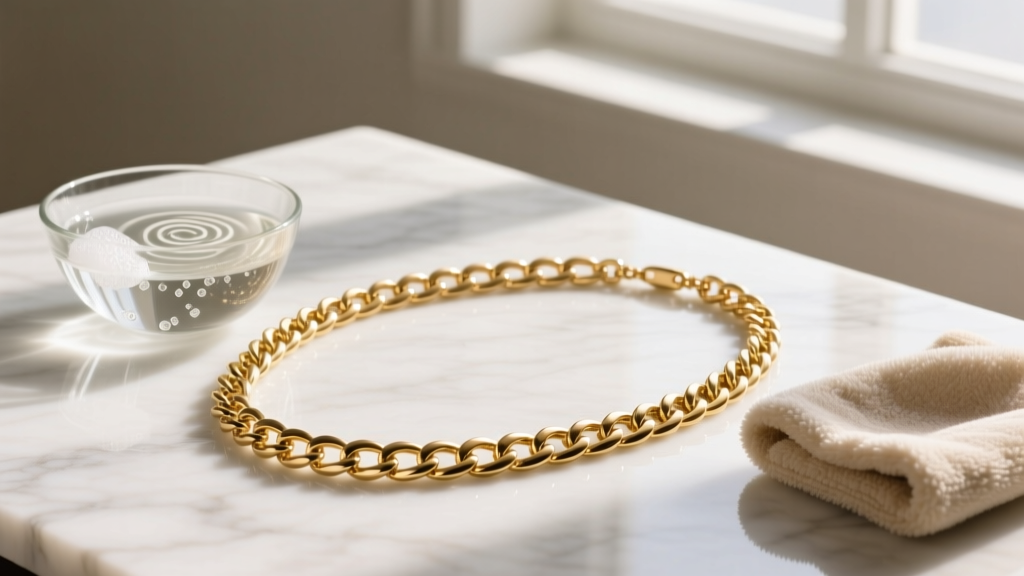
The Collarbone Microclimate: Why Length Dictates Care
When we discuss jewelry maintenance, we often focus on gemstone hardness or metal purity, rarely considering how the physical length of a piece impacts its degradation rate. A 16 necklace chain sits precisely at the base of the neck and the upper collarbone. In dermatological terms, this area is a high-friction zone with a dense concentration of sebaceous (sweat and oil) glands. Because a 16-inch chain rests directly against the skin's warmest, most active microclimate, it is subjected to a continuous barrage of lactic acid, urea, sebum, and cosmetic residues that longer chains (like 20-inch or 24-inch lengths) largely avoid.
This constant biological and chemical exposure means that a 16 necklace chain requires a much more rigorous and specific cleaning protocol than a pendant that hangs freely over clothing. If you wear your 16-inch chain daily, the accumulation of dead skin cells and body oils will not only dull the metal's luster but can also accelerate galvanic corrosion in lower-karat gold alloys and trigger rapid silver sulfide tarnishing.
Metal-Specific Cleaning Protocols
According to the Gemological Institute of America (GIA), the approach to cleaning jewelry must be strictly tailored to the metal's composition and any surface treatments. Here is how to safely clean the most common metals used for 16-inch chains.
Sterling Silver (925)
Silver reacts with hydrogen sulfide in the air and on the skin to form silver sulfide, the black tarnish that plagues daily-wear chains. Because a 16 necklace chain sits near the hairline and neck, it is also frequently exposed to sulfur-heavy hair products.
- Routine Cleaning: Use a specialized micro-abrasive jeweler's cloth (such as a Sunshine polishing cloth) once a week. The cloth contains embedded polishing agents that chemically reduce silver sulfide back into pure silver.
- Deep Cleaning: For heavy buildup, use the aluminum foil and baking soda electrochemical bath. Line a glass bowl with aluminum foil (shiny side up), add boiling water, a tablespoon of baking soda, and a pinch of salt. Submerge the chain for 60 seconds. The sulfur transfers from the silver to the aluminum. Rinse thoroughly and pat dry.
Solid Gold (14k and 18k) & Platinum
Solid gold and platinum are highly resistant to tarnish, but the copper and zinc alloys in 14k gold can oxidize when exposed to acidic sweat. Platinum, while inert, develops a natural 'patina' (micro-scratches) that can trap collarbone oils.
- The Surfactant Method: Mix three drops of mild, phosphate-free dish soap (like Dawn) into a bowl of lukewarm water. Submerge the 16 necklace chain for 15 minutes to loosen sebum. Gently agitate the chain using a baby toothbrush with ultra-soft bristles, paying special attention to the links near the clasp where debris accumulates. Rinse under distilled water to prevent hard water spotting.
Gold Vermeil and Gold-Plated Chains
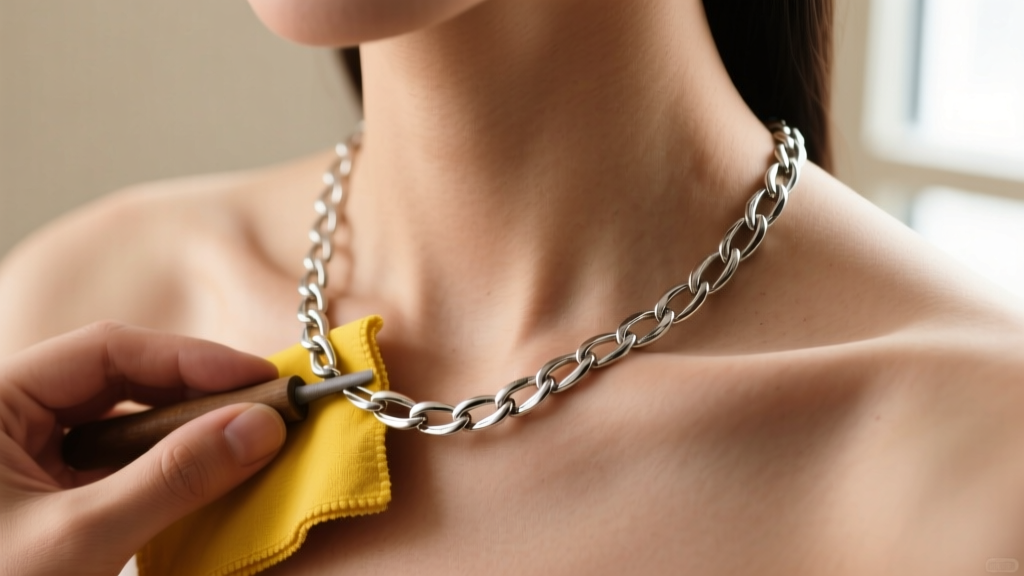
Gold vermeil consists of a sterling silver base plated with at least 2.5 microns of gold. The friction from a 16-inch chain rubbing against the collarbone will naturally wear down this plating over time. Never use polishing cloths, ultrasonic cleaners, or chemical dips on vermeil. The micro-abrasives and high-frequency cavitation will strip the gold layer entirely. Clean vermeil chains only with a damp microfiber cloth and a drop of mild soap, rubbing strictly in the direction of the chain links to minimize friction.
Cleaning Agents & Safety Matrix
Not all commercial cleaners are safe for every metal. The Jewelers of America organization frequently warns consumers about the misapplication of harsh chemical dips. Refer to this matrix before applying any solution to your chain:
| Cleaning Agent | Sterling Silver | Solid Gold / Platinum | Gold Vermeil / Plated |
|---|---|---|---|
| Ultrasonic Cleaner (40kHz) | Safe (if no porous stones) | Highly Effective | DANGER: Strips plating |
| Commercial Silver Dip | Effective (rinse immediately) | Safe but unnecessary | DANGER: Ruins finish |
| Mild Dish Soap & Water | Safe | Safe | Safe (use gentle wiping) |
| Baking Soda / Toothpaste | DANGER: Causes micro-scratches | DANGER: Dulls polish | DANGER: Strips plating |
The Tangle Factor: Storage Solutions for Shorter Chains
A 16 necklace chain is notoriously prone to 'bird-nesting' (severe tangling). Because the two ends of the chain are in close proximity when laid flat, the clasp and jump ring easily weave through the links during movement in a jewelry box. Tangles are not just an annoyance; attempting to pull apart a knotted 0.8mm rope chain or a delicate 1.0mm box chain will stretch the metal, weaken the solder points, and eventually cause snapping.
Optimal Storage Methods
- The Straw Threading Trick: Unclasp the chain, thread one end through a standard plastic drinking straw, and re-clasp it. The rigid straw prevents the chain from folding back on itself, making it physically impossible to tangle in a drawer.
- Individual Polyethylene Zip-Bags: Store the chain in a small, 2x3 inch zip-lock bag, leaving the clasp hanging outside the seal. This limits oxygen exposure (slowing silver tarnish) and keeps the chain isolated from harder gemstones that could scratch it.
- Vertical Hanging Organizers: Utilize a multi-hook acrylic or velvet jewelry stand. Gravity keeps the 16-inch chain perfectly straight, preserving the structural integrity of the links.
Clasp and Hardware Maintenance
The clasp is the most mechanically vulnerable component of any necklace, and on a 16 necklace chain, it sits directly at the nape of the neck, collecting hair products and dead skin. Most 16-inch chains utilize either a spring ring or a lobster clasp.
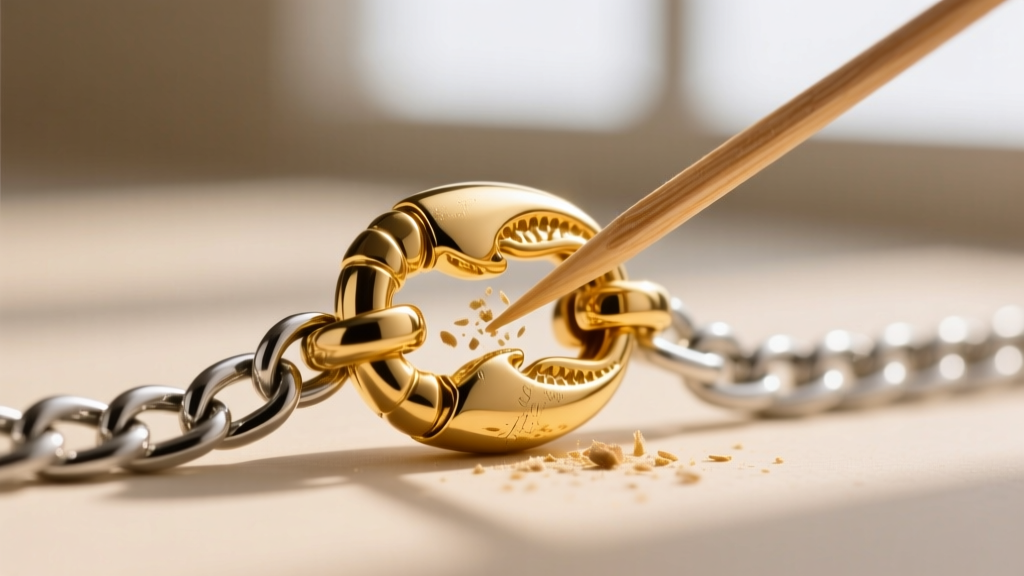
Spring Ring Clasps: These contain a tiny internal steel spring. If you wear your chain in the shower or pool, chlorine and hard water minerals will calcify inside the spring mechanism, causing it to seize or fail to retract. Use a wooden toothpick (never metal, which will scratch the gold or silver) to gently clear debris from the clasp opening once a month.
Lobster Clasps: While more durable, the tiny lever can become loose over time due to the friction of being opened and closed. If your lobster clasp feels 'mushy' or fails to snap shut completely, it requires professional tensioning by a jeweler. Do not attempt to bend the lever back with pliers, as cast clasps are brittle and will snap.
Chemical Hazards: The Invisible Destroyers
The Federal Trade Commission (FTC) and consumer protection agencies note that improper chemical exposure is the leading cause of premature jewelry failure. For a 16 necklace chain worn close to the skin, you must be hyper-aware of the following hazards:
- Chlorine (Pools & Hot Tubs): Chlorine reacts with the copper and silver alloys in 14k and 18k gold to form gold chloride. This causes a phenomenon known as 'stress corrosion cracking,' where the chain links become brittle and shatter under minimal tension. Always remove your chain before swimming.
- Perfumes and Aerosols: The alcohol and essential oils in perfumes can degrade the rhodium plating often used over white gold or silver chains. Apply your fragrance to your wrists or lower chest, allowing it to dry completely before putting on your 16-inch chain.
- SPF and Self-Tanners: Zinc oxide and titanium dioxide (common in sunscreens) are highly abrasive minerals that will act like liquid sandpaper against your chain, dulling high-polish finishes in a matter of days.
Pro-Tip: Adopt the 'Last On, First Off' rule. Your 16 necklace chain should be the very last item you put on after your skincare, makeup, and perfume have fully dried, and the very first item you take off when you return home.
Your Annual Maintenance Calendar
To ensure your 16 necklace chain remains structurally sound and visually brilliant, follow this expert maintenance schedule:
- Weekly: Wipe down with a clean, lint-free microfiber cloth to remove daily sebum and lotion buildup.
- Monthly: Perform a deep clean using the mild dish soap and distilled water method. Inspect the jump ring connecting the clasp to ensure it is fully closed and shows no signs of gap separation.
- Bi-Annually: If you own a sterling silver chain, perform the aluminum foil electrochemical bath to reverse deep tarnish. Check the chain for any 'stretched' links, which indicate weak points that need professional soldering.
- Annually: Take the chain to a certified bench jeweler for an ultrasonic deep clean and a professional inspection of the clasp tension and link integrity. This is especially critical for chains thinner than 1.2mm.
By understanding the unique biological and mechanical challenges faced by a shorter chain length, you can dramatically extend the lifespan of your jewelry. A 16 necklace chain is a timeless, versatile staple that sits proudly at the focal point of your neckline; treating it with targeted, scientific care ensures it will remain a brilliant fixture in your wardrobe for decades to come.


