Mala Necklaces Material Guide: Wood, Seeds & Gemstones Compared
Compare physical properties, durability, and traditional uses of mala necklaces. Discover which wood, seed, or gemstone bead suits daily wear.

The Anatomy of Mala Necklaces: Beyond the 108 Beads
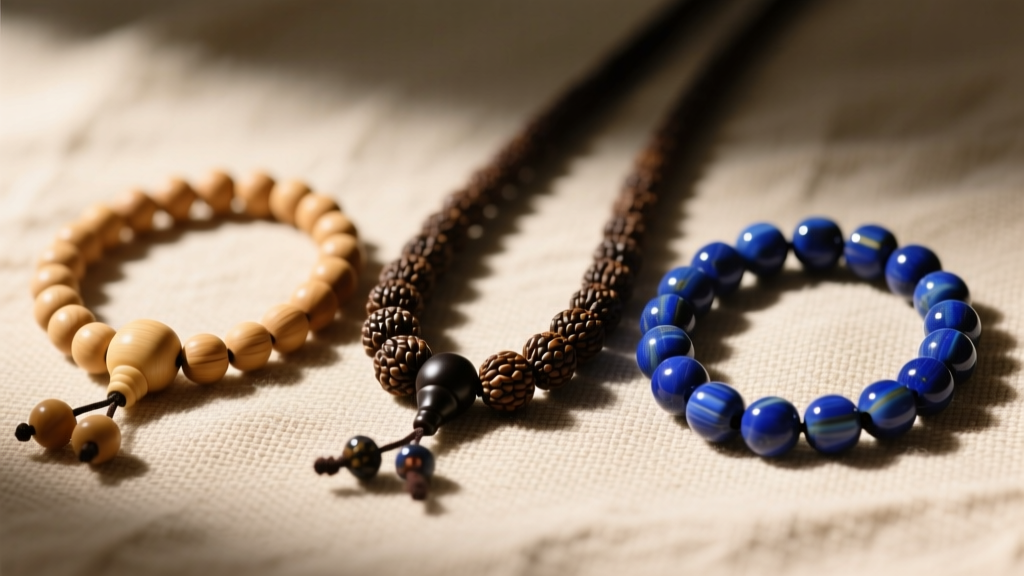
When selecting mala necklaces, most buyers focus on color or the spiritual intention behind the piece. However, from a material science and jewelry design perspective, the physical properties of the beads dictate the necklace's longevity, skin interaction, and structural integrity. A traditional mala consists of 108 beads, a guru bead, and often a tassel or marker beads. Because these pieces are manipulated constantly during japa meditation or worn against the skin's natural oils, understanding material porosity, Mohs hardness, and tensile requirements is essential.
As of 2026, sustainable harvesting and ethical sourcing have also become critical factors, particularly for rare woods and mined crystals. This guide breaks down the exact material properties of the most popular mala components, helping you choose a piece that aligns with both your lifestyle and your meditation practice.
Organic Materials: Woods and Seeds
Organic malas are prized for their warmth, lightweight feel, and ability to absorb the wearer's natural oils, developing a unique patina over time. However, their cellular structure makes them inherently more vulnerable to environmental changes than stones.
Sandalwood (Chandan)
Genuine sandalwood, primarily Santalum album from India or Santalum spicatum from Australia, is dense and rich in natural essential oils. On the Janka hardness scale, Indian sandalwood rates moderately high, making it resistant to denting. The material is highly porous; it will naturally darken and develop a glossy sheen as it absorbs sebum from your skin. Expert Warning: Many commercial "sandalwood" malas are actually dyed pine or basswood dipped in synthetic fragrance. Authentic sandalwood has a subtle, milky-woody scent that only releases when gently warmed by friction, not a sharp, perfumed odor.
Rudraksha Seeds
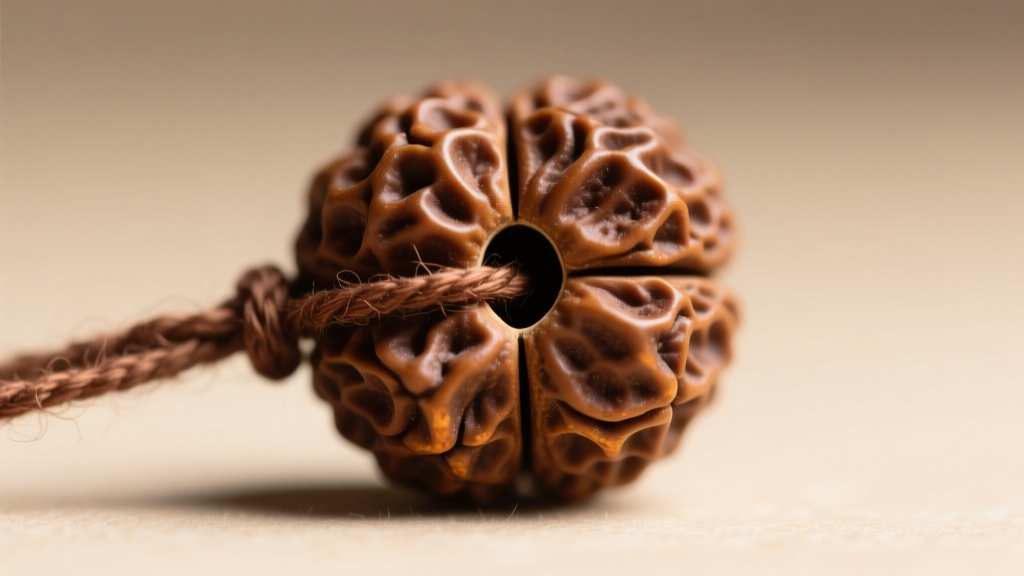
Sourced from the Elaeocarpus ganitrus tree, rudraksha beads are categorized by their "mukhis" (faces or clefts). Physically, these seeds possess a rugged, deeply grooved exterior that provides excellent tactile feedback during meditation. They are remarkably durable but can become brittle if exposed to extreme dry heat or prolonged UV exposure. To maintain their structural integrity, traditional practitioners recommend conditioning 5-mukhi or 6-mukhi rudraksha malas with a single drop of pure mustard or sandalwood oil every few months to prevent the outer shell from micro-cracking.
Bodhi Seeds
Often mistaken for actual seeds, Bodhi beads are typically the dried fruit pits of the Ficus religiosa (sacred fig) or similar palm species. They start as a pale, matte cream color and possess a relatively soft surface. With daily handling, the outer layer compresses and oxidizes, eventually turning a deep, rich amber-brown. Because they are lightweight, a 108-bead mala made from 8mm Bodhi seeds will weigh significantly less than a stone equivalent, reducing neck fatigue during long meditation sessions.
Inorganic Materials: Gemstones and Minerals
Gemstone malas offer cooling thermal properties and visual brilliance, but their crystalline structures require specific care. According to the GIA Gem Encyclopedia, understanding a stone's cleavage and hardness is vital for daily-wear jewelry.
The Quartz Family (Amethyst, Rose Quartz, Clear Quartz)
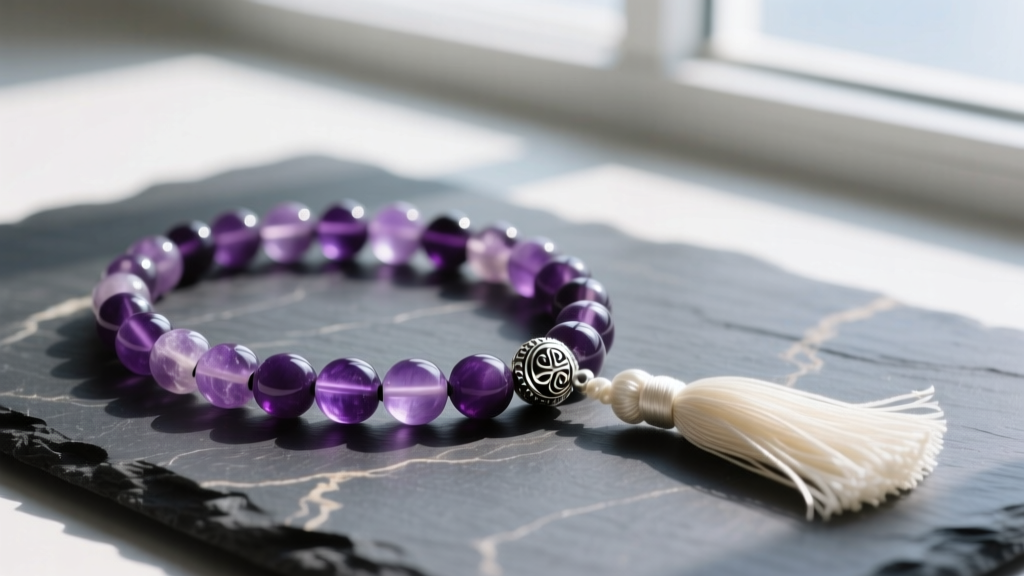
Quartz varieties rate a 7 on the Mohs scale of mineral hardness. This makes them highly resistant to scratching from everyday dust (which contains quartz particles). They are non-porous, meaning they will not absorb sweat, lotions, or perfumes, making them ideal for practitioners who wear their malas during hot yoga or strenuous activity. They can be safely cleansed under running water without risk of structural degradation.
Porous Gemstones (Lapis Lazuli, Turquoise, Malachite)
Lapis Lazuli is not a single mineral but a rock composed primarily of lazurite, calcite, and pyrite. The calcite inclusions rate a mere 3 on the Mohs scale, making Lapis highly sensitive to acids, including the natural lactic acid in human sweat. Prolonged skin contact can dull the polish and cause the stone's vibrant blue to fade or develop white, chalky spots. Similarly, turquoise is a porous hydrous phosphate that can absorb oils and change color entirely over time. These malas are best worn over clothing or reserved strictly for seated meditation.
Lava Rock (Basalt)
Formed from rapidly cooling volcanic magma, lava rock is incredibly lightweight and features a highly vesicular (porous) surface. In modern aromatherapy practices, lava rock malas are used as passive diffusers; applying a drop of essential oil to the guru bead or a few spacer beads allows the porous basalt to trap the scent and release it slowly over 24 to 48 hours.
Comparative Durability & Properties Matrix
Use this data table to match the material properties to your specific wear-and-tear requirements. For deeper mineralogical data, the Mindat Mineral Database remains the gold standard for specific gravity and cleavage metrics.
| Material | Mohs / Relative Hardness | Porosity | Water & Sweat Resistance | Ideal Bead Size for 108 Mala |
|---|---|---|---|---|
| Sandalwood | Moderate (Janka ~1200) | High | Poor (Absorbs oils/darkens) | 6mm - 8mm |
| Rudraksha | Hard Organic Shell | Medium | Fair (Requires occasional oiling) | 7mm - 9mm |
| Amethyst (Quartz) | 7.0 | None | Excellent | 6mm - 8mm |
| Lapis Lazuli | 5.0 - 6.0 (Varies) | Medium (Calcite) | Poor (Sensitive to acids) | 8mm (Heavy) |
| Lava Rock | 6.0 - 6.5 | Very High | Excellent | 8mm - 10mm |
The Hidden Variable: Stringing Materials and Knotting
The beads are only half the equation; the cord holding a 108-bead mala must withstand repetitive friction and the weight of the stones. According to tensile testing data from Fire Mountain Gems, material choice here prevents catastrophic breakage.
- Traditional Silk Cord (Size D or F): Silk offers a beautiful, traditional drape and holds macrame knots exceptionally well. However, it is a natural protein fiber that degrades with sweat, UV exposure, and moisture. Silk malas require restringing every 1 to 2 years with active use.
- Bonded Nylon (C-Lon or S-Lon): Available in gauges from 0.4mm to 0.9mm, nylon offers superior tensile strength and zero water absorption. A 0.8mm nylon cord is the industry standard for heavy 8mm gemstone malas, providing the necessary thickness to fill the bead holes and prevent the cord from sawing through the stone's drill channel.
- Elastic Cords: Avoid elastic (like Stretch Magic) for traditional knotted malas. The friction of knotting compromises the elastic's integrity, and heavy gemstones will stretch the cord, causing the mala to lose its structural drape and eventually snap.
Pro-Tip: Always insist on hand-knotted malas (macrame style) where a knot is placed between every single bead. This prevents the beads from grinding against each other—crucial for soft stones like turquoise—and ensures that if the cord breaks, you lose only one bead rather than the entire strand.
Care, Maintenance, and Skin Sensitivities
Maintenance protocols vary wildly by material. Never use ultrasonic jewelry cleaners or harsh chemical dips on any mala necklace. The high-frequency vibrations of an ultrasonic cleaner will shatter the internal crystalline structure of heavily included stones like lapis lazuli and will strip the natural oils from sandalwood and rudraksha.
For gemstone malas, a simple wipe-down with a damp, lint-free microfiber cloth is sufficient. For organic seeds and woods, use a dry, soft-bristled brush (like a clean makeup brush) to remove dust from the deep grooves of rudraksha or carved Bodhi seeds. If you have highly acidic skin or use chemical exfoliants (like AHAs/BHAs) on your chest and neck, stick to non-porous quartz or glass beads to prevent skin irritation and material degradation.
Final Verdict: Choosing Your Mala
If your practice involves movement, heat, or daily wear over bare skin, non-porous quartz varieties or lava rock are your most durable options. If your mala is strictly for seated japa meditation and you value a tactile, warming experience that evolves with you, organic materials like authentic sandalwood or rudraksha offer an unparalleled sensory connection. By prioritizing material properties and stringing integrity over fleeting aesthetic trends, you invest in a tool that will withstand years of dedicated practice.