Male Pearl Necklace Value Guide: Pricing & Quality 2026
Discover the true value of a male pearl necklace in 2026. Compare freshwater, Akoya, and Tahitian pricing tiers, nacre grades, and styling tips.

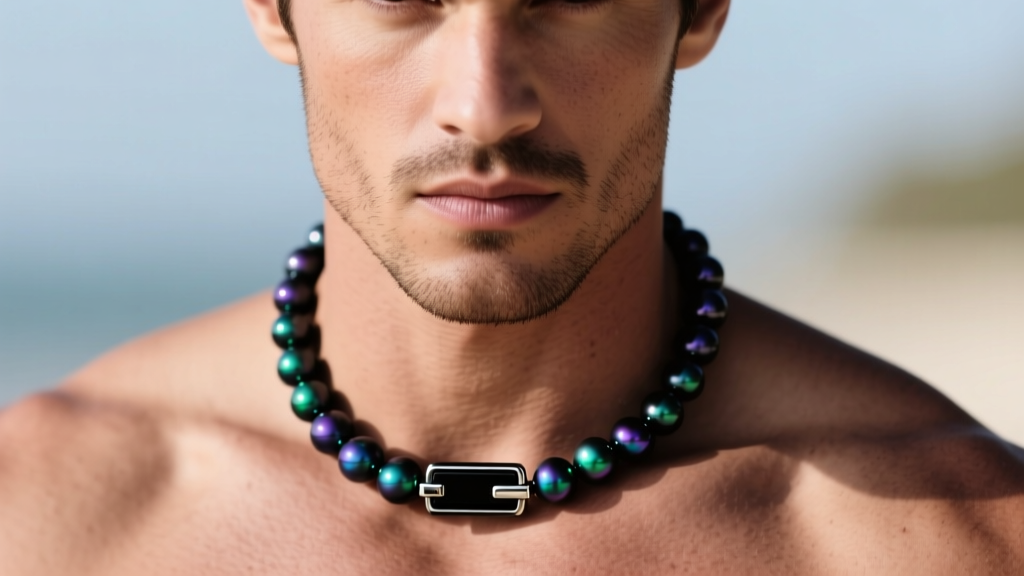
The Renaissance of Men's Pearls: Beyond the Hype
The male pearl necklace has transcended fleeting celebrity trends to become a staple in modern men's jewelry. However, as demand surges in 2026, the market is flooded with everything from $30 glass-coated imitations to $15,000 investment-grade South Sea strands. For the uninitiated buyer, assessing the true value of a pearl necklace requires looking past the surface luster and understanding the gemological and structural factors that dictate price. Whether you are seeking a subtle baroque strand for casual layering or a perfectly matched Akoya piece for formal wear, understanding the budget-to-value ratio is critical to avoiding overpriced fashion traps.
Unlike metals, which are priced by weight and purity, pearls are organic gems evaluated on a complex matrix of nacre thickness, luster, surface cleanliness, and origin. This guide breaks down the exact pricing tiers, material grades, and structural vulnerabilities you must evaluate before purchasing a male pearl necklace.
Decoding Pearl Types and Their Price Tiers
The origin and cultivation method of the pearl dictate its baseline market value. For men, the size and color profile of specific pearl types often align better with masculine styling, but they come at vastly different price points.
Freshwater and Edison Pearls: The Entry-Level Workhorse
Standard freshwater pearls (typically 6mm-8mm) are the most budget-friendly option, ranging from $50 to $250 for a standard 18-inch strand. However, for men seeking larger, more substantial beads without the South Sea price tag, Edison pearls are the ultimate value hack. Cultivated in China using techniques similar to saltwater pearls, Edison pearls are nucleated and can reach 11mm-14mm in diameter. While a comparable white South Sea pearl of 13mm might cost $4,000, a high-luster Edison pearl strand of the same size can be acquired for $400 to $800. The trade-off is that Edison pearls sometimes exhibit slight color banding or softer luster compared to saltwater varieties, but they offer unparalleled size-to-budget value.
Akoya: The Classic Luster Standard
Akoya pearls, primarily cultivated in Japan and Vietnam, are renowned for their mirror-like luster and perfectly round shapes. Due to severe environmental shifts and warming waters affecting Japanese oyster yields over the past few years, Akoya production has dropped significantly, pushing 2026 prices upward. Expect to pay between $400 and $1,800 for a high-quality (Hanhadama grade) strand. For men, the 8.0mm to 9.0mm range is the sweet spot, offering a refined, classic look that pairs exceptionally well with tailored menswear. Be wary of budget Akoya strands priced under $300; these often feature nacre thicknesses below 0.25mm, which will peel and degrade within a few years of regular wear.
Tahitian: The Masculine Investment Tier
Tahitian pearls are naturally dark, ranging from peacock green to deep charcoal, making them inherently suited for men's jewelry. Sourced from the black-lipped oyster in French Polynesia, these pearls are large (typically 9mm-13mm) and command premium prices. A well-matched, continuous strand of 10mm Tahitian pearls with high luster and minimal blemishes will cost between $1,500 and $5,000. To maximize budget, many men opt for 'baroque' or 'circle' Tahitian pearls, which feature organic, asymmetrical shapes and deep grooves. These unique shapes can cost 40% to 60% less than perfectly round Tahitians while offering a more rugged, avant-garde aesthetic.
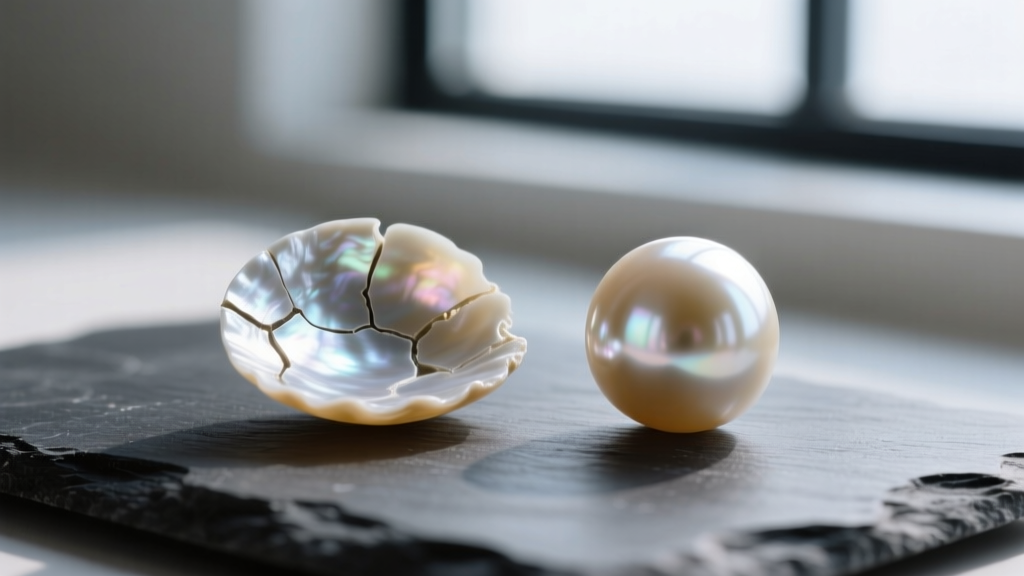
The Value Matrix: Nacre, Luster, and Sizing
According to the Gemological Institute of America (GIA), nacre thickness is the single most important factor in a pearl's durability and long-term value. Nacre is the crystalline substance the oyster secretes around the nucleus. If the nacre is too thin, the pearl will literally peel like an onion, exposing the dull shell bead underneath.
| Pearl Type | Optimal Male Size | Min. Nacre Thickness | Estimated Price Range (18-inch) | Best Style Application |
|---|---|---|---|---|
| Freshwater (Standard) | 7.0mm - 8.5mm | Solid Nacre (No bead) | $80 - $250 | Casual layering, streetwear |
| Edison Freshwater | 11.0mm - 13.0mm | 2.0mm+ (Bead nucleated) | $400 - $900 | Bold statement pieces |
| Akoya (Saltwater) | 8.0mm - 9.0mm | 0.40mm minimum | $600 - $1,800 | Formal wear, business attire |
| Tahitian (Saltwater) | 9.5mm - 12.0mm | 0.80mm minimum | $1,200 - $4,500+ | Evening wear, luxury casual |
Proportion and Length: Sizing for the Male Physique
A common budget mistake is buying a standard women's 16-inch choker length simply because it is cheaper due to using fewer pearls. On a male neck, a 16-inch strand will sit uncomfortably high, resembling a restrictive collar rather than a styled accessory. For proper masculine proportion, you must budget for longer lengths:
- 18 Inches (Princess): Sits just below the collarbone. Ideal for wearing over a crew-neck t-shirt or a lightweight knit sweater.
- 20 to 22 Inches (Matinee): Falls at or just below the neckline of an unbuttoned dress shirt. This is the most versatile length for men, allowing the pearls to rest naturally against the sternum without choking the neck.
- 24 to 30 Inches (Opera/Rope): Designed for layering over heavier garments, hoodies, or streetwear jackets. If buying a rope length, ensure the strand is knotted between every pearl to prevent catastrophic loss if the cord snaps.
Hardware and Stringing: Where Budget Necklaces Fail
When evaluating the value of a male pearl necklace, buyers often obsess over the gems and ignore the engineering holding them together. Pearls are heavy, and the stringing material undergoes significant tensile stress.
The Danger of Cheap Silk and Brass
Low-budget pearl necklaces are often strung on thin, unknotted nylon or cheap silk that stretches and degrades when exposed to sweat and skin oils. Furthermore, budget clasps are frequently made of plated brass. Over time, the plating wears off, the brass oxidizes, and the clasp mechanism fails. If a heavy 12mm Edison pearl strand snaps, the financial loss is immediate and total.
What to Demand for Your Budget
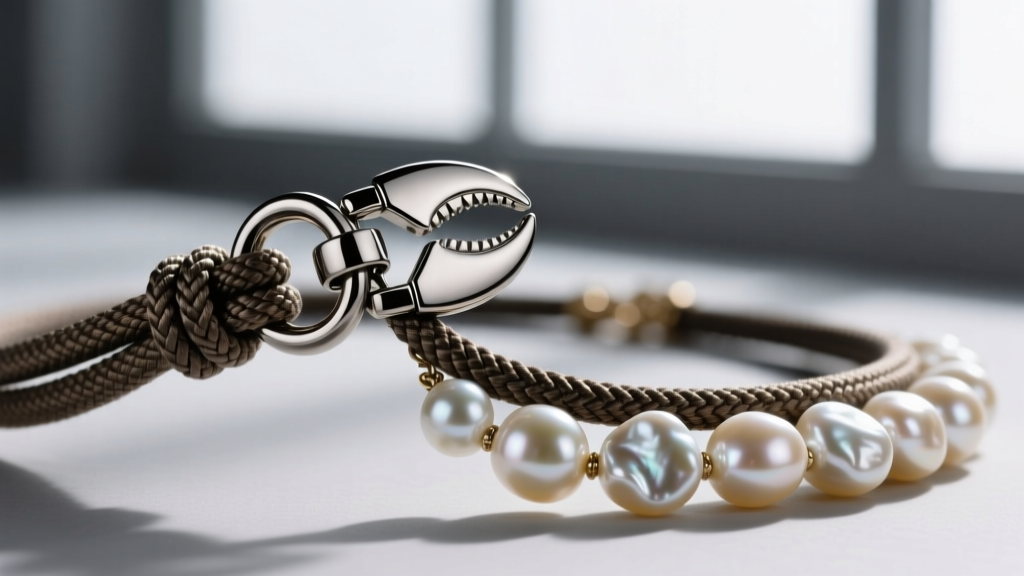
For any pearl necklace priced over $300, insist on hand-knotted silk or high-tensile stainless steel wire. Knotting between each pearl not only prevents them from rubbing against each other (which damages the nacre) but also ensures that if the strand breaks, you only lose one pearl. For the clasp, look for solid 14k gold, sterling silver, or marine-grade titanium. Magnetic clasps are popular for ease of use, but they are notorious for detaching when caught on a jacket collar; a locking lobster clasp or a secure screw-clasp is a much safer investment for heavy men's pearls.
How to Spot Overpriced 'Fashion' Pearls
The rise in popularity of men's pearls has attracted opportunistic brands selling 'fashion pearls' at luxury markups. Here is how to protect your budget:
- The Tooth Test: Gently rub the pearl against the edge of your front tooth. A real pearl will feel slightly gritty or sandy due to its microscopic crystalline structure. A glass or plastic coated imitation will feel perfectly smooth.
- Weight and Temperature: Real pearls have a dense, substantial weight and feel cool to the touch, taking a few seconds to warm up against your skin. Plastic 'shell pearls' feel light and warm instantly.
- Brand Markup vs. Gemological Value: Many high-end fashion houses sell freshwater pearl strands for $800 to $1,200. While the design and brand cachet hold social value, the gemological value of those specific pearls might only be $150. If you are buying for brand status, accept the markup. If you are buying for material value, purchase from specialized pearl vendors or American Gem Society accredited jewelers who grade their inventory transparently.
Final Verdict: Allocating Your Budget
Assessing the value of a male pearl necklace requires aligning your budget with your lifestyle and styling needs. If you are experimenting with the trend for casual streetwear, a $150 knotted freshwater baroque strand offers incredible texture and zero financial anxiety. If you are building a permanent, heirloom-quality wardrobe staple, bypass the mid-tier Akoya market and invest $1,500+ into a dark, peacock-green Tahitian strand with verified nacre thickness. Ultimately, true value in men's jewelry is found where structural integrity, gemological transparency, and masculine proportion intersect. Do not pay luxury prices for thin-nacre beads strung on cheap wire; demand the craftsmanship that justifies the investment.


