The Marcasite Heart Necklace Trend: 2026 Style Guide
Discover why the marcasite heart necklace is the defining vintage-jewelry trend of 2026. Explore styling, material facts, and buying guides.

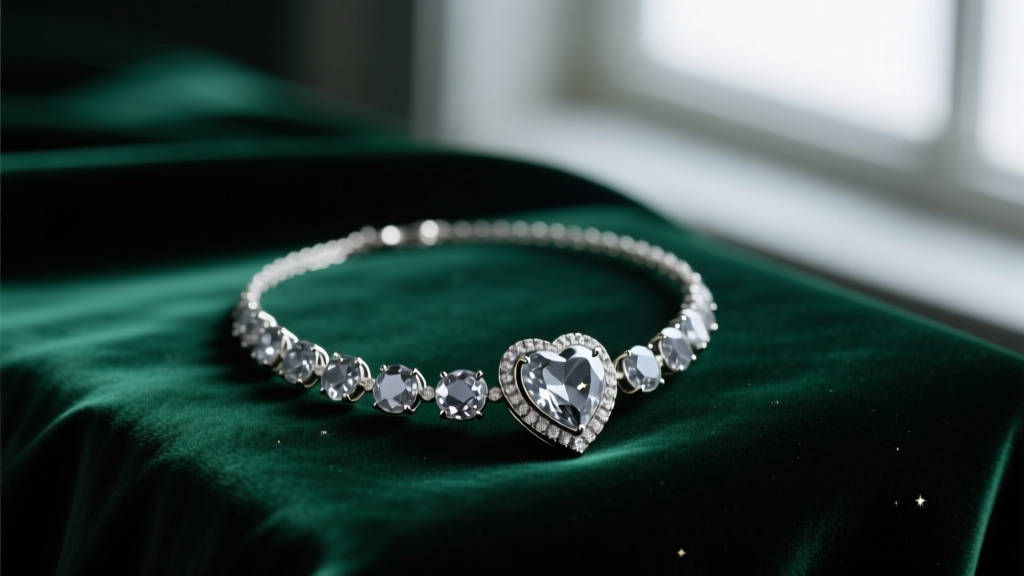
The jewelry landscape of 2026 has decisively pivoted away from the hyper-polished, minimalist gold aesthetics that dominated the early 2020s. In its place, a moody, historically grounded aesthetic has taken root, driving a massive resurgence in antique-inspired pieces. At the very center of this shift is the marcasite heart necklace. Blending the romantic silhouette of a heart pendant with the dark, metallic grit of faceted pyrite, this specific piece of jewelry has become the quintessential staple for the 'Dark Academia' and 'Gothic Romance' style tribes. But beyond its undeniable visual appeal, the marcasite heart pendant represents a fascinating intersection of vintage revival, material science, and artisanal craftsmanship. This comprehensive guide breaks down the anatomy, styling frameworks, and geological realities of 2026's most captivating neckwear trend.
The Cultural Shift: Why Romantic Grit is Dominating 2026
To understand the surge in demand for the marcasite heart necklace, we must look at the broader cultural rejection of 'quiet luxury.' While the minimalist trend championed flawless, high-karat gold and invisible settings, the 2026 consumer is craving texture, history, and a touch of melancholy. The heart shape is inherently sentimental and traditional, but when rendered in blackened sterling silver and gunmetal-gray pyrite, it subverts expectations. It is jewelry that looks as though it was unearthed from a Victorian-era estate sale. This 'Romantic Grit' aesthetic pairs perfectly with the current fashion landscape, which heavily features sheer lace, high-necked Victorian collars, distressed leathers, and rich, jewel-toned velvets. The marcasite heart acts as an anchor piece—a talisman that feels deeply personal and slightly mysterious.
Material Science: The Great Marcasite Misnomer
One of the most critical aspects of buying and collecting these necklaces is understanding what you are actually wearing. The jewelry industry has used the term 'marcasite' for over a century, but it is a profound geological misnomer. True marcasite and pyrite are both iron sulfide (FeS2), but they possess entirely different crystal structures. According to Mindat.org's pyrite mineral database, pyrite forms in an isometric crystal structure, making it relatively stable with a Mohs hardness of 6 to 6.5. True marcasite, however, forms in an orthorhombic structure, making it incredibly brittle and prone to crumbling.
If a jeweler were to use actual marcasite, the stones would shatter during the faceting and setting processes. Therefore, every genuine vintage and modern 'marcasite' heart necklace on the market is actually set with pyrite. The metallic, brassy luster of pyrite is what gives the jewelry its signature gunmetal sparkle when cut into tiny rose-cut or flat-backed facets. Understanding this distinction is a hallmark of a true jewelry connoisseur and is vital for proper archival care, which we will cover later.
Design Anatomy: Evaluating Craftsmanship and Settings
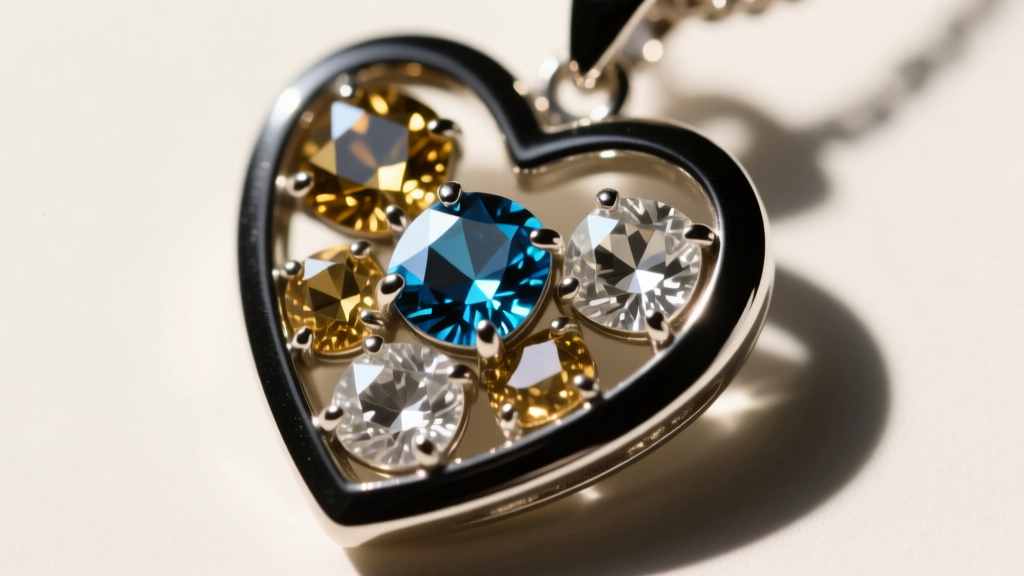
Not all marcasite heart pendants are created equal. The market is currently flooded with both mass-produced fast-fashion replicas and exquisite artisan-crafted heirlooms. Evaluating the craftsmanship requires a close inspection of the setting technique and the silver oxidation process.
The Setting Test: Glue vs. Mechanical Bezels
In lower-tier manufacturing, tiny pyrite chips are simply glued into stamped silver cavities using industrial epoxy. Over time, exposure to skin oils, perfumes, and temperature changes will cause this adhesive to degrade, leading to lost stones. In contrast, high-end 2026 artisan pieces utilize mechanical bead-setting or flush-setting. A master jeweler will use a graver to push the surrounding .925 sterling silver over the girdle of the faceted pyrite stone, locking it in place without a single drop of glue. When examining a potential purchase, use a jeweler's loupe: if you see tiny, polished silver beads or smooth metal lips overlapping the edges of the stones, you are looking at quality mechanical setting.
The Oxidation Process
The deep, moody contrast of a premium marcasite heart necklace comes from oxidized sterling silver. Artisans use a chemical compound called 'liver of sulfur' to intentionally tarnish the silver, turning it a deep, charcoal black. The surface is then lightly polished, leaving the blackened patina in the crevices and around the pyrite settings, while the raised silver borders gleam. Cheap alternatives often use painted enamel or rhodium plating to fake this depth, which chips and wears away unnaturally.
Market Tiers: Pricing and Quality Matrix
When shopping for a marcasite heart necklace in 2026, it is crucial to align your budget with your expectations regarding longevity and materials. The following table outlines the current market tiers.
| Market Tier | Price Range (USD) | Material & Construction | Longevity & Value |
|---|---|---|---|
| Fast Fashion | $25 - $55 | Silver-plated brass, glued pyrite chips, painted black crevices. | Low. Plating will wear off; stones will drop within 1-2 years. |
| Mid-Tier Commercial | $60 - $120 | Solid .925 Sterling Silver, mixed glue and basic prong settings. | Medium. Good for occasional wear; requires careful maintenance. |
| Artisan / Heritage | $150 - $350+ | Solid .925 Silver, liver of sulfur oxidation, hand-set mechanical bezels. | High. Heirloom quality; stones are secure; patina deepens beautifully. |
Styling Frameworks: Necklines and Layering Rules
The marcasite heart necklace is remarkably versatile, but its dark, textured nature requires deliberate styling to avoid looking costumey. The goal in 2026 is to integrate it seamlessly into a modern, sophisticated wardrobe.
The Solo Statement: Sweetheart and Square Necklines
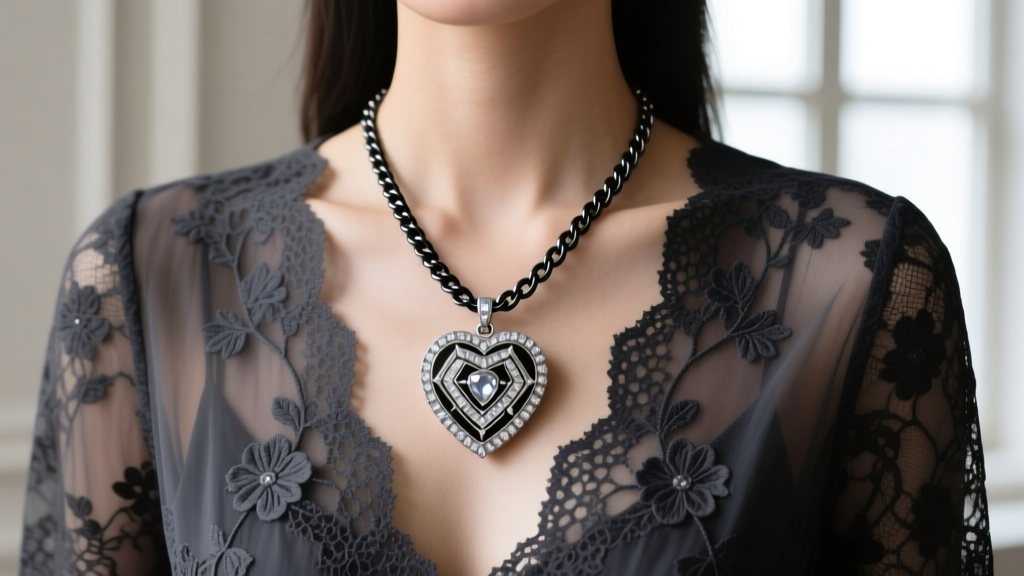
When worn alone, an 18-inch marcasite heart pendant sits perfectly just below the collarbone. This length is ideal for sweetheart necklines or structured square-neck blouses. The dark, glittering pyrite provides a striking visual contrast against bare skin or crisp, white poplin fabrics. Avoid wearing it over busy, multi-colored floral prints, as the intricate faceting of the pyrite will get lost in the visual noise.
The Layering Protocol: Texture over Shine
Layering a marcasite heart requires a departure from traditional gold-layering rules. Because the pendant is heavily textured and oxidized, it must be paired with chains that share its matte, industrial energy.
- The Base Layer: Start with a 16-inch, 1.2mm blackened sterling silver cable chain featuring a simple, unembellished bar or tiny signet ring.
- The Focal Layer: Your 18-inch marcasite heart pendant should hang on a slightly heavier chain, such as a 2.5mm oxidized rolo chain or a flat snake chain, which provides a liquid-metal backdrop to the jagged pyrite facets.
- The Anchor Layer (Optional): For a maximalist Dark Academia look, add a 22-inch blackened silver paperclip chain featuring a dark gemstone drop, such as black onyx or labradorite.
Archival Care: Preventing 'Pyrite Disease'
The most vital piece of E-E-A-T knowledge any marcasite collector must possess is an understanding of 'Pyrite Disease' (also known as pyrite decay). As noted by the Victoria and Albert Museum's jewelry conservation guidelines, pyrite is highly susceptible to oxidation when exposed to high humidity. In damp environments, the iron sulfide reacts with oxygen and moisture to form iron(II) sulfate and sulfuric acid. This manifests as a white, powdery crust on the stones, which eventually causes the pyrite to crack, crumble, and disintegrate entirely.
The 2026 Preservation Protocol
- Never Use Ultrasonic Cleaners: The high-frequency vibrations will shatter the faceted pyrite and strip the intentional liver-of-sulfur oxidation from the silver.
- Avoid Liquid Dips: Commercial silver polishing dips contain harsh acids that will eat away at the pyrite and cause immediate, irreversible damage.
- Humidity Control: Store your marcasite heart necklace in an airtight archival plastic bag with a fresh packet of silica gel desiccant. Keep it in a climate-controlled room, never in a humid bathroom.
- Surface Cleaning: To remove skin oils, gently wipe the silver borders with a dry, untreated microfiber cloth. Use a soft, dry makeup brush to gently dust the crevices around the pyrite settings.
By respecting the geological reality of the stones and adhering to strict archival storage methods, your marcasite heart necklace will remain a stunning, wearable artifact of the 2026 romantic revival for decades to come. For further reading on gemological properties and stability, the Gemological Institute of America (GIA) offers extensive databases on iron sulfide behaviors in antique jewelry settings.


