Paperclip Pendant Necklace Deep Dive: Wire Gauges, Metals & Durability
Explore the structural mechanics of the paperclip pendant necklace. Learn about wire gauges, metal alloys, bail compatibility, and failure points.


The paperclip chain has evolved from a fleeting minimalist trend into a permanent staple of modern jewelry design. However, when tasked with supporting a pendant, the structural integrity of a paperclip pendant necklace is pushed to its limits. Unlike traditional cable or curb chains, the elongated geometry of the paperclip link creates unique stress vectors, friction points, and load-bearing challenges. For jewelers, collectors, and everyday wearers, understanding the metallurgy, wire gauges, and mechanical failure modes of these necklaces is critical for long-term durability.
The Structural Anatomy of Paperclip Links
A true paperclip link is defined by its elongated rectangular shape with rounded apices, typically maintaining a 3:1 or 4:1 length-to-width ratio. The structural weakness of this design lies in the long, unsupported lateral spans of the wire. When a pendant is attached, the weight pulls the top link downward, creating a fulcrum effect against the adjacent links. This lateral tension can cause the wire to bow or warp if the gauge is insufficient.
Wire Gauge vs. Link Dimensions
The durability of a paperclip chain is dictated by the cross-sectional thickness of the wire, measured in American Wire Gauge (AWG) or millimeters. Selecting the correct gauge requires balancing aesthetic drape with tensile strength.
- 14-Gauge (1.6mm): Heavy-duty. Ideal for substantial pendants (over 15 grams). The thick wire resists lateral bowing but creates a stiffer, more rigid drape. Often used in solid 10k or 14k gold to manage material costs.
- 16-Gauge (1.3mm): The optimal middle ground. Provides excellent structural support for medium-weight pendants (5–15 grams) while maintaining a fluid, liquid-like drape.
- 18-Gauge (1.0mm): Standard for fine jewelry. Best suited for lightweight, delicate pendants. Susceptible to plastic deformation if subjected to sudden snags.
- 20-Gauge (0.8mm) and below: Strictly for micro-pendants or layering. An 18mm paperclip link in 20-gauge wire will easily warp under the weight of a standard gemstone solitaire.
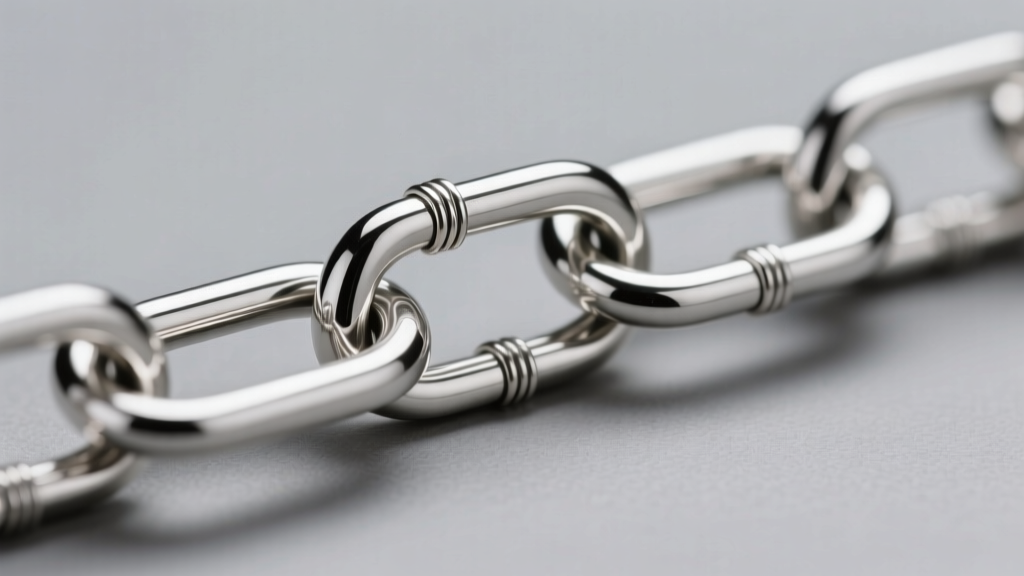
Metallurgical Choices: Tensile Strength and Wear
The geometric vulnerabilities of the paperclip link demand metals with high yield strength and appropriate Vickers hardness (HV). According to the Gemological Institute of America (GIA), pure 24k gold is far too soft (approx. 25 HV) for chain making, necessitating specific alloy mixes to achieve the required durability for daily wear.
| Metal / Alloy | Vickers Hardness (HV) | Yield Strength | Best Application |
|---|---|---|---|
| 14k Yellow Gold | ~135 HV | High | Everyday wear, medium pendants |
| 18k White Gold (Nickel-free) | ~125 HV | Medium-High | Premium fine jewelry, lightweight pendants |
| Platinum (950/50 Ru) | ~130 HV (Work-hardens) | Very High | Heirloom pieces, heavy diamond pendants |
| 316L Stainless Steel | ~150 HV | Extremely High | Budget-friendly, heavy industrial pendants |
| Sterling Silver (925) | ~65 HV | Low | Fashion jewelry, lightweight charms |
Platinum is particularly noteworthy for paperclip chains. While its initial HV is comparable to 14k gold, platinum exhibits unique work-hardening properties. As the chain flexes and moves against itself during wear, the metal actually becomes harder and more resistant to abrasion, making it the superior choice for elongated links that experience high internal friction.
The Pendant Bail Interface: Preventing Friction Wear
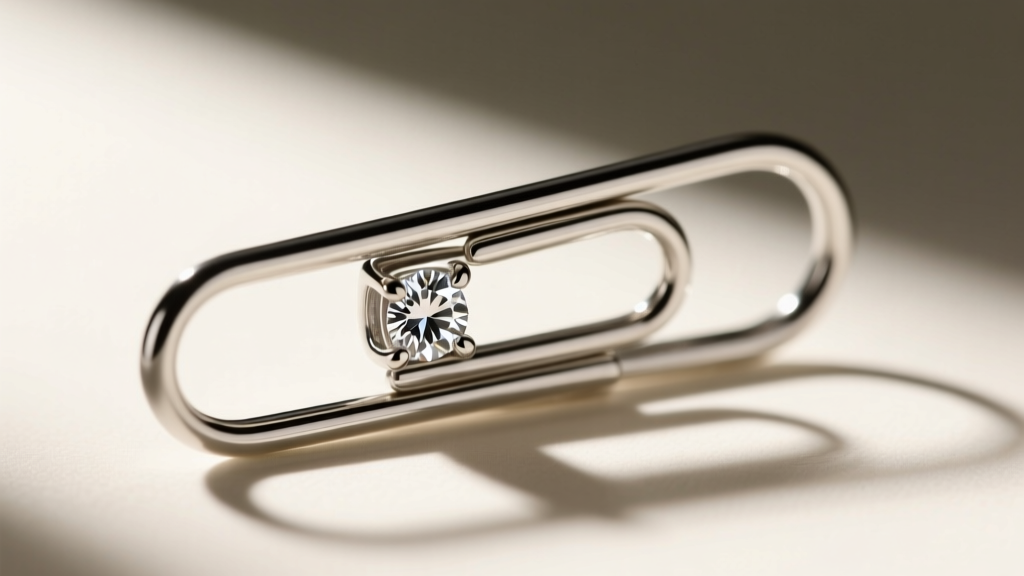
The most common point of catastrophic failure in a paperclip pendant necklace is not the chain itself, but the interface between the pendant bail and the top link. The flat, elongated interior of a paperclip link creates a concentrated friction zone. If a pendant features a narrow, rigid bail, it acts like a blade, slowly sawing through the gold or silver wire at the apex of the link.
Bail Sizing Matrix
To prevent the "guillotine effect," the internal diameter (ID) and geometry of the bail must be engineered to distribute the pendant's weight across the widest possible surface area of the paperclip link.
- Standard 15x4mm Link: Requires a bail with a minimum interior width of 5mm and a rounded, polished interior track.
- Oversized 25x6mm Link: Can accommodate a standard 3mm bail, but a hidden slide bail or a custom-forged wrap bail is recommended to prevent the pendant from sliding laterally and catching on the solder joints.
- Soldered vs. Unsoldered Bails: Always opt for laser-welded or torch-soldered bails. Unsoldered snap-bails introduce a secondary failure point and can easily pry open under the pendulum motion of a heavy necklace.
Common Failure Modes and Troubleshooting
Even with optimal gauge and metal selection, paperclip chains are subject to specific mechanical failures. Recognizing these early can save a valuable piece from being lost.
1. Solder Joint Fatigue
Every closed link in a paperclip chain features a solder joint. In mass-produced chains, these joints are often flash-soldered, leaving a brittle seam. When a heavy pendant swings, the torque concentrates on the solder joints of the top three links. Troubleshooting: Inspect the top links under a 10x loupe. If the solder seam appears dark, pitted, or shows micro-cracking, the links must be re-soldered using hard, high-karat solder or laser-welded to restore structural integrity.
2. Plastic Deformation (Link Stretching)
Unlike round cable links, which distribute tension evenly in a radial pattern, the long sides of a paperclip link are prone to outward bowing. Once the metal passes its yield point, it undergoes plastic deformation and will not return to its original shape. Troubleshooting: If links begin to look wider and shorter, the chain is overloaded. Remove the pendant immediately and have a jeweler re-shape the links using flat-nose nylon-jaw pliers to avoid marring the polished surface.
Expert Insight: Never use a standard ultrasonic cleaner on a paperclip chain that has been stretched or features compromised solder joints. The high-frequency vibrations can easily snap a fatigued 18-gauge solder seam, especially in softer metals like sterling silver or 22k gold alloys.
Sourcing and Authenticity Verification
When investing in a fine paperclip pendant necklace, verifying the metallurgical claims is essential. Reputable suppliers like those listed in the Rio Grande metals directory adhere to strict FTC guidelines regarding gold karatage and metal purity. Always look for laser-stamped hallmarks on the end tag or the first link adjacent to the clasp. For platinum pieces, ensure the stamp reads "950Pt" or "Pt950", indicating the presence of crucial alloying metals like ruthenium or cobalt that provide the necessary hardness for chain manufacturing. By prioritizing precise wire gauges, appropriate alloy hardness, and engineered bail clearances, you ensure that a paperclip pendant necklace remains a resilient, lifelong accessory rather than a fragile fashion casualty.


