Preserving the Significance of Key Necklace Heirlooms: Expert Care
Discover expert care, cleaning, and maintenance tips to preserve the physical beauty and significance of key necklace heirlooms and daily pendants.

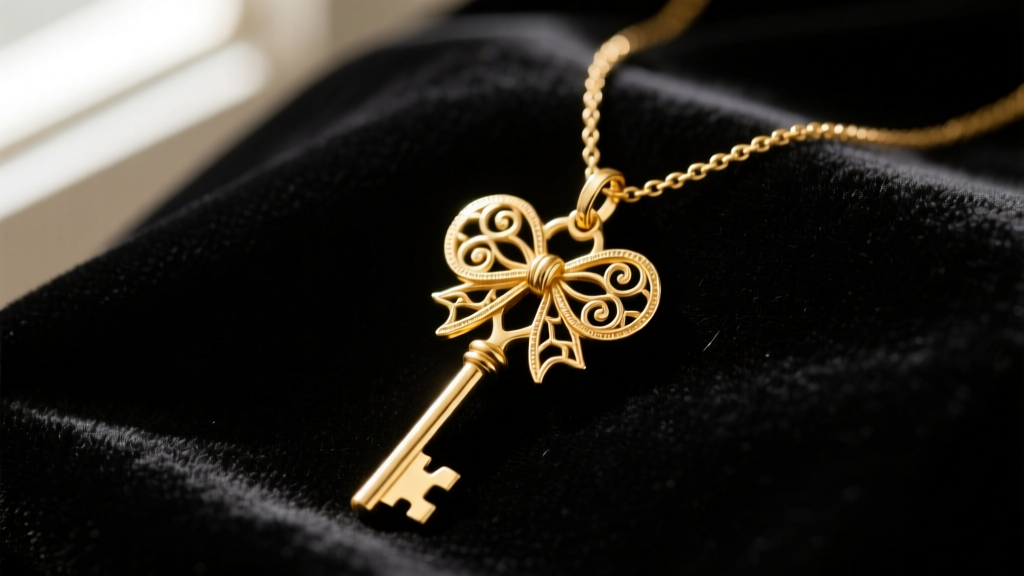
The Sentimental Weight: Why Key Pendants Demand Specialized Care
Jewelry is rarely just metal and stone; it is a physical manifestation of memory. Understanding the significance of key necklace tokens—whether they symbolize unlocking one's heart, a 21st birthday milestone, a new home, or a passed-down family heirloom—means recognizing that their physical preservation is just as vital as their emotional weight. Key pendants, with their intricate bows (the top looped part), complex bits (the teeth), and elongated shafts, present unique structural vulnerabilities. Dust, skin oils, and environmental sulfur easily become trapped in the deep crevices of a skeleton key or the microscopic milgrain detailing of an Art Deco piece.
Unlike a simple solitaire pendant, a key necklace requires a multidimensional approach to maintenance. The elongated shape acts as a lever, putting disproportionate stress on the bail and the chain's jump ring. Furthermore, antique keys were often cast in varied alloys that react unpredictably to modern commercial cleaners. To honor the legacy of these pieces, we must move beyond generic jewelry wipes and adopt a conservation-grade approach to daily care and deep cleaning.
Material Identification: The First Step in Key Pendant Maintenance
Before applying any cleaning solution, you must accurately identify the metal composition of your key pendant. A piece that looks like tarnished silver might actually be silver-plated brass, where aggressive polishing will strip the micron-thin silver layer entirely. Here is a breakdown of common key necklace materials and their specific vulnerabilities:
| Material Grade | Composition & Characteristics | Primary Vulnerability | Recommended Cleaning Agent |
|---|---|---|---|
| 925 Sterling Silver | 92.5% Silver, 7.5% Copper | Tarnish (silver sulfide) from humidity and sulfur | pH-neutral surfactant or ion-exchange bath |
| 14k Yellow Gold | 58.5% Gold, Copper/Zinc alloys | Copper oxidation from chlorine and lotions | Mild dish soap and distilled water |
| 18k Rose Gold | 75% Gold, 22.25% Copper, 2.75% Silver | High copper content makes it prone to dark patina | Specialized non-abrasive gold cloth |
| Antique Brass/Bronze | Copper/Zinc or Copper/Tin alloys | Verdigris (green corrosion) in crevices | Distilled white vinegar and salt paste (spot treat) |
| Platinum (950) | 95% Platinum, 5% Ruthenium/Iridium | Develops a soft 'patina' (surface displacement) | Ultrasonic (if no porous gems) or professional polish |
Step-by-Step Cleaning Protocols for Antique and Modern Keys
The architecture of a key pendant dictates its cleaning protocol. The deep grooves of the 'bit' (the part that enters the lock) and the hollow loops of the 'bow' are magnets for sebum and cosmetic buildup. According to the American Gem Society, regular removal of these oils prevents long-term degradation of both metal and any inset gemstones.
The Mild Surfactant Method for Intricate Details
For solid gold, platinum, and diamond-set key necklaces, the safest and most effective deep clean utilizes a mild surfactant. Mix three drops of pH-neutral, lotion-free dish soap (such as original Dawn) into a bowl of warm distilled water. Distilled water is critical; tap water contains chlorine and dissolved minerals that can leave micro-deposits on high-karat gold. Submerge the pendant for 15 minutes to loosen debris. Using a baby toothbrush with ultra-soft 0.1mm bristles, gently agitate the bristles along the shaft and into the teeth of the key. Never scrub in wide circles; use short, directional strokes to push dirt out of the crevices. Rinse under a gentle stream of lukewarm water and dry immediately with a lint-free microfiber cloth to prevent water spotting.
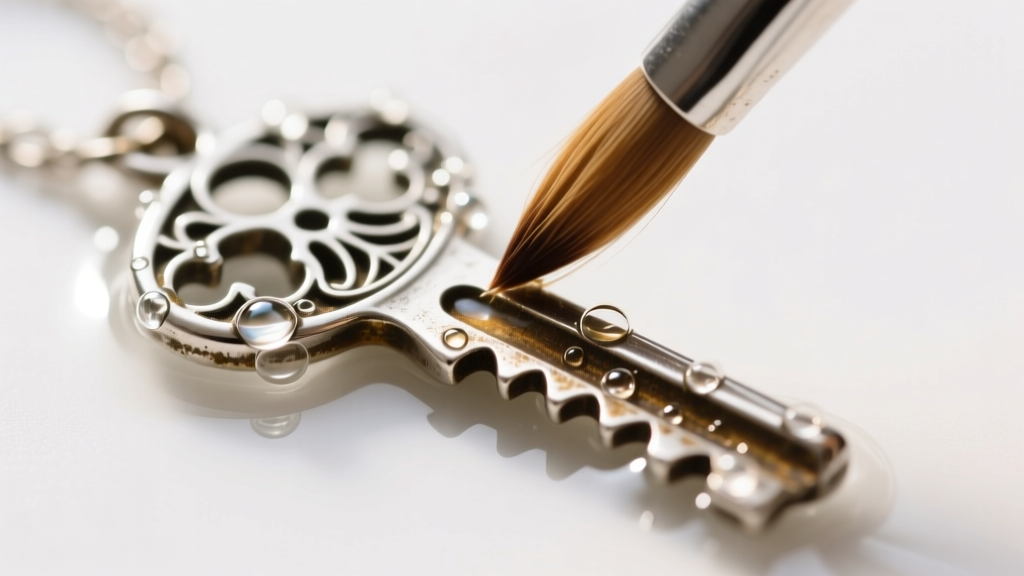
The Ultrasonic Trap: When to Avoid Vibrational Cleaning
Many vintage key necklaces feature inset stones in the bow, such as turquoise, opal, emerald, or lapis lazuli. Ultrasonic cleaners operate at frequencies between 40-45 kHz, creating microscopic cavitation bubbles that implode with immense localized force. While excellent for cleaning bare diamond and platinum, these shockwaves will fracture porous gems and shatter opals. Furthermore, if your antique key pendant features enamel work (like guilloché or cloisonné), the vibrational energy will cause the glass enamel to micro-fracture and flake away from the metal substrate. Always default to manual cleaning for any mixed-material heirloom.
Reversing Heavy Tarnish on Sterling Silver Keys
If your 925 sterling silver key necklace has developed a thick, black layer of silver sulfide, liquid dips containing thiourea should be avoided. These harsh chemicals strip the silver layer and leave a porous, matte surface that tarnishes faster in the future. Instead, use the ion-exchange method: line a glass bowl with aluminum foil (shiny side up), place the silver key on the foil, and add a tablespoon of baking soda. Pour boiling water over the piece. The electrochemical reaction transfers the sulfur from the silver to the aluminum, lifting the tarnish without removing any base metal. The Gemological Institute of America (GIA) highly recommends this non-abrasive method for preserving the sharp edges of antique silver jewelry.
Chain Integrity and Clasp Mechanics: Preventing Loss
The significance of key necklace heirlooms makes losing them to a mechanical failure devastating. Key pendants are inherently top-heavy. A solid 14k gold skeleton key can easily weigh 8 to 12 grams, which places constant tensile stress on the chain's weakest link: the jump ring connecting the clasp to the chain, and the bail holding the pendant.
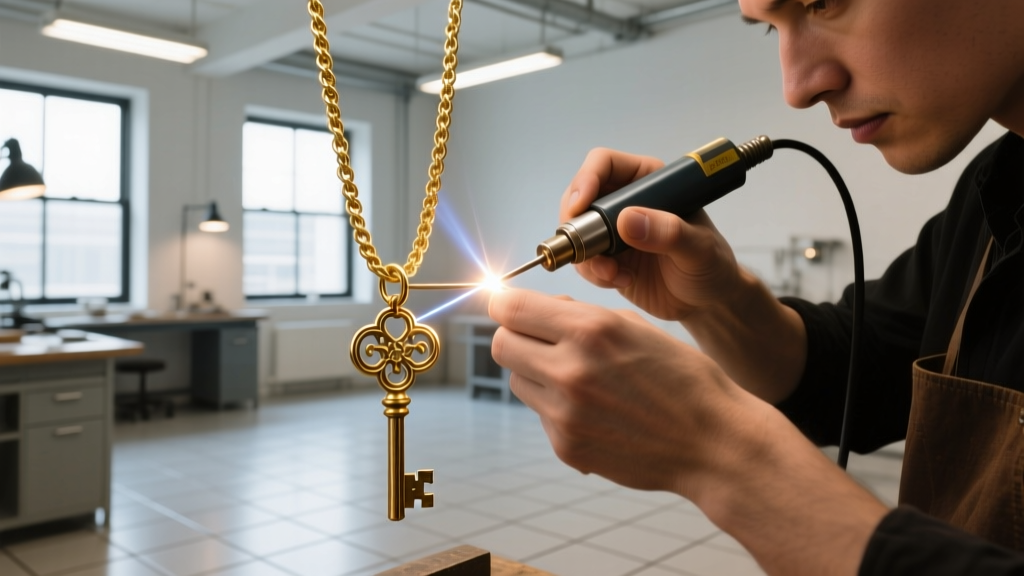
Upgrading the Jump Ring and Clasp
Most commercial necklaces use 20-gauge (0.8mm) open jump rings that are simply pinched shut. Over time, the weight of a key pendant will pull these rings into an oval shape, eventually causing them to snap open. Have a jeweler replace all open jump rings with soldered jump rings. Additionally, swap out standard spring-ring clasps—which have weak internal springs that fail under heavy loads—for a solid lobster claw clasp or a secure box clasp with a figure-eight safety catch.
Bail Friction and Wear
The bail (the loop the chain passes through) on a key pendant experiences high friction, especially if the key is worn on a thick rope or box chain. Inspect the interior of the bail every six months. If you see a groove deeper than 0.5mm, the bail is at risk of snapping. A jeweler can easily install a hardened steel or platinum insert inside the bail to prevent further wear without altering the exterior aesthetic of the piece.
Proper Storage to Prevent Oxidation and Scratching
How you store your key necklace when it is not being worn is just as crucial as how you clean it. The elongated shape of a key makes it highly susceptible to bending if stored in a crowded jewelry box where heavier items can press against the shaft.
- Individual Polyethylene Bags: Store the necklace in a sealable, food-grade polyethylene bag (avoid PVC or vinyl, which emit gases that accelerate tarnishing). Squeeze out excess air before sealing.
- Anti-Tarnish Strips: Place a 3M anti-tarnish strip inside the bag. These strips absorb ambient sulfur and hydrogen sulfide, protecting sterling silver and copper alloys for up to 12 months in a sealed environment.
- Silica Gel Packets: For humid climates, include a small, rechargeable silica gel desiccant packet to keep the micro-environment bone-dry, preventing the oxidation of alloy metals in 14k and 18k gold.
- Suspension Storage: If storing in a box, hang the necklace from a padded hook rather than laying it flat. This prevents the chain from kinking and keeps the heavy key pendant from resting on delicate chain links.
Professional Restoration vs. DIY: Knowing the Limits
While routine cleaning and jump-ring inspections can be managed at home, certain issues demand professional intervention. If your antique key necklace has a cracked shaft, missing filigree wire, or severe verdigris (green corrosion) that has pitted the metal, DIY attempts will likely cause catastrophic failure. Laser welding is the industry standard for repairing antique keys, as it allows a jeweler to fuse metal with pinpoint accuracy without exposing the entire piece to the heat of a traditional torch, which could melt solder joints or destroy heat-sensitive gemstones.
"Preserving an heirloom is not about making it look brand new; it is about stabilizing its current state so it can survive for the next generation. Over-polishing an antique key removes the soft patina that proves its age and history."
By treating the maintenance of your jewelry with the same respect as the memories it holds, you ensure that the significance of key necklace pieces remains intact, both emotionally and physically, for decades to come.


