Letter C Necklace Materials: Gold, Silver & Titanium Compared
Discover the best metals for your letter C necklace. We compare gold, silver, platinum, and titanium for durability, tarnish, and price.

The Structural Vulnerability of the Letter C
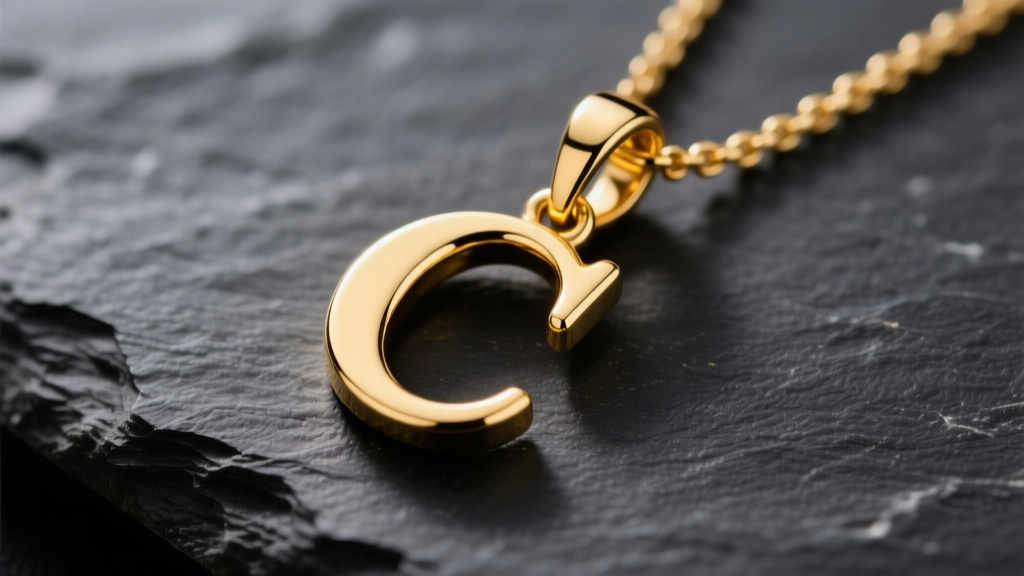
Initial jewelry remains a dominant force in personalized fashion, but not all letters are engineered equally. When selecting a letter C necklace, you are dealing with a specific geometric challenge. Unlike a closed letter like 'O' or a structurally grounded letter like 'H', the letter 'C' features two open, protruding terminals. These top and bottom curves are highly susceptible to snagging on knitwear, hair, and towels. When a snag occurs, the kinetic energy transfers directly to the metal, risking deformation, bending, or even snapping at the bail (the loop connecting the pendant to the chain).
Because of this inherent structural vulnerability, the metallurgical properties of your chosen material are not just about aesthetics—they are about survival. A metal that is too malleable will bend out of shape, while a metal that is too brittle may fracture under sudden tension. In this comprehensive 2026 material guide, we break down the exact alloy compositions, Vickers hardness (HV) ratings, and long-term wearability of the most popular metals used for initial pendants.
Metallurgical Breakdown: Gold Alloys
Gold remains the premier choice for heirloom-quality initial necklaces, but pure 24k gold is far too soft (approx. 25 HV) for a delicate letter C. Jewelers rely on specific alloy mixtures to achieve the necessary tensile strength.
14k vs. 18k Solid Gold: The Hardness Divide
The World Gold Council notes that alloying gold with metals like copper, silver, and zinc drastically alters its physical properties. For a letter C pendant, 14k gold (58.5% pure gold) is often the superior choice for everyday wear. It boasts a Vickers hardness of approximately 140-160 HV, making it highly resistant to the bending forces exerted during a snag. 18k gold (75% pure gold), while richer in color and more expensive, sits at a softer 120-130 HV. If your letter C features intricate diamond-cut facets or delicate serif fonts, 14k gold will preserve those sharp edges far longer than 18k gold, which tends to round off at the edges over years of friction.
Rose Gold vs. Yellow Gold Durability
The color of gold is dictated by its alloy. Rose gold achieves its pink hue through a high copper content (often up to 20-25% in 14k rose gold). Copper is a remarkably strong metal, meaning 14k rose gold actually exhibits slightly higher tensile strength and scratch resistance than its yellow gold counterpart. If you are prone to catching your necklace on clothing, a 14k rose gold letter C offers a marginal but measurable advantage in structural integrity.
Silver: Standard 925 vs. Argentium 935
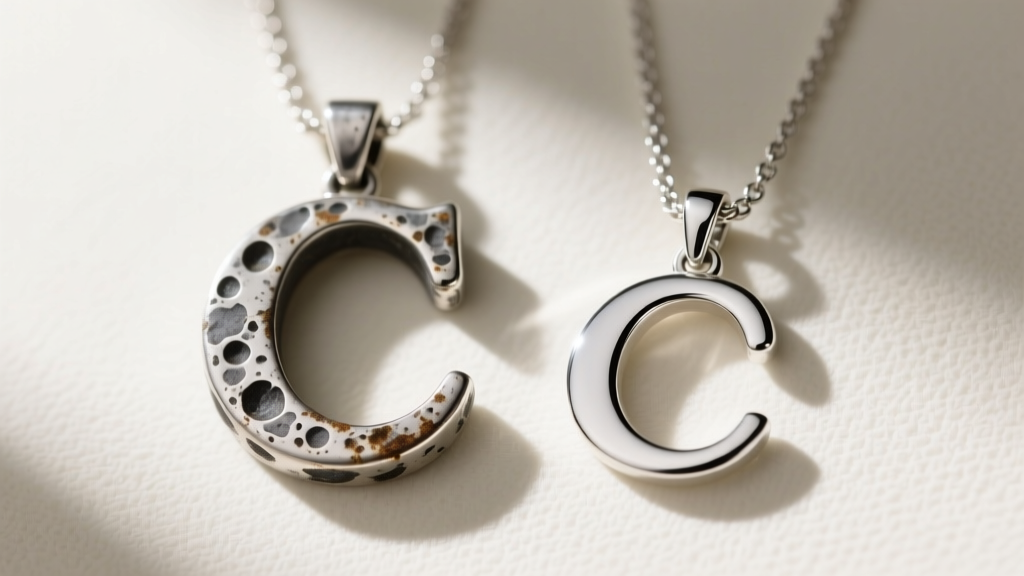
Silver is the most accessible entry point for initial necklaces, but it comes with well-documented maintenance issues. Standard 925 sterling silver contains 7.5% copper. When exposed to sulfur compounds in the air and human sweat, the copper reacts to form copper sulfate, resulting in rapid black tarnish. For a letter C necklace, which often sits flush against the collarbone where sweat accumulates, tarnish can quickly obscure the pendant's details.
The Argentium Advantage
To combat this, modern jewelers are increasingly turning to Argentium 935 silver. By replacing a portion of the copper alloy with germanium (typically 1-2%), Argentium forms a transparent, self-healing germanium dioxide layer on the surface. According to The Silver Institute, this drastically slows the tarnishing process. For a letter C necklace that you intend to wear daily without constant polishing, Argentium is a vastly superior investment over traditional 925 sterling, despite a 15-20% premium in initial cost.
Platinum and Titanium: The Extremes
When you move to the extremes of the periodic table, you encounter metals that offer unparalleled durability, albeit with distinct trade-offs in weight and manufacturability.
Platinum 950: The Heavyweight Champion
Platinum is typically alloyed at 95% purity with 5% ruthenium or iridium. It is incredibly dense (approx. 21.45 g/cm³), meaning a solid platinum letter C pendant will weigh nearly 60% more than the exact same design in 14k gold. This heft provides a luxurious, premium drape, but it demands a thicker, more robust chain to prevent the bail from wearing through the links. Platinum does not tarnish and develops a soft 'patina' over time, which many collectors prefer. Furthermore, when platinum is scratched, the metal is merely displaced, not lost, allowing it to be polished back to a mirror finish indefinitely.
Titanium: The Modern Alternative
Grade 5 Titanium (Ti-6Al-4V) is an aerospace-grade alloy that is exceptionally strong, lightweight, and completely hypoallergenic. A titanium letter C necklace is virtually unbendable under normal human force. However, titanium's extreme hardness makes it notoriously difficult to work with. If the bail snaps or requires resizing, traditional soldering is impossible; it requires specialized laser welding. Additionally, titanium cannot be easily cast into intricate, custom serif fonts, so designs are usually limited to modern, blocky, or minimalist sans-serif lettering.
Comparative Data: Hardness, Pricing, and Wearability
To help you make an informed decision, we have compiled a matrix comparing the core properties of these metals as they relate specifically to delicate initial pendants in the current 2026 market.
| Metal / Alloy | Vickers Hardness (HV) | Tarnish Resistance | Relative Weight | Avg. Price (1g - 2026) |
|---|---|---|---|---|
| 14k Yellow Gold | 140 - 160 | Excellent | Medium | $75 - $95 |
| 18k Yellow Gold | 120 - 130 | Excellent | Medium-High | $110 - $135 |
| 925 Sterling Silver | 60 - 70 | Poor | Light | $2 - $4 |
| Argentium 935 | 75 - 85 | Very Good | Light | $4 - $7 |
| Platinum 950 | 130 - 150 | Perfect | Heavy | $100 - $125 |
| Grade 5 Titanium | 330 - 350 | Perfect | Very Light | $1 - $3 |
Note: Pricing reflects raw material and basic casting costs per gram; finished retail prices for custom initial pendants will include labor, CAD design, and brand markups.
Chain Pairing: Matching the Letter C to the Right Link
A common failure point in initial necklaces is not the letter itself, but the chain breaking under the pendant's localized weight. The Gemological Institute of America (GIA) frequently highlights the importance of matching chain tensile strength to pendant mass.
The Bail-to-Link Ratio
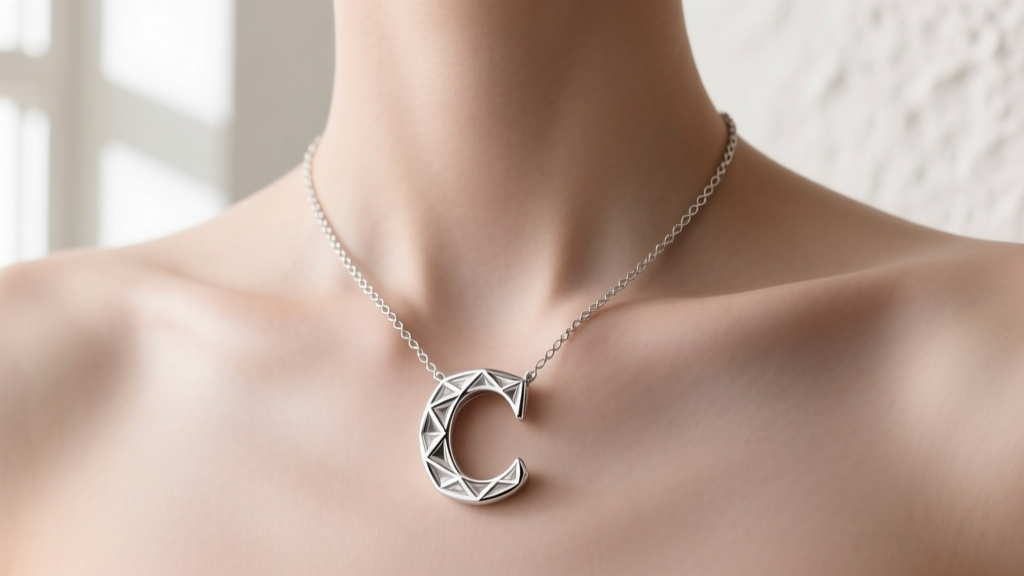
The letter C requires a bail that allows the pendant to sit flat against the chest. If the chain is too thick, the pendant will constantly flip backward. For a standard 3-gram gold or silver letter C, a 1.0mm to 1.2mm box chain or wheat chain is ideal. These chain styles offer high tensile strength (often exceeding 15 lbs of pull-force) while remaining thin enough to glide through the bail smoothly.
If you opt for a heavy platinum letter C (which can easily exceed 6 grams for a bold, 15mm height), you must upgrade to a 1.5mm curb or cable chain. Using a delicate 0.9mm chain with a heavy platinum pendant will result in accelerated friction wear, eventually causing the chain links to slice through the bail or snap at the clasp.
Expert Verdict: Which Metal Should You Choose?
The ideal material for your letter C necklace depends entirely on your lifestyle and maintenance preferences. If you want a timeless, heirloom-quality piece that balances durability with luxury, 14k solid gold remains the undisputed champion. Its optimal hardness ensures the terminals of the 'C' won't bend during daily wear.
For those on a budget who despise polishing, an Argentium 935 silver pendant offers brilliant, low-maintenance shine at a fraction of the cost of gold. Finally, if you demand absolute structural invincibility and prefer a modern, minimalist aesthetic, Grade 5 Titanium provides unmatched strength, provided you are comfortable with its manufacturing limitations. By understanding the metallurgy behind your jewelry, you ensure your initial necklace remains a staple in your wardrobe for decades to come.


