Marie Antoinette and the Diamond Necklace Affair: Style Legacy
Explore how Marie Antoinette and the Diamond Necklace Affair shaped maximalist jewelry trends, statement necklaces, and modern high-carat diamond styling.

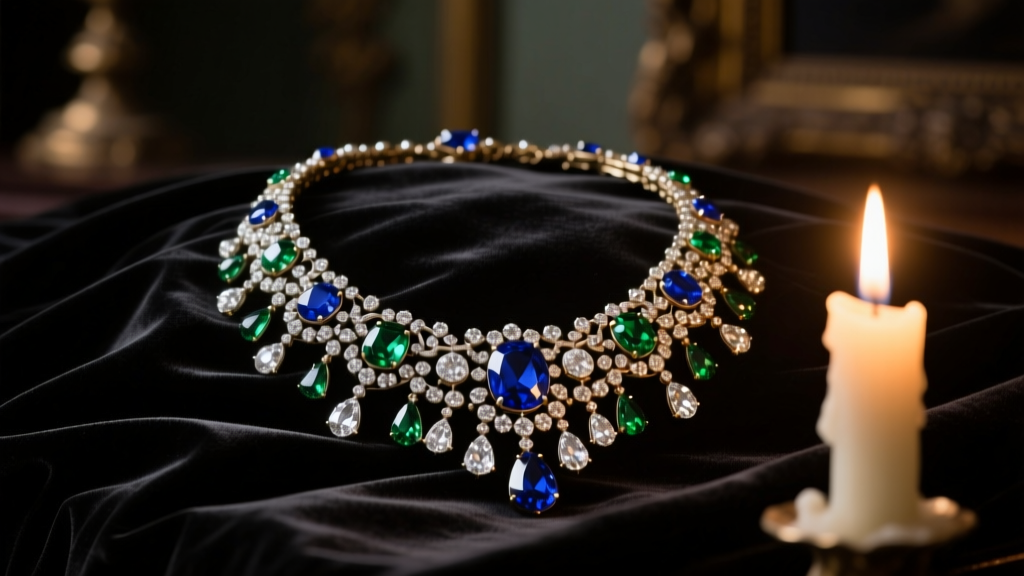
When we analyze the pivotal moments that forever altered the trajectory of high jewelry, few events carry the cultural and aesthetic weight of marie antoinette and the diamond necklace affair. While historically remembered as a devastating political scandal that accelerated the fall of the French monarchy, from a gemological and design perspective, the infamous 1785 commission remains the undisputed blueprint for the modern maximalist statement necklace. Today, as the "Royalcore" and historical maximalism movements dominate 2026 runways, the design DNA of that legendary 2,800-carat masterpiece is experiencing a massive renaissance.
In this deep-dive analysis, we deconstruct the original anatomy of the Boehmer and Bassange necklace, translate its 18th-century engineering into modern wearable metrics, and provide actionable styling frameworks for integrating "Affair-inspired" festoon and tassel motifs into contemporary wardrobes.
The Anatomy of the Infamous 2,800-Carat Masterpiece
To understand the modern trend, we must first examine the original specs. Commissioned initially for Madame du Barry and later used as the centerpiece in the con against Marie Antoinette, the necklace was not a simple chain. It was a highly complex festoon design. According to historical inventories, the piece contained approximately 647 diamonds totaling an astonishing 2,800 carats.
The architecture of the necklace relied on three primary elements:
- The Choker Base: A rigid, multi-strand collar that sat flush against the collarbone, serving as the structural anchor.
- The Festoon Swags: Three cascading, multi-strand diamond drapes (swags) that hung from the base, creating a tiered waterfall effect over the décolletage.
- The Tassel Drops: The central swag terminated in a massive 73-carat stone, surrounded by articulated diamond tassels that moved fluidly with the wearer's breathing and steps.
From an engineering standpoint, 18th-century jewelers utilized silver-topped gold. Because platinum was not yet widely used in jewelry, artisans set diamonds in silver to achieve a white metal color that enhanced the stones' brilliance, but backed the silver with 18-karat yellow gold to prevent the silver from tarnishing and staining the wearer's skin and garments.
From Scandal to Runway: The "Royalcore" Maximalist Revival
In 2026, the aesthetic fallout of marie antoinette and the diamond necklace affair is visible in the resurgence of articulated tassel pendants and multi-tiered festoon chains. However, modern high jewelry has completely overhauled the material science behind these pieces.
Modern Material Grades vs. Historical Foil-Backed Diamonds
The diamonds used in the 1780s were primarily Old Mine cuts and rose cuts. According to the Gemological Institute of America (GIA), these early cuts featured high crowns, small tables, and large culets, resulting in a "chunky" scintillation rather than the piercing brilliance we expect today. Furthermore, many were foil-backed in closed settings to artificially amplify their fire.
Modern interpretations of the Affair's aesthetic utilize 57-facet Round Brilliant cuts (typically in VS1 clarity and D-F color grades) set in open-back 950 Platinum or 18-karat white gold. This eliminates the need for foil backing and allows light to enter the pavilion from all angles. For collectors seeking the historical "chunky" light performance without the foil, custom-cut Old European diamonds (with a 90% crown height ratio) are currently commanding a 30% premium in the bespoke market.
Data Table: Translating 18th-Century Grandeur into Modern Wearability
Wearing a historical replica requires an understanding of weight distribution and scale. Below is a comparative framework for adapting the original scandal's specs into modern, wearable high jewelry.
| Feature | 1785 Original Spec | 2026 Modern Interpretation | Styling & Engineering Application |
|---|---|---|---|
| Total Carat Weight | ~2,800 Carats | 85 - 150 Carats (Lab-Grown or Natural) | Reduces neck strain from ~300g to a manageable 45g. |
| Metal Base | Silver-topped Yellow Gold | 950 Platinum or 18k White Gold | Prevents tarnish; provides higher tensile strength for heavy swags. |
| Chain Linkage | Rigid, soldered links | Articulated micro-hinges (1.2mm titanium cores) | Allows the festoon to drape naturally without kinking the precious metal. |
| Central Drop | 73-Carat Briolette | 12-18 Carat Pear Brilliant | Maintains the visual anchor without pulling the choker base downward. |
| Estimated Value | 1.6 Million Livres (Historical) | $85,000 - $2.5 Million (Depending on origin) | Lab-grown diamonds make the maximalist volume accessible to private buyers. |
How to Style "Affair-Inspired" Statement Necklaces Today
Translating the sheer volume of marie antoinette and the diamond necklace affair into a modern wardrobe requires strategic neckline pairings. The greatest failure point when wearing heavy festoon necklaces is a clash of geometry between the jewelry and the garment.
The Structural Pairing Framework
1. The Square Neckline (The Optimal Canvas)
The square bodice, popular in both 18th-century court dress and 2026 corset-style evening wear, provides a rigid, horizontal boundary. An 18-inch princess-length festoon necklace with three graduated swags will sit perfectly within the negative space of a square neckline, framing the collarbones without competing with the fabric's edges.
2. The Deep V-Neck (The Tassel Integration)
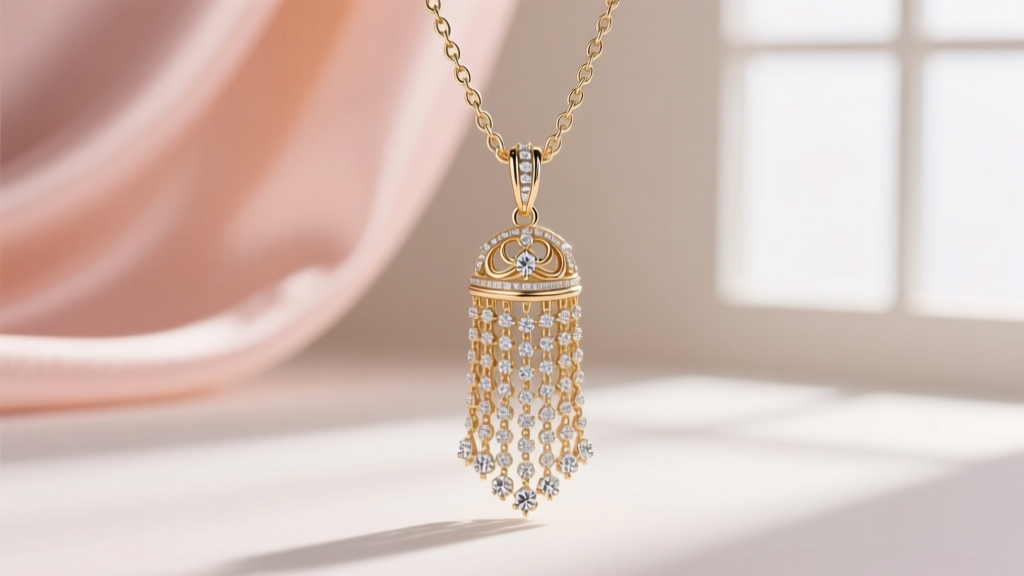
For deep plunging necklines, abandon the multi-strand choker base. Instead, opt for a single, heavy-gauge chain (such as a 4mm Platinum Rolo chain) dropping to a 24-inch matinee length, terminating in a diamond tassel pendant. The 4mm gauge is critical here; anything thinner (like a 1.5mm cable chain) will suffer from "pendulum swing," where the heavy tassel causes the thin chain to flip and tangle.
3. Weight Distribution and Counter-Balancing
If you are wearing a high-carat replica featuring over 100 carats of diamonds, the front of the necklace will naturally pull downward. Master jewelers solve this by integrating a hidden 10-gram platinum counterweight into the rear clasp assembly, or by utilizing a 15mm-wide velvet ribbon backing that grips the skin and distributes the 60+ gram load across the nape of the neck rather than concentrating it on the cervical spine.
The Enduring Psychology of the Statement Diamond
Why does a scandal from 1785 continue to dictate high jewelry trends nearly two and a half centuries later? The answer lies in the paradox of the piece itself. According to the Palace of Versailles official archives, Marie Antoinette actually preferred relatively modest, delicate jewelry in her private life, favoring simple pearls and cameo pendants. The massive diamond necklace was a symbol of a public persona she never truly embraced, yet it became the ultimate symbol of her perceived extravagance.
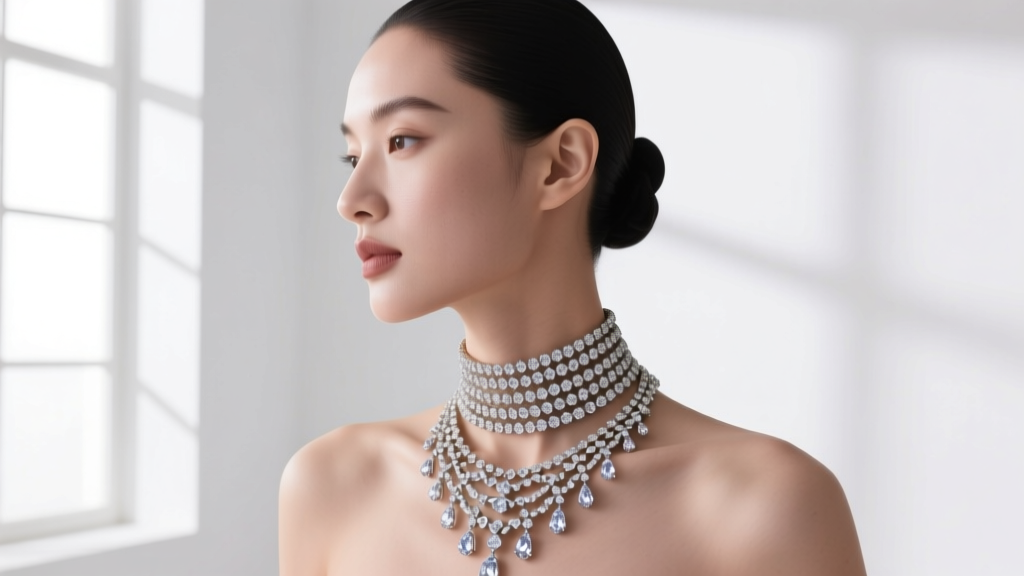
Today, wearing an Affair-inspired maximalist necklace is an act of deliberate sartorial rebellion. In an era where quiet luxury and minimalist "stealth wealth" have saturated the market, donning a cascading diamond festoon or a heavy, articulated tassel pendant is a reclamation of unapologetic glamour. It signals a deep appreciation for jewelry not just as an accessory, but as wearable architecture and historical storytelling.
Conclusion: The Legacy Lives in the Links
The story of marie antoinette and the diamond necklace affair is a cautionary tale of politics and deception, but in the realm of jewelry design, it is a triumph of engineering and aesthetic ambition. By understanding the historical mechanics of the festoon drape, upgrading the metallurgy to modern platinum standards, and strategically pairing these statement pieces with complementary necklines, contemporary collectors can wear the legacy of 1785 with both historical reverence and modern structural integrity.


