Marine Corps Necklace Value Guide: Budget Picks for 2026
Discover the true value of a Marine Corps necklace in 2026. We compare materials, pricing tiers, and veteran-owned brands to find the best budget picks.

The True Cost of a Marine Corps Necklace: What Should You Pay?
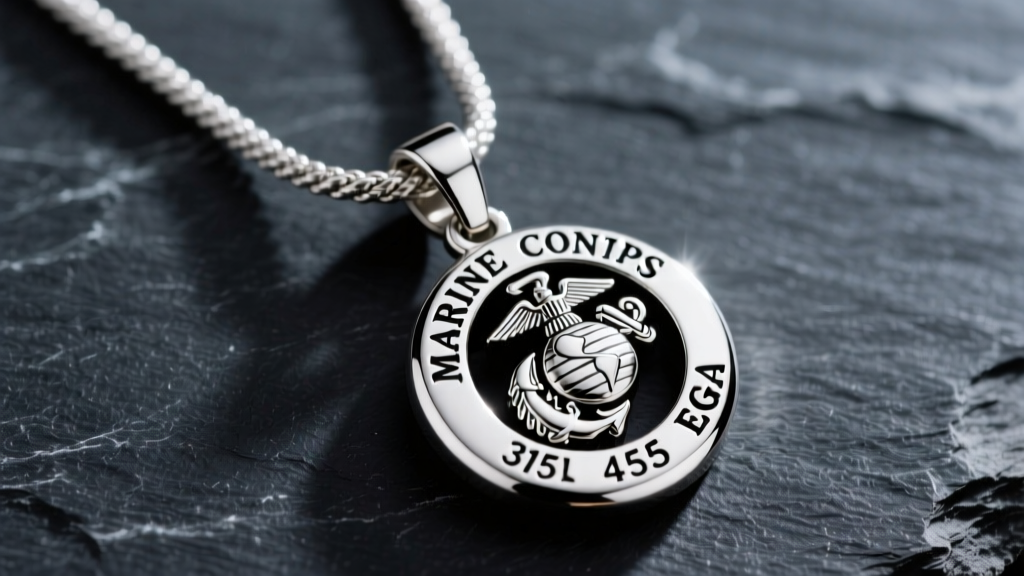
For Marines, the Eagle, Globe, and Anchor (EGA) is far more than a piece of metal; it is a blood-earned symbol of the few and the proud. When shopping for a Marine Corps necklace, the market is heavily saturated with everything from $15 hollow imports to $300 solid gold custom pieces. But where is the actual value? In 2026, assessing the budget and true value of military jewelry requires looking past the initial price tag and examining metallurgy, chain tensile strength, and trademark licensing. A cheap necklace that turns your skin green or snaps under the weight of a solid pendant is a poor investment, regardless of how low the upfront cost might be. This guide breaks down the exact material grades, chain gauges, and pricing tiers you need to know to maximize your budget without sacrificing the dignity of the emblem.
Material Breakdown: Steel, Silver, and Tungsten
The foundation of any necklace's value lies in its base metal. Different environments demand different metallurgical properties. If you are an active-duty Marine deploying to humid, saltwater environments, or a veteran who wears their necklace daily at the gym, your material choice dictates the lifespan of the piece.
316L Surgical Stainless Steel: This is the undisputed workhorse of military jewelry. Unlike standard 304 stainless steel, 316L contains molybdenum, which drastically increases resistance to chloride corrosion (sweat and saltwater). It is hypoallergenic, will not tarnish, and holds a brilliant polish. A high-quality 316L EGA pendant offers the best dollar-to-durability ratio on the market.
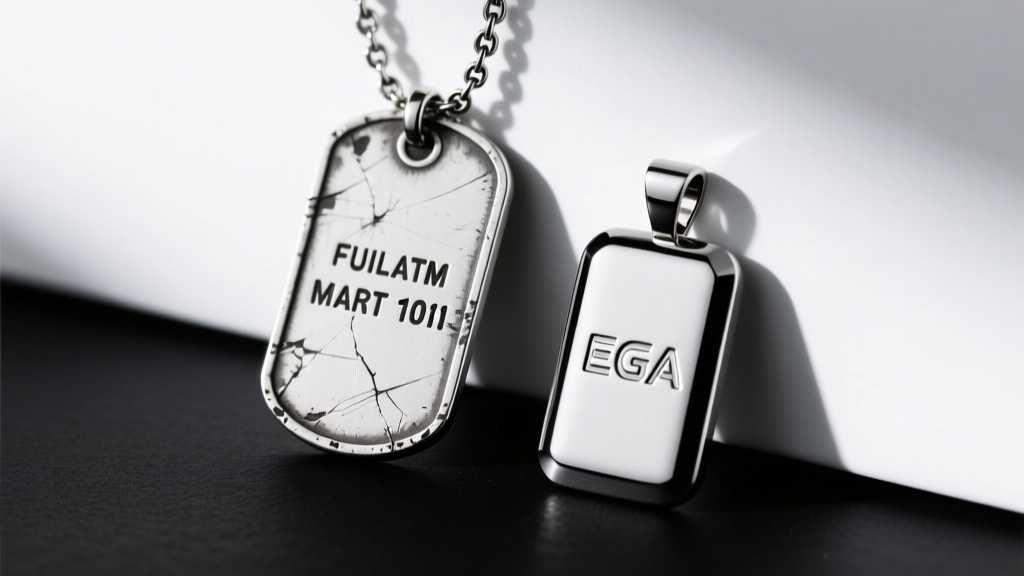
.925 Sterling Silver: Composed of 92.5% pure silver and 7.5% copper, sterling silver carries intrinsic precious metal value and a traditional, high-end luster. However, the copper content means it will oxidize and tarnish when exposed to sulfur and moisture. It requires regular maintenance with a jeweler's polishing cloth but remains a top choice for dress uniforms and formal occasions.
Tungsten Carbide: Rated between 8.5 and 9 on the Mohs hardness scale, tungsten is virtually scratch-proof and maintains a permanent, mirror-like finish. However, buyers must be vigilant: cheap tungsten jewelry uses a cobalt binder, which can cause severe skin reactions and oxidation. Always verify that the manufacturer uses a nickel-binder tungsten carbide. Furthermore, while it resists scratching, tungsten is brittle and can shatter if dropped onto a hard tile floor.
| Material | Average Price Range | Tarnish Resistance | Best Use Case |
|---|---|---|---|
| 316L Surgical Steel | $25 - $55 | Excellent | Daily wear, gym, deployment |
| .925 Sterling Silver | $65 - $140 | Poor (Requires polish) | Dress uniform, formal events |
| Tungsten Carbide (Nickel) | $40 - $85 | Excellent | Heavy labor, scratch-prone jobs |
Chain Gauges and Clasp Mechanics
A common budget mistake is spending $80 on a heavy, solid-metal EGA pendant and hanging it on a flimsy 1.5mm hollow chain. A standard solid stainless steel Marine Corps pendant weighs between 18 and 30 grams. Over time, the kinetic energy of walking and working out will snap a lightweight chain, resulting in the loss of your pendant.
For pendants in the 20g to 35g range, you need a chain with a minimum thickness of 3.5mm to 5.0mm. Solid box chains and wheat chains offer superior tensile strength compared to rope chains of the same width, as their interlocking geometric links distribute weight more evenly. Avoid hollow-core chains entirely; they dent easily and are nearly impossible to repair if kinked.
The 'Tug Test' and Clasp Failure Rates
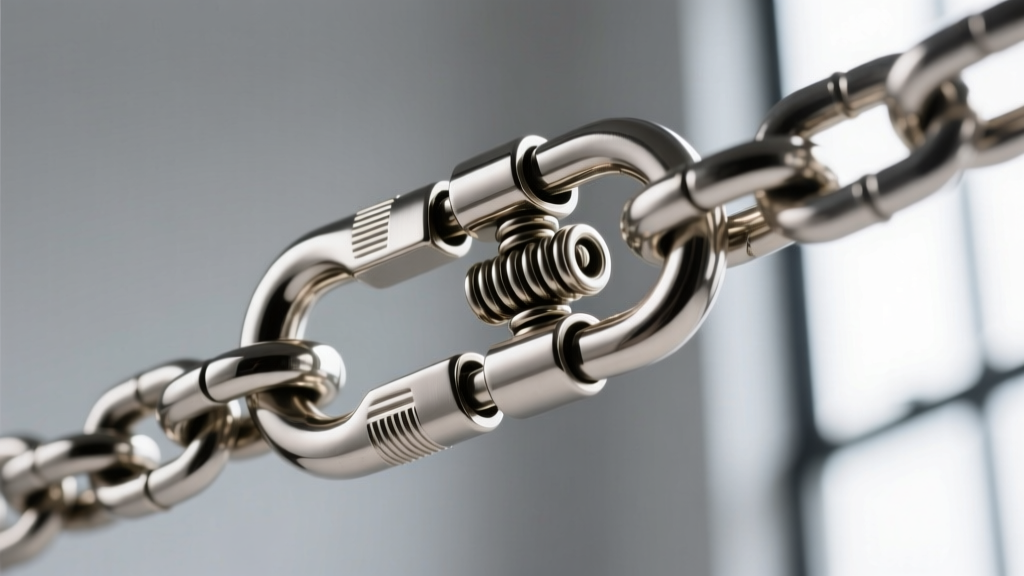
The clasp is the single most frequent point of failure on any necklace. Spring-ring clasps, while cheap and common, feature a tiny internal spring that degrades rapidly under heavy loads. If your Marine Corps necklace weighs more than 15 grams, a spring-ring clasp is a liability. Always upgrade to a heavy-duty lobster clasp. A quality lobster clasp features a thicker lever, a stronger tension spring, and a wider base that prevents the jump ring from slipping through the gap. When budgeting, allocate an extra $8 to $15 to ensure your chain is fitted with a stainless steel lobster clasp rather than a base-metal spring ring.
Licensed vs. Unlicensed: The Hidden Value Trap
The Eagle, Globe, and Anchor is a strictly protected emblem. The United States Marine Corps aggressively defends its trademarks, and for good reason. Unlicensed manufacturers flooding online marketplaces often produce pendants with distorted proportions—the eagle's wings may be misshapen, the globe's continents inaccurate, or the anchor's flukes improperly angled. To a trained eye, an anatomically incorrect EGA is immediately recognizable and diminishes the pride of wearing it.
True value in military jewelry is not just about the weight of the metal; it is about the historical accuracy of the emblem and the ethical sourcing of the product. Supporting licensed, veteran-owned businesses ensures the legacy of the Corps is respected.
When evaluating a purchase, check for official licensing. Purchasing directly from the Marine Corps Exchange (MCX) or from verified veteran-owned jewelers guarantees that the emblem meets the exact heraldic standards set by the Marine Corps. You can learn more about the official history and heraldry of the emblem via the official Marine Corps website. Paying a 20% premium for a licensed, proportionally accurate pendant is a mandatory investment for any Marine who values authenticity.
2026 Budget Tiers: Where to Spend Your Money
To help you navigate the market, we have categorized the current landscape into three distinct budget tiers based on material quality, licensing, and hardware.
- Tier 1: The Budget Compromise ($15 - $30)
Typically features 304 stainless steel or zinc alloy with a thin silver plating. Chains are usually 2mm hollow rope with spring-ring clasps. The EGA proportions are often unlicensed and inaccurate. Verdict: Avoid. The plating will wear off within months, and the chain is prone to snapping. - Tier 2: The Sweet Spot ($40 - $85)
Solid 316L surgical steel or nickel-binder tungsten carbide. Pendants are officially licensed with correct heraldry. Chains are 4mm solid box or wheat chains equipped with lobster clasps. Verdict: The best overall value. Offers lifetime durability, accurate symbolism, and robust hardware for daily wear. - Tier 3: The Heritage Investment ($120 - $250+)
Solid .925 sterling silver or 10k/14k gold accents. Often features hand-enameled details on the eagle and anchor. Verdict: Excellent for retirement gifts, formal dress uniforms, and heirloom pieces, though it requires careful maintenance to prevent tarnishing or scratching.
Final Verdict: Maximizing Your Investment
When assessing the budget for a Marine Corps necklace, the cheapest option is rarely the most economical in the long run. A $20 unlicensed pendant on a weak chain will inevitably end up lost or tarnished in a drawer. By targeting the $40 to $85 range, you secure a licensed, historically accurate EGA crafted from 316L surgical steel or premium tungsten, suspended on a 4mm solid chain with a reliable lobster clasp. This specific combination guarantees a piece of jewelry that can withstand the rigors of daily life while honoring the weight and history of the emblem you earned.


