Mary Medallion Necklace Guide: Metals, Chains, and Enamel Details
Explore the technical details of the Mary medallion necklace. Learn about metal grades, enamel durability, chain pairings, and bail construction.

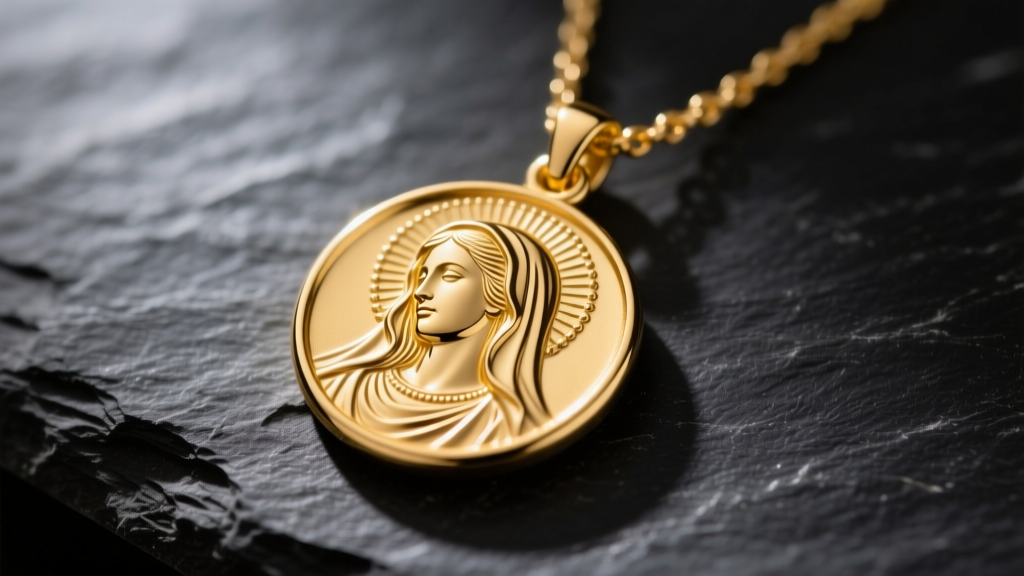
The Anatomy and Manufacturing of a Mary Medallion
The Mary medallion necklace has transcended its origins as a strictly religious artifact—specifically tracing back to the 1830 Miraculous Medal revealed to Saint Catherine Labouré—to become a staple in both fine jewelry and contemporary streetwear layering. However, not all medallions are created equal. From an expert perspective, the longevity and visual crispness of a medallion depend entirely on its manufacturing method.
Premium Mary medallions are die-struck rather than cast. Die-striking involves placing a sheet of precious metal between two hardened steel dies and applying up to 100 tons of pressure. This compresses the metal's grain structure, resulting in a denser, harder, and more scratch-resistant pendant with razor-sharp portrait details. Conversely, cast medallions (produced via lost-wax casting) are more porous, softer, and often exhibit a slight loss of fidelity in the facial features and surrounding star motifs. When evaluating a vintage or modern piece, look for the high-relief sharpness that indicates a die-struck origin.
Metallurgy & Material Grades: Decoding the Alloys
The metal composition dictates both the medallion's wear resistance and its long-term value. According to the FTC Jewelry Guides, strict standards govern how these metals are stamped and marketed.
925 Sterling Silver & Rhodium Plating
Sterling silver (92.5% pure silver, 7.5% copper) is the most common base for Mary medallions. Because the copper content makes it prone to oxidation, high-end manufacturers apply a rhodium flash plating. For optimal tarnish resistance, look for a plating thickness of at least 0.10 microns. Thinner "flash" plating (under 0.03 microns) will wear off the high-relief areas of the Virgin Mary's portrait within months of daily skin contact.
14k vs. 18k Solid Gold
While 18k gold (75% pure gold) offers a richer, deeper yellow hue, it is inherently softer than 14k gold (58.5% pure gold). For a heavy, daily-wear Mary medallion that might swing and strike against hard surfaces, 14k gold is the superior technical choice. The higher alloy content (usually mixed with silver, copper, and zinc) provides the tensile strength needed to prevent the medallion's outer rim from denting or warping over time.
The Enamel Factor: Vitreous vs. Cold Enamel
Many vintage and luxury Mary medallions feature blue or white enamel accents, particularly in the halos or background fields. Understanding the type of enamel used is critical for predicting the piece's lifespan.
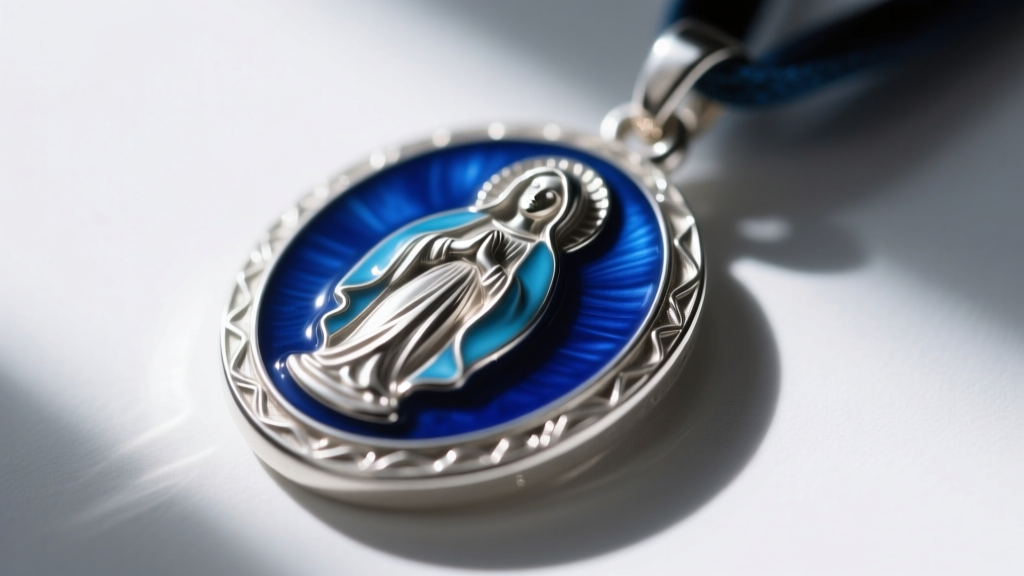
- Vitreous Enamel: As detailed by the Victoria and Albert Museum's enamelling archives, vitreous enamel is essentially finely ground glass (silica) fused to metal at temperatures exceeding 1400°F (800°C). It is highly durable, UV-resistant, and will never yellow. If a vintage French hallmark Mary medallion features vitreous enamel, it is an investment-grade piece.
- Cold Enamel: This is a modern epoxy or polyurethane resin. It is cured at room temperature and is significantly softer. Cold enamel is prone to micro-chipping along the metal borders and will yellow with prolonged exposure to UV light and skin oils. It is acceptable for fashion jewelry but should be avoided in heirloom-tier pieces.
Chain Pairings & Bail Construction Mechanics
The most common failure point in any heavy pendant necklace is the bail—the loop that connects the medallion to the chain. When pairing a chain with a Mary medallion, you must account for bail friction.
If you thread a hard, textured chain (like a wheat or box chain) through a softer 14k or 18k gold bail, the chain acts as a microscopic file. Over 12 to 24 months of daily wear, the friction will saw through the bail, resulting in a lost medallion.
| Chain Type | Tensile Strength | Bail Friction Risk | Best Medallion Weight |
|---|---|---|---|
| Cable (Standard) | Moderate | Low (Smooth links) | 2g - 8g |
| Rope | High | Moderate (Textured) | 5g - 15g |
| Wheat | Very High | High (Abrasive) | 10g - 25g (Use steel bail insert) |
| Box | High | Very High (Sharp edges) | Not recommended for soft gold bails |
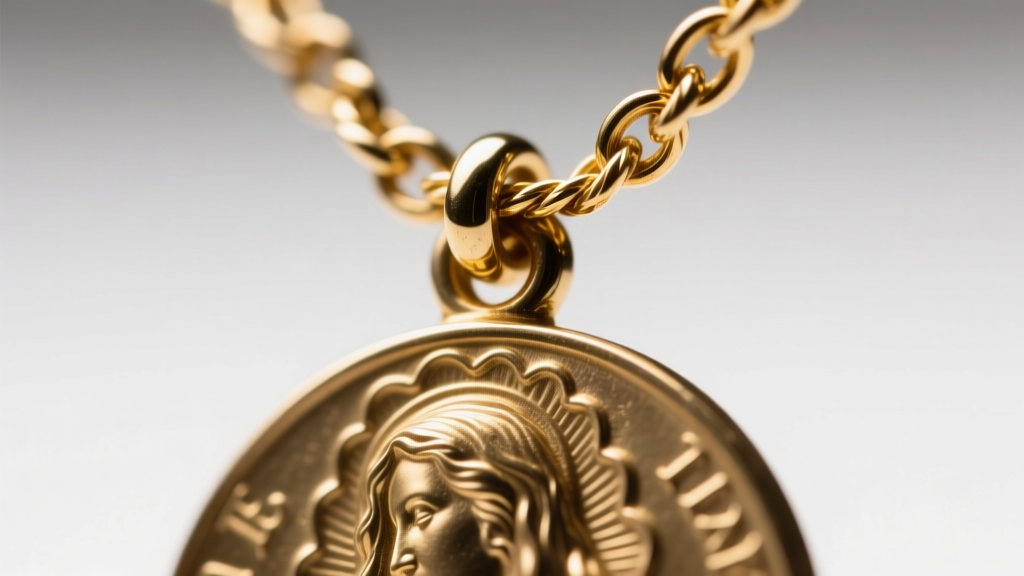
Expert Solution: If you prefer a heavy wheat chain for a substantial 15-gram Mary medallion, have a jeweler solder a hardened steel or platinum jump ring inside the medallion's bail. This sacrificial ring will absorb the friction, protecting the precious metal bail from structural failure.
Sizing, Proportions, and Layering Frameworks
The diameter of the Mary medallion dictates its role in a jewelry stack. Technical precision in layering requires varying both the drop length and the medallion scale to prevent the pendants from tangling or scratching one another.
The 3-Tier Layering Matrix
- The Anchor (14" - 16" Drop): Use a small 10mm to 12mm Mary medallion on a delicate 1.0mm cable chain. This sits at the collarbone and provides a subtle, intimate focal point.
- The Core (18" Drop): A standard 18mm to 20mm Miraculous Medal style on a 1.5mm rope chain. This rests on the upper sternum and serves as the primary visual weight.
- The Statement (22" - 24" Drop): A large 25mm to 30mm vintage portrait medallion. At this scale, ensure the chain is at least 2.0mm thick to maintain visual balance and structural integrity.
Pro-Tip on Tangling: Never layer two medallions of the exact same diameter on chains that are only 1 inch apart in drop length. Maintain a minimum 2-inch drop differential to allow the pendants to swing independently without interlocking.
Maintenance & Preventing Enamel Damage
Maintaining a Mary medallion requires specific protocols, especially if the piece features vitreous enamel or oxidized silver detailing (antiquing) in the portrait's crevices.
- Avoid Ultrasonic Cleaners: The high-frequency cavitation bubbles in ultrasonic cleaners can shatter vitreous enamel and strip intentional black oxidation from the recessed areas of the Virgin Mary's portrait.
- Polishing Protocol: Use a treated, non-abrasive jeweler's cloth (such as a Sunshine cloth) to polish the high-relief areas. Use a soft-bristled horsehair brush to gently clean the recessed star motifs and lettering without removing the dark patina that provides contrast.
- Hallmark Verification: When purchasing vintage European pieces, consult resources like the UK Assay Office hallmarking guides or French eagle head stamps to verify the gold purity before attempting any chemical dips or heavy polishing.
Ultimately, a high-quality Mary medallion necklace is a masterclass in miniature sculpture and metallurgy. By prioritizing die-struck construction, selecting the appropriate gold alloy for your lifestyle, and pairing it with a friction-conscious chain, you ensure the piece remains both a meaningful talisman and a structurally sound heirloom for decades.


