The Mary Necklace Gold Guide: Purity and Durability
Compare 10k, 14k, 18k, and 24k gold for your Mary necklace. Discover Vickers hardness, detail retention, and chain pairing tips for medallion pendants.

The Enduring Appeal of the Mary Medallion
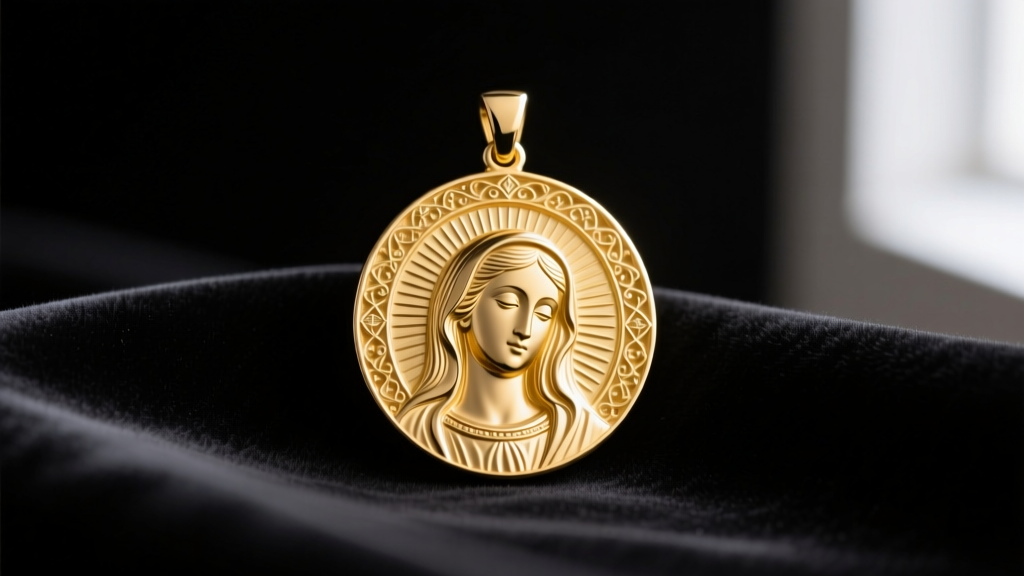
The Virgin Mary medallion is one of the most recognizable and deeply personal symbols in religious and vintage jewelry. Whether passed down as a family heirloom or purchased as a protective talisman, the material integrity of this pendant is paramount. When appraising a vintage piece, gold content dictates the baseline value, but many modern buyers specifically search for a 'Mary necklace gold' piece without fully understanding the metallurgical differences between karatages.
Unlike simple geometric pendants, a Mary necklace features intricate bas-relief detailing—delicate facial features, flowing drapery, and fine halo engravings. These microscopic peaks and valleys are highly susceptible to friction wear. Choosing the wrong gold purity can result in a loss of detail within just a few years of daily wear. In this comprehensive guide, we break down the exact material properties, Vickers hardness ratings, and structural requirements for selecting the perfect gold Mary pendant.
Understanding Gold Purity: The Karat System Explained
Pure gold (24K) is inherently soft and malleable. To make it suitable for jewelry, it is alloyed with other metals like copper, silver, zinc, and sometimes nickel or palladium. The karat (K) system measures the proportion of pure gold in the alloy, with 24 parts representing 100% purity. According to the Federal Trade Commission (FTC) Jewelry Guides, strict tolerances apply to these karat stamps to protect consumers from under-karated goods.
For a Mary pendant, the alloy mix does more than just change the color; it fundamentally alters the crystal lattice structure of the metal, dictating how well the pendant will resist scratching, bending, and detail erosion over decades of wear.
Material Comparison: 10K vs. 14K vs. 18K vs. 24K
To make an informed decision, it is crucial to look beyond the price tag and examine the physical properties of each gold type. The table below outlines the critical metrics for daily-wear religious medallions.
| Karat | Gold % | Vickers Hardness (HV) | Detail Retention | Avg. Retail Markup |
|---|---|---|---|---|
| 24K | 99.9% | 25 - 30 HV | Poor (Wears smooth in 3-5 years) | 1.2x - 1.5x Melt |
| 18K | 75.0% | 120 - 135 HV | Good (Retains detail 15-20 years) | 2.5x - 3.5x Melt |
| 14K | 58.3% | 140 - 160 HV | Excellent (Lifetime retention) | 2.0x - 3.0x Melt |
| 10K | 41.7% | 160 - 180 HV | Superior (Highly scratch resistant) | 1.8x - 2.5x Melt |
The Color and Hue Variations
The alloy composition also dictates the visual warmth of the pendant. 18K gold contains a higher concentration of pure gold, resulting in a rich, buttery yellow hue that is highly prized in luxury markets. 14K gold, alloyed with more copper and silver, presents a slightly paler, more muted yellow tone.
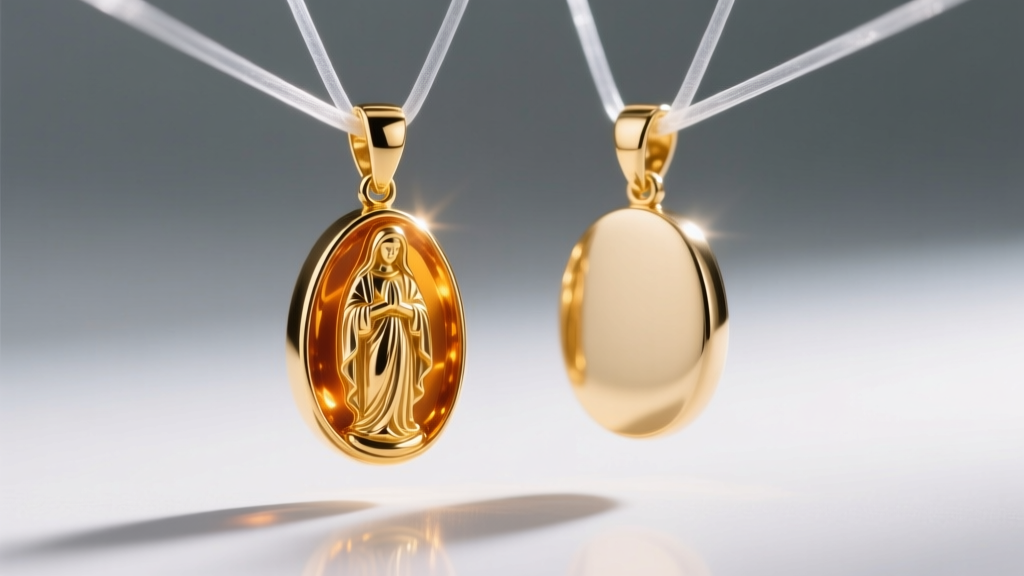
While 18K offers superior color depth, 14K provides a better balance of warmth and structural integrity, making it the undisputed champion for everyday religious jewelry that must withstand friction against clothing and skin.
The Crucial Role of Vickers Hardness in Relief Pendants
The Gemological Institute of America (GIA) notes that pure gold is so soft it can be molded by hand. In metallurgy, the Vickers Hardness (HV) test measures a material's resistance to indentation and surface deformation.
For a Mary necklace, surface deformation is the enemy. The nose, closed eyelids, and intricate lettering (such as 'Ave Maria' or 'Immaculate Conception') on a 24K gold medallion will literally rub away through microscopic friction against cotton t-shirts, wool sweaters, and the wearer's own skin. A 24K pendant worn daily will lose its bas-relief depth within five years, turning into a smooth, featureless gold disc. Conversely, a 14K gold pendant, boasting a hardness of up to 160 HV, will retain its crisp, three-dimensional relief for multiple generations. If your goal is to pass the necklace down as a legible heirloom, 14K or 18K is mandatory.
Selecting the Right Chain Gauge and Clasp Mechanics
A common failure point in gold medallion necklaces is not the pendant itself, but the chain and clasp. Solid gold Mary pendants are surprisingly dense. A standard 20mm (approx. 3/4 inch) solid 14K gold Mary medallion typically weighs between 4.5 and 8.5 grams.
Chain Tensile Strength Requirements
- 1.0mm Cable Chain: Break strength of ~1.5kg. Not recommended for pendants over 3 grams. A snag on a sweater will easily snap this chain.
- 1.5mm Box Chain: Break strength of ~3.0kg. Acceptable for lightweight, hollow-backed Mary pendants.
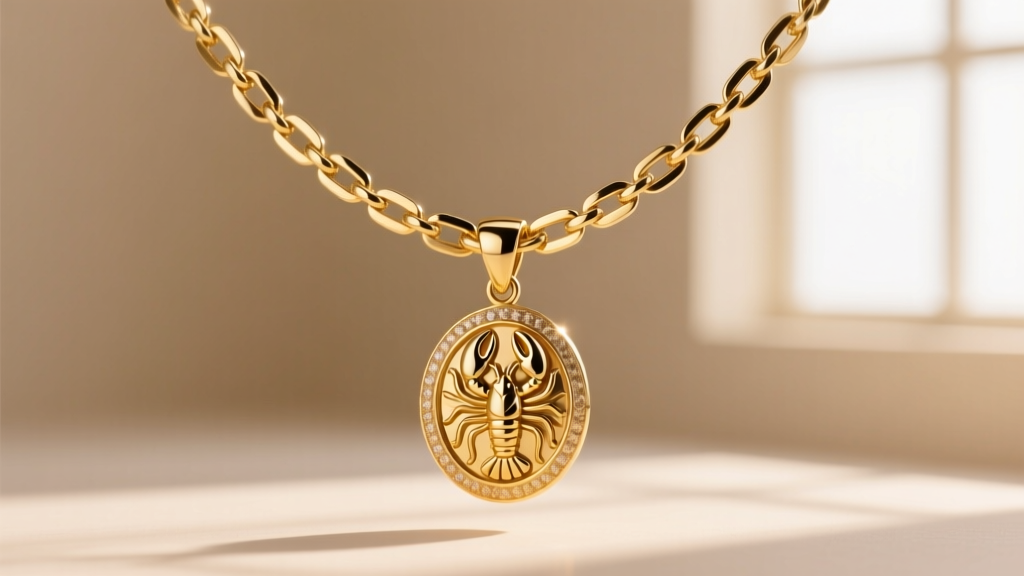
- 2.0mm - 2.5mm Rolo, Figaro, or Wheat Chain: Break strength exceeding 6.0kg. Highly recommended for solid, heavy medallions. The interlocking links distribute the pendant's weight evenly and resist kinking.
Clasp Mechanics
Never pair a heavy solid gold medallion with a spring-ring clasp. The internal steel spring in a spring-ring is prone to failure, and the thin wire loop can pull open under the dynamic weight of a swinging pendant. Always opt for a solid gold lobster clasp (minimum 12mm in length) or a secure barrel clasp, ensuring the jump ring connecting the pendant to the chain is fully soldered shut.
Skin Sensitivities and Alloy Compositions
Because necklaces rest directly against the highly sensitive skin of the décolletage, alloy composition is a major health and comfort consideration. Lower-karat golds, particularly 10K and some 14K white gold alloys, often contain nickel or high levels of copper to achieve their color and hardness.
Nickel is a known contact allergen that causes contact dermatitis, presenting as red, itchy rashes where the pendant rests. If you have sensitive skin, you must verify that the 14K or 18K gold used for your Mary necklace is explicitly nickel-free. Many premium refiners now use palladium or manganese as whitening agents for white gold, and strictly controlled copper-silver ratios for yellow gold, ensuring hypoallergenic properties even at lower karatages.
Final Verdict: Which Gold Purity is Right for You?
Choosing the right metal for your Mary necklace requires balancing budget, aesthetic preference, and lifestyle.
- Choose 18K Gold if: You desire the richest, most luxurious yellow hue, wear the pendant only on special occasions, or are purchasing a high-end luxury designer piece where color prestige outweighs daily durability.
- Choose 14K Gold if: You intend to wear the necklace daily as a protective talisman. It offers the perfect equilibrium of Vickers hardness for preserving bas-relief details, structural chain safety, and beautiful warmth.
- Choose 10K Gold if: You are on a strict budget and require maximum scratch resistance for a highly active lifestyle, provided you have confirmed the alloy is nickel-free.
- Avoid 24K Gold for daily wear: Reserve 24K pieces strictly for investment bullion coins or occasional-wear ceremonial jewelry, as it will inevitably destroy the intricate details of the Mary relief.
By prioritizing metallurgical hardness and proper chain pairing over pure karat weight, you ensure that your gold Mary necklace remains a pristine, legible symbol of faith and style for decades to come.


