Technical Guide: Buying a Necklace with Jesus Pendant
Discover the metallurgy, chain mechanics, and bail types needed to choose a durable, high-quality necklace with Jesus pendant for everyday wear.

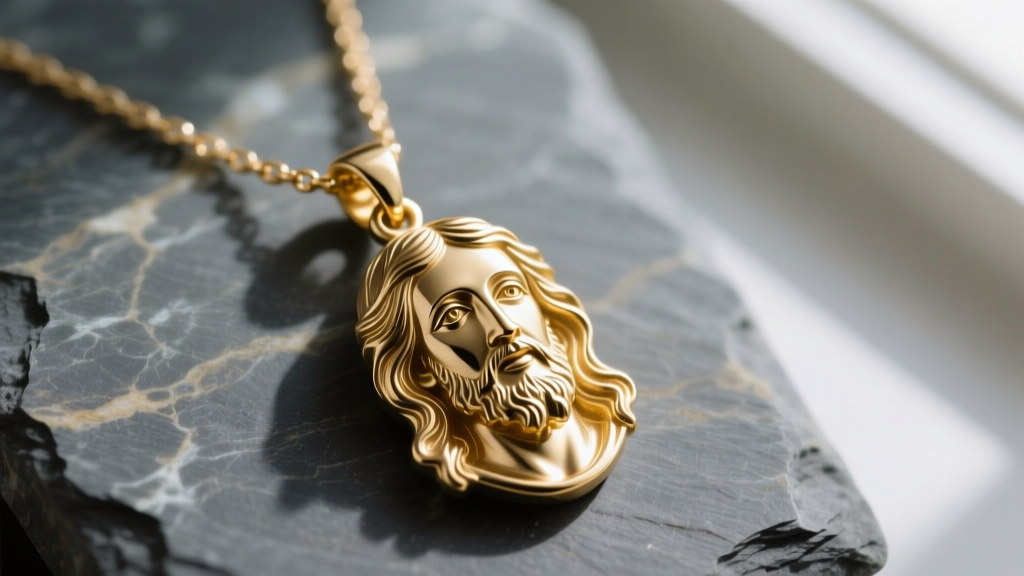
Selecting a necklace with Jesus pendant is rarely just an aesthetic choice; it is an investment in a piece of heritage jewelry meant to withstand decades of daily wear. Yet, the retail market is heavily saturated with hollow-cast pendants, weak jump rings, and poorly alloyed chains that snap under the kinetic stress of everyday movement. As jewelry manufacturing techniques evolve, understanding the structural integrity of religious jewelry is paramount for both collectors and everyday wearers. This technical guide dissects the metallurgy, chain mechanics, and bail engineering required to choose a piece that honors both faith and material science.
The Metallurgy of Faith: Choosing the Right Alloy
The longevity of your pendant is dictated by its elemental composition. While pure 24k gold is virtually untarnishable, its extreme malleability makes it entirely unsuitable for intricate religious iconography, which requires structural rigidity to maintain facial features and textured details like the crown of thorns.
- 14k Gold (58.5% Pure): Alloyed with copper, silver, and zinc, 14k gold offers a Vickers hardness (HV) of roughly 120-140. This makes it highly resistant to the scratching, bending, and bail-friction that plague higher-karat alternatives. According to the Gemological Institute of America (GIA), 14k gold is the optimal balance of durability and precious metal content for heavy, everyday pendants.
- 18k Gold (75% Pure): With a lower HV of around 110, 18k gold offers a richer, warmer hue but sacrifices some structural rigidity. It is better suited for lighter, occasional-wear pieces or pendants that sit flush against the chest without swinging.
- 925 Sterling Silver: Composed of 92.5% silver and 7.5% copper, sterling silver is highly susceptible to hydrogen sulfide tarnishing. If choosing silver, ensure the pendant features a thick rhodium flash plating to delay oxidation, though this will eventually wear away at the high-contact points.
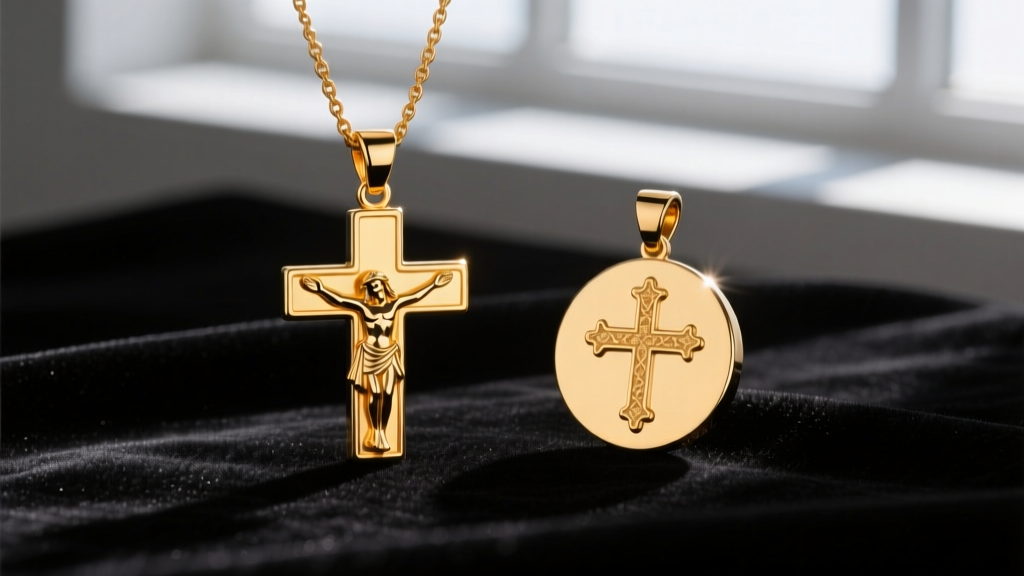
Casting vs. Die-Striking: Manufacturing Integrity
How your pendant is formed dictates its internal density and long-term resilience. There are two primary manufacturing methods used for religious jewelry, each with distinct engineering trade-offs.
Lost-Wax Casting
Most high-detail, three-dimensional Jesus pendants are created via lost-wax casting. Molten metal is poured into a plaster mold created from a wax original. While this allows for deep relief, intricate facial expressions, and complex drapery, it introduces the risk of porosity. If the metal cools unevenly, microscopic gas bubbles become trapped inside the pendant. Over years of wear, these porous weak points can lead to cracking, particularly around the bail. Always inspect cast pendants under a loupe for pitting or surface dullness, which indicates poor casting practices.
Die-Striking
Die-striking involves using immense hydraulic pressure to force a sheet of metal into a steel die. This process compresses the metal's grain structure, resulting in a significantly higher tensile strength and a denser, non-porous finish. However, die-striking is generally limited to flatter, two-dimensional silhouettes. If you prefer a modern, minimalist profile of a crucifix or a flat-stamped Jesus figure, a die-struck piece will outlast a cast equivalent in sheer structural durability.
Chain Mechanics and Weight Distribution
A common failure mode in religious jewelry is the chain snapping under the pendulum effect of a heavy pendant. The chain must possess adequate tensile strength and resistance to kinking. Below is a technical breakdown of chain styles and their load-bearing capacities.
| Chain Style | Optimal Gauge | Tensile Rating | Best Pendant Weight | Repair Difficulty |
|---|---|---|---|---|
| Rope Chain | 2.0mm - 3.0mm | High | 10g - 25g | Extremely Difficult |
| Figaro Chain | 2.5mm - 4.0mm | Medium-High | 8g - 20g | Moderate |
| Box Chain | 1.5mm - 2.5mm | Low | Under 5g | Easy (Link replacement) |
| Cable Chain | 1.8mm - 2.5mm | Medium | 5g - 12g | Easy (Soldering) |
Expert Warning on Diamond-Cut Chains: While diamond-cut rope chains offer exceptional brilliance, the faceting process removes metal, creating microscopic stress fractures. If a heavy pendant catches on clothing, a diamond-cut chain is more likely to snap at a faceted joint than a smooth, high-polish equivalent.
Bail Engineering and Jump Ring Failures
The bail—the loop connecting the pendant to the chain—is the single most critical stress point on your necklace. The vast majority of lost pendants are not the result of a broken chain, but rather a failed jump ring or a worn-through bail.
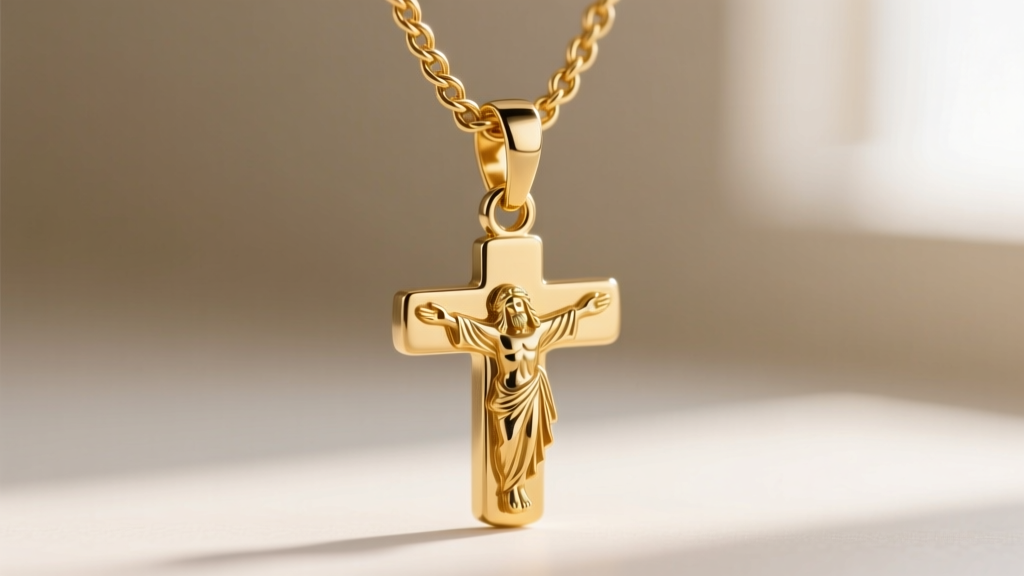
- Jump Ring Gauge: For a solid gold pendant weighing over 8 grams, the jump ring connecting the bail to the chain must be at least 18-gauge (1.0mm thick). Standard 20-gauge or 22-gauge rings will warp and pull open under kinetic stress.
- Soldered vs. Unsoldered: Never hang a heavy, valuable pendant from an unsoldered jump ring. An unsoldered ring relies entirely on the tension of the metal to stay closed. Over time, friction from the chain will cause the ring to rotate, eventually finding the gap and pulling apart. Demand a laser-soldered or torch-soldered jump ring from your jeweler.
- Bail Friction: If your pendant features a standard loop bail, the constant rubbing of the chain will eventually saw through the metal. To mitigate this, look for pendants with a 'hidden bail' or a reinforced, tapered bail lined with a harder metal or ceramic insert to resist friction wear.
Maintenance Protocols and Ultrasonic Risks
Proper maintenance of a necklace with Jesus pendant requires understanding the specific finish of the metal. Many religious pendants feature 'antiquing'—a process where the recessed areas of the casting are intentionally oxidized to create contrast and highlight the facial details.
Never place an antiqued or diamond-cut pendant in an ultrasonic cleaner. The high-frequency cavitation bubbles will strip away the intentional oxidation in the crevices, leaving the piece looking flat and washed out. Furthermore, if your pendant features micro-pave diamond accents (such as a halo or diamond-set cross), the ultrasonic vibrations can shake loose the microscopic prongs holding the stones.
Instead, utilize a mild, phosphate-free dish soap mixed with warm water. Agitate gently with an extra-soft baby toothbrush, paying special attention to the bail area where skin oils and dead cells accumulate, creating an acidic environment that accelerates metal degradation. Rinse with distilled water to prevent hard water spots, and dry with a microfiber cloth.
Sourcing and Hallmark Verification
When purchasing fine jewelry, always verify the hallmark. The Federal Trade Commission (FTC) Jewelry Guides mandate that any piece stamped with a quality mark (e.g., '14K' or '925') must also bear the registered trademark of the manufacturer or retailer. If your pendant features a karat stamp but lacks a maker's mark, it was likely imported through unregulated channels and the metal purity cannot be legally guaranteed. Always purchase from established jewelers who provide a certificate of metal authenticity and offer post-purchase structural inspections.


