Masonic Necklace Guide: Metallurgy, Symbols & Chain Gauges
Explore the technical details of a Masonic necklace. Learn about precious metal grades, chain gauge durability, and precision engraving for symbols.

The Anatomy of a Masonic Necklace: Beyond the Surface
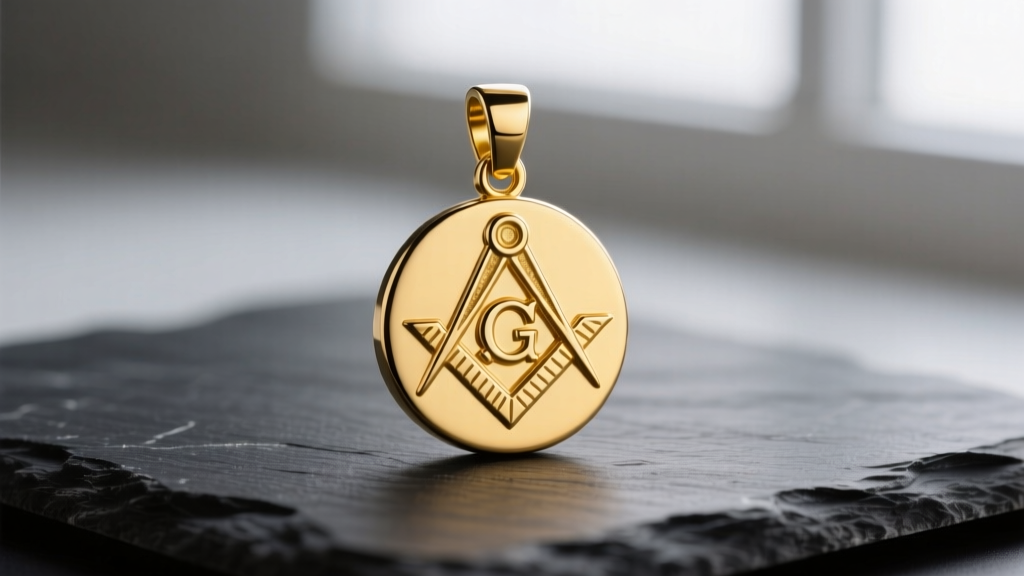
The Masonic necklace serves as both a personal talisman and a public declaration of fraternal affiliation. However, the contemporary jewelry market is saturated with poorly cast, lightweight pendants that fail to honor the geometric precision of the Square and Compasses. As a technical guide for 2026, we dissect the metallurgy, chain mechanics, and engraving tolerances that separate a durable heirloom from cheap costume jewelry. A high-quality Masonic necklace is an exercise in structural integrity and symbolic exactitude.
Standard pendant dimensions for fraternal jewelry typically range from 25mm to 32mm in diameter. The weight of a solid cast pendant should fall between 12g and 22g. Anything under 8g is likely hollow-backed or stamped from thin sheet metal, making it highly susceptible to denting and deformation under daily wear. Furthermore, the bail—the loop that connects the pendant to the chain—must be reinforced. A standard 4mm inner diameter bail is required to accommodate the heavier chains necessary to support the pendant's weight without causing excessive friction or wear on the jump ring.
Metallurgical Standards: Choosing the Right Alloy
The longevity of a Masonic necklace is dictated by its base alloy. According to guidelines from Jewelers of America, understanding the Vickers hardness (HV) and tarnish resistance of various metals is critical for selecting a piece that will withstand decades of friction against the skin and clothing.
| Metal Grade | Composition | Hardness (HV) | Tarnish Resistance | Est. Price Range |
|---|---|---|---|---|
| 316L Surgical Steel | Iron, 16-18% Cr, 10-14% Ni, 2-3% Mo | 150-190 | Excellent | $25 - $60 |
| 925 Sterling Silver | 92.5% Ag, 7.5% Cu | 60-70 | Poor (Requires Rhodium) | $45 - $120 |
| 10k Yellow Gold | 41.7% Au, 58.3% Alloy (Cu/Zn) | 130-150 | Good | $150 - $250 |
| 14k Yellow Gold | 58.3% Au, 41.7% Alloy (Cu/Ag) | 120-140 | Very Good | $250 - $450 |
| 18k Yellow Gold | 75% Au, 25% Alloy | 90-110 | Excellent | $400 - $800+ |
For daily wear, 316L surgical steel offers the highest tensile strength and scratch resistance, making it ideal for active members. However, for ceremonial prestige, 14k gold remains the optimal choice. It provides a rich, traditional hue while retaining enough alloyed copper and silver to resist the deep scratching that plagues softer 18k or 24k gold pieces. If opting for sterling silver, ensure the pendant is plated with at least 0.5 microns of rhodium to prevent the copper content from reacting with sulfur in the air and skin oils.
Symbolic Precision: Engraving Techniques & Tolerances
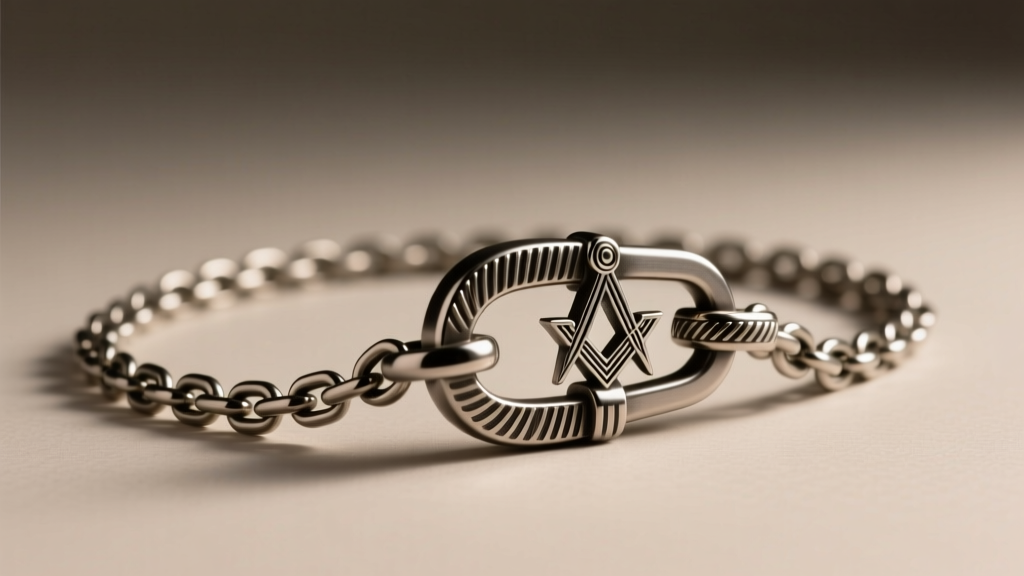
The Square and Compasses, often encompassing the letter 'G' (representing Geometry or the Great Architect), is a sacred emblem. The Grand Lodge of British Columbia and Yukon notes that the historical geometry of these tools is paramount; the square must represent a perfect 90-degree right angle, and the compasses must feature a distinct, functional-looking hinge. Mass-produced pendants often blur these lines, resulting in a historically inaccurate emblem.
CNC Milling vs. Fiber Laser Engraving
Modern high-end Masonic necklaces utilize 1064 nm fiber lasers to etch the emblem into the metal face. Unlike traditional diamond-drag engraving, which can leave microscopic burrs that catch on fabrics, fiber laser engraving achieves tolerances of 0.01mm. This allows for the crisp delineation of the compass hinges and the precise serifs of the letter 'G' without removing excessive structural material from the pendant face.
Enamel Filling: Vitreous vs. Epoxy
Many pendants feature black or blue enamel to provide contrast against the metal. Cheap imports use cold epoxy resin, which yellows, chips, and degrades under UV exposure within 2 to 3 years. Premium pieces utilize vitreous enamel—a glass-based powder fired at 800°C. Vitreous enamel fuses with the metal at a molecular level, ensuring the black recesses of the Square and Compasses remain impervious to moisture, skin acids, and time.
Chain Mechanics: Gauge, Links, and Weight Distribution
A 20g solid metal pendant requires a chain with a minimum breaking strength of 15kg to ensure safety during accidental snags. The physics of weight distribution dictate that the chain must be robust enough to support the pendant without the links deforming at the clasp or bail.
- Gauge Thickness: Opt for a chain gauge between 2.5mm and 3.5mm. Anything thinner than 2.0mm risks link elongation over time, while anything thicker than 4.0mm will visually overpower the 30mm pendant.
- Link Styles: Curb chains and cable chains are the most mechanically sound. Curb chains lay flat against the chest, distributing the pendant's weight evenly across the collarbone. Figaro chains offer a similar tensile strength but introduce a varied visual rhythm that complements the geometric pendant.
- Clasp Mechanics: Never pair a heavy Masonic pendant with a standard spring-ring clasp. The internal spring mechanism is the weakest point of failure. Always select a heavy-duty lobster clasp with a stainless steel internal spring and a reinforced soldered jump ring.
Care, Maintenance, and Enamel Preservation
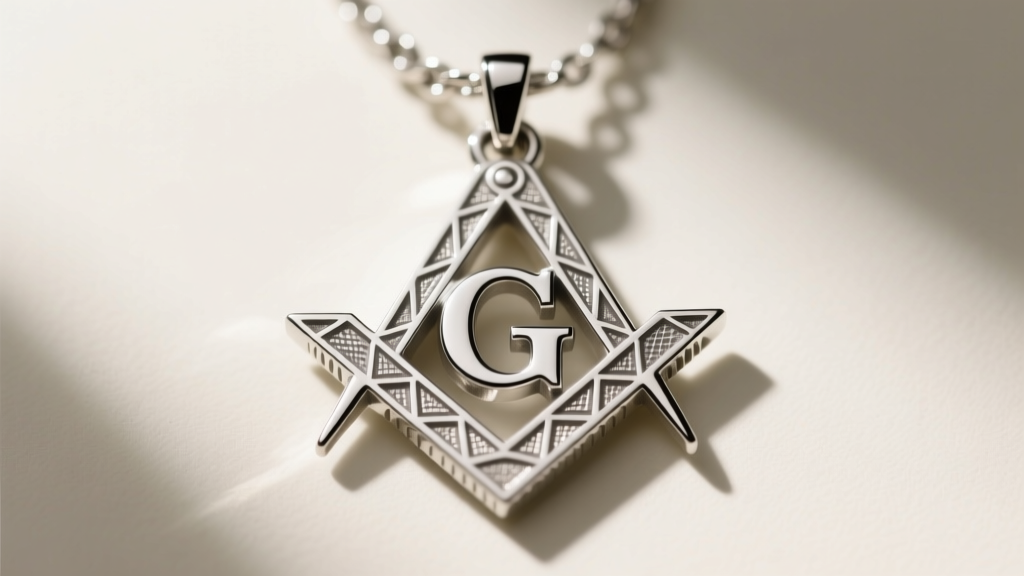
Maintaining the sharp geometric lines and high-contrast enamel of a Masonic necklace requires specific care protocols. Ultrasonic jewelry cleaners, which use high-frequency sound waves to dislodge dirt, are highly effective for bare metal chains but can be destructive to pendants featuring cold epoxy enamel, causing micro-fractures in the resin.
For routine cleaning, use a mild solution of warm water and phosphate-free dish soap, agitating gently with a soft-bristled baby toothbrush to remove sebum and dead skin cells from the deep recesses of the engraving. When polishing the raised metal surfaces, use a treated jeweler's rouge cloth rather than abrasive liquid pastes. Liquid polishes can accumulate in the engraved lines, creating a stubborn white residue that is difficult to remove without professional steam cleaning. By adhering to these metallurgical and mechanical standards, a Masonic necklace transcends mere accessory status, becoming a durable, historically accurate heirloom worthy of the fraternity it represents.


