Mastering Necklace Lengths Inches: A Step-by-Step Guide
Learn how to measure and style necklace lengths inches perfectly. Our step-by-step guide covers layering, necklines, and exact sizing.

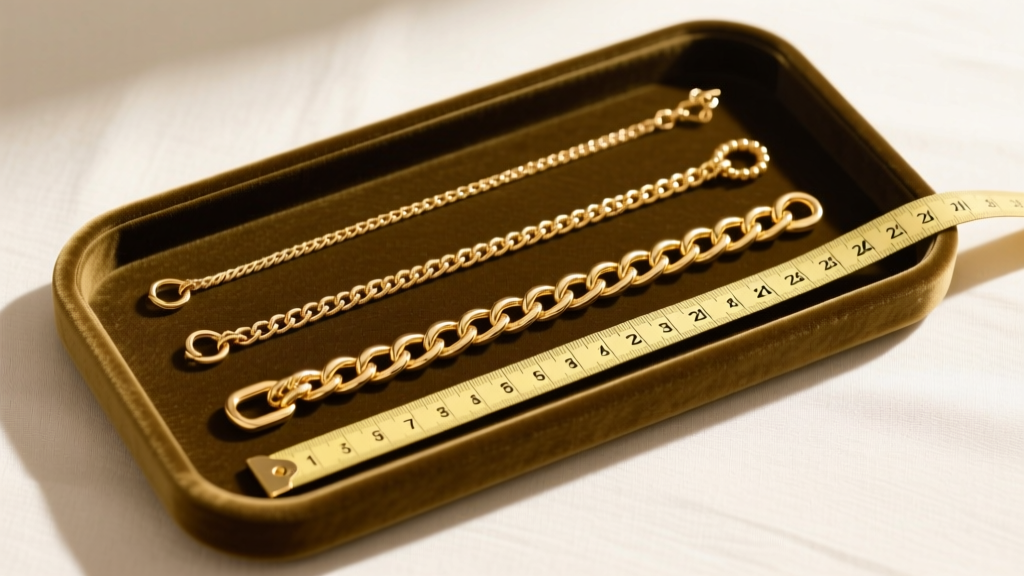
Introduction to the Measurement Matrix
Finding the right fit in fine jewelry is never about guesswork; it is an exercise in applied geometry. When shopping for chains, pendants, or layering sets, understanding standard necklace lengths inches is the difference between a piece that flatters your unique anatomy and one that feels awkward or restrictive. Many buyers make the mistake of relying solely on visual estimates from product photos, only to find the chain sits too high on the collarbone or drowns in the neckline of their favorite blouse.
This comprehensive, step-by-step guide will teach you how to accurately measure your neck, decode industry-standard sizing, and apply the mathematics of layering. Whether you are selecting a delicate 14-inch collar or a bold 24-inch opera chain, precision is your best tool. According to Blue Nile's Necklace Guide, accounting for your specific torso proportions and the visual weight of the chain gauge is critical for achieving a bespoke look without paying for custom sizing.
Step 1: Decoding Standard Necklace Lengths Inches
The jewelry industry operates on a standardized matrix of measurements. However, a standard measurement on a mannequin will behave differently on a human body depending on neck circumference and shoulder slope. Below is the definitive breakdown of standard necklace lengths inches, complete with recommended chain gauges to maintain structural integrity.
| Length (Inches) | Style Name | Anatomical Placement | Ideal Chain Gauge (mm) |
|---|---|---|---|
| 14" | Collar | Tight around the mid-neck | 1.0mm - 2.0mm |
| 16" | Choker | Base of the neck / upper collarbone | 1.2mm - 3.0mm |
| 18" | Princess | Center of the collarbone | 1.5mm - 4.0mm |
| 20" | Matinee | Just below the collarbone | 2.0mm - 5.0mm |
| 22" - 24" | Opera | Chest / Sternum | 3.0mm - 6.0mm |
| 28" - 36" | Rope / Lariat | Below the bustline | 4.0mm - 8.0mm |
As noted by manufacturing experts at Rio Grande Jewelry Supply, pairing a heavy 5mm Cuban link with a 14-inch length creates excessive stiffness and discomfort, whereas a 1.2mm cable chain at 24 inches is highly prone to kinking and snapping under its own unsupported span.
Step 2: The String-and-Ruler Measurement Method
To determine your ideal baseline length, do not use a metal carpenter’s tape measure, as it will not contour to the hollow of your throat. Instead, use the string-and-ruler method for exact precision.
- Prepare your materials: Cut a 30-inch piece of non-stretch cotton string or nylon cord. Avoid elastic or yarn, which will yield false, elongated readings.
- Position the string: Drape the string around your neck at the exact height you want the necklace to rest. For a standard princess length, let it rest naturally on your collarbones.
- Mark the intersection: Pinch the point where the two ends of the string meet at the center of your chest.
- Measure flat: Lay the string completely flat on a table and measure the distance from the end to your pinch mark using a rigid ruler or a steel tape measure. This is your exact anatomical baseline in inches.
- Account for the clasp: Remember that standard lobster or spring-ring clasps add roughly 0.5 to 0.75 inches to the total wearable length. If your string measures 17.25 inches, an 18-inch chain will provide a perfect, comfortable fit with room for breathing and movement.
Step 3: Pairing Specific Lengths with Necklines
Once you know your baseline measurements, the next step is harmonizing your jewelry with your wardrobe. The interplay between fabric and metal dictates the visual success of your outfit.
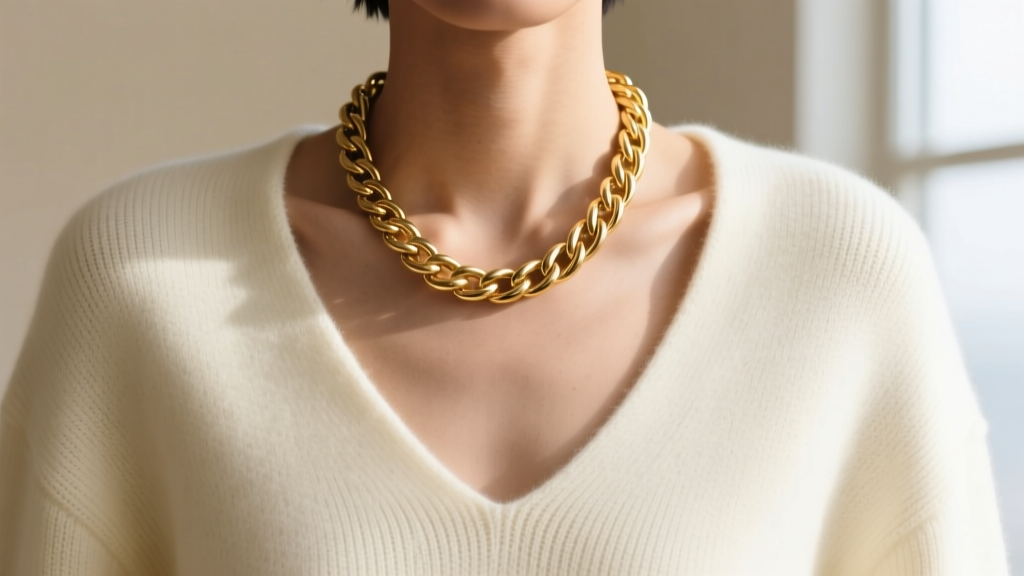
- V-Necklines: Opt for 20-inch to 24-inch matinee or opera lengths. The chain should mimic the V-shape of the fabric, with the pendant resting just above the hemline of the neckline. An 18-inch chain will visually chop the V-shape in half, disrupting the elongating effect.
- Crew Necks: You have two distinct options. Go tight with a 14-inch to 16-inch collar/choker that sits entirely above the fabric line, or go long with a 24-inch+ chain that sits entirely below. Avoid the 18-inch to 20-inch range, as it will compete directly with the ribbed collar of the sweater or tee.
- Off-the-Shoulder & Boat Necks: These expose the collarbone and upper chest. A 14-inch collar or a delicate 16-inch choker provides a striking contrast against the expanse of bare skin without overwhelming the silhouette.
- Button-Down Shirts: Wear the shirt unbuttoned to the sternum and layer a 16-inch choker with a 22-inch lariat. This creates a vertical line that draws the eye downward, complementing the sharp angles of the collar.
Step 4: The Mathematics of Layering (The 2-Inch Rule)
Layering is the cornerstone of modern jewelry styling, but improper spacing leads to a tangled, frustrating mess. The secret to effortless layering lies in torsion physics and the strict adherence to the 2-inch rule.
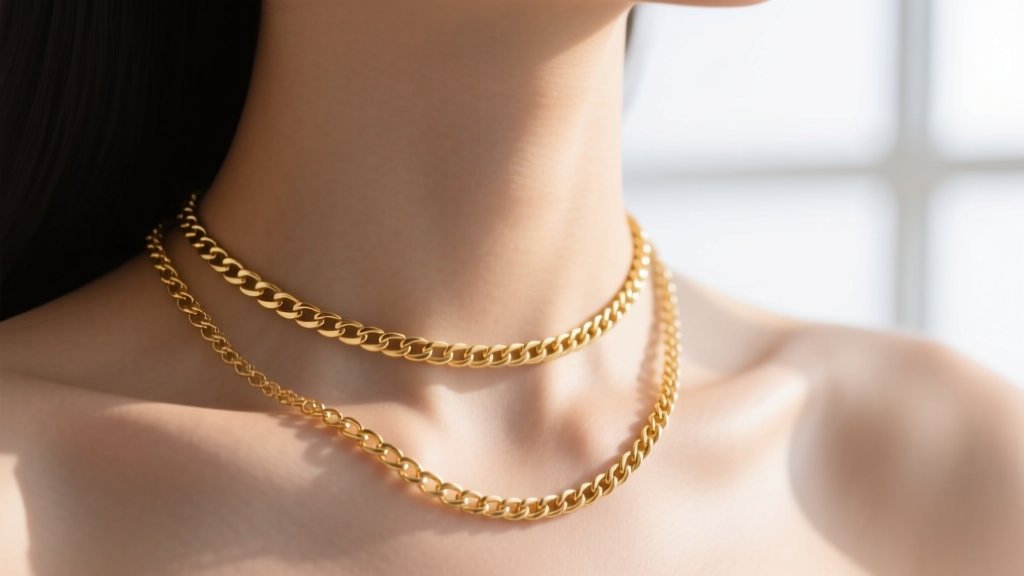
When two chains of similar length and gauge rest against each other, the natural friction of your movement causes them to twist around one another. To prevent this, there must be a minimum 2-inch difference between each layered piece. For example, a perfectly balanced stack consists of a 14-inch collar, a 16-inch choker, and an 18-inch princess chain.
Pro Tip: Never layer chains of the exact same link type. Pairing a 16-inch cable chain with an 18-inch cable chain invites the links to interlock like gears. Instead, mix textures: use a 16-inch snake chain paired with an 18-inch Figaro or rope chain to eliminate friction points.
Chain Weight and Clasp Considerations
When layering, the top chain should always be the lightest in gauge, and the bottom chain the heaviest. A 1.2mm top chain and a 3.5mm bottom chain create a visually grounded look. Furthermore, upgrade your top chains to magnetic or small lobster clasps, as bulky spring rings will slide down to the front of your neck and ruin the aesthetic of the stack.
Step 5: Calculating Pendant Drop and Visual Length
A chain's stamped length only tells half the story. When you add a pendant, the visual drop changes significantly. According to styling principles outlined by Jewelry Wise, understanding pendant geometry is crucial for placing a gemstone exactly where you want it.
To calculate the true visual drop, take the total height of the pendant (including the bail) and divide it by two. For instance, if you attach a 1-inch (25mm) teardrop pendant to an 18-inch chain, the lowest point of the jewelry will rest at 18.5 inches. If you are trying to keep a pendant hidden beneath a high crew neck collar, you must subtract the pendant's drop radius from your target length to ensure it stays concealed.
Troubleshooting Common Sizing Failures
Even with careful planning, you may encounter fit issues. Here is how to troubleshoot the most common problems associated with necklace lengths inches:
- The Chain Keeps Flipping: If your pendant constantly flips backward, the chain is too light for the bail. The center of gravity is off. Solution: Move to a heavier chain gauge (e.g., from 1.5mm to 2.5mm) or use a silicone pendant guard to lock the bail in place.
- The Choker Feels Suffocating: Neck circumference fluctuates throughout the day due to hydration and temperature. If a 14-inch collar feels tight by evening, use a 1-inch to 2-inch chain extender. This allows you to adjust the fit dynamically without visiting a jeweler for a permanent alteration.
- Visual Shortening by Thick Necks: Individuals with thicker necks or broader shoulders will find that standard lengths sit higher than expected. A standard 18-inch chain may look like a 16-inch choker. Always add 1 to 2 inches to your baseline string measurement if you have a neck circumference exceeding 15 inches.
Final Thoughts on Precision Sizing
Mastering your exact measurements transforms jewelry shopping from a gamble into a precise science. By understanding the mechanics of standard necklace lengths inches, applying the string measurement method, and respecting the mathematics of layering, you can curate a collection that fits flawlessly. Remember to account for pendant drops, chain gauges, and neckline geometry, and your jewelry will always sit exactly where it was designed to.


