Metal Properties of Different Types of Necklace Chains
Discover how metallurgy affects the different types of necklace chains. Compare gold, platinum, silver, and titanium for durability and style.

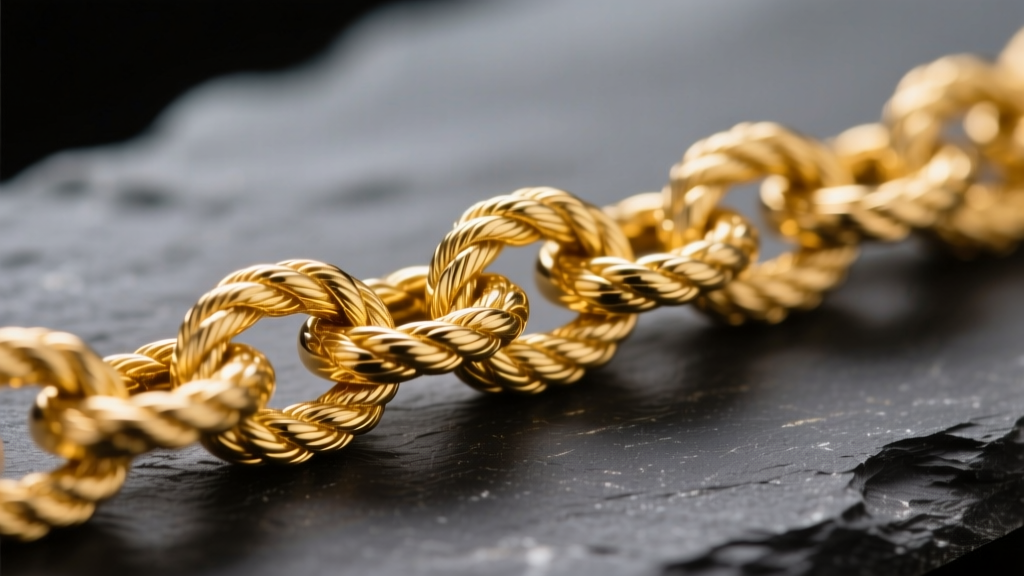
The Metallurgy of Chain Jewelry: Why Material Dictates Longevity
When browsing the different types of necklace chains, most buyers focus exclusively on the visual style—whether it is a classic cable, a streetwear-ready Cuban curb, or a delicate rope. However, from a structural and metallurgical perspective, the chain style is only half the equation. The metal alloy used to forge those links dictates the chain's tensile strength, resistance to kinking, weight, and ultimate lifespan. A 1.5mm box chain crafted from aerospace-grade titanium will outlast a 3.0mm box chain made of soft 22k gold by decades. In 2026, as material science continues to intersect with fine jewelry, understanding the properties of these metals is essential for making an informed investment.
This guide bypasses the superficial aesthetic descriptions and dives deep into the metallurgical properties, failure modes, and practical applications of the metals used to manufacture the different types of necklace chains available on the market today.
Precious Metals: Gold, Platinum, and Silver Alloys
Precious metals remain the standard for fine jewelry, but pure precious metals are generally too soft for chain manufacturing. They must be alloyed with base metals to achieve the necessary structural integrity. According to the Gemological Institute of America (GIA), the specific alloy mix drastically alters the metal's Vickers hardness and ductility.
14k vs. 18k Gold: Tensile Strength and Stretch
Gold chains are typically manufactured in 14k (58.5% pure gold) or 18k (75% pure gold). The remaining percentage consists of strengthening alloys like copper, zinc, silver, and nickel.
- 14k Gold: With a Vickers hardness ranging from 135 to 170 (depending on the exact alloy mix and heat treatment), 14k gold offers superior tensile strength. It is the optimal choice for structurally demanding chain styles like rope, figaro, and thin cable chains that must support heavy pendants without stretching.
- 18k Gold: Softer and more ductile, with a Vickers hardness of roughly 110 to 125. While it offers a richer, deeper yellow hue and higher hypoallergenic properties, 18k gold is prone to 'chain stretch.' Over time, the friction and weight of a pendant can cause the links of an 18k cable or oval chain to elongate, eventually leading to structural failure.
Expert Tip: If you are buying an 18k gold chain, avoid gauges thinner than 1.2mm for pendant suspension. Reserve ultra-fine 0.8mm 18k chains strictly for lightweight lockets or standalone wear.
Platinum (950pt): Density and Work-Hardening
Platinum chains are the pinnacle of durability, typically alloyed with 5% ruthenium or iridium (950pt). Platinum possesses a unique metallurgical trait: it is malleable but highly resistant to material loss. When a gold chain link is scratched or bent, microscopic particles of metal are displaced and lost. When platinum is scratched or stressed, the metal is merely displaced, forming a patina rather than thinning out.
Furthermore, platinum exhibits work-hardening. As the metal is stressed or bent, the crystalline structure locks, making the metal harder and more rigid at the stress point. This makes platinum curb and mariner chains virtually indestructible under normal wear. However, platinum's extreme density (21.45 g/cm³) means a thick platinum chain will be significantly heavier—and more expensive—than its gold counterpart. For a deep dive into platinum's unique structural benefits, refer to the GIA's Platinum Guide.
Sterling Silver (925): The Rhodium Factor and Kinking
Sterling silver is an alloy of 92.5% silver and 7.5% copper. The copper provides necessary hardness but introduces a major vulnerability: oxidation. The copper reacts with sulfur and moisture in the air, causing tarnish. To combat this, many modern silver chains are flash-plated with rhodium.
Structurally, sterling silver has a relatively low tensile strength compared to gold or steel. Silver box chains and herringbone chains are notorious for kinking. Once a silver herringbone chain kinks, the structural memory of the metal is compromised, and the kink will eventually snap. Always store silver chains flat or hanging, never balled up in a jewelry box.
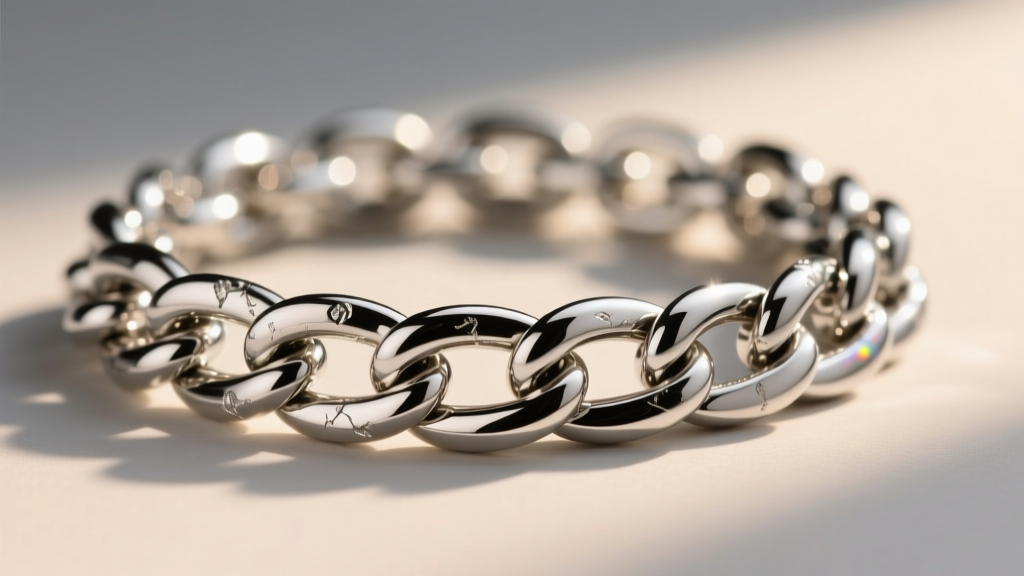
Alternative Metals: Titanium and Surgical Steel
For buyers prioritizing extreme durability, hypoallergenic properties, and affordability, alternative metals have dominated the men's and streetwear chain markets over the last decade.
Grade 5 Titanium (Ti-6Al-4V) vs. 316L Stainless Steel
Not all titanium jewelry is created equal. Commercially pure titanium (Grade 2) is relatively soft. High-end titanium chains are forged from Grade 5 Titanium (Ti-6Al-4V), an aerospace alloy containing aluminum and vanadium. Grade 5 titanium boasts a Vickers hardness of roughly 340, making it incredibly resistant to scratching and deformation. A Grade 5 titanium box chain will never stretch, kink, or tarnish. However, its extreme hardness means that if a link breaks, traditional jewelers cannot solder it with a standard torch; it requires specialized laser welding.
316L Surgical Stainless Steel is the other heavyweight champion. It contains molybdenum, which provides exceptional resistance to chlorides and corrosion (hence its use in marine environments). Steel chains offer a brilliant, white-metal luster similar to white gold but at a fraction of the cost. The primary drawback of steel is its rigidity; complex chain styles like the snake chain are prone to permanent bending in steel because the metal lacks the ductility to flex smoothly.
Material-to-Style Matrix: Matching Metal to Chain Type
Choosing the right metal depends heavily on the geometric structure of the chain style. Below is a structural matrix to guide your selection.
| Chain Style | Best Metal Match | Metallurgical Reasoning |
|---|---|---|
| Rope Chain | 14k Gold | Requires high ductility to twist the links tightly, but enough tensile strength (via 14k alloys) to prevent the twisted links from pulling apart under tension. |
| Box Chain | Grade 5 Titanium / 316L Steel | Box chains rely on rigid, square links. Soft metals like silver or 18k gold will deform at the corners, causing the chain to kink and snap. Titanium maintains sharp geometry. |
| Cuban Curb | Platinum / 18k Gold | Curb chains feature flat, interlocking surfaces that maximize light reflection. The density of platinum and the rich hue of 18k gold provide the ultimate luxury aesthetic. |
| Herringbone | 18k Gold (Solid, not hollow) | Herringbone relies on flat, flush links. It requires a soft, highly malleable metal to lay flat against the collarbone. 18k gold provides the necessary drape. |
| Cable Chain | 14k White Gold / Rhodium Silver | The simple oval links benefit from the high tensile strength of 14k white gold to support heavy pendants without the links elongating over time. |
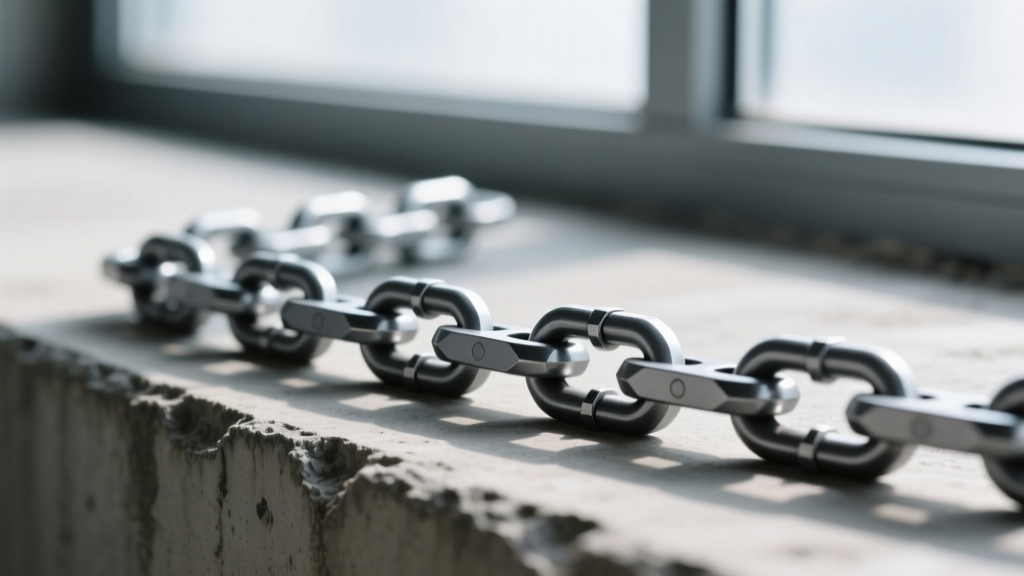
Real-World Failure Modes and Troubleshooting
Even the best chains fail if the material is mismatched to the environment or the clasp hardware. Here are the most common failure modes we see in our 2026 repair diagnostics:
The Spring Ring Vulnerability: Many high-end chains are ruined by cheap clasps. A solid 14k gold rope chain is only as strong as its weakest link—often a hollow, base-metal spring ring clasp. Always upgrade to a solid lobster clasp or a magnetic neodymium clasp forged from the same metal grade as the chain.
- Hollow Gold Crushing: Many manufacturers produce 'hollow' gold chains to offer a thick look at a lower price. The gold tubing is incredibly thin (often under 0.2mm). If a hollow curb chain is subjected to compressive force (like being slept on), the links will crush. Once crushed, the structural integrity is zero, and they cannot be repaired.
- Silver Solder Joint Snaps: In sterling silver chains, the links are often soldered closed. Silver solder has a lower melting point and lower tensile strength than the silver itself. Under torque, the chain will invariably snap exactly at the solder joint.
- White Gold Rhodium Wear: 14k and 18k white gold chains are plated with rhodium to achieve a bright white finish. The constant metal-on-metal friction of the links rubbing together will wear the rhodium off within 6 to 12 months, revealing the slightly yellowish-white alloy underneath. This requires periodic re-plating, an ongoing maintenance cost that platinum and steel do not require.
Pricing Realities and Sourcing in 2026
The pricing of necklace chains is dictated by three factors: the spot price of the raw metal, the density (weight) of the chain, and the labor required to manufacture the specific link style. In 2026, with gold spot prices remaining historically high, the price gap between 14k gold and alternative metals has widened significantly.
A standard 20-inch, 3mm solid 14k gold Cuban curb chain can easily range from $2,500 to $4,500 depending on the exact gram weight. The exact same dimensions in 316L stainless steel will cost between $30 and $60. For buyers who want the prestige of a precious metal but need structural durability, platinum chains represent a generational investment. While a platinum chain of the same dimensions may cost 30% to 50% more than its 14k gold equivalent due to platinum's higher density and melting point challenges, it will never require re-plating, will not tarnish, and will easily outlive the original owner.
Ultimately, when evaluating the different types of necklace chains, look past the display case lighting. Check the stamp (e.g., 750, 950Pt, 316L), ask about the clasp hardware, and match the metal's tensile properties to your daily lifestyle. A chain is a mechanical linkage; treat it with the metallurgical respect it deserves.


